Category Archives: Sea ice habitat

BBC Arctic Live for viewers outside the UK: watch scientist distort polar bear facts

Viewers outside the UK can now watch polar bear scientist Steve Amstrup live (Episode 2, filmed 2 November 2016), state that there are “20,000-25,000” polar bears in the world, almost a full year after the IUCN Red List put the worldwide polar bear population size at 22,000-31,000.

[even though Amstrup (now chief scientist and spokesperson for Polar Bears International) was a co-author of that 2015 Red List report, Wiig et. al. 2015]
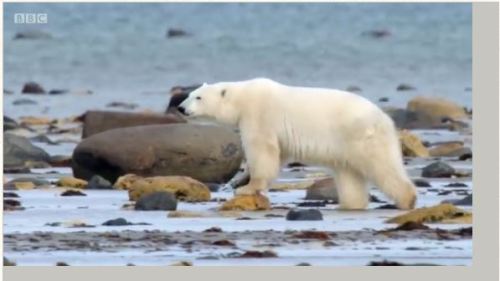
bbc-live-ii-fat-polar-bear-03

Watch Steve Amstrup, live (Episode 2, filmed 2 November 2016) state that sea ice is only “usually” present in March/April when females with cubs emerge from their dens to feed – as if there has ever not been sea ice present at this critical time of year!

Watch Amstrup , live (Episode 2, filmed 2 November 2016) not point out that the prediction he was responsible for making in 2007 (that got polar bears listed as ‘threatened’ in the USA) has been a total failure: even though the USGS models predicted that polar bear numbers worldwide would decline by 67% and Western Hudson Bay polar bears (as well as nine others) would be wiped out completely when summer sea ice reached the levels they’ve been at since 2007, he pretends that prediction was scientifically valid.

We’ve had sea ice levels not predicted to occur until 2050 for 8 out of the last 10 years and polar bears are still going strong. If Amstrup had been right about the relationship of summer sea ice and polar bear numbers, there would have been no polar bears in Churchill for the BBC to film this year.

Watch all three hour-long episodes below as these two organization team up to promote fear of future global warming with polar bears (or polar bears, as Humble says it). Decide for yourself if polar bear science is being fairly represented.
Continue reading

Polar Bear Alert report for 1st week of November 2016, Churchill Manitoba

Week 17 (I’ve been counting) for 31 October – 6 November (Week 1 was 11-17 July):

“Most bears are still out at Cape Churchill.” [see map below]

2016-oct-31-nov-6_week-17_week-11-missing

See previous reports here, and here. Ten-day sea ice animation, CIS.
Continue reading

Ice formation in W Hudson Bay slower than 2015 but not likely as slow as 1983

After a great start this year for Churchill-area polar bears of Western Hudson Bay – who came off the ice in better than usual condition after what must have been a good spring hunting season – ice maps suggest that freeze-up will be later than last year, an impression confirmed by on-the-ground observers.

Ice coverage this year at 7 November (2016):

sea-ice-extent-canada-2016-nov-7_cis

Ice coverage last year at this date (7 November 2015), see this post for details:

UPDATED 23 November 2021: see below.
Continue reading

Tracking west Alaskan polar bears in the Beaufort in October – all at Banks Is., CAN

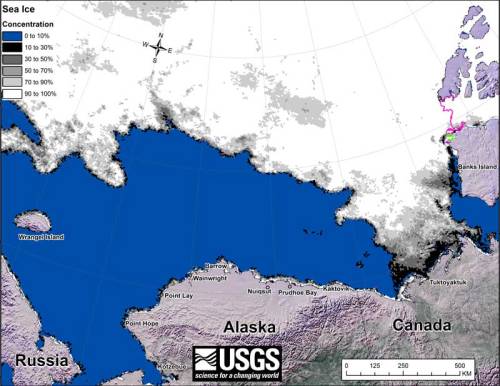
polar-bear-habitat_usgs-from-cbc-story-sept-19-2015

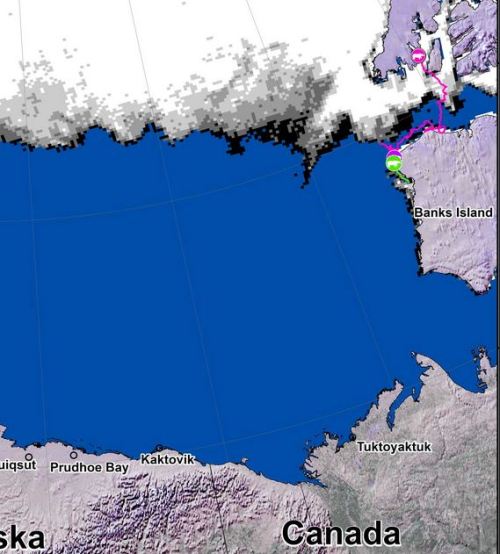
Two out of three polar bear females that were collared by USGS researchers near Barrow, Alaska last spring are hanging out on the northwest coast of Banks Island, Canada. The other bear (bright green icon) appears to have been collared on the ice off Prudoe Bay in April. And as I discussed last month, it’s unusual for bears from the western end of the Southern Beaufort subpopulation (or even the central region) to end up in the Northern Beaufort subpopulation territory.

beaufort-tracking-usgs-bear-movements-october-2016-sm

Original caption: “Movements of 3 satellite-tagged polar bears for the month of October, 2016. Polar bears were tagged in 2016 on the spring-time sea ice of the southern Beaufort Sea. All 3 of these bears have satellite collar transmitters. Polar bear satellite telemetry data are shown with AMSR2 remotely-sensed ice coverage from 29 October, 2016.” See full resolution image here and close-up below.

Continue reading

If experts had been right about sea ice, there would be no polar bears in Churchill

The simple fact is that if polar bear experts had been right about the threat to polar bears from the loss of summer sea ice in the Arctic, there would be no polar bears in Churchill this fall. No bears for tourists to photograph, none for biologists to study, and certainly none for the BBC to film for an upcoming three-part TV special called “Arctic Live.

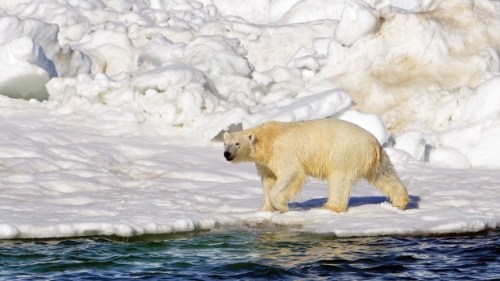
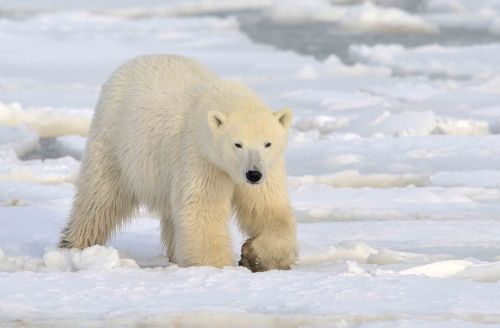
polar-bear-stock-image-gg66298544_sm

The low-ice future that biologists said would doom polar bears to extinction by 2050 has already happened in 8 out of the last 10 years. The sea ice future has been realized.

Polar bears have experienced those supposedly deadly low-ice summers for almost a decade but the global population did not drop by 2/3 as predicted and not a single one of the ten subpopulations predicted to be extirpated under those conditions has been wiped out.

How much more wrong can you be than that? Will the BBC mention this conundrum in their show? Will the polar bear experts they consult share this fact with viewers? We’ll all have to watch and see [show times and summaries of each program here, 1-3 November] but here are some background facts that might enhance your viewing experience.

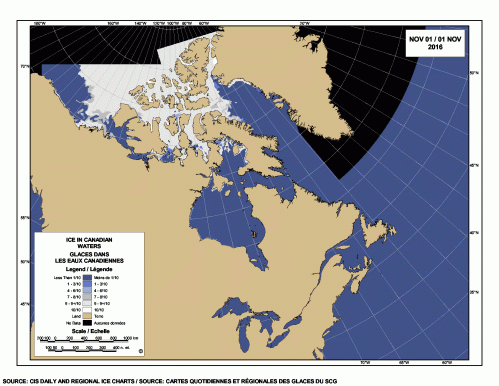
UPDATE: Sea ice condition of Hudson Bay at 1 November 2016 below from the Canadian Ice Service (some slushy ice looks to be forming along the coast north of Churchill – this is how freeze-up starts). See the animation for the last 10 days here:

sea-ice-extent-canada-2016-nov-1_cis

Continue reading

Fall Arctic ice growth often differs regionally: 2016 compared to other years

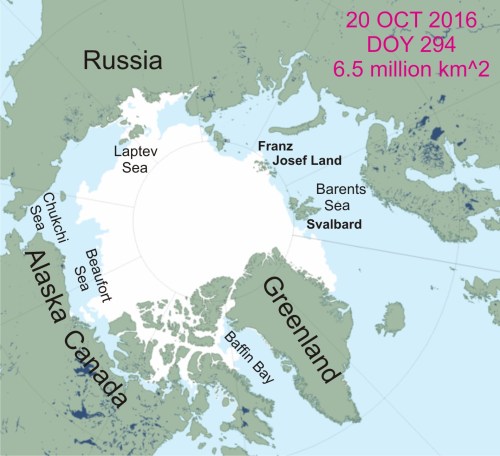
Arctic sea ice is spreading out quickly from its central basin summer refuge – according to this NSIDC Masie ice chart, it has already grown more than 2 mkm2 beyond the annual minimum reached in early September. Ice is already pushing south into the eastern Beaufort and the archipelago of Franz Josef Land in the Barents Sea.

masie-sea-ice-2016-oct-20-cropped-and-marked_polarbearscience

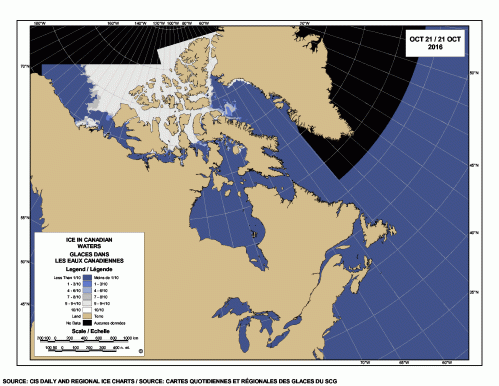
Over the next couple of weeks, shorefast ice will start forming along the coasts of North America and Eurasia (see the first bits off Alaska in the 21 October CIS map below), which will eventually meet the expanding Arctic Basin pack to fill the Basin and Canadian Arctic Archipelago with ice – as it has done for eons.

sea-ice-extent-canada-2016-oct-21_cis

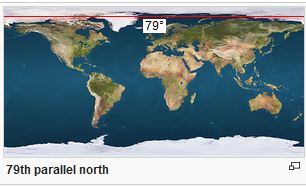
The evidence from the last decade or so suggests that by the end of October, most of the Arctic north of the 79th parallel (see map below) will be filled with ice – although the Chukchi Sea (north of the Bering Strait) may not fill until sometime in November:

79-th-parallel-north_wikipedia

Polar bears usually resume hunting as soon as sea ice conditions permit in the fall, since it’s their last chance to top up their fat reserves before the dark and cold of winter when hunting may become next to impossible.

I’ve copied ice charts from the Masie archives for some previous years at 31 October below.

Continue reading

Kaktovik, AK has a polar bear problem but not because bears are desperate for food

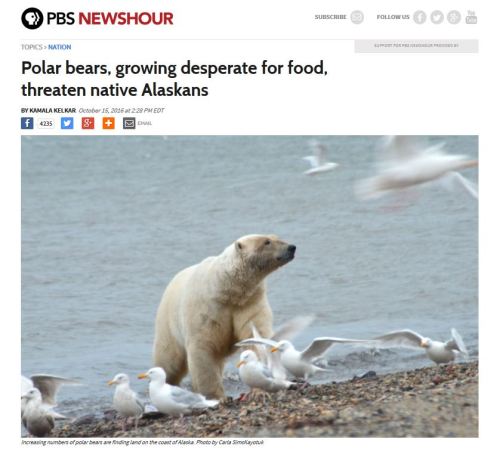
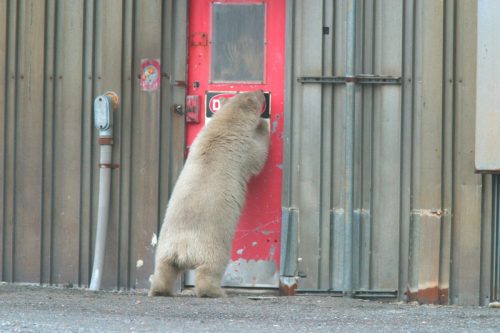
PBS has published a bizarre poor-starving-polar-bears story that uses pictures of fat, healthy bears to illustrate the supposed desperation of malnourished bears of the Southern Beaufort Sea that is blamed on declining sea ice.

pbs-newshour-headline_15-october-2016

The photo of the fat bear above, taken by the Kaktovik resident quoted in the 15 October 2016 PBS story, Polar bears, growing desperate for food, threaten native Alaskans, accompanies this statement:

“While images of malnourished polar bears have become a national symbol of the effects of climate change, they are a front line reality for Native Alaskans, who face them on their own property and do not want them to get hurt.”

Except this is not a story about starving bears but too many fat bears hanging around one particular community looking for other kinds of food – after being lured in by the enticing smell of rotting whale meat left onshore by the residents.

If photos of starving Beaufort bears existed that PBS could have used to illustrate this story, I’m certain those photos would have been used. But virtually all of the pictures I’ve seen of Kaktovik bears are the epitome of health – fat and sassy – but none that could be described as starving.

polar_bear-US FWS_young bear Alaska maybe Kaktovik no date.jpg

It turns out that while native Kaktovik residents have profited from tourists and journalist who have shown up in droves to view the large numbers of bears attracted to the bone piles left after butchering summer-caught bowhead whales, the bears have also put the community at risk of personal attack and loss of stored food. Who would have thought?

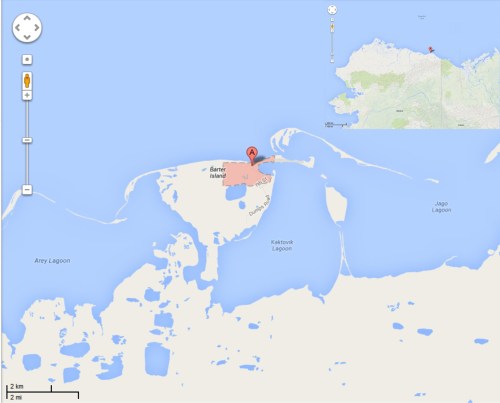
Residents of Kaktovik (see map below) have unwittingly enticed these polar bears ashore and now must deal with the consequences. As the residents of Churchill discovered decades ago, having polar bears close to your community comes with benefits, problems – and danger.

kaktovik-composite

There is no doubt that Kaktovik has a polar bear problem but it cannot plausibly be blamed on anthropogenic global warming, retreating sea ice, or starving bears – an irresistible attractant close to the community is the cause and solutions must be found to keep residents safe and their food secure. The PBS article discusses a few of those solutions. Some quotes and background below.

Continue reading

Arctic sea ice grows & Churchill polar bears into their 4th month of fasting

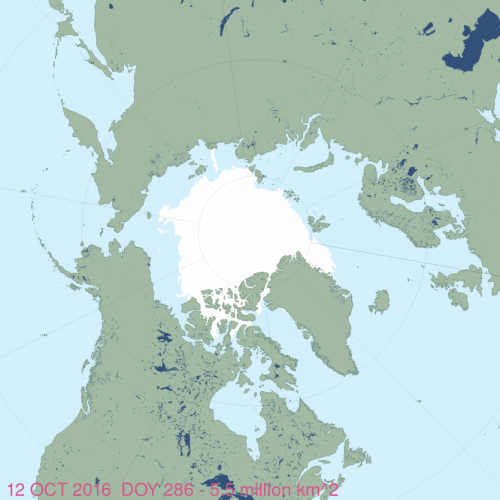
A quiet year for problems in the polar bear capital of the world (Churchill, Manitoba) so far – despite this year tying for the second-lowest minimum since 1979 – and the ice is growing fast. In fact, Arctic ice growth in the second half of September was rapid and there is now more ice than there was at this date in 2007 and 2012 (when polar bears in those regions considered most at risk did not die off in droves).

masie_all_zoom_4km-2016-oct-12

Pessimistic polar bear specialists are wrong  – polar bears are much more resilient to low sea ice levels in summer than they assume: their own data from low summer ice years proves it.  If you’ll recall from my previous post, polar bears seem to have barely survived the extensive sea ice coverage during the Last Glacial Maximum – in other words, too much ice (even over the short term) is their biggest threat. Polar bear numbers, as confirmed by the latest estimates in the 2015 IUCN Red List assessment, are higher now than they have been since the 1960s, despite almost 10 years of summer sea ice minimums below 5.0 mk2.

Churchill Polar Bear Alert reports and Arctic sea ice comparisons at this date, in detail below.

Continue reading

Tracking Western Alaskan polar bears in the Beaufort in Sept – all 3 chose Canada

All three polar bear females tagged in the Southern Beaufort Sea far west of Kaktovik (near Barrow) spent all or most of September onshore in the Northern Beaufort area of Canada.

beaufort-tracking-usgs-bear-movements-september-2016-lg-closeup

Continue reading

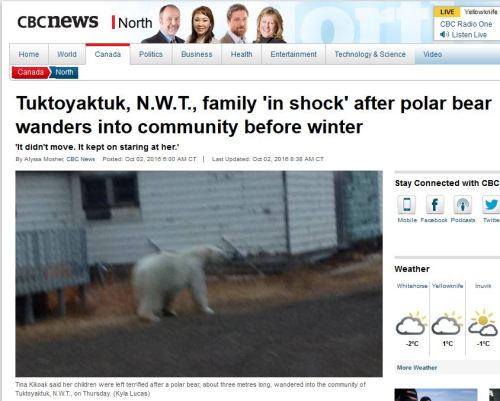
Polar bear onshore in Tuktoyaktuk got so close to kids they heard it breathing

A report from the CBC this morning (with video) of a large polar bear wandering about the village of Tuktoyaktuk on the (Canadian) shore of the Eastern Beaufort Sea on Thursday (29 September) that got very close to a group of children playing outside. Fortunately, no one was hurt.

tuk-polar-bear-sighting-sept-29_cbc-oct-1-2016-headline

That this was a rare event is evident in the awe and excitement in the voices of the residents as someone recorded the movements of the bear through town (picture quality is not the best, but clear enough).

As I’ve said before, with more bears we can expect more interactions with people and more sightings like this that haven’t happened in decades. Map and quotes below.
Continue reading