Tag Archives: facts

Nunavut survivor describes what a polar bear attack is like

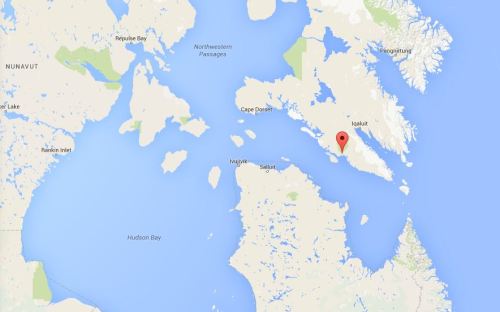
From NunatsiaqOnline yesterday, a detailed description of a polar bear attack that took place along Hudson Strait, within the Davis Strait polar bear subpopulation.

Kimmirut Nunavut_Google maps

Kootoo Shaw was wearing nothing but long johns and a T-shirt when a 400-pound polar bear dragged him by his toes along the tundra towards the ocean outside Kimmirut in September 2003.

Shaw, 46, was working as a guide on a sport-hunting trip when the attack occurred in the early morning. Continue reading

Paleoclimate + genetic study confirms: Arctic species adapted to sea ice changes

A new paper that combines paleoclimatology data for the last 56 million years with molecular genetic evidence concludes there were no biological extinctions [of Arctic marine animals] over the last 1.5M years despite profound Arctic sea ice changes that included ice-free summers: polar bears, seals, walrus and other species successfully adapted to habitat changes that exceeded those predicted by USGS and US Fish and Wildlife polar bear biologists over the next 100 years.

Healy Aug  24 2015 Polar-Bear V Tim Kenna

Cronin, T. M. and Cronin, M.A. 2015. Biological response to climate change in the Arctic Ocean: the view from the past. Arktos 1:1-18 [Open access] http://link.springer.com/article/10.1007/s41063-015-0019-3

Thomas Cronin is a USGS paleoclimatologist at the Eastern Geology and Paleoclimate Science Center, and Matthew Cronin is a molecular geneticist at the University of Alaska Fairbanks (see previous posts here and here about Matt’s work on the genetics of polar bear evolution).

From the Abstract:

Arctic climatic extremes include 25°C hyperthermal periods during the Paleocene-Eocene (56–46 million years ago, Ma), Quaternary glacial periods when thick ice shelves and sea ice cover rendered the Arctic Ocean nearly uninhabitable, seasonally sea-ice-free interglacials and abrupt climate reversals.

The final discussion and two summary graphics from this paper (copied below) are especially useful:

Continue reading

Davis Strait polar bear habitat well above average for the first week of winter

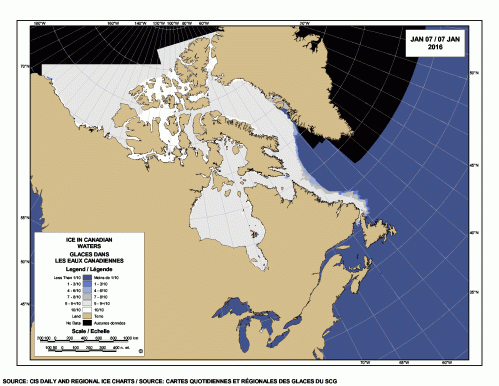
The region inhabited by the Davis Strait subpopulation of polar bears dips as far south as James Bay and has a history of highly variable sea ice coverage.

Canadian Arctic Jan 7 2016_CIS

For the last two years Davis Strait sea ice in March has been well above average, while other years it been well below. You might be surprised to hear that 1969 had the lowest February/March ice coverage over the entire the 1969-2002 record (Johnston et al. 2005: 211), which ice charts show now extend to 2015 (see below). Reports of sealers working north of Newfoundland and in the Gulf of St. Lawrence in the first few decades of the 20th century show this variability has likely always been a characteristic of the area (Ryan 2014).

Remarkably, this year’s ice coverage for the first week in January is well above what they were in 2014 and 2015 – even though those two years were above average by March. In fact, there hasn’t been this much polar bear habitat in the Southern Labrador Sea in the first week of January since at least 1993.
Continue reading

Tracking polar bears in the Beaufort Sea – one tagged bear left at year end 2015

I’ve combined the months of November and December for this post on USGS polar bear tracking in the Beaufort Sea because there’s not much to tell: there’s one tagged bear left and she’s going almost nowhere. Where’s the news in that?

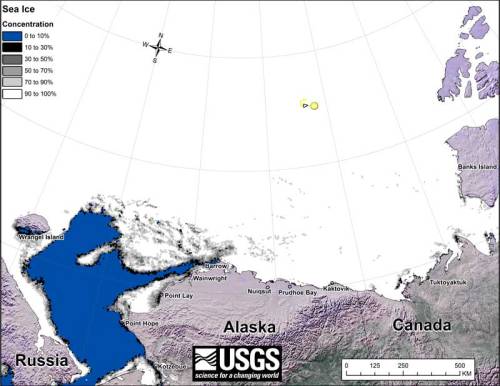
Beaufort tracking USGS bear-movements-November 2015 sm

Movements of 1 satellite-tagged polar bear female for the month of November, 2015; shown with sea ice coverage at 30 November 2015. This bear was tagged in the spring of 2015 in the Southern Beaufort Sea. See original image here and December movements below.

Actually, it does tell us something: this female is probably in a sea ice den, a relative common phenomenon in the Beaufort Sea. And she’s on ice that’s out over very deep water. Continue reading

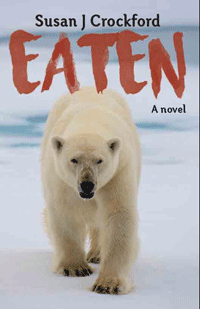
2015 was a great year for polar bears and for EATEN

Not only did we see plenty of great news about polar bears but EATEN (my first novel) is now well on it’s way to being a resounding success. Don’t let your friends and colleagues have all the nightmares! Fabulous read for a long cold NH winter’s night but also an excellent choice for the beach…perhaps fewer nightmares?

polar_bear570  ONTARIO MINISTRY OF NATURAL RESOURCES

The Canadian Ice Service predictions for winter 2016 off eastern Canada (where my novel takes place) is for extensive ice for the third year in a row. That means only nine years to go for the situation in 2025 to meet my speculations regarding a most terrifying onslaught of starving polar bears in Newfoundland.

I don’t ask for donations here at PolarBearScience – if you appreciate my efforts (418 posts and almost 630,000 views since late July 2012) and would like to see more of the same, please buy a copy or two of my book (and don’t forget to go back and leave a brief review; only the number of stars count). Paperback editions here and here; Ebooks for immediate gratification (Kindle; All other e formats).

EATEN-cover-front_thumbnail

In 2015, the Arctic Fallacy was exposed, there were official admissions of population increases (here and here) – all after we had Twenty Good Reasons Not to Worry About Polar Bears.

More of the same for 2016!

A heartfelt Happy New Year to you and yours, from a Canadian zoologist not afraid to wonder ‘what if’ but honest enough to call the output fiction.

Susan

Survey Results: Svalbard polar bear numbers increased 42% over last 11 years

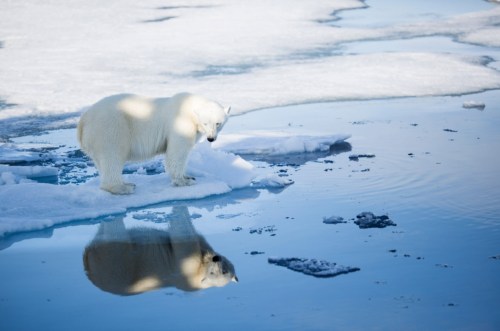
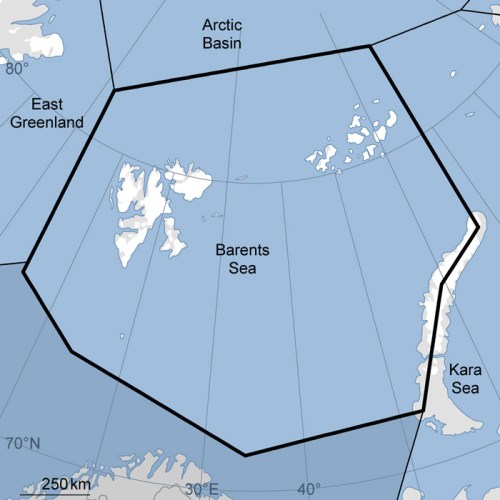
Results of this fall’s Barents Sea population survey have been released by the Norwegian Polar Institute and they are phenomenal: despite several years with poor ice conditions, there are more bears now (~975) than there were in 2004 (~685) around Svalbard (a 42 30% increase) and the bears were in good condition.
Svalbard polar bear fall 2015_Aars

Oddly, in a September report right after the count, biologist Jon Aars reported them in “excellent” condition, with some of them “as fat as pigs.” I guess “good” is the same as “excellent.”

Bears in the Russian portion of the Barents Sea were not counted this year because the Russians would not allow it; the previous total count, from 2004, was 2,650 (range ~1900-3600) for the entire region.
map-BarentsSea

In the map above (courtesy the IUCN Polar Bear Specialist Group), the Svalbard archipelago is on the left (Norwegian territory) and the archipelagos of Franz Josef Land and Novaya Zemlya on the right (Russian territory).

Oddly, the comments made by lead researcher Jon Aars to a Norwegian newspaper (in English), which picked this up yesterday (“Polar bears make a comeback” ), were far more positive than those in the press release (which is likely all that western media will see).

UPDATE 24 December 2015: The new population survey number for Svalbard is actually a 42% increase over the 2004 number. Thanks to Arvid Oen, a WUWT reader, for alerting Anthony Watts to the error, and to Anthony for passing it along. Title and text fixed accordingly, apologies to any others who have picked this up. Cheers and Merry Christmas.

Continue reading

Some polar bears make poor choices, like this one in James Bay

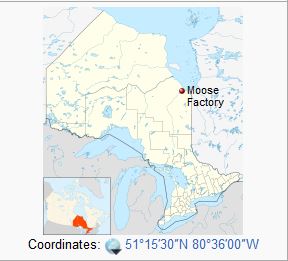
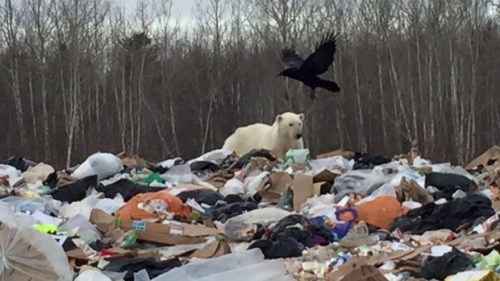
CBC reported this morning that a polar bear was shot last Friday (18 December) at the dump in Moose Factory, Ontario – long past the date when bears in Southern Hudson Bay are usually out on the ice. But a single bear in trouble does not spell catastrophe for the species or the local population: how many times does this need to be said?

Moose Factory_Wikipedia

Claims of “almost no ice” seem a bit disingenuous, since this seems to be the only bear caught in this situation (if there are others, no one has reported it): other bears appear to have either made use of the ice that was present (see map below) or walked north until they found more ice. This bear (picture below) seems to have decided that the fare on land might do for a while longer, which suggests he’s either a subadult bear (with little experience) or an old one – looks like the former to me in the picture below but the report doesn’t say.

Moose Factory_polar-bear-in-dump_CBC Dec 22 2015

Continue reading

Organizations fail to acknowledge 2015 Red List polar bear assessment info

You have to know that the 2015 IUCN Red List assessment for polar bears contains good news because no one is talking about it – and none of the online information sources I’ve checked have updated their polar bear profiles to reflect it.

For all its flaws (including the deceptive focus on summer sea ice), this Red List update is the most statistically robust, in-depth study of the conservation status of polar bears – why is it being ignored, especially by the conservation organizations people turn to for information online?

UPDATE: see 18 January 2016 post here.

Continue reading

Hungry polar bear attacks: why my novel “Eaten” is set in early March

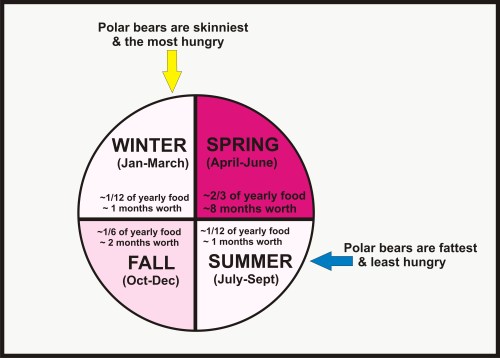
As I’ve pointed out previously, polar bears are leanest – and thus, hungriest and potentially the most dangerous to humans – at the end of winter (i.e. March).

Polar bear feeding by season simple_Nov 29 2015

That is why the unexpected prospect of hundreds of lean and hungry polar bears coming ashore in early March hunting available human prey would be a truly terrifying and daunting experience. Such a speculative scenario stands in marked contrast to an actual incident in July that involved a single well-fed bear that attacked a man asleep in a tent because he and his companions had chosen to dismiss the known risk.

Any predatory attack by a polar bear is terrifying but which is potentially the more deadly? One you can reasonably expect (and thus prepare for) or one that comes out of the blue and catches everyone unprepared?
Continue reading