Tag Archives: facts

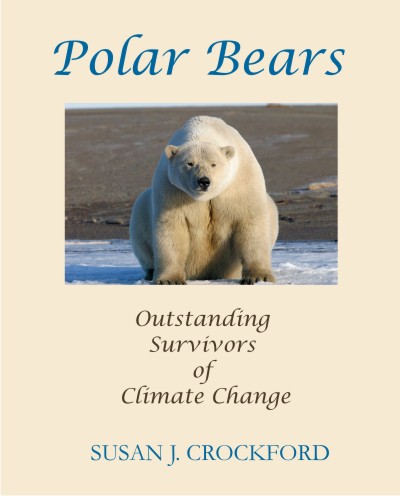
Announcing the release of Polar Bears: Outstanding Survivors of Climate Change

It’s here! The book that explains, in just enough detail, why polar bears are thriving despite the gloomy prognostications of the data collectors and future survivor modelers.

os_small

Here is all the science you need to know to understand contemporary polar bear issues of sea ice loss and species extinction. It contains the most up-to-date information available in an easy to digest format, with references to back it up. Continue reading

As polar bear populations fail to decline with sea ice, message of doom intensifies

If 10 years of summer sea ice levels expected to kill 2/3 of the world’s polar bears by 2050 hasn’t had an impact, why would anyone expect a bit less summer ice will do the job?
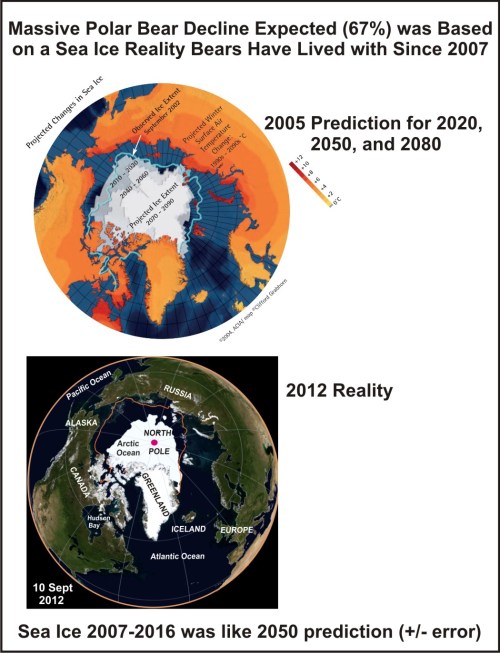
sea-ice-prediction-vs-reality-2012_polarbearscience

The more the polar bears fail to die in droves, the shriller the message from activist polar bear researchers – via willing media megaphones – that the great death of the bears will soon be upon us, just you wait and see!

Some big media guns were out this past week spreading the prophesy of doom fed to them by the polar bear researchers most committed to the “threatened with extinction” narrative: The New York Times, The Atlantic, The Guardian. The desperation is becoming palpable as the public catches on to their epic failure.

In 2007, the sea ice dropped to a level the experts said wouldn’t be reached until mid-century, and since then, it has remained at that low level (about 3-5mkm2, give or take some measuring error). And in 2007, US Geological Survey (USGS) biologists said with absolute confidence that when sea ice levels reached that point, 2/3 of the world’s polar bears would be gone.

No bears at all would remain, they said, in Western Hudson Bay (the Churchill bears), Southern Hudson Bay, Foxe Basin, Davis Strait, Baffin Bay, Southern Beaufort, Chukchi Sea, Barents Sea, Kara Sea, and the Laptev Sea:  ten out of 19 subpopulations would be extirpated if sea ice levels in most years dropped to the summer lows in the 3-5 mkm2 range.

On the basis of that prediction, polar bears were declared ‘threatened’ with extinction by the US Fish & Wildlife Service (USFWS) under the Endangered Species Act (ESA).

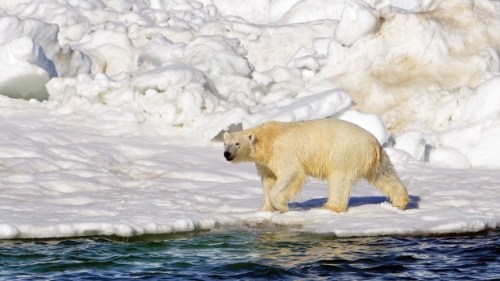
But nothing of the kind happened. There are still lots of polar bears – and not even struggling-to-survive bears but lots of fat healthy bears everywhere across the Arctic, in what were considered by USGS biologists to be the most vulnerable regions of all: Western Hudson Bay (i.e., Churchill), Chukchi Sea and Southern Beaufort (Alaska) and the Barents Sea (Norway).

This is the truth the world needs to hear: the experts were wrong. Polar bears have not been driven to the brink of extinction by climate change, they are thriving. This is the message of each of my two new books (one of which is appropriate for kids of all ages, see the sidebar).

In turns out that polar bears are much more resilient to changing levels of sea ice than data collectors assume and the proof is in the current healthy populations everywhere. Continue reading

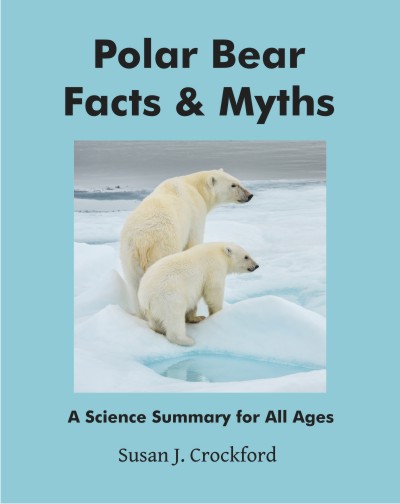
Polar Bear Facts & Myths now available and may arrive in time for Christmas

The first science book suitable for kids that tells the whole truth about polar bears and climate change is now for sale at Amazon.

fm_small

This beautiful, full color summary (44 pages, 8 x 10 inches) explains in simple terms why polar bears are thriving despite the recent loss of Arctic sea ice. It’s written in a question and answer format, in language that readers of all ages can understand (age 7 and up). The book takes a sensible, big-picture approach that many readers will appreciate and is based on the most up-to-date information available.

This is the perfect gift for some of the polar bear lovers on your gift list and if you act quickly (order here), your book may arrive before the 25th. At this time, only the paperback is available but some ebook versions should be out shortly. 

For purchasers for which a pre-Christmas delivery isn’t going to work (publication will be later in Europe; shipping is faster to eastern Canada and the US than to the west), I have provided a gift card you can download to print off and give in lieu of the physical book (kind of a placeholder until it arrives).

UPDATE: 18 Dec. 2016 Now listed at Amazon Canada and Amazon UK

Download gift card PDF HERE for Polar Bear Facts & Myths

Download gift card PDF HERE for Polar Bears: Outstanding Survivors of Climate Change  (coming soon, see below).

[Download Christmas gift cards, one per page, for both books here]

Check my book website for updates.

For adults & high school students (coming soon Now available)

os_small

This color, fully-referenced polar bear science book is aimed at adults and high school students. Polar Bears: Outstanding Survivors of Climate Change is fashioned after the popular lecture with the same title I have given since 2009, which has been enthusiastically received by audiences with diverse backgrounds.

My book website now has full details of these new non-fiction books (along with a revised author biography) and will be updated regularly regarding formats and venues as they become available. Details for EATEN on that site has moved to its own fiction page.

Coming soon: the polar bear science books you’ve been requesting

It’s just past the first anniversary of the publication of my science-based novel, EATEN, so satisfied readers may be pleased to learn that I have a pair of polar bear science books set to be released.

Finally – books for adults and children that present the facts about polar bears without spin and fear-mongering about model-predicted futures: reference books that include the most up-to-date information that show polar bears have the innate ability to adapt quickly to changes in sea ice.

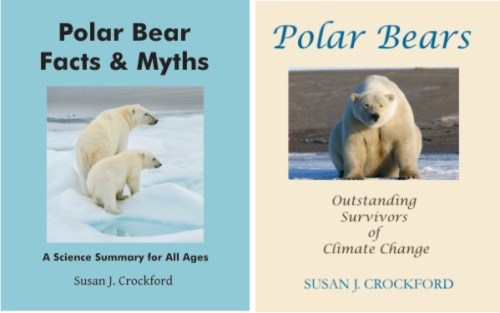
Barring major revisions, the covers will look like this:

os-and-fm-cover-drafts-14-dec-2016

One is a fully-referenced book for adults and high school kids called Polar Bears: Outstanding Survivors of Climate Change.

The other is a fabulous companion or stand-alone summary volume (ages 7 and up), called Polar Bear Facts and Myths: A Science Summary for all Ages..

Both books are full-color and relatively short. With luck, they should be available next week, so stay tuned for details. Each will sell for well under US$20 (exact prices unknown).

Continue reading

History of anxiety over sea ice gets a video

A brief historical perspective on the failed predictions that have plagued scientific understanding of Arctic sea ice changes – predictions embraced wholeheartedly by polar bear specialists and conservation experts. It’s worth a watch.

Transcript here from the Global Warming Policy Foundation.

Tracking west Alaskan polar bears in the Beaufort in October – all at Banks Is., CAN

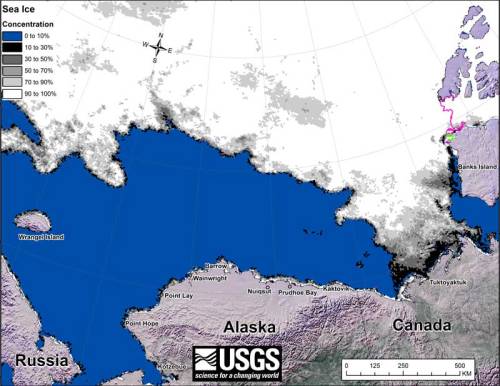
polar-bear-habitat_usgs-from-cbc-story-sept-19-2015

Two out of three polar bear females that were collared by USGS researchers near Barrow, Alaska last spring are hanging out on the northwest coast of Banks Island, Canada. The other bear (bright green icon) appears to have been collared on the ice off Prudoe Bay in April. And as I discussed last month, it’s unusual for bears from the western end of the Southern Beaufort subpopulation (or even the central region) to end up in the Northern Beaufort subpopulation territory.

beaufort-tracking-usgs-bear-movements-october-2016-sm

Original caption: “Movements of 3 satellite-tagged polar bears for the month of October, 2016. Polar bears were tagged in 2016 on the spring-time sea ice of the southern Beaufort Sea. All 3 of these bears have satellite collar transmitters. Polar bear satellite telemetry data are shown with AMSR2 remotely-sensed ice coverage from 29 October, 2016.” See full resolution image here and close-up below.

Continue reading

If experts had been right about sea ice, there would be no polar bears in Churchill

The simple fact is that if polar bear experts had been right about the threat to polar bears from the loss of summer sea ice in the Arctic, there would be no polar bears in Churchill this fall. No bears for tourists to photograph, none for biologists to study, and certainly none for the BBC to film for an upcoming three-part TV special called “Arctic Live.

polar-bear-stock-image-gg66298544_sm

The low-ice future that biologists said would doom polar bears to extinction by 2050 has already happened in 8 out of the last 10 years. The sea ice future has been realized.

Polar bears have experienced those supposedly deadly low-ice summers for almost a decade but the global population did not drop by 2/3 as predicted and not a single one of the ten subpopulations predicted to be extirpated under those conditions has been wiped out.

How much more wrong can you be than that? Will the BBC mention this conundrum in their show? Will the polar bear experts they consult share this fact with viewers? We’ll all have to watch and see [show times and summaries of each program here, 1-3 November] but here are some background facts that might enhance your viewing experience.

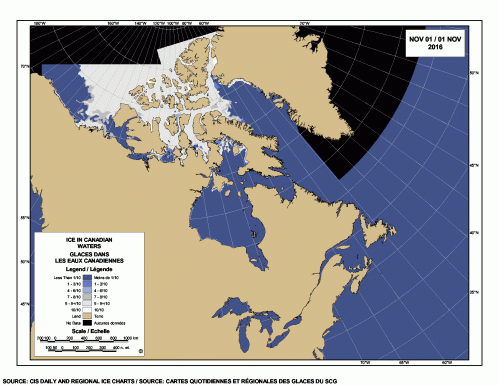
UPDATE: Sea ice condition of Hudson Bay at 1 November 2016 below from the Canadian Ice Service (some slushy ice looks to be forming along the coast north of Churchill – this is how freeze-up starts). See the animation for the last 10 days here:

sea-ice-extent-canada-2016-nov-1_cis

Continue reading

Kaktovik, AK has a polar bear problem but not because bears are desperate for food

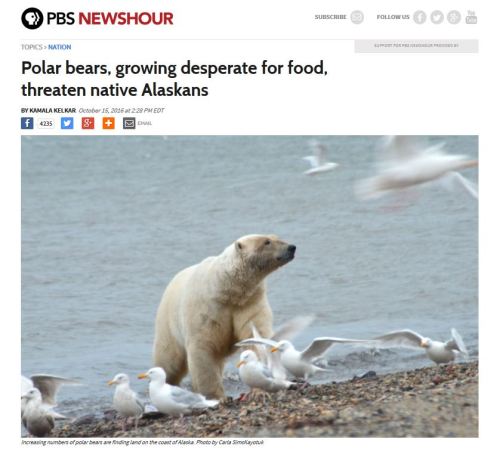
PBS has published a bizarre poor-starving-polar-bears story that uses pictures of fat, healthy bears to illustrate the supposed desperation of malnourished bears of the Southern Beaufort Sea that is blamed on declining sea ice.

pbs-newshour-headline_15-october-2016

The photo of the fat bear above, taken by the Kaktovik resident quoted in the 15 October 2016 PBS story, Polar bears, growing desperate for food, threaten native Alaskans, accompanies this statement:

“While images of malnourished polar bears have become a national symbol of the effects of climate change, they are a front line reality for Native Alaskans, who face them on their own property and do not want them to get hurt.”

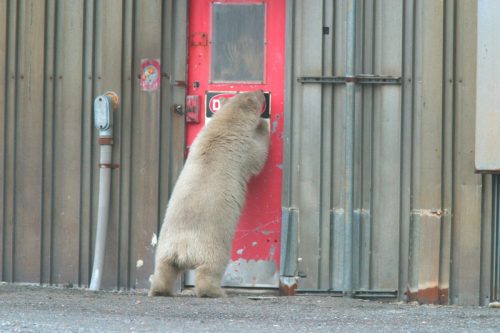
Except this is not a story about starving bears but too many fat bears hanging around one particular community looking for other kinds of food – after being lured in by the enticing smell of rotting whale meat left onshore by the residents.

If photos of starving Beaufort bears existed that PBS could have used to illustrate this story, I’m certain those photos would have been used. But virtually all of the pictures I’ve seen of Kaktovik bears are the epitome of health – fat and sassy – but none that could be described as starving.

polar_bear-US FWS_young bear Alaska maybe Kaktovik no date.jpg

It turns out that while native Kaktovik residents have profited from tourists and journalist who have shown up in droves to view the large numbers of bears attracted to the bone piles left after butchering summer-caught bowhead whales, the bears have also put the community at risk of personal attack and loss of stored food. Who would have thought?

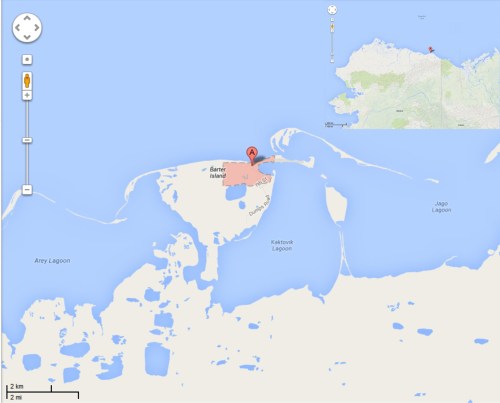
Residents of Kaktovik (see map below) have unwittingly enticed these polar bears ashore and now must deal with the consequences. As the residents of Churchill discovered decades ago, having polar bears close to your community comes with benefits, problems – and danger.

kaktovik-composite

There is no doubt that Kaktovik has a polar bear problem but it cannot plausibly be blamed on anthropogenic global warming, retreating sea ice, or starving bears – an irresistible attractant close to the community is the cause and solutions must be found to keep residents safe and their food secure. The PBS article discusses a few of those solutions. Some quotes and background below.

Continue reading

Arctic sea ice grows & Churchill polar bears into their 4th month of fasting

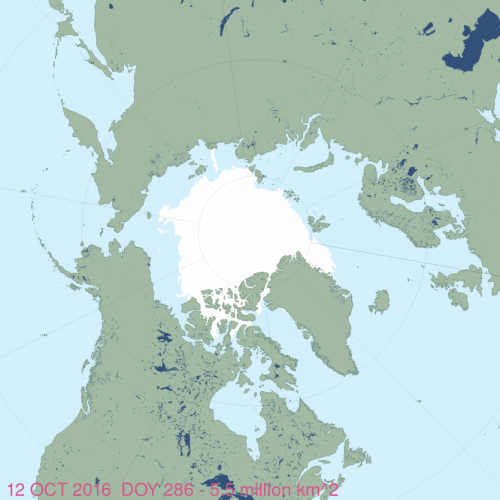
A quiet year for problems in the polar bear capital of the world (Churchill, Manitoba) so far – despite this year tying for the second-lowest minimum since 1979 – and the ice is growing fast. In fact, Arctic ice growth in the second half of September was rapid and there is now more ice than there was at this date in 2007 and 2012 (when polar bears in those regions considered most at risk did not die off in droves).

masie_all_zoom_4km-2016-oct-12

Pessimistic polar bear specialists are wrong  – polar bears are much more resilient to low sea ice levels in summer than they assume: their own data from low summer ice years proves it.  If you’ll recall from my previous post, polar bears seem to have barely survived the extensive sea ice coverage during the Last Glacial Maximum – in other words, too much ice (even over the short term) is their biggest threat. Polar bear numbers, as confirmed by the latest estimates in the 2015 IUCN Red List assessment, are higher now than they have been since the 1960s, despite almost 10 years of summer sea ice minimums below 5.0 mk2.

Churchill Polar Bear Alert reports and Arctic sea ice comparisons at this date, in detail below.

Continue reading

In case you missed it…writer James Delingpole puts my novel in context

From Saturday 8 October, English journalist, author and broadcaster James Delingpole (via his Breitbart column) writes about polar bears:

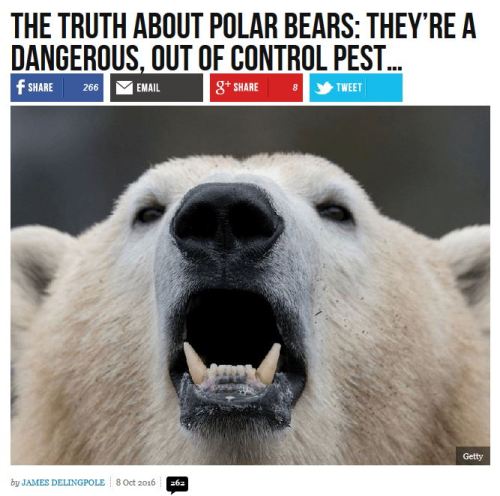
delingpole-8-oct-2016-headline

The Truth About Polar Bears: They’re a Dangerous, Out of Control Pest…

Crockford is the author of a Jaws-style thriller on ravenous polar bears killing humans called Eaten. At least one polar scientist who has read it considers its “science-based scenario” to be frighteningly plausible.

In field-level polar bear management circles, people don’t talk about the kind of scenario that forms the premise of this novel as an “if”. Instead, they describe it as a “when” and they are not looking forward to it.

Eek.

Eek is right! The book has been nightmare-inducing for many readers. Put EATEN on your Christmas shopping list (all purchase options here). It makes a great gift and supports the work I do here. Colleagues have said their young adult children really enjoyed it.

[I’m reminded of Christmas since we had turkey for Canadian Thanksgiving this weekend – a fabulous gathering of all the local family at my place, including the two (!!) grandbabies, both of whom are now walking. I’ll be sending Nico to Churchill before you know it]

[And FYI, I’ve updated the Svalbard “problem no one is talking about” post with statistics by year (1974-2015) for polar bears killed to protect life and property]