Tag Archives: freeze-up

Western & Southern Hudson Bay polar bears experience earliest freeze-up in decades

This is shaping up to be one of the shortest ice-free seasons in at least 20 years for both Western and Southern Hudson Bay polar bears.

Hudson Bay sea ice at 2 November 2020. NSIDC Masie chart.

Last week, sea ice started forming along the shore of Hudson Bay, from the north end all the way south into James Bay. So far, the shorefast ice that’s forming is only a narrow strip along the coast but is thickening and becoming broader each day, which means that unless something changes dramatically, the bears should all be on the ice at the end of the week, an exodus from shore that hasn’t happened this early in WH since 1993 (the earliest since 1979).

The last WH tagged polar bear didn’t leave the ice this year until 21 August, which means if it’s on the ice by the end of this week it will have spent only 11 weeks onshore – less than 3 months. Even the first bears that came ashore in mid-July will have only spent about 16 weeks on land – at least a month less than they did a decade ago (Stirling and Derocher 2012). Four months spent ashore was the historical average for Western Hudson Bay bears in the 1970s and 1980s (Stirling et al. 1977, 1999). This year, most polar bears will have spent only about 13-14 weeks on land because they did not come ashore until early August.

UPDATE 8 November 2020: Report from Churchill area polar bear guide Kelsey Eliasson, via Facebook Saturday 7 November: “Most bears have left on the ice – including peanut – but still some stragglers” [Peanut’ is a well-known female who has two cubs this year]. See below for sea ice chart for 8 November shows broadening band of grey ice clearly thick enough to support the weight of adult bears (and the same thing is happening in Southern Hudson Bay):

Hudson Bay North daily stage of development 2020 Nov 8_all grey ice

Continue reading

Potential impact of the second-lowest sea ice minimum since 1979 on polar bear survival

The annual summer sea ice minimum in the Arctic has been reached and while the precise extent has not yet been officially determined, it’s clear this will be the ‘second lowest’ minimum (after 2012) since 1979. However, as there is no evidence that polar bears were harmed by the 2012 ‘lowest’ summer sea ice this year’s ‘second-lowest’ is unlikely to have any negative effect.

This is not surprising since even 2nd lowest leaves summer ice coverage in the Arctic at the level sea ice experts wrongly predicted in 2005 wouldn’t be seen until 2050 (ACIA 2005; Amstrup et al. 2007; Wang and Overland 2012) and this is the same amount of summer sea ice that polar bear experts incorrectly predicted would cause 2/3 of all polar bears to disappear. My book explains how it all went wrong: The Polar Bear Catastrophe That Never Happened

In this summary of how polar bears have been doing since the the lowest sea ice minimum in 2012, I show that contrary to all predictions, polar bears have been thriving despite reduced summer ice in the Barents, Chukchi and Southern Beaufort Seas, and because of unexpectedly short ice-free seasons in Hudson Bay and less multiyear ice in the Canadian Arctic Archipelago.

UPDATE 21 September (10:20 PT): NSIDC has just announced the Arctic sea ice extent minimum (preliminary) for 2020 at 3.74 mkm2 reached on 15 September. See full report here.

Continue reading

Western Hudson Bay freeze-up earlier than average for 1980s for the third year in a row

This is the third year in a row that freeze-up of Western Hudson Bay (WH) ice has come earlier than the average of 16 November documented in the 1980s. Reports by folks on the ground near Churchill confirm polar bears are starting to move onto the sea ice that’s developing along the shore after almost 5 months on land. After five good sea ice seasons in a row for WH polar bears, this repeat of an early freeze-up means a sixth good ice season is now possible for 2019-2020.

Sadly for the tourists, however, it means the polar bear viewing season in Churchill will be ending early this year, just like it did last year and the year before.

Churchill pbs checking the ice 10 Nov 2019 Amanda Atarling photo

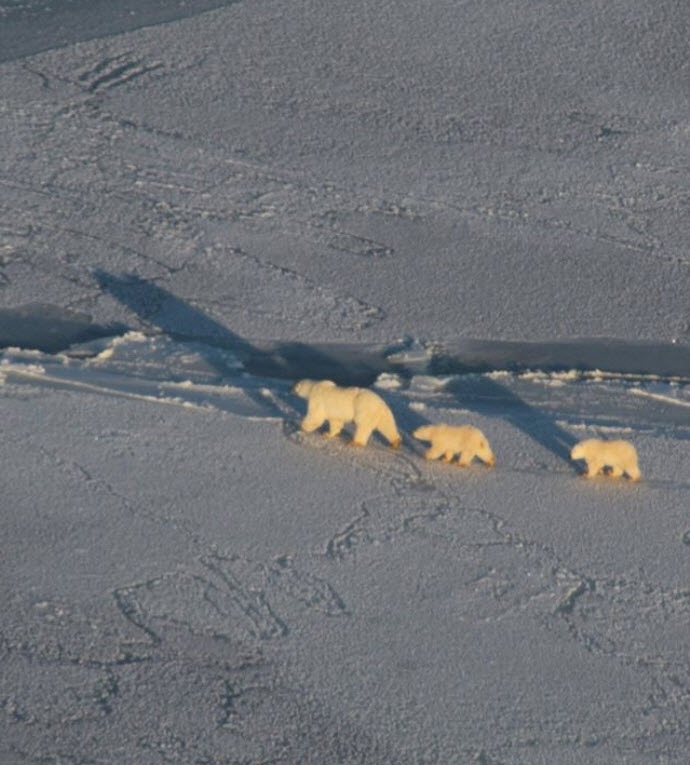
Polar bear family on the ice off Churchill Manitoba (taken from a helicopter), courtesy Explore.org

When mothers with cubs are out on the ice (see photo above), it’s pretty certain the mass movement from land to sea ice is well underway because these family units are usually the last to leave.

UPDATE 19 November 2019: Polar Bear Alert report for 11-17 Nov (week 20) confirms that freeze-up is underway, bears are heading out on the ice and problem bears held in the ‘jail’ were released 13 November. See below.
Continue reading

Polar bear activity picks up in Churchill as W Hudson Bay freeze-up time approaches

This is week 15 for most polar bears onshore near Churchill in Western Hudson Bay, which means they have been onshore for almost 4 months. Still, photos being circulated are still showing bears in excellent condition and we are just waiting to see if freeze-up this year is as early as it has been for the last two years.

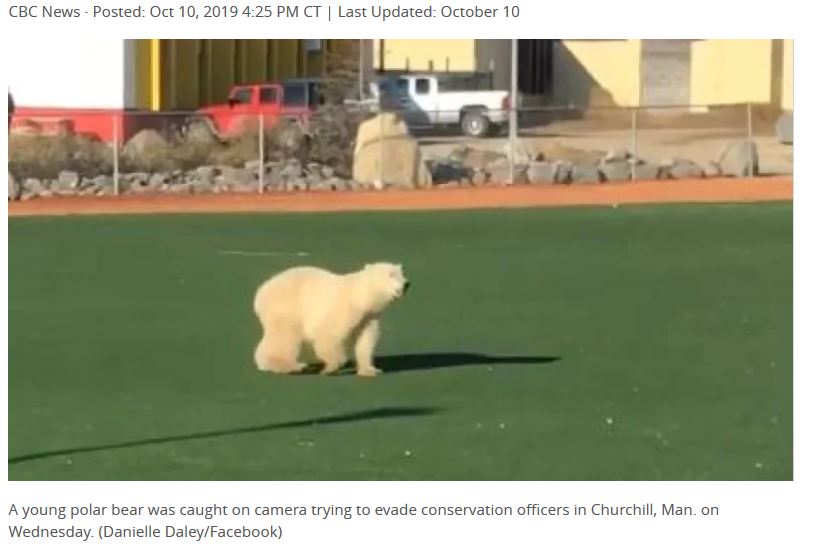
polar bear churchill 9 Oct 2019 Danielle Daley photo

Continue reading

Western Hudson Bay polar bears in great shape after five good sea ice seasons

Polar bear researcher Andrew Derocher says it takes four years of good sea ice conditions to recruit a polar bear from birth but implies that 2019 is the first year in decades that conditions for bears have been ‘good’ in Western Hudson Bay. He thinks he can get away with saying this because he hasn’t published any of the data on body weight and body condition he’s collected on these bears over the last 25 years (apparently, whatever funding agency pays for his research does not require him to publish the data he collects).

But independent observations such as dates of ice freeze-up in fall, ice breakup in summer, dates and condition of bears recorded onshore, suggest he’s blowing smoke: at least five out of five of the last sea ice seasons for WH bears have been good. That means we should be seeing more bears in the next official population count.

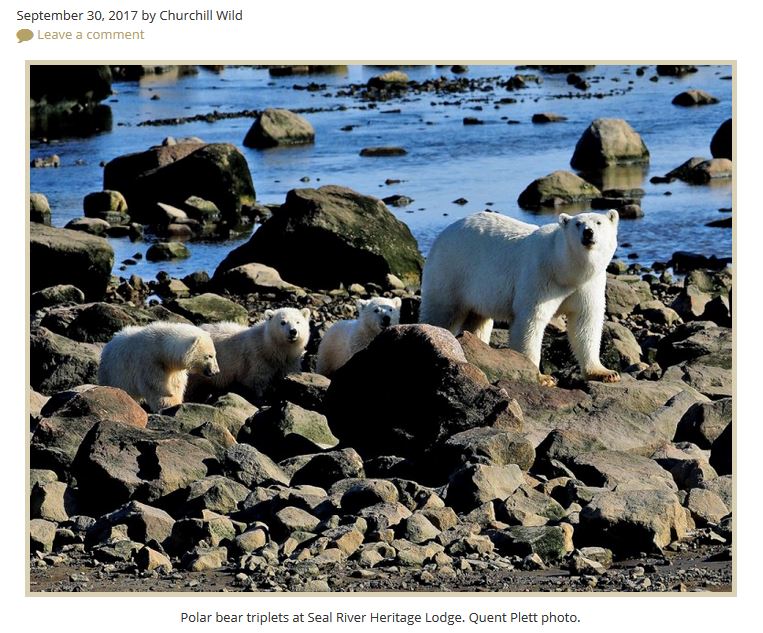
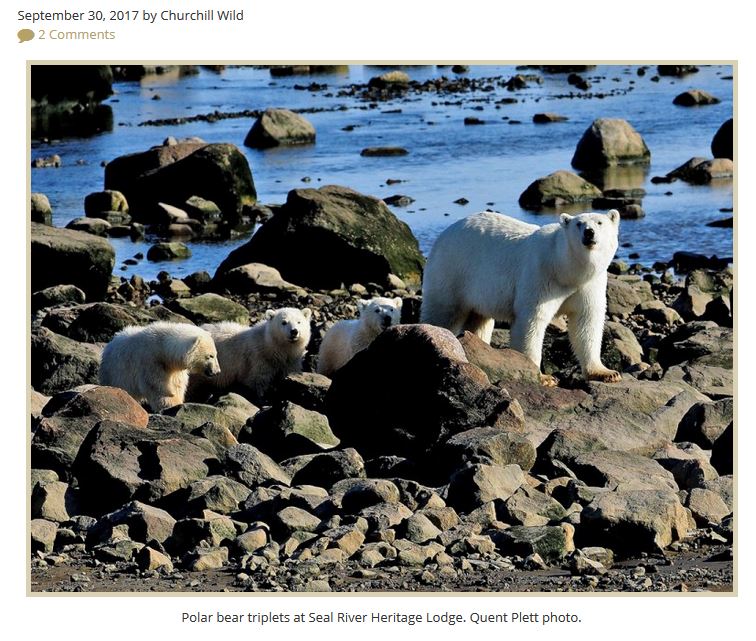
Churchill Seal River Lodge triplets_30 Sept 2017

Continue reading

International Polar Bear Day: a time to admit the species is not threatened with extinction due to reduced sea ice habitat

Times have changed: where once many scientists worried that polar bears could not survive an Arctic with 40% less ice, now the concern is that people of the Arctic might not be able to keep themselves safe from growing numbers of increasingly fearless bears.

International Polar Bear Day is tomorrow, 27 February. It’s a good time to reconsider polar bear conservation in light of current realities. Polar bears are not threatened with extinction by loss of sea ice habitat but continue to thrive in spite of it (Crockford 2017).

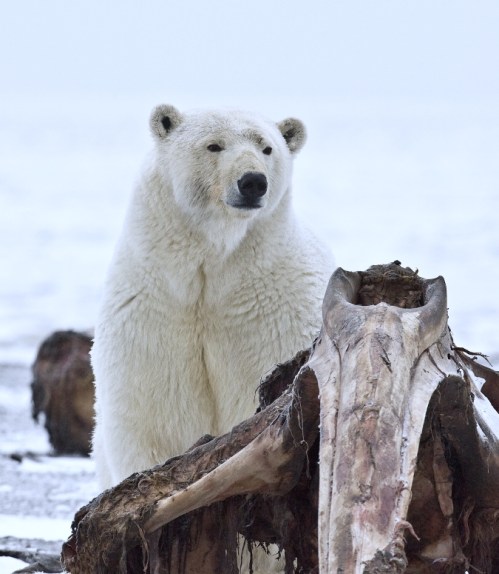
Polar bear Aug 2017 near area where June 19 2018 bear was spotted Gordy Kidlapik

Fat bear in August 2017 outside Arviat, Nunavut. Gordy Kidlapik photo.

Tomorrow, the 2018 State of the Polar Bear Report will be released. But for now, see some of the failed claims below.

Continue reading

CBC hypes “bleak” Churchill polar bear fate with unsupported claims & falsehoods

Over the weekend in Canada, the CBC ran a polar bear news feature that is now available online (“Polar bears in peril: the bleak future of Churchill bears,” The National, CBC, 3 December 2018). It gave polar bear biologist Nick Lunn of Environment Canada free rein to spread unsubstantiated claims and outright falsehoods about the status of Western Hudson Bay polar bears and sea ice. Apparently, he and the CBC learned nothing from National Geographic‘s fiasco over their starving’ polar bear video last year: they still think the public will be swayed to “act” on human-caused global warming if a persuasive expert tells them that polar bears are on their way to extinction. I expect many were convinced otherwise, since the facts are available for all to see.

No triplet litters born since 1996? Nonsense, as the photo below (from 2017) shows.

Triplet litter at Seal River Lodge 2017 Quent Plett photo

The CBC video is described this way:

“They are a majestic icon of Canada’s North, but polar bears have also come to symbolize climate change. And scientists say the future for one particular population of polar bears in northern Manitoba is dire.

Continue reading

W Hudson Bay freeze-up earlier than average for 2nd year in a row, polar bear hunt resumes

This is the second year in a row that freeze-up of Western Hudson Bay ice has come earlier than average. Movement of tagged bears and reports by folks on the ground in WH show some polar bears are starting to hunt seals on the sea ice that’s developing along the shore. It’s unlikely that a strong wind will again blow the newly-formed ice offshore (as happened earlier this year) because the ice is more extensive. It seems polar bear viewing season in Churchill will be ending early this year, just like it did last year.

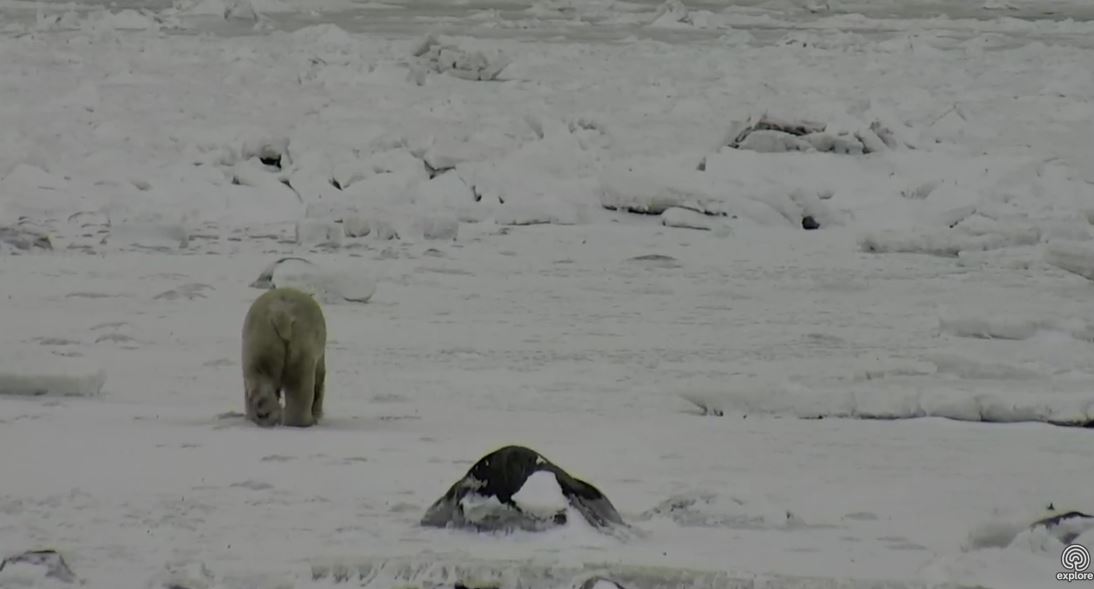
Tundra Buggy Cam_10 Nov 2017_bear headed offshore pm

The 9 November map Andrew Derocher (University of Albera) published on twitter showing tagged and collared polar bear movements on Hudson Bay makes it look like almost no ice is present:

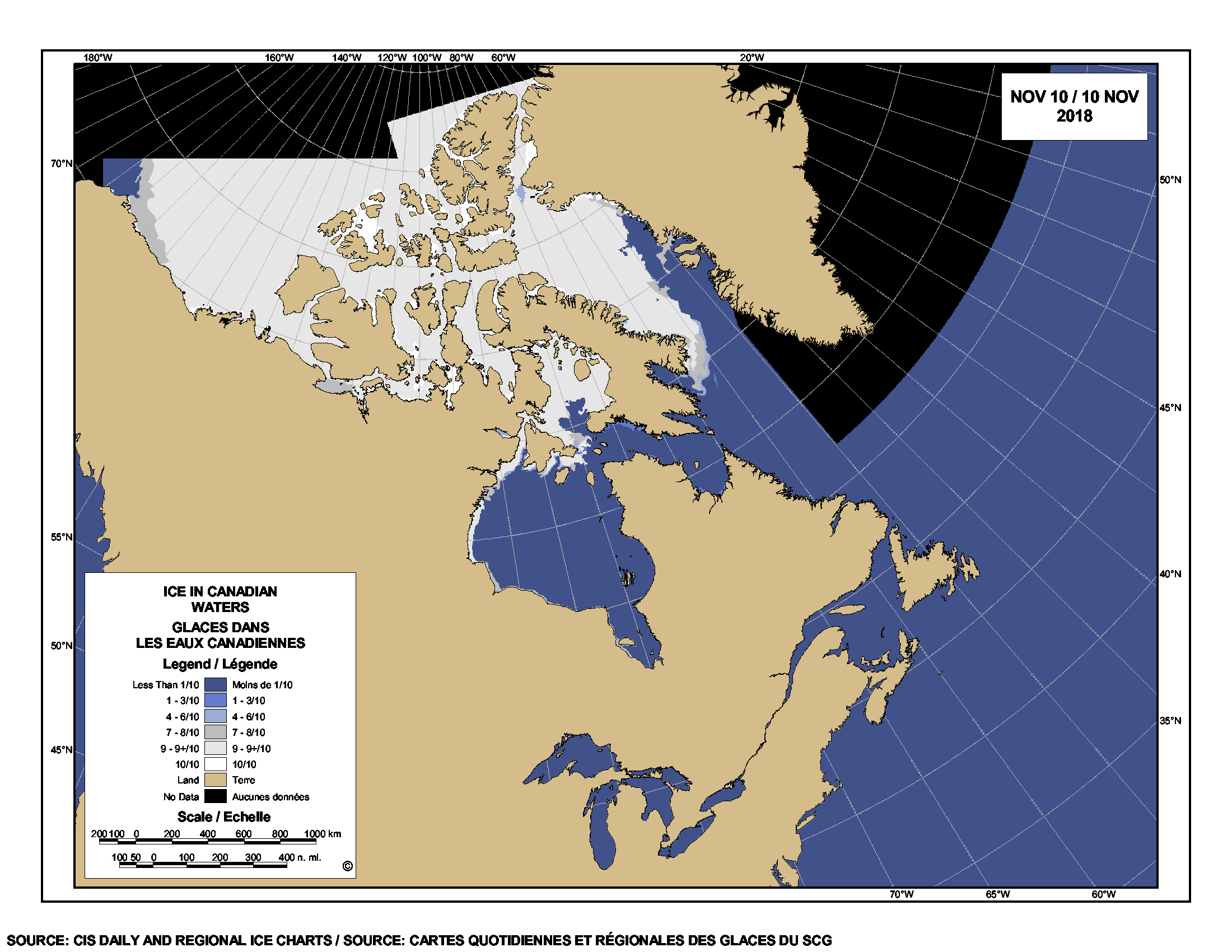
However, the Canadian Ice Service chart for 10 November shows the ice very clearly:

Sea ice Canada 2018 Nov 10

UPDATE 13 November 2018: See more recent ice charts and the latest (November 4-11, week 19) report from the Polar Bear Alert Program in Churchill that confirms the bears are moving offshore.

Continue reading

Fall polar bear habitat update: 3 mkm2 Arctic sea ice increase in the last two weeks

What a difference two weeks make! When the seasonal minimum Arctic sea ice extent occurs in September, polar bear doom-mongers always forget to tell you that within two months, sea ice will return to virtually all regions where polar bears have spent the summer on land, including Hudson Bay. Just as it did in 2007, when polar bears did not die by the thousands due to lack of fall sea ice, polar bear habitat is reforming.

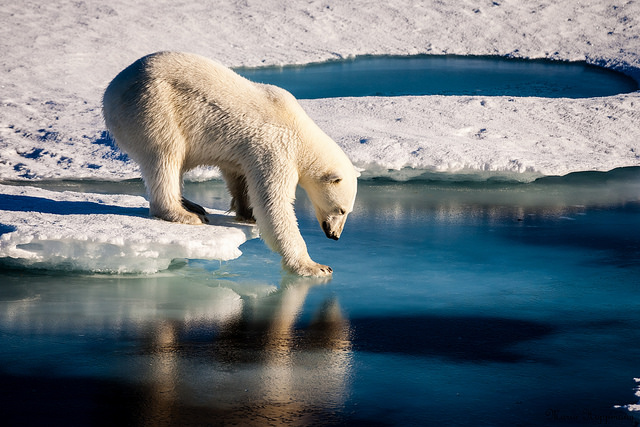
Polar bear tests thin ice_Laidre_UW_no copyright_taken22August2015_sm

This year, the seasonal minimum came on 23 September. Despite the fact that the US National Snow and Ice Data Center proclaimed that “unusual warmth” in the Arctic continued during October, over the last two weeks sea ice expanded from 6 mkm2 to 9 mkm2. At the current rate of ice growth documented by sea ice charts (see below), Arctic sea ice will be wide-spread by 23 November.

Continue reading

New ice on Hudson Bay a week earlier than 2017: another early freeze-up ahead?

Last year, an early freeze-up of Western Hudson Bay sea ice almost ruined the Polar Bear Week campaign devised by Polar Bears International to drum up donation dollars and public sympathy for polar bear conservation. Many bears were on the ice hunting by 7-8 November in 2017 before the celebratory week was done (the average date that bears left the ice in the 1980s): sea ice charts suggest the same may be happening this year.

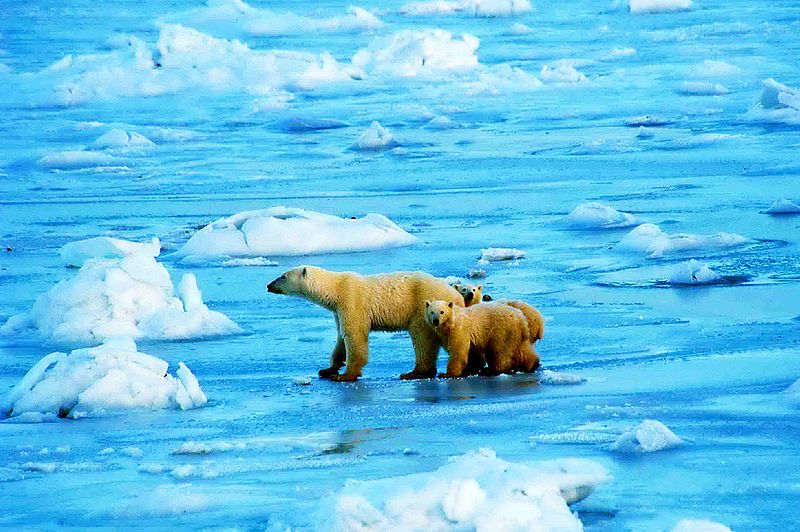
Polar bears off Churchill_2000-11-20_wikipedia

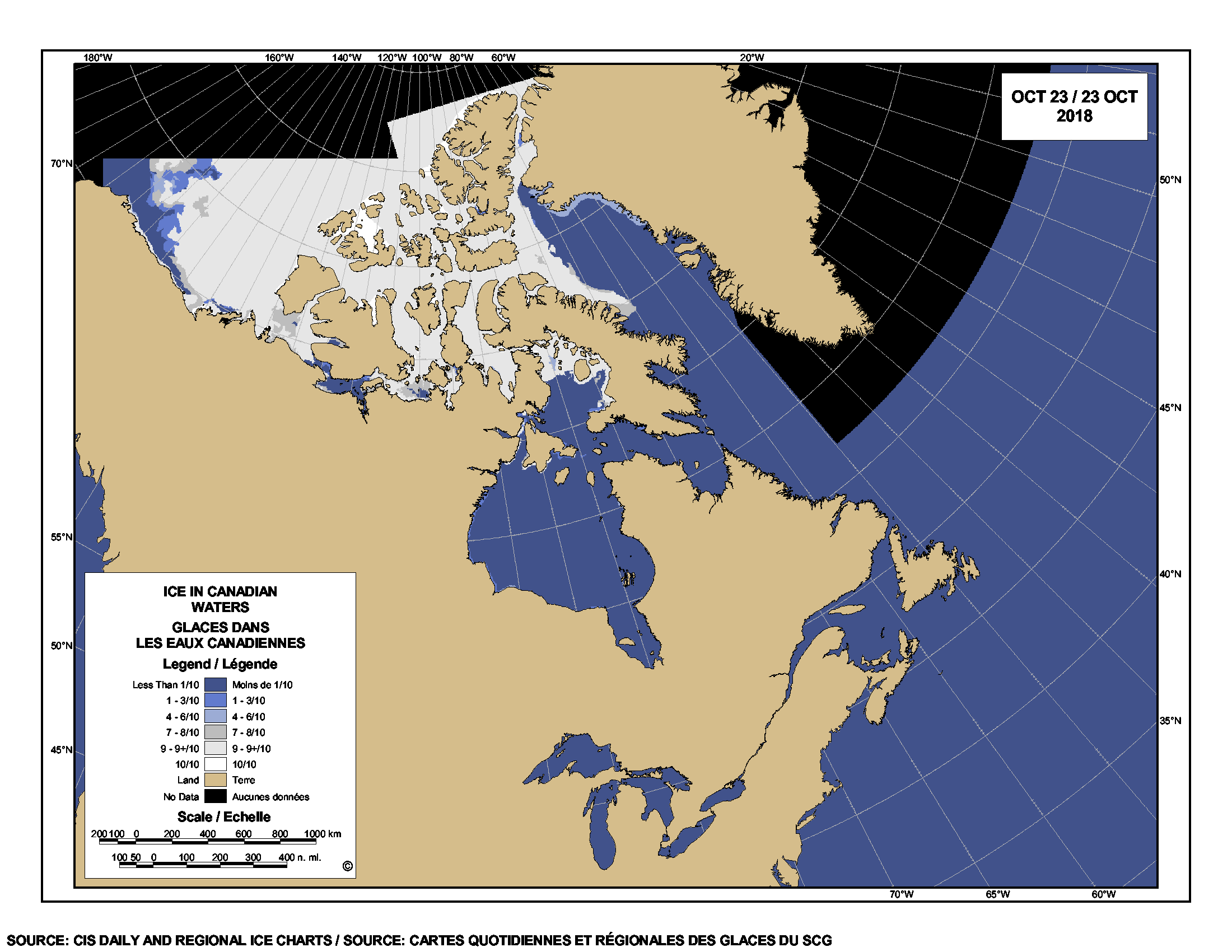
Ice is forming along the Hudson Bay coast more than a week earlier than it was last year (barely discernible on the map below but detailed ice charts show it clearly), consistent with early build-up of ice in the Canadian Archipelago, East Greenland, and Foxe Basin since mid-September.

Sea ice Canada 2018 Oct 23

The question is: will the ice continue to build over the next few weeks or get blown offshore? See the ice charts below for this year and 2017.
Continue reading