Tag Archives: Hudson Bay

W Hudson Bay freeze-up earlier than average for 2nd year in a row, polar bear hunt resumes

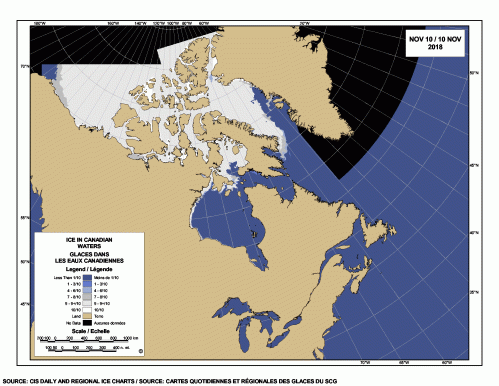
This is the second year in a row that freeze-up of Western Hudson Bay ice has come earlier than average. Movement of tagged bears and reports by folks on the ground in WH show some polar bears are starting to hunt seals on the sea ice that’s developing along the shore. It’s unlikely that a strong wind will again blow the newly-formed ice offshore (as happened earlier this year) because the ice is more extensive. It seems polar bear viewing season in Churchill will be ending early this year, just like it did last year.

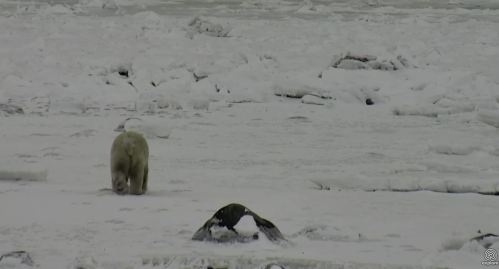
Tundra Buggy Cam_10 Nov 2017_bear headed offshore pm

The 9 November map Andrew Derocher (University of Albera) published on twitter showing tagged and collared polar bear movements on Hudson Bay makes it look like almost no ice is present:

However, the Canadian Ice Service chart for 10 November shows the ice very clearly:

Sea ice Canada 2018 Nov 10

UPDATE 13 November 2018: See more recent ice charts and the latest (November 4-11, week 19) report from the Polar Bear Alert Program in Churchill that confirms the bears are moving offshore.

Continue reading

Fall polar bear habitat update: 3 mkm2 Arctic sea ice increase in the last two weeks

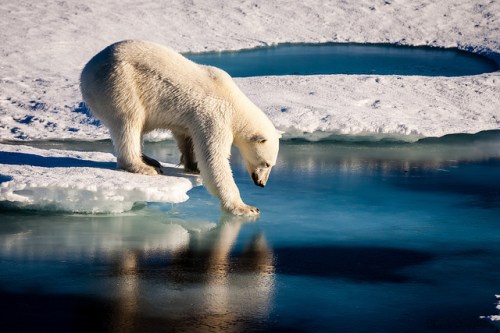
What a difference two weeks make! When the seasonal minimum Arctic sea ice extent occurs in September, polar bear doom-mongers always forget to tell you that within two months, sea ice will return to virtually all regions where polar bears have spent the summer on land, including Hudson Bay. Just as it did in 2007, when polar bears did not die by the thousands due to lack of fall sea ice, polar bear habitat is reforming.

Polar bear tests thin ice_Laidre_UW_no copyright_taken22August2015_sm

This year, the seasonal minimum came on 23 September. Despite the fact that the US National Snow and Ice Data Center proclaimed that “unusual warmth” in the Arctic continued during October, over the last two weeks sea ice expanded from 6 mkm2 to 9 mkm2. At the current rate of ice growth documented by sea ice charts (see below), Arctic sea ice will be wide-spread by 23 November.

Continue reading

Churchill’s polar bear problems took time and money to resolve

Churchill, Manitoba is proud of its management of problem polar bears and rightly so. But it took time and money to implement the solutions that allowed Churchill to function as it does today, and that should be a lesson for other Arctic communities that have only really started to have problems with polar bears in recent years.

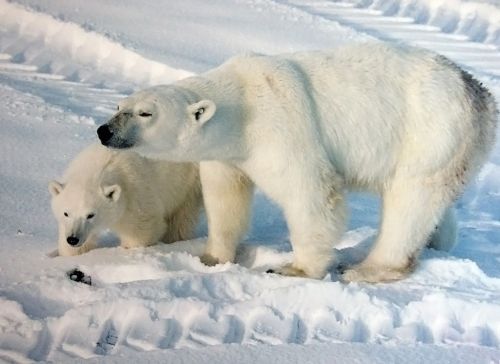
Churchill polar bear_mother_with_cub 2009 Wikipedia

For those who want to understand the problems facing other communities, including Arviat (formerly “Eskimo Point”), a town 260 km north of Churchill. Arviat has a population more than three times the size of Churchill and has been having significant problems with bears since about 2007. I’ve made an excerpt of an excellent paper written by Ian Stirling and colleagues that was published back in 1977 (Stirling et al. 1977).

It describes in detail the problems Churchill had with polar bears in the 1960s and 70s when bear numbers were on the rise — and the various steps that were taken to try and resolve them (even by the time the paper was written, not all of them had been adequately resolved, see Kearney 1989).  It’s a fascinating read — see it here.

Continue reading

New ice on Hudson Bay a week earlier than 2017: another early freeze-up ahead?

Last year, an early freeze-up of Western Hudson Bay sea ice almost ruined the Polar Bear Week campaign devised by Polar Bears International to drum up donation dollars and public sympathy for polar bear conservation. Many bears were on the ice hunting by 7-8 November in 2017 before the celebratory week was done (the average date that bears left the ice in the 1980s): sea ice charts suggest the same may be happening this year.

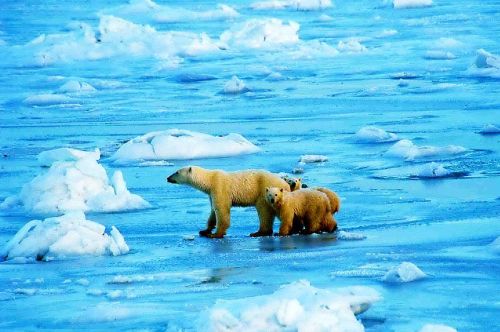
Polar bears off Churchill_2000-11-20_wikipedia

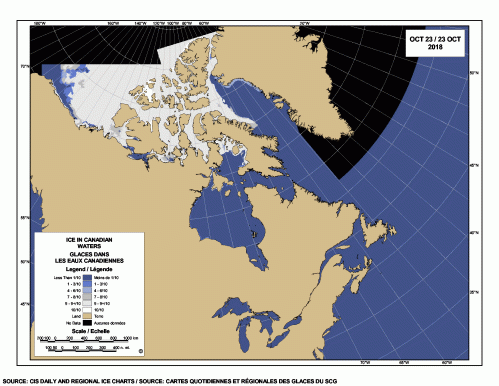
Ice is forming along the Hudson Bay coast more than a week earlier than it was last year (barely discernible on the map below but detailed ice charts show it clearly), consistent with early build-up of ice in the Canadian Archipelago, East Greenland, and Foxe Basin since mid-September.

Sea ice Canada 2018 Oct 23

The question is: will the ice continue to build over the next few weeks or get blown offshore? See the ice charts below for this year and 2017.
Continue reading

Churchill problem polar bear report for week 3, July 23-29 2018

Polar bears that have come off the sea ice of Hudson Bay near Churchill, Manitoba in Western Hudson Bay are apparently in a wide variety of conditions, from very fat to skinny.  So, not all skinny despite the relatively early breakup of ice in the northwest.

Churchill PB reports_week 3_ July 23-29_July 2018

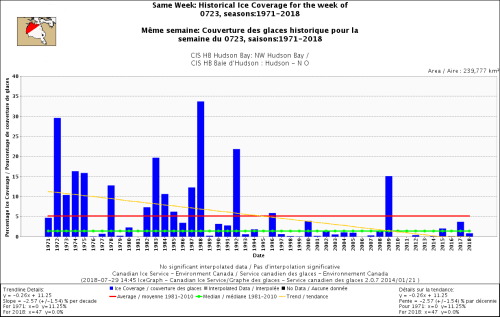
Most of the ice was gone from the NW of Hudson Bay for the week of 23 July 2018 and the graph below shows that this is a new pattern that began in 1997, with only 2009 being an outlier:

Hudson Bay NW same week_ ice coverage 23 July 1971-2018 with trend

Continue reading

Hudson Bay sea ice update: more ice in the east than usual but less in the west

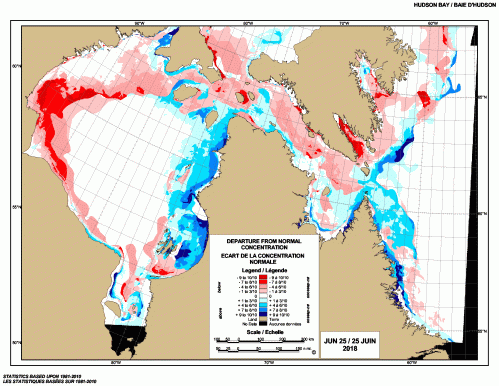
There’s almost more blue in the Canadian Ice Service “departure from normal” charts for this week than red, which means more sea ice than usual, especially in the eastern half of the bay and northern Labrador. Eventually, the melting ice will force polar bears ashore where they will fast for 4-5 months, living off the fat they’ve put on over the spring feeding season.

Hudson Bay weekly departure from normal 2018 June 25

Continue reading

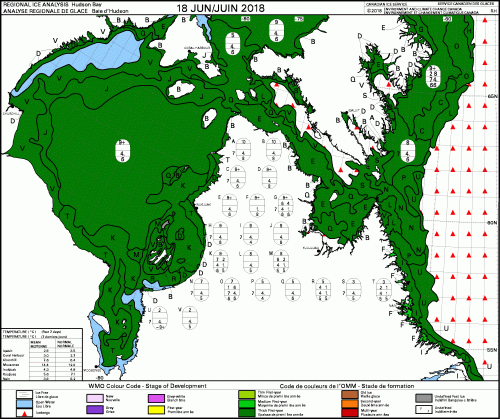
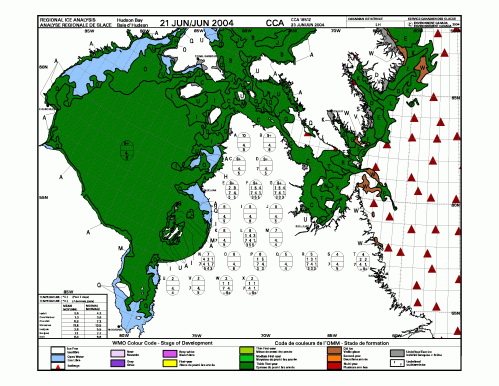
Hudson Bay ice update: more thick first year ice habitat for polar bears in 2018 than 2004

Despite pronouncements from one polar bear specialist that “ice in Hudson Bay is in rapid retreat” a look back in time shows that there is more thick first year ice over the Bay this year for the week of the summer solstice than there was in 2004 – and much less open water than 1998.

Lunn et al 2016 EA cover image WH bear

Below, 2018, June 18 (the week of the summer solstice):

Hudson Bay weekly stage of development 2018 June 18

Compare the above to the same week coverage chart for 2004, below:
Hudson Bay weekly stage of development 2004_June 21

Ice coverage for some other recent years are shown below compared to 1998, the year the ice breakup pattern on Hudson Bay changed. Speed and melt sequences vary according to the amount of thick first year ice present, discussed previously here.

PS. If you’re wearing white today, flaunt it! Tell your friends and colleagues that you’re celebrating the success of polar bears despite such low summer sea ice since 2007 that 2/3 of them were predicted to disappear.
Continue reading

Does thick first year ice on Hudson Bay mean a late date ashore for WH polar bears in 2018?

Following up on my previous post, it appears sea ice conditions on Hudson Bay this year might be headed for a late breakup due to the dominance of thick first year ice. That would mean a relatively longer on-ice season for polar bears in Western and Southern Hudson Bay.

James Bay female and cub_Ontaro Govt

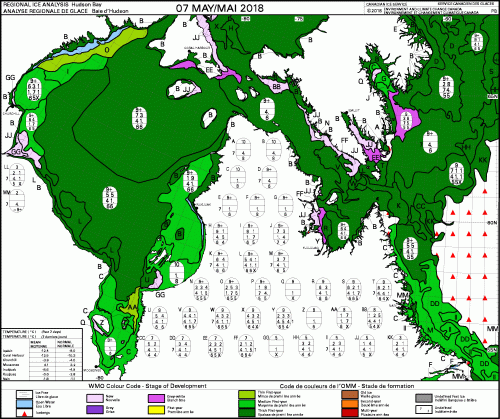
As of the 1st week in May 2018, most of Hudson Bay, Foxe Basin and Hudson Strait were covered with thick 1st year ice (dark green, >1.2 m thick):

Hudson Bay weekly stage of development 2018 May 7

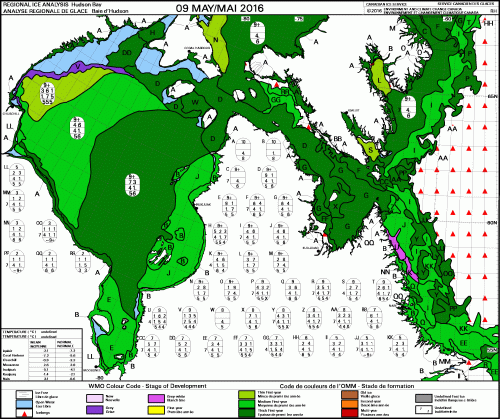
Compare that to the 1st week of May 2016, which had much less thick first year ice than 2018 and more medium first year ice (70-120cm, bright green):

Hudson Bay ice stage of development weekly at 9 May 2016

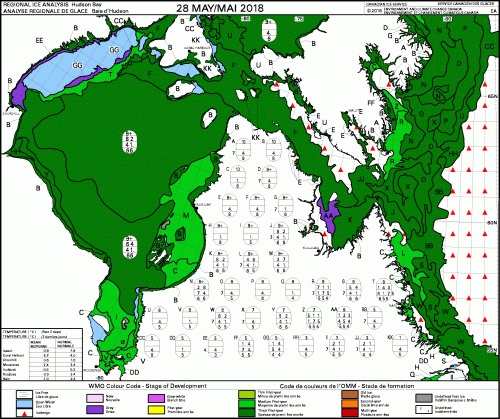
To update the situation, at the end of May this year (week of 28 May), thick first year ice covered even more of the bay with a large patch of open water in the NW corner:

Hudson Bay weekly stage of development 2018 May 28

Thick first year ice does not melt as quickly as medium or thin first year ice (lime green) under most conditions, so the amount of thick first year ice present in May strongly affects the rate of breakup of the ice over the summer (temperature and wind also contribute). Here are some charts of ice melt sequences from the past (2016 and a couple others) that give a hint at what might be in store for Hudson Bay polar bears this year.

Continue reading

Polynya refresher: open water in spring is due to winds & currents, not ice melt

Arctic sea ice begins to open up in spring at predictable locations due to currents and prevailing winds and this was as true in the 1970s as it is today. Polynyas and widening shore leads that most often get mistaken for early sea ice melt are those in the Beaufort and Chukchi Seas and in Hudson Bay.

Beaufort Sea male polar bear USGS_2005 Amstrup photo

But contrary to concerns expressed about possible negative implications of these early patches of open water, these areas have always been critical congregation areas for Arctic seals and are therefore important feeding areas for polar bears.

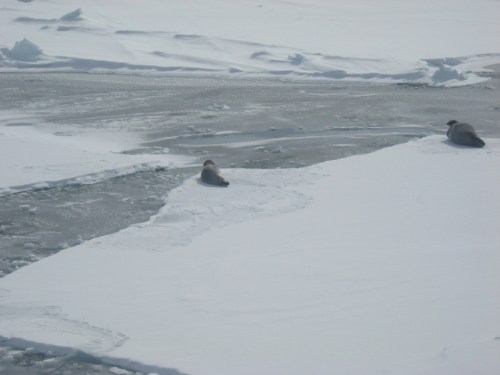
Seal habitat frozen open lead_Beaufort 2008_Miller

Seals hauled out beside a lightly frozen over lead in Beaufort Sea ice, 2008. USFWS.

Continue reading

W Hudson Bay freeze-up one of earliest since 1979, not “closer to average”

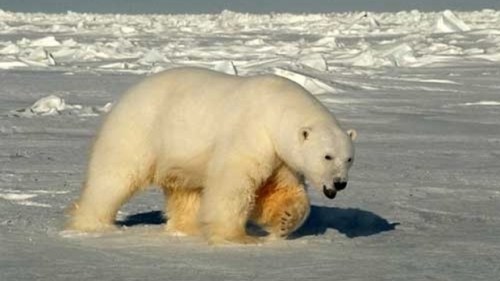
Tundra Buggy Cam_10 Nov 2017_bear headed offshore pmWestern Hudson Bay polar bears have been leaving shore for the rapidly thickening sea ice since at least 8 November (bear above was heading out 10 Nov.). However, Polar Bears International chose not to mention the unusually early freeze-up until the week-long (5-11 November) doomsday bombardment they call “Polar Bear Week” was almost over.

It’s worse than that: two days earlier, PBI’s activist spokesperson Steven Amstrup apparently told the Sierra Club (“People Show Up for Polar Bear Week, But the Ice Hasn’t Yet”; 8 November 2017) that “the bears are still waiting on shore for that ice to freeze” even though ice development had been well on its way for days at that point. As if freeze-up on 10 November came as a big surprise to him, with no warning whatsoever.

Apparently, they didn’t want their naive and gullible supporters to know at the beginning of Polar Bear Week that the sea ice loss of which PBI spokespeople rant about constantly (Save Our Sea Ice) was a total non-issue this year: breakup was not earlier than usual and new ice began developing off Churchill at about the same time it did in the 1980s (last week of October).

As I discussed last year regarding newly-published studies (Obbard et al. 2015, 2016) on the status of Southern Hudson Bay (SHB) bears:

“…SHB polar bears left the ice (or returned to it) when the average ice cover near the coast was about 5%. This finding is yet more evidence that the meteorological definition of “breakup” (date of 50% ice cover) used by many researchers (see discussion here) is not appropriate for describing the seasonal movements of polar bears on and off shore.”

That post (with its list of references) is worth another look for its discussion of the following points: the definition of freeze-up; the relationship of official freeze-up and breakup dates to the dates that bears depart; the overall health and survival of Western and Southern Hudson Bay polar bears.
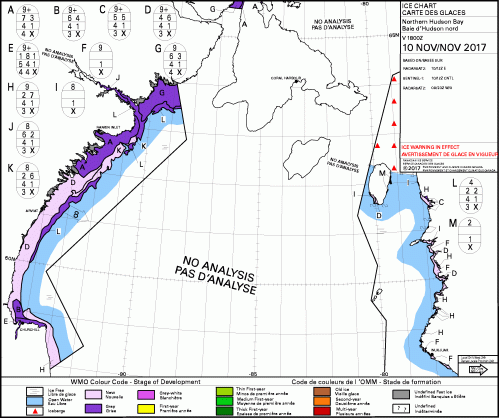
Hudson Bay North daily ice stage of development 2017_Nov 10

Below I dissect the misinformation that PBI calls “science communication” in their attempt to minimize the damage caused by this early freeze-up to their message of looming catastrophe for polar bears.

Bottom line: Not only was freeze-up early this year, 2017 will go down as one of the earliest WHB freeze-up years since 1979 and for Southern Hudson Bay bears as well, since as of 13 November there is concentrated ice all the way into James Bay.
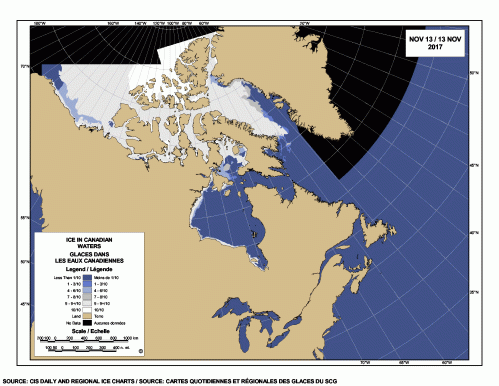
Sea ice Canada 2017 Nov 13

UPDATE 14 November 2017: CBC Radio broadcasted an interview yesterday with a recent visitor to Churchill who was remarkably candid about what he saw regarding polar bears, sea ice, and what he heard from locals about freeze-up (“the earliest since 1991”). It corroborates what I’ve reported here. Worth a listen (about 8 minutes):

“Brian Keating: Polar bears in Churchill, Manitoba” (The Homestretch, November 13, 2017, Season 2017, Episode 300312418)

The closest Doug Dirks has come to seeing a live polar bear was at the Calgary Zoo many moons ago. But naturalist Brian Keating has just returned from another trip to Churchill, Manitoba. He joined Doug Dirks with the details of that frosty adventure.

http://www.cbc.ca/player/play/1095183939998

Continue reading