Tag Archives: polar bear

Narwhal and beluga ice entrapment is natural – not caused by global warming

A part-time Arctic researcher eager for media attention suggested earlier today that the ice entrapment of narwhals in 2008 and again in 2015 at Pond Inlet (that made headlines around the world) was the result of “sudden changes in temperature” caused by climate change. This grossly misleading claim ignores the facts: ice entrapment of narwhals is an entirely natural feature of the Arctic that has been known about for hundreds of years.
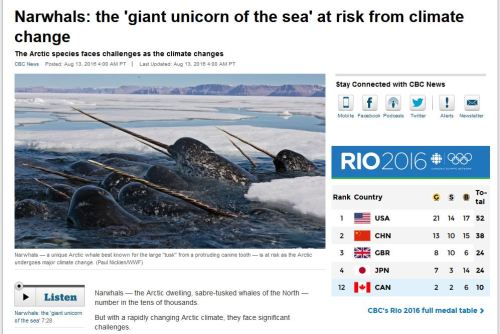
Narwhals_at risk from climate change_CBC 13 Aug 2016 headline

Narwhals: the ‘giant unicorn of the sea’ at risk from climate change” (CBC, 13 August 2016), a print version of a CBC Radio interview with Clint Wright that aired 8 August 2016. Wright is the general manager at the Vancouver Aquarium and apparently has “joined a team of researchers to tag and study” narwhals for several years – but does not seem to know much about the history or circumstances of natural ice entrapment.

Ice entrapment of small whales is nothing new. The first formally documented incident – in English – occurred in 1915 (Porsild 1918) and the phenomenon has probably occurred as long as there has been ice in the Arctic (millions of years).

Animals routinely become trapped in a few specific areas due to local geography: when ice that forms in the north moves south quickly, it blocks the entrances to inlets or coastal bays that still have open water. The presence of the pack ice causes nearby  temperatures to drop quickly. Rapid development of ice on the bay proceeds from the mouth toward the head of the bay. Any whales present cannot escape to open water and will eventually die or be eaten.

Pond Inlet at the north end of Baffin Island is one such place but Disko Bay in western Greenland is another. In fact, Pond Inlet and Disko Bay are almost identical in geographic layout even though they lie on opposite sides of Baffin Bay, so it’s not surprising that both are locations of repeated entrapment events.

Three highly informative journal articles on the phenomenon of ice entrapment of narwhals and beluga are open access documents that reveal some fascinating details of such incidents, including polar bear predation on trapped whales. h/t T. Nelson Continue reading

Tracking polar bears in the Beaufort Sea in July & sea ice comparison with 2007/2012

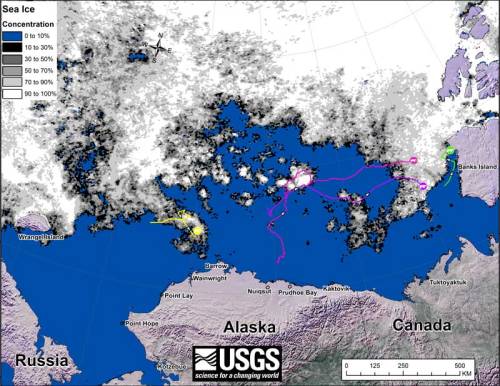
Only four Alaskan polar bear females had USGS satellite collars left transmitting locations in the Beaufort Sea and all four of these bears were on the ice during July, 2016. The same was true in June and May.

Beaufort tracking USGS bear-movements-July 2016 sm

Original caption: “Movements of 4 satellite-tagged polar bears for the month of July, 2016. Polar bears were tagged in 2015 and 2016 on the spring-time sea ice of the southern Beaufort Sea. All 4 of these bears have satellite collar transmitters. Polar bear satellite telemetry data are shown with AMSR2 remotely-sensed ice coverage from 31 July, 2016.” Original here.


There looks like a lot of open water for this time of year but in terms of absolute extent there is somewhat less ice than there was in 2007 and only slightly less than 2012, according to NSIDC Masie charts. And of course, what we know is that polar bears of the Chukchi Sea and the Southern Beaufort not only survived the low ice summers of 2007 and 2012, they thrived: CS bears were in great condition and reproducing well, and BS bears were recovering from the devastating thick ice conditions of the 2004-2006. Have a look at the maps below. Continue reading

Canadian Prime Minister risked being EATEN by polar bears on Fogo this year

This week (Tuesday 9 August), British Columbia’s Knowledge Network is re-running the 2015 documentary about the revitalization of Fogo Island, the Newfoundland location featured in my polar bear attack thriller, EATEN. It’s called Strange and Familiar: Architecture on Fogo Island and highlights the Fogo Island Inn, where our recently elected Prime Minister Justin Trudeau apparently spent a weekend earlier this year – gambling he could avoid a lethal encounter with a hungry polar bear when fictional others haven’t been so lucky.

Fogo Island special on Knowledge Network_9 Aug 2016

The Prime Minister and his family stayed at the Fogo Island Inn over Easter (25-28 March 2016). Did Justin Trudeau know they could have been EATEN by a polar bear at that time of year? Were members of his security detail actually prepared for a polar bear attack?

Did Trudeau’s advisors do any preparatory reading? I mean, seriously: aside from reading my terrifying science-based novel (where polar bear attacks take place right outside the Fogo Island Inn where the Trudeaus were staying), Fogo (see maps below) has a recent history of polar bear visits.

Most bears come ashore on Newfoundland in late March-early April, although this year one came ashore on Fogo in late January. Another was shot in early May this year as it advanced on an RCMP officer near one of the artist’s studios on Fogo. I guess I’ll have to send a complimentary copy to Ottawa…because next time, what with polar bear numbers increasing in that region, this high-profile family might not be so lucky.

“What-if” indeed…the risks they took are mind-boggling. Continue reading

Why is polar bear conservation such a contentious issue?

Are polar bears in decline or not? Who is to blame for the fact that there is no clear answer about how polar bears are doing? Apparently, everyone except polar bear specialists are at fault for the way polar bear issues have been handled in recent years (including me), at least according to one northern journalist.

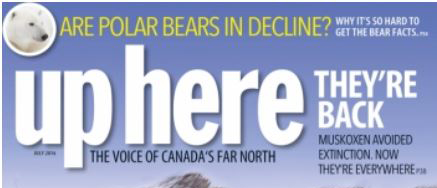
UpHere Magazine_July 2016 cover cropped

Back in February, I wrote a rather critical review of an exclusive interview with polar bear researcher Ian Stirling that was published in the February issue of UpHere Magazine called, He speaks for the polar bears – with this lede under the title:

“No fear-mongering. No exaggeration. For Ian Stirling, it’s purely about the science.”

I said “Yeah, well – judge for yourself,” and pointed out some rather critical inaccuracies and obfuscations in Stirling’s answers that I backed up with references.

Well, the editor of that magazine, Tim Edwards, emailed me a few days later and said:

“...we wanted to try to clarify the issues and just talk hard science, no rhetoric. Lo and behold, we’re learning that even his opinion is by no means universally agreed-upon. So thank you for your criticism.”

In May, I was contacted by UpHere writer Dan Campbell, who spoke to me several times before writing this month’s article (15 July 2016), Lost in the numbers: The polar bear is getting more attention than ever, but that may be harming the animal more than helping. Have a look and decide if it clarifies any of the polar bear issues for you. Continue reading

Four years of PolarBearScience and polar bear habitat for ‘Christmas in July’

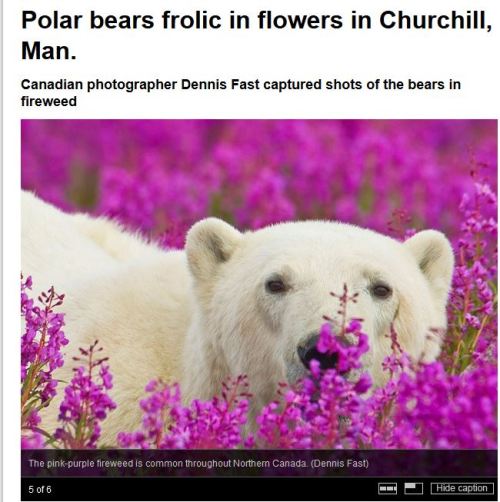
The traditional gift for a 4th anniversary is flowers, so to celebrate 4 years of blogging at PolarBearScience, I’m highlighting a CBC article from last year that featured the work of photographer Dennis Fast, who captured some fantastic images of polar bears cavorting in a field of fireweed near Churchill (see screencap below from the 2015 CBC feature, more at the DailyMail for 21 August 2015). Great photography – it deserves another look.

Churchill pbs in wildflowers_CBC feature_August 2015

Hard to imagine that four years have passed! Cheers to Hilary Ostrov (who blogs at The view from here) for getting me over my initial frustrations with WordPress – without which I’d never have made it this far – and for her much-appreciated typo alerts [Hilary is still dealing with on-going health issues but we talk on the phone from time to time.]

And thanks of course to my readers, who’ve made it all worthwhile. I truly appreciate all your tips and feedback. The word is getting out, via tweets and retweets, reblogging, personal blog and Facebook discussions, as well as links back to particular posts in the comments of news articles and other internet content, and straight up media mentions. The sum of it all has brought us to this point: 495 posts, over 764,000 views, and more than 411,000 visitors. Not too shabby for a single issue science blog, eh?

I thought of adding a Tip Jar button for next year, but decided against it – instead, if you’d like to support my efforts here, you can buy my polar bear attack novel (give it as a gift if you’re not keen on this type of fiction). I’d be just as grateful. See the sidebar for the link.

But back to business – below find sea ice maps of polar bear habitat at 25 July (‘Christmas in July’), this year as well as some previous years.
Continue reading

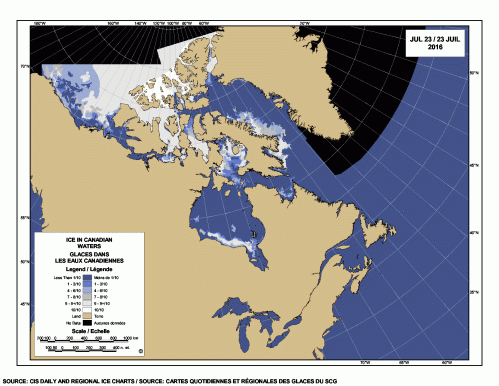
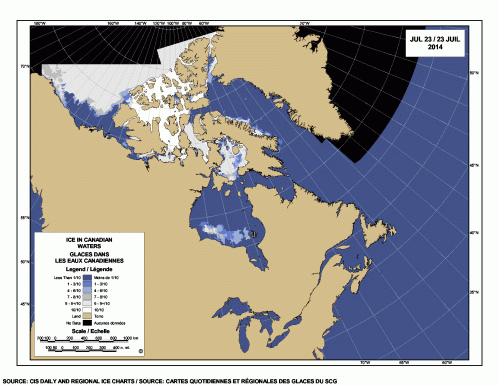
Sea ice habitat Canada update for 23 July 2016 vs. 2014 & the start of bear problems

Sea ice breakup is always a little bit different year to year but since I have the maps archived, take a look at the differences and similarities at this date for this year compared to 2014…

Sea ice extent Canada 2016 July 23_CIS

Sea ice extent Canada 2014 July 23 CIS

Is there evidence that any polar bears – say Western Hudson Bay bears, for example – were negatively affected by sea ice levels in 2014? Not that I’ve heard. In fact, quite the opposite.

Polar bear guide and blogger Kelsey Eliasson, writing from Churchill, Manitoba, had this to say about the condition of bears and freeze-up that year (16 Nov. 2014):

“With these families appearing [heading out to the ice], it really sums up at just what a productive season this has been for the western Hudson Bay population. Any guide who knows their stuff will tell you this was a banner year for cubs, one we haven’t seen in a long time.”

Meanwhile, bears are starting to come ashore and cause a bit of grief:

Southern Hudson Bay (two days ago): “Polar bear shot after wandering through Kashechewan” [see map below for location: the bear shot was a cub that appears to have been separated from its mother and sibling, who were spotted several km away not causing any trouble]

Iqaliut, Baffin Island (this morning): “Polar bear rips 6 tents pitched in Iqaluit park”

Continue reading

Hudson Bay update – lots of sea ice well positioned for polar bears to get ashore

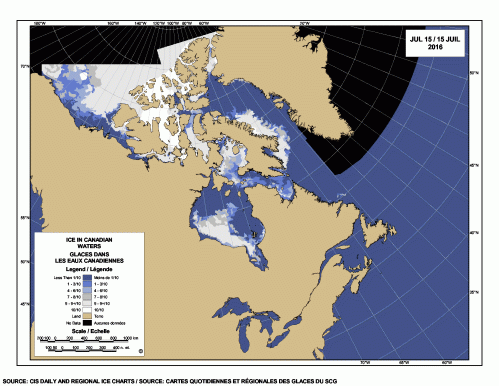
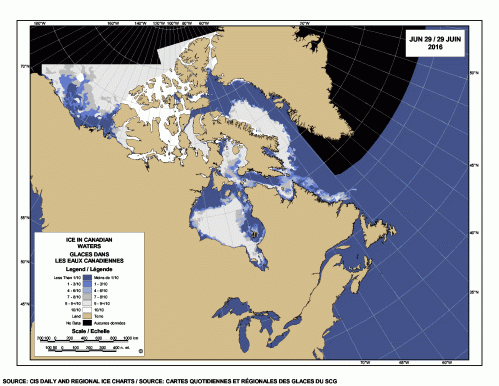
There is slightly less ice this year in Hudson Bay than last year but it is hugging tight against the western shore, which means polar bears in Western and Southern Hudson Bay will be able to stay out on the ice (if they want to) until August.

Sea ice extent Canada 2016 July 15_CIS

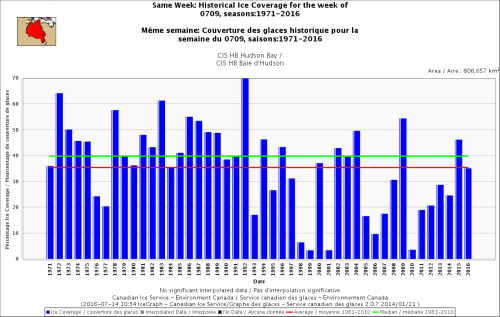
The latest weekly ice graph from the Canadian Ice Service (for 9 July) below shows average ice coverage this year (and more than there was in 1976 and 1977):

Hudson Bay same week 9 July 1971-2016

[By the way, the IUCN Polar Bear Specialist Group website is still “under construction” allowing them to avoid mentioning the less-than-dire conclusions contained in the 2015 IUCN Red List assessment]

More ice maps below, comparing previous years.

Continue reading

USGS polar bear researchers publish their rebuttal to 2015 IUCN Red List assessment

Surprise! US Geological Survey polar bear specialists have just published another opinion-based model that concludes – yet again – that there is no hope for polar bears of the future unless the world drastically reduces fossil fuel use. This appears to be the Amstrup-led rebuttal to the hated 2015 IUCN Red List polar bear assessment I have been expecting, written in tandem with the Red List document by two of the same co-authors (Steve Amstrup and Todd Atwood).

Kaktovik female w cub_21 September 2015 USDA_med

Really, no surprises here – just more of the same overwrought fear-mongering about polar bears that we’ve been hearing from USGS since 2007. I saw Atwood and Amstrup last week in a British-made TV film that expressed the same sentiments (The Great Polar Bear Feast – it oddly featured dozens of fat/very fat Kaktovik polar bears while mostly USGS ‘experts’ talked about impending starvation). On camera, Atwood and Amstrup were almost indistinguishable in their statements of doom, and even though the film aired 6 months ago in the UK, it has so far not garnered the angst it seems to have intended.

Some folks may be even more convinced than ever by this new PR strategy [TV movie plus a published paper] that the polar bears are all going to die unless we (not they) change our wicked ways and stop using fossil fuels, but chances are that many more will detect the desperation in their escalated pitch and continue to refuse to buy what they are so frantically trying to sell.

Continue reading

Polar bears and W. Hudson Bay sea ice breakup 2016

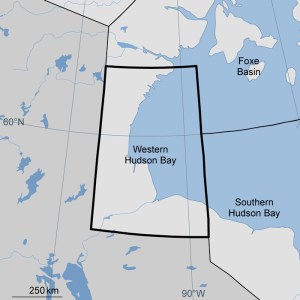
Breakup for Western Hudson Bay (WHB) is looking to be later than usual this year, given that the average breakup date since 1991 has been July 1 (using a 30% threshold) – only a few days from now – and the ice in WHB is nowhere near 50% coverage, let alone 30%.

Churchill_Polar_Bear_2004-11-15 Wikipedia

Note that few WHB bears come off the ice around Churchill – most come ashore along the southwest coast of Hudson Bay (almost into SHB) and make their way north over the course of the summer to meet the ice as it reforms in the fall north around Churchill – that’s why it’s called a “migration.”

map-WesternHudsonBay

There’s still a lot of ice left in Hudson Bay, as the Canadian Ice Service map for 29 June 2016 (below) shows: Sea ice extent Canada 2016 June 29 CIS

It seems to me that breakup for WHB this year is looking rather like 2014, which was something like a week later than the average since 1991, but time will tell. See below for comparison to 2009 (a late breakup year), 2015, and 2013 (lots of variability!), as well as a discussion of when bears come ashore in relation to this sea ice breakup benchmark.

Continue reading

BREAKING: DNA results prove so-called polar bear hybrid was a blonde grizzly

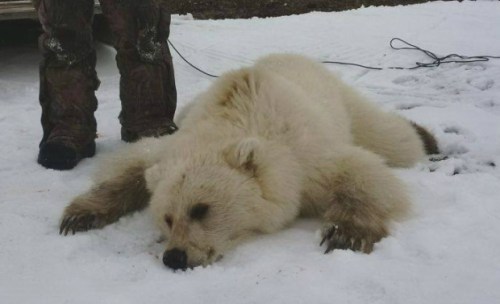
All the hubris last month about polar bear x grizzly hybrids, based on an unusual-looking bear killed near Arviat, has turned out to be wishful thinking by those who’d like to blame everything to do with polar bears on climate change. An awful lot of “experts” now have egg on their faces. That “hybrid” was just a blonde grizzly, as I warned it might.

grizzly-polar-bear-hybrid_Arviat 2016 Didji Ishalook

According to one report, Nunavut wildlife manager Mathieu Dumond said:

“Some otherwise pretty renown bear biologists jumped on the hybrid bear story without even knowing what they were talking about,” Dumond said.

“I think it was something blown out of proportion, with the wrong information to start.”

Gee, ya think? CBC ran a story too. But the CBC don’t really admit (see below) that they were the first out of the gate on this story and started the media madness. It was the CBC that relied on the opinion of a black bear expert from Minnesota (who likely only saw a picture) – but since he was willing to say it was a hybrid and that its presence was a sign of climate change, they went with it.  See “Grolar or pizzly? Experts say rare grizzly-polar bear hybrid shot in Nunavut: Expert says interbreeding may be happening more frequently due to climate change” (CBC 18 May 2016).

For background, see these recent posts on this putative hybrid and the issues on hybridization it spawned:
Another alleged grizzly-polar bear hybrid shot but it’s not a sign of climate change

Polar bear hybrid update: samples sent for DNA testing to rule out blonde grizzly

Five facts that challenge polar bear hybridization nonsense

Most polar bear hybrids said to exist have not been confirmed by DNA testing

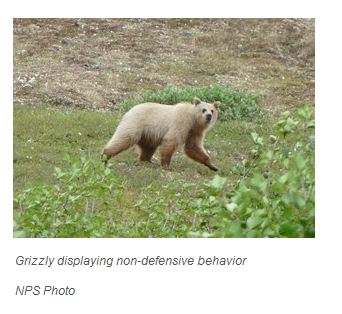
Blonde grizzlies, like the one pictured below (which I posted the day the story broke), are actually a proven sign of natural variation within species – a critical lesson in biology that should be the take-home message here. [ADDED: 2007 Alaska Fish & Wildlife Service Newsletter article on colour variation in black and brown/grizzly bears. h/t Wayne D]

“Paging Professor Derocher”: PBSG biologist and University of Alberta professor Andrew Derocher gave so many interviews to the media on this issue I lost count – he fed the media frenzy almost single-handedly. Well, except for granddaddy of polar bear experts Ian Stirling, who said (via the Toronto Star)[update: Toronto Star published correction]:

“I think it’s 99 per cent sure that it’s going to turn out to be a hybrid,” said Ian Stirling, an emeritus research scientist with Environment Canada and adjunct professor at the University of Alberta.”


Grizzly light_NPS photo

Quotes from today’s story below.
Continue reading