Tag Archives: predictions

Spring sea ice prediction for next year off Newfoundland: extensive ice coverage

EATEN – my new polar bear attack novel – is set in Newfoundland 2025 for a reason. I wondered: what if sea ice coverage 10 years from now is as high or higher than it has been for the last two years, with inevitable positive effects on Davis Strait harp seal and polar bear populations?

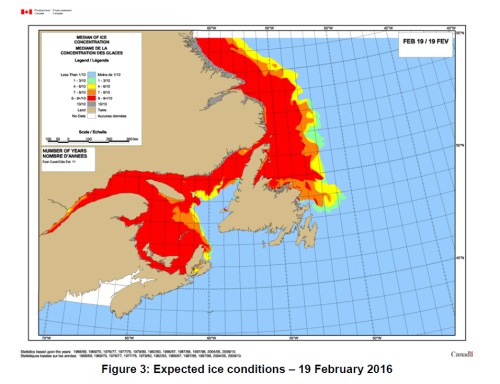
The Canadian Ice Service prediction for this region, released earlier this week (1 December 2015, see references for link), is that 2016 is set to meet my “what-if” scenario handily. Nine years to go! See the CIS expected ice coverage for 19 February 2016 below (CIS fig. 3):

2016 Newfoundland Ice outlook for 19 Feb 2016_at Dec 1 2015

How does the above ice map compare to the last two years? At least as high or higher. Have a look below.

Continue reading

IUCN Red Book officials forced scientific standards on polar bear predictive models

As I reported Thursday, the IUCN announcement of a new Red List assessment for polar bear got the usual overwrought attention from international media outlets. However, not one of these contained a quote from a polar bear biologist.

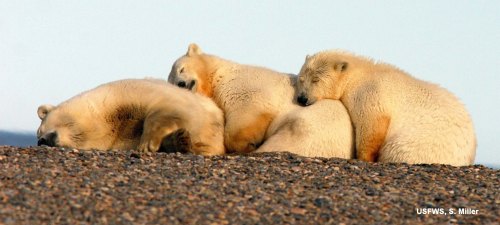
polarbears-arcticnatlwildliferefuge-suzannemiller-usfws_labeled_sm

Steven Amstrup, science spokesperson for activist conservation organization Polar Bears International, has so far had nothing to say to the media. Yet, Amstrup was a co-author of the IUCN Red List report. Not until late in the day following the release of the report did his his organization’s website post a short, bland news report (“Climate Change Still Primary Threat to Polar Bears”).

Similarly, Ian Stirling, Andrew Derocher, Nicholas Lunn (also a co-author of the IUCN Red List report), and former WWF employee Geoff York – who are usual go-to guys for polar-bears-are-all-going-to-die media frenzies – have so far been silent and invisible on this issue.

In addition, while the IUCN press release [backup here: 2015 IUCN Red List press release_Nov 19 2015] included a quote from IUCN Polar Bear Specialist Group (PBSG) chairman Dag Vongraven, as of this morning (21 November, PST), the website of the PBSG contains no mention of this decision – no item in the “News” category  and, more importantly, no update of the status table  or global estimates to reflect the changes contained in the report  (even though they obviously knew it was coming months ago: the report was submitted to the IUCN Red List 27 August 2015).

In my opinion, this silence says it all: polar bear specialists know this assessment is a severe de facto critique of their 2008 assessment (as well as Amstrup’s predictive models) and it’s a big step backwards for their conservation activism. I expect they are silent because they are royally pissed off.

However, this assessment is good news because finally, some standards of scientific rigor have been applied to polar bear predictive models – even though the PBSG were still been allowed to pretend that summer sea ice coverage is critical to polar bear health and survival (Crockford 2015).  Continue reading

Polar bear doom and gloom from USGS vs. biologist Mitch Taylor’s reasoned thoughts

A few days ago polar bear biologist Mitch Taylor and Nunavut’s Gabriel Niryungaluk talked to Toronto radio host Roy Green about the recent USGS dire model predictions for the future of polar bears.

Taylor interview_5 July 2015 Polar bear numbers_radio

There’s an audio podcast and, courtesy of the valuable efforts of fellow blogger Alex Cull, a transcript. Links below, plus some excerpts of Mitch Taylor’s commentary.
Continue reading

My new Arctic Fallacy paper- Sea ice stability and the polar bear

I have a new paper out that explains a fundamental problem with polar bear conservation.
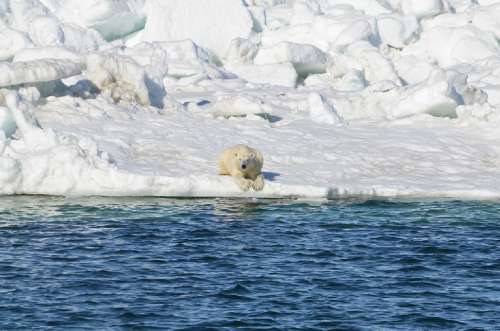
Chukchi June 15 2014_USGS_Brian Battaile_after swim_sm

I’m convinced that a flawed and out-dated ecological concept — that sea ice, under natural conditions, provides a stable, predictable habitat — is what has allowed the present doom and gloom attitude of most polar bear specialists to develop.

Sea ice changes, of course, from season to season. However, the concept that sea ice is a stable habitat assumes that these seasonal changes are predictable and virtually the same from one year to the next – at least, similar enough that the differences are not responsible for causing marked declines in population size.

The assumption is that under natural, stable conditions populations of Arctic animals will either stay the same over time or increase. Biologists were taught at university that sea ice should be a stable habitat and as a result, they’ve glossed over evidence they collected to the contrary. [see recent posts here and here, for example]

Negative effects on populations of short-term natural variations in spring sea ice or spring snow cover on sea ice have been entirely ignored in modeled predictions of future conditions. The focus has been on summer ice extent.

I have summarized this evidence in a fully referenced, peer-reviewed essay that explores how the acceptance of this fallacy (“sea ice is a stable habitat”) has so skewed the conservation biology of polar bears that to outsiders it may look like a scientific integrity issue.

The summary and the essay are below (with embedded links and references). The Global Warming Policy Foundation (GWPF) has published the essay in their “Briefing Paper” series (#16, The Arctic Fallacy: Sea Ice Stability and the Polar Bear), which includes a must-read foreword by Dr. Matthew Cronin, Professor of Animal Genetics at the University of Alaska Fairbanks. Press release here, pdf here.

I think you’ll find it timely and thought-provoking.

Continue reading

No evidence of actual damage to polar bear brains from environmental contaminants

Earlier this year we had polar bear penis bones supposedly breaking due to environmental toxins; this week we have their brains damaged.

The March 15 ScienceNordic story (“Chemical pollution is causing brain damage in polar bears”) came complete with a photo of a bear (copied below, provided by research co-author Rune Dietz) that is presumably meant to convey what a “brain damaged” polar bear might look like — if not, perhaps another photo would have been a better choice?

Polar bear looking brain damaged Rune Dietz photo Science Nordic

Except, the research only showed there theoretically might be damage but the researchers didn’t bother looking for it before shouting out their findings. All about the scary message, these folks: the very large uncertainties and speculation in their research be damned.
Continue reading

Polar bear biologists try – again – to blame S. Beaufort thick spring ice on global warming

The trouble is, sea ice researchers and atmospheric scientists have not drawn that conclusion, despite what a new paper by Pilfold and colleagues imply. It shows just what lengths desperate IUCN Polar Bear Specialist Group  (PBSG) biologists will go to in order to link the recent decline of Southern Beaufort bear numbers to global warming while ignoring similar past declines.

Beaufort Sea pressure ridges_Spring 1949 wikipedia sm

Continue reading

Editorial calls for more jobs for polar bear biologists

An editorial in the Edmonton Journal this morning (“Stand on guard for polar bears”) takes a most extraordinary position: that the results of two recent papers of dubious value should motivate Canada to create more jobs for polar bear biologists, “protect” the Canadian Arctic Archipelago (from what, they don’t say), and galvanize Canada’s position with respect to curtailing carbon dioxide emissions. In that order.

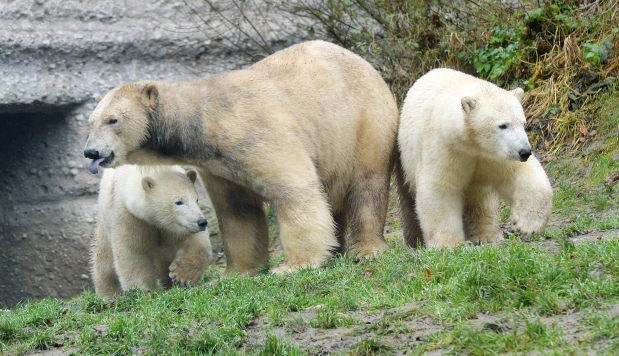
Edmonton Journal editorial photo 22 January 2015

Edmonton Journal editorial photo 22 January 2015. Munich Zoo bears.

First, the unnamed editors1 say: “This country needs more eyes and ears monitoring the health, numbers and locations of its polar bear populations.

Why would they come to that conclusion? They quote University of Alberta’s Andrew Derocher (who supervises a number of students doing polar bear research in Western Hudson Bay):

“If Canada was doing the right thing, we’d have extensive monitoring,” University of Alberta polar bear researcher Andrew Derocher said to the Journal in late 2014.

Continue reading

‘Threatened’ status for Arctic ringed seals under ESA makes no sense

Recent research (Crawford and Quakenbush 203; Rode et al. 2014) has shown that sea ice declines in the Chukchi and Beaufort Seas have made life better for ringed seals, not worse (as predicted) – ringed seals are in better condition and reproducing better than they were in the 1970s. Why? Ringed seals do most of their feeding in the open-water period (Young and Ferguson 2013), so a longer open-water season means fatter, healthier seals and more fat pups for polar bears to hunt the following spring.

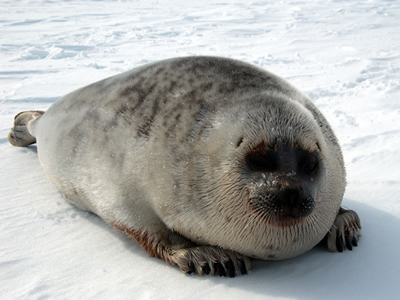
Ringed_seal_2_NOAA

However, Arctic ringed seals (as well as bearded seals) were designated as ‘threatened’ by the USA in 2012 under the Endangered Species Act, based on predicted ice and snow declines due to prophesied global warming. These listings are all about future threats, with no pretense of on-going harm.

Virtually no other Arctic nation has taken this step for Arctic seals — see previous discussion here. There are lots of ringed seals — an estimated 3-4 million world-wide and about 1.7 million within the critical habitat proposed by NOAA (see below).

As weak as the case for listing polar bears as ‘threatened’ has proven to be, the case for listing ringed and bearded seals is even more feeble (a judge has already sent the bearded seal listing back to the drawing board).
Continue reading

Polar bear gene flow blamed on melting ice is another model result that doesn’t make sense

Polar bear researchers just published a study that suggests polar bears have moved around the Arctic in direct response to recent sea ice changes — a conclusion I suggest you take with a grain of salt and a raised eyebrow.

That’s because they have also proposed, among other things, that the Svalbard Archipelago was a sea ice refugium during warm interglacial periods, and could be again if the Arctic warms as predicted. That they would accept and promote such a model-based conclusion, which has no relationship with reality, calls their scientific judgment into question.

Svalbard as a potential warm refugium_Jan 8 2015_PolarBearScience

Based on genetic model results, the Svalbard Archipelago (circled) has been proposed as a sea ice refugium for polar bears during previous warm Interglacial periods and during predicted sea ice declines in the future. Yet most years since 1979 (2014 was one exception), this region has been ice free during the summer, making Svalbard a decidedly poor candidate for retaining sea ice when it’s much warmer than today.

Continue reading

Amstrup knows his polar bear predictions are flawed – but continues to promote them

The largest conservation organization in the world says that predictive models developed by polar bear biologist Steven Amstrup are utterly unsuitable for scientifically estimating future populations. Earlier this year, mathematical modeling experts  at the International Union for the Conservation of Nature, who maintain the Red List of Threatened Species, made it clear that Amstrup’s models (used in 2008 to convince the US Fish and Wildlife Service to list polar bears as ‘threatened’ due to predicted global warming) do not meet IUCN standards.

I’d say this makes Amstrup’s polar bear projections (Amstrup et al. 2008, 2010) no more scientifically useful than a crystal ball prophesy, but you wouldn’t know it by his recent actions — or the silence of his fellows.

crystal ball_3c

Continue reading