Tag Archives: Southern Beaufort

Sickening effect of satellite radio collars polar bear researchers don’t want you to see

A report at CBC News (Photo shows polar bear injured by tight radio collar,” Martin Zeilig, 28 October 2015) shows the bloodied neck of a male Southern Beaufort Sea polar bear, taken near Kaktovik, Alaska, whose radio collar is too tight.

polar-bear-radio-collar_CBC Oct 28 2015

Researchers should not be putting collars on young animals and male bears – they know the problems! Who did the USGS have working for them that did not know this or couldn’t tell a male bear from a female? [see below] The other question is: how many more bears are in the same condition but out of sight on the sea ice – or dead due to their injuries? Don’t forget, this is a population that researchers claim is endangered because of climate change but which really declined recently due to thick spring ice in 2004-2006. [SJC – ambiguity fixed]

UPDATE 28 October 2015: 5:41 pm – in a comment under the CBC story, Churchill polar bear guide Kelsey Eliasson wrote (“4 hours ago”):

“This isn’t a he, it’s a she. Saw this bear during our trip, its a female with one cub.

Male polar bears are not radio collared.”

The statement in the CBC article that the bear with the collar is a male thus seems to be an error.  That makes more sense but does not negate the suffering of the animal.

UPDATE 5 November 2015: 8:30 am – I just received an email from a reader who contacted USGS about this bear and with their permission, I have copied the response below (leaving out the USGS contact person’s details), my bold:

Hello xxxx,

I do not believe USGS banded the bear. I have talked with staff at the USGS Alaska Science Center and found that the polar bear in the news was an adult male. The USGS scientists will band female polar bears, but not male bears. If you have questions, see this site. there is a link to the staff on the left. Click it and you will see a list with the project manager at the top. http://alaska.usgs.gov/science/biology/polar_bears/tracking.html

It may be that USGS is accepting the word of one of the experts quoted in the story [Vince Crichton] that the bear is a male and have denounced their involvement on that basis. Obviously, other polar bear researchers must be working in the area, and Geoff York statements (below) suggest a crew from University of Alberta, led by Andrew Derocher.  But if Kelsey Eliasson is right that this is a female with a cub (see above update), it may indeed be a USGS bear, perhaps one who’s collar has stopped transmitting. The plot thickens.
Continue reading
Beaufort Sea polar bear habitat highest since 2008 at this date

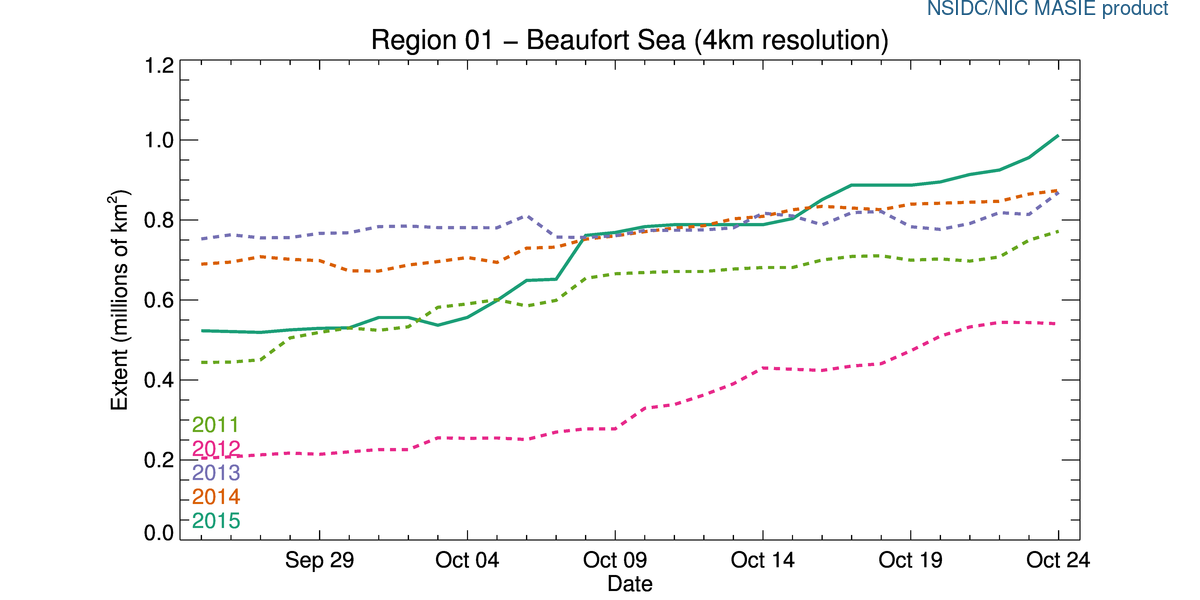
Good news for Southern Beaufort polar bears! Sea ice converging on the north shore of Alaska earlier than any year since 2011 at least, according to NSIDCs regional ice plots (below).

r01_Beaufort_Sea_ts_4km

But wait, their Masie ice maps show it’s actually the earliest since 2008 (although the ice movement onshore was also earlier than 2006 and 2007, see below). And it’s still a full week before the end of October, the first month of Arctic fall (October-December). Lot’s of seal hunting habitat.

This emphasizes the fact that the primary problem faced by Southern Beaufort sea polar bears is not scarce summer ice but by thick sea ice conditions in the spring. Bears photographed near Kaktovik this year were in excellent condition (see here and here, taken by Kelsey Eliasson, Polar Bear Alley). If folks have been seeing starving bears, they haven’t said anything that I’ve been able to find.

Ice maps below.
Continue reading

Tracking polar bears – 3 out of 4 S. Beaufort bears on the ice during September 2015

The shore of Alaska is not very important to Southern Beaufort polar bears – most of them stay on the sea ice during the summer and early fall, where they may or may not continue eating. These results of on-going satellite tracking studies by USGS1 confirm results of previous studies.

Tranquilized_pb570_S Beaufort March 2014_USGS

Continue reading

July 2015: all 13 collared polar bears in the Southern Beaufort are out on the sea ice

Most of these bears are close enough to shore to hit the beach if that’s where they wanted to be but they’re on the sea ice.

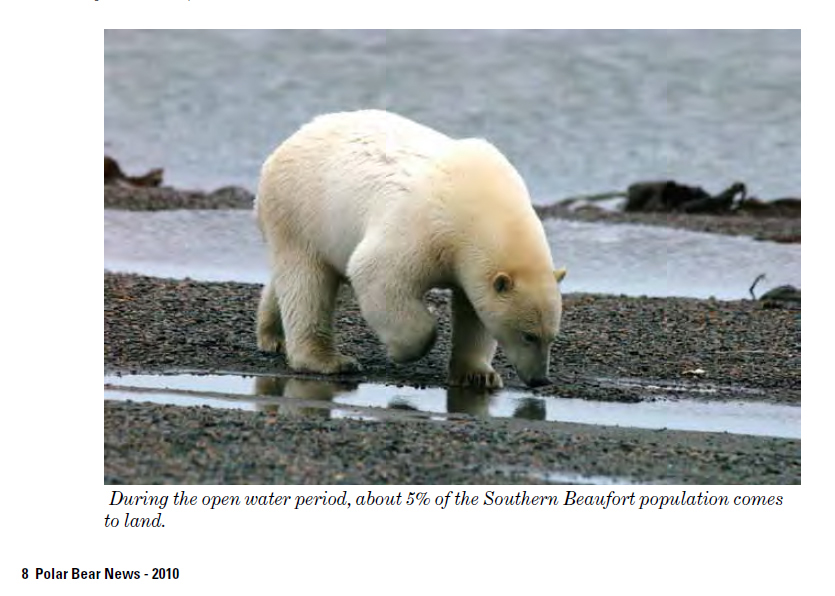
Polar bear S Beaufort_PolarBearNews2010

I’ve been posting these USGS tracking maps for two years.1  The map archive at USGS goes back to December 2009.  Seeing all animals on the ice in July is usual for Southern Beaufort polar bears.

During August, a few of these females usually come ashore (see here and here), probably because they plan to den there later. But most polar bear females stay out on the ice, no matter how far it contracts into the Arctic Basin. Only about 5% of SB bears spend time on land during the summer.

See the July track map below and some sea ice maps and graphs for the region.
Continue reading

Alarm over future summer polar bear habitat disguises how good conditions are right now

Despite the public outcry last week over future polar bear survival, the polar-bears-are-doomed crowd can’t hide the fact that this year, spring sea ice habitat for polar bears worldwide has been excellent.

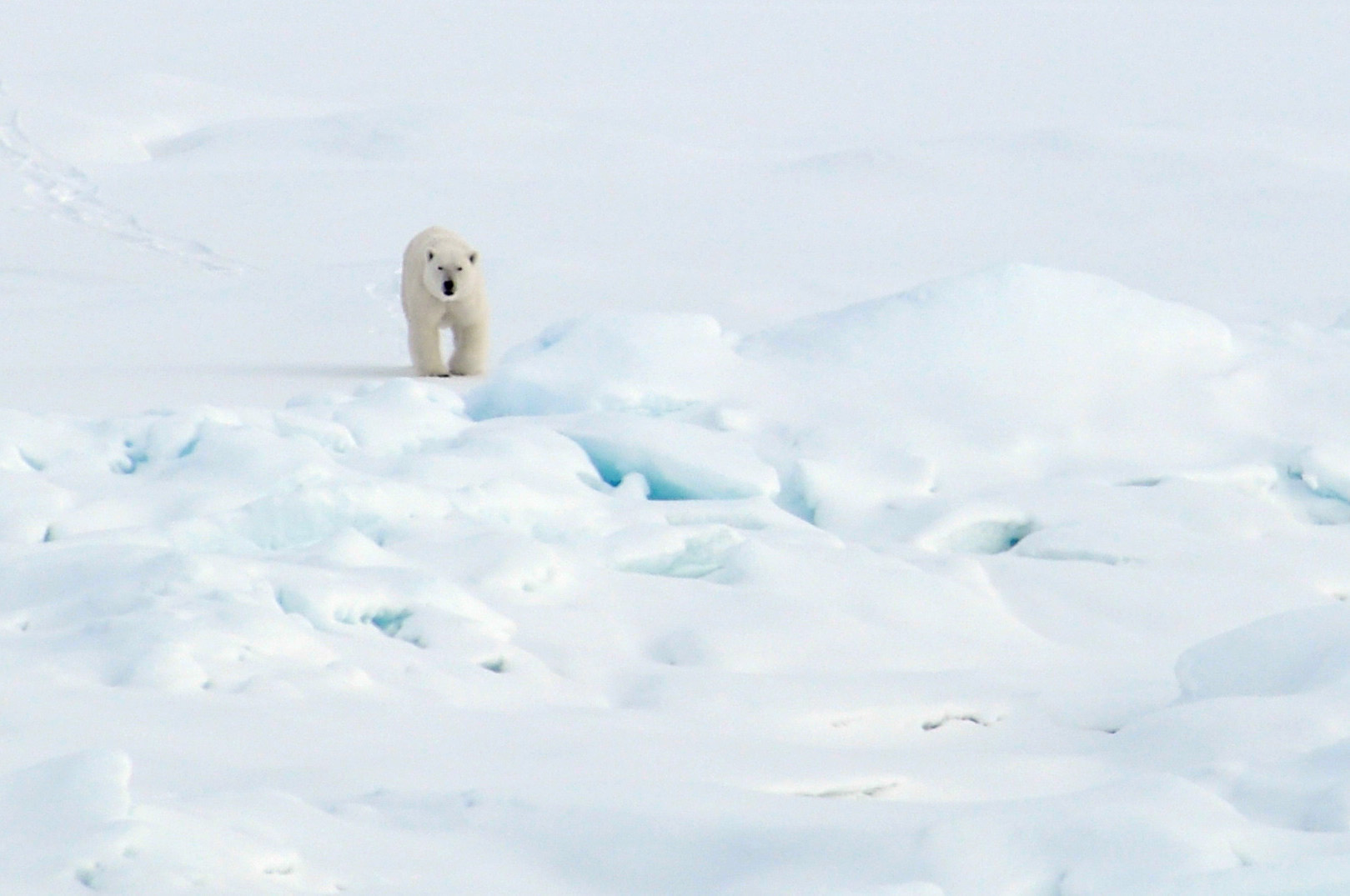
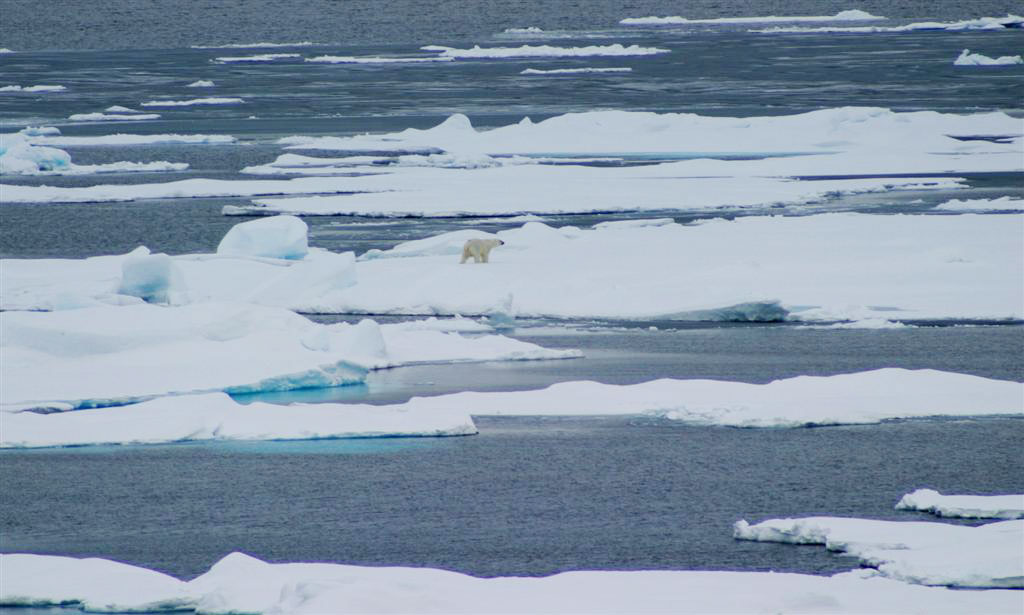
A polar bear walks on the Arctic Ocean ice Aug. 21, 2009.

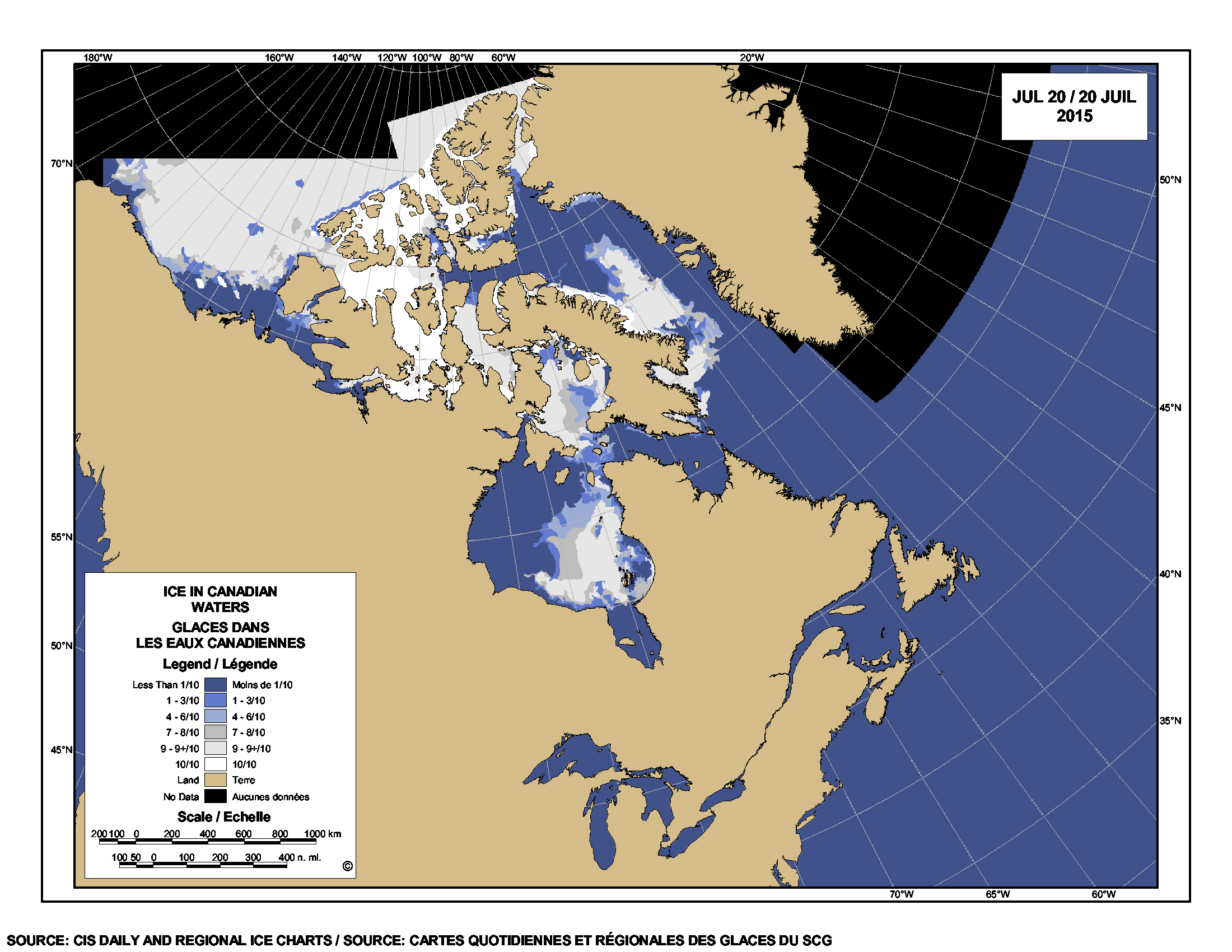
This year on 19 July, for example, Hudson Bay had greater than 150,000 square km more sea ice than there was in 2009 on that date (526.2 vs. 368.5 mkm2)(1992 was a particularly cold year and most bears left the ice as late in 2009 as they did in 1992).1 Conditions have also been excellent for pregnant females around Svalbard – Norwegian polar bear researchers recently reported a good crop of cubs this spring.

Hudson Bay breakup July 20 2015_CIS

Worldwide, there was exactly the same amount of Arctic sea ice present on 18 July 2015 as there was back in 2006 (Day 199) – 8.4 mkm2. By 19 July (day 200), 2015 had more ice than 2006 (8.4 mkm2 vs. 8.3).

All this means that recent summer ice melt has not impinged on the spring feeding period that is so critically important for polar bears. So much ice left in early summer means there was lots of sea ice in the spring (April-June), even in the Southern Beaufort Sea.

The only region with sea ice coverage well below the last five years is the Chukchi Sea (see plots below, click to enlarge). So why aren’t we hearing the-sky-is-falling stories about Chukchi bears? Because biologist have already demonstrated that polar bears in the Chukchi do very well even with no summer sea ice.
Continue reading

New paper finds experts were wrong: polar bears are not “walking hibernators”

A polar bear paper just out in Science concludes the experts were wrong, polar bears are not “walking hibernators” – in summer, they slow down and live off their accumulated fat just like other mammals. Take home message: experts are not infallible and spring fat is critical for polar bear survival over the summer.

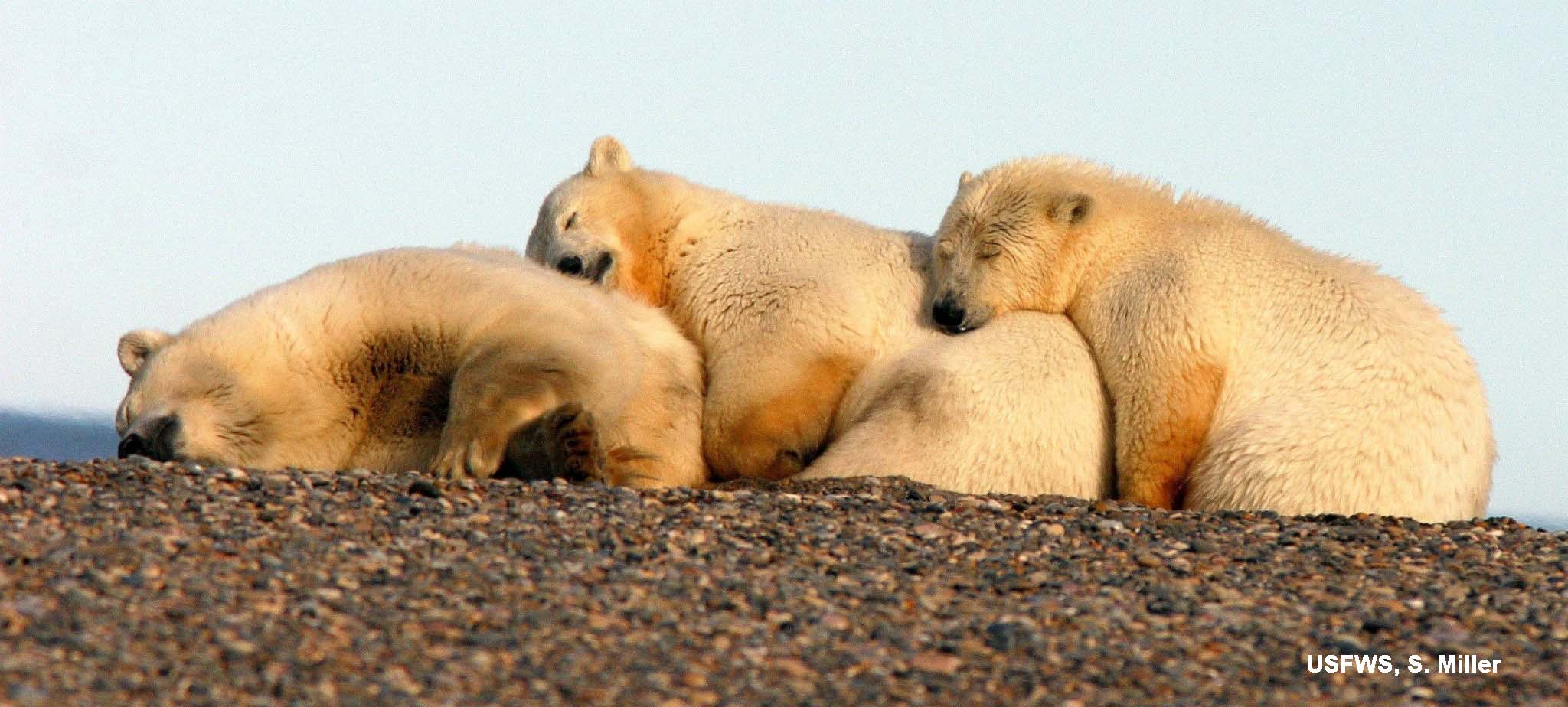
polarbears-arcticnatlwildliferefuge-suzannemiller-usfws_labeled_sm

This paper presents no compelling evidence that Southern Beaufort polar bears, or those in any other region, lack the ability to survive predicted summer sea ice declines in future decades – although they claim it does. See what you think.
Continue reading

Polar bear habitat looking good for early summer – last days before the fast

Some polar bears may already be living mostly off the fat put on over the spring but others may catch a seal or two on the sea ice before the summer fast begins – since the ice hasn’t left the coast in most regions quite yet. Polar bears eat little in summer, whether they spend their time on land or on the sea ice.

PolarBearCV1LG_USGS

Sea ice is still high over Hudson Bay – for this time of year, it hasn’t had this much polar bear habitat since 2009. Davis Strait and Foxe Basin are also above average – Davis Strait hasn’t had this much ice since 1992 (the Mt. Pinatubo cold year). Polar bear subpopulation refresher map below.

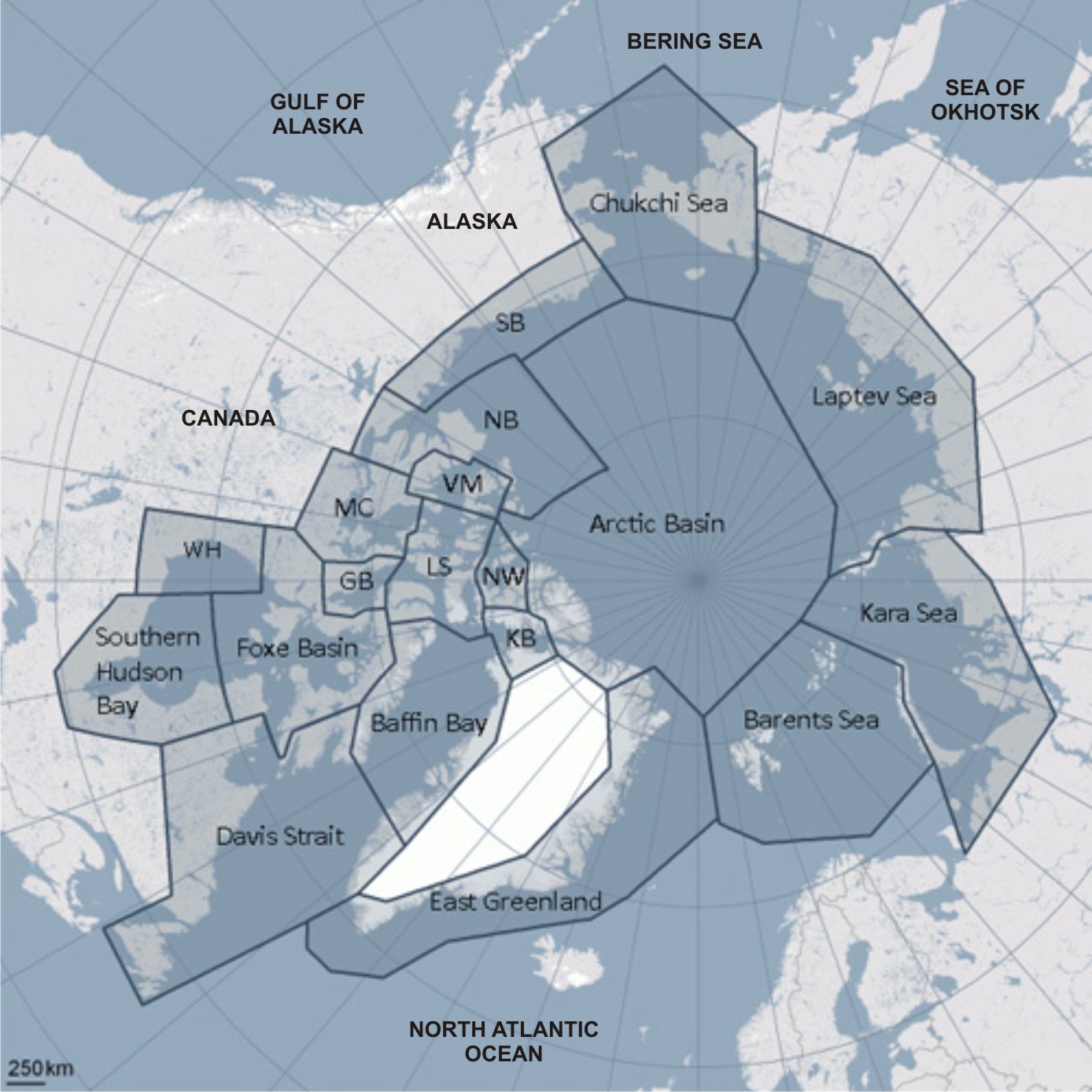
PB map-all-populations PBSG original plus Okhotsk
Continue reading

Polar bears fine now but give us more money: US Fish & Wildlife Management Plan subtext

Between-the-lines message of the recently released (and hyped to death) Conservation Management Plan for polar bears by the US Fish & Wildlife Service is that the bears really have nothing to worry about except human-caused global warming but it will cost tens of millions of dollars over the next five years to study and manage them.

polar_bear_usfws_no date_sm

So filled with double-speak, misinformation, and obfuscation [including the newly-invented term, “quasi-extinction floor”] that it’s no wonder some news outlets got it wrong (nowhere in this document does it say that polar bears might go extinct within ten years“). The document does, however, lay out the FWS budget for polar bears over the next five years – and it’s a real eye-opener.

Continue reading

Tracking polar bears in the Southern Beaufort June 2015 – all 17 bears out on the sea ice

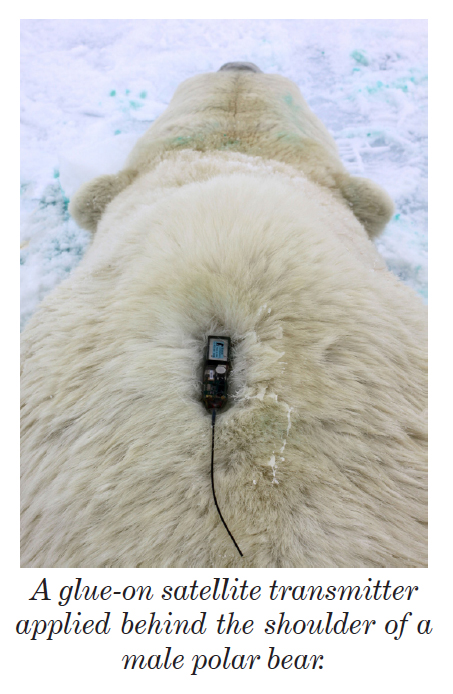
Sixteen females with satellite collars plus one with a glue-on transmitter – down from 17 with collars and 6 with tags last month – all out on the ice during the month of June 2015.

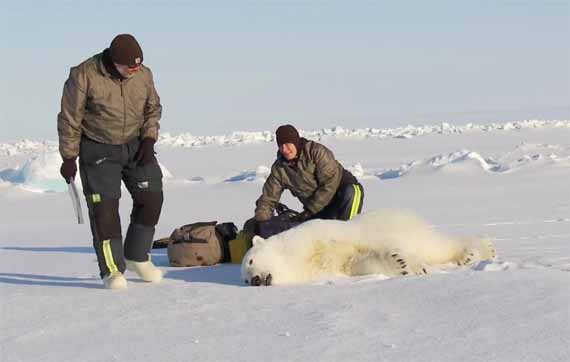
Tranquilized_pb570_S Beaufort March 2014_USGS

Polar bears were captured by USGS biologists in 2014 and 2015 on the spring-time sea ice of the southern Beaufort Sea. The glue-on tags don’t seem to be holding up very well, with only one remaining out of the original eight deployed this spring.
Continue reading

Tracking polar bears in the Southern Beaufort, with a sea ice surprise – April 2015 map

USGS biologists were clearly busy this spring putting more satellite radio collars and glue-on tags on Southern Beaufort Sea polar bears but there’s some surprising information in their April 2015 tracking map about current sea ice conditions.

From the 2013-2014 issue of  “Polar Bear News” (USFWS).

From the 2013-2014 issue of “Polar Bear News” (USFWS).

What’s interesting is that the sea ice maps they use show less dark spots that might be open water this year than were present last year in late April. Oddly, this phenomenon has one prominent biologist worried about “challenging” polar bear habitat developing this year – without mentioning last year at all.

The USGS track map for April 2015 is copied below.1
Continue reading