Tag Archives: western hudson bay

Hudson Strait and Davis Strait polar bear habitat highest since 1993

Sea ice development over Hudson Bay, Hudson Strait, and Davis Strait has been rather unusual this year but what that might mean for polar bears over the coming winter and spring is hard to tell.

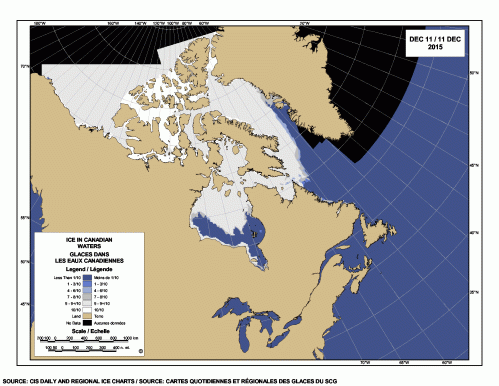
Canadian Arctic Dec 11 2015_CIS

Note: The Canadian Ice Service seems to be in the process of updating its sea ice page and graphing features that used to be available weekly on Thursday have not been available until the following week. This means the most recent graphs available are for the week of 11 December (see below).
Continue reading

Paris climate change deal will not stop polar bears dying due to thick ice in spring

Thick spring ice due to natural causes is currently the single biggest threat to polar bears. Not declining summer sea ice – thick spring ice. That could change in the future but right now, the evidence supports that statement.

polar_bear with collar_USGS

Polar bear deaths due to cyclical changes in Arctic sea ice thickness in the spring have continued despite rising CO2 emissions and declining summer sea ice extent (last major incident, 2004-2006): there is no reason to expect this will not continue. Unwarranted attention on summer ice extent has deflected attention from this major cause of local polar bear population decline.

Sea ice models do not address past or future changes in spring ice thickness and predictive models of polar bear survival blame all population declines on summer sea ice declines despite strong evidence to the contrary (Crockford 2015: The Arctic Fallacy). Continue reading

Discovery News spreads old misinformation about W. Hudson Bay polar bears

In a just-released Discovery News piece, Kieran Mulvaney (4 November 2015, “In the polar bear capital, an uncertain future) repeated three misleading statements about Western Hudson Bay polar bears that keep making the rounds, despite the fact they have been laid to rest by the latest scientific reports on  (Lunn et al. 2013, 2014; Stapleton et al. 2014). I reviewed these just a few weeks ago.
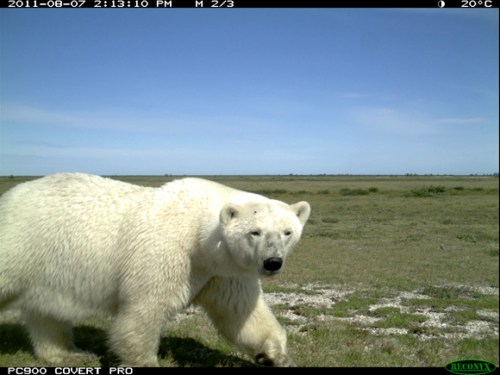
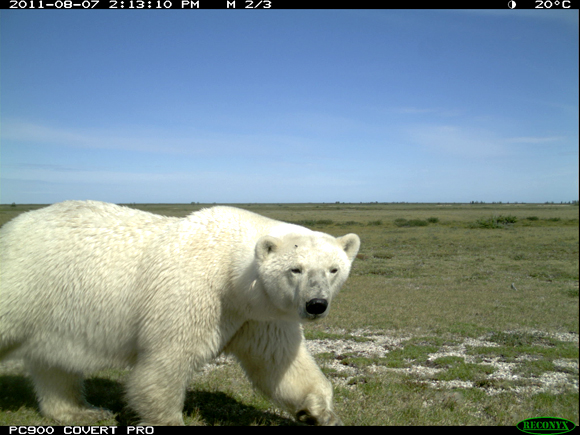
Western Hudson Bay bear, Wakusp National Park, August 2011.

Western Hudson Bay bear, Wakusp National Park, August 2011.

1) “Climate change is causing the bay’s ice to melt earlier and freeze later, causing bears to spend longer a shore.”

Not true. Lunn and colleagues stated explicitly that there has been no trend in either break up or freeze-up of WHB sea ice since 2001. Although there has been large variability in dates, that lack of trend that has continued to this year.

2 & 3) “As a consequence, Churchill’s polar bears are decreasing in number (from approximately 1,350 three decades ago to roughly 900-1,000 now) and in physical condition.”

This deliberately misleading statement avoids the fact that the latest surveys found roughly the same number of bears in 2011 as in 2004 (the estimate used by the IUCN Polar Bear Specialist Group for WHB is 1030) when different counting methods were taken into account. The ~900 bear estimate came from the mark-recapture survey, which left out a portion of the range that the aerial survey covered, hence the official estimate of 1030.

In addition, there has been no scientific assessment of body condition or cub survival since before the last population estimate in 2004 – polar bear “experts” keep telling journalists there are declines but have yet to produce any data to support those claims. The latest surveys did not collect data on body condition or cub survival.

Mulvaney’s misinformation is almost certainly the result of spending time in Churchill with activist Polar Bears International spokesperson Steve Amstrup and activist climate scientist Katherine Hayhoe doing webcasts (e.g. “Challenges of communicating climate change”).  

Mulvaney is clearly not a journalist or a science writer: if he was, he would do some research of his own and stop believing as gospel every word that activist scientists feed him. They are using him as a mouth-piece and sadly, Discovery News is buying it all and presenting it as science.

[Hayhoe, by the way, blocked me on twitter earlier this morning for making one observational comment, my first-ever to her account, in response to a conversation about polar bear population numbers. This is what I said that Hayhoe does not want her followers to know:

“Stop wanton slaughter, #’s go up, works for all species. S Beaufort #polarbear #s dipped due to thick spring #seaice”

Both statements are true and supported by scientific literature. But Hayhoe is all about “climate communication” which appears not to allow science to intrude.]

References
Lunn, N.J., Regehr, E.V., Servanty, S., Converse, S., Richardson, E. and Stirling, I. 2013. Demography and population assessment of polar bears in Western Hudson Bay, Canada. Environment Canada Research Report. 26 November 2013. PDF HERE

Lunn, N.J., Servanty, S., Regehr, E.V., Converse, S.J., Richardson, E. and Stirling, I. 2014. Demography and population assessment of polar bears in Western Hudson Bay, Canada. Environment Canada Research Report. July 2014. PDF HERE [This appears to be the version submitted for publication]

Stapleton S., Atkinson, S., Hedman, D., and Garshelis, D. 2014. Revisiting Western Hudson Bay: using aerial surveys to update polar bear abundance in a sentinel population. Biological Conservation 170:38-47. http://www.sciencedirect.com/science/article/pii/S0006320713004618#

2015 may be the earliest in many years that W. Hudson Bay polar bears head for the sea ice

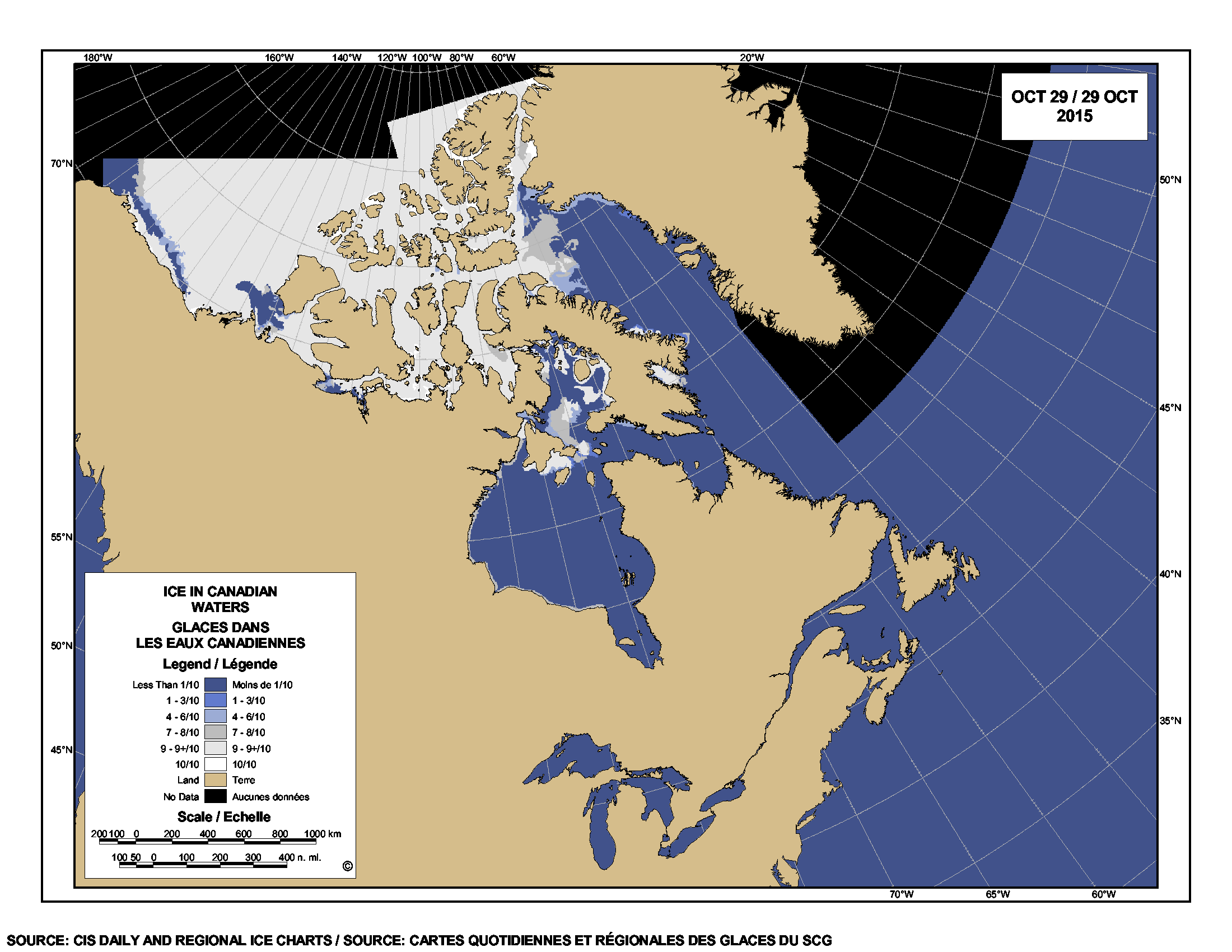
Great news for Western Hudson Bay polar bears! Following up from sea ice conditions last week, CIS maps show ice forming all along western Hudson Bay – not a huge amount, but the beginning of the end of the ice-free season, which recently has not occurred until mid-November (Cherry et al. 2013).

Canadian Arctic Oct 29 2015_CIS

There is above-average sea ice coverage in Foxe Basin and Davis Strait, and only slightly below average coverage in the Beaufort Sea (see graphs below). Polar bear habitat is shaping up very nicely indeed across Canada and the US this year.
Continue reading

Sickening effect of satellite radio collars polar bear researchers don’t want you to see

A report at CBC News (Photo shows polar bear injured by tight radio collar,” Martin Zeilig, 28 October 2015) shows the bloodied neck of a male Southern Beaufort Sea polar bear, taken near Kaktovik, Alaska, whose radio collar is too tight.

polar-bear-radio-collar_CBC Oct 28 2015

Researchers should not be putting collars on young animals and male bears – they know the problems! Who did the USGS have working for them that did not know this or couldn’t tell a male bear from a female? [see below] The other question is: how many more bears are in the same condition but out of sight on the sea ice – or dead due to their injuries? Don’t forget, this is a population that researchers claim is endangered because of climate change but which really declined recently due to thick spring ice in 2004-2006. [SJC – ambiguity fixed]

UPDATE 28 October 2015: 5:41 pm – in a comment under the CBC story, Churchill polar bear guide Kelsey Eliasson wrote (“4 hours ago”):

“This isn’t a he, it’s a she. Saw this bear during our trip, its a female with one cub.

Male polar bears are not radio collared.”

The statement in the CBC article that the bear with the collar is a male thus seems to be an error.  That makes more sense but does not negate the suffering of the animal.

UPDATE 5 November 2015: 8:30 am – I just received an email from a reader who contacted USGS about this bear and with their permission, I have copied the response below (leaving out the USGS contact person’s details), my bold:

Hello xxxx,

I do not believe USGS banded the bear. I have talked with staff at the USGS Alaska Science Center and found that the polar bear in the news was an adult male. The USGS scientists will band female polar bears, but not male bears. If you have questions, see this site. there is a link to the staff on the left. Click it and you will see a list with the project manager at the top. http://alaska.usgs.gov/science/biology/polar_bears/tracking.html

It may be that USGS is accepting the word of one of the experts quoted in the story [Vince Crichton] that the bear is a male and have denounced their involvement on that basis. Obviously, other polar bear researchers must be working in the area, and Geoff York statements (below) suggest a crew from University of Alberta, led by Andrew Derocher.  But if Kelsey Eliasson is right that this is a female with a cub (see above update), it may indeed be a USGS bear, perhaps one who’s collar has stopped transmitting. The plot thickens.
Continue reading

BBC perspective on Arviat polar bears – those not included in the last mark-recapture study

In a polite but misleading article today in a BBC magazine (The polar bears are coming to town) about the relationship of polar bears and Inuit in Arviat, Western Hudson Bay, there is no mention of the on-going feud between Nunavut Inuit and Canadian polar bear scientists regarding invasive research.

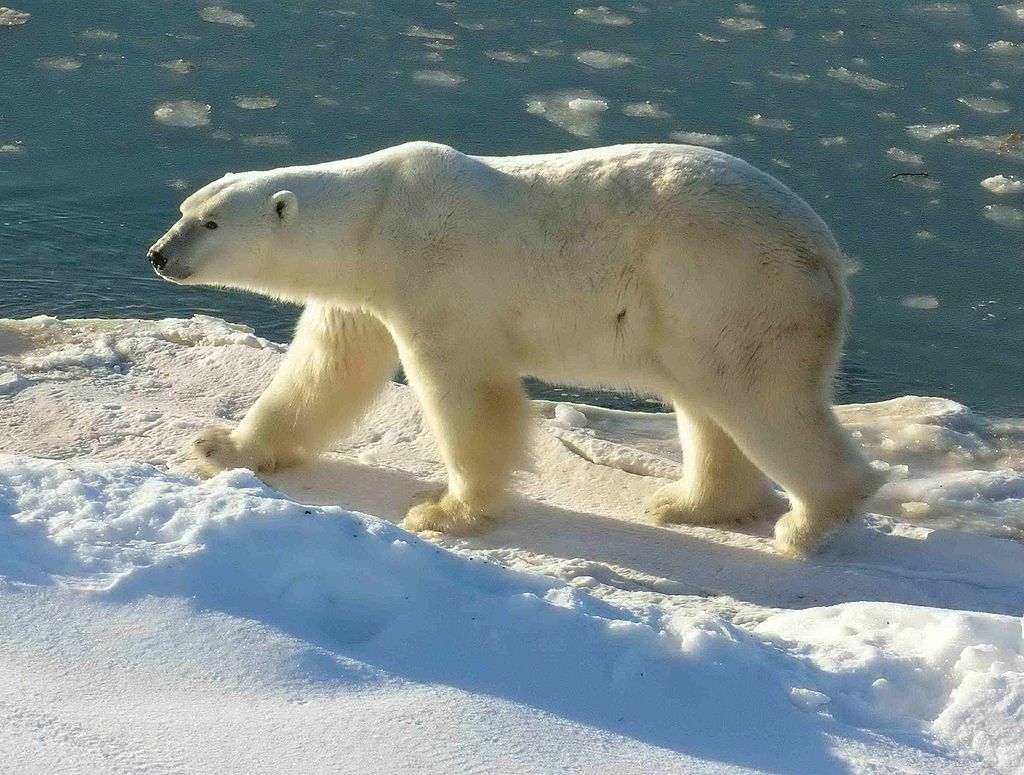
Churchill_Polar_Bear_2004-11-15 Wikipedia

Nor is there a mention of the fact that according to the most recent research, there has been no trend in sea ice conditions since 2001.
Continue reading

Western Hudson Bay polar bear numbers are stable, no trend in ice breakup or freeze-up

This needs saying again: the latest study on Western Hudson Bay polar bears reveal the population has been stable since 2004 and there has been no significant trend in either breakup or freeze-up dates since 2001.

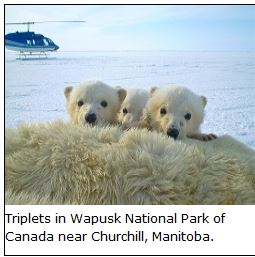
Triplets in Wapusk NP from McCall webpage 2013

Environment Canada and the IUCN Polar Bear Specialist Group concur that the current size of the WHB subpopulation is about 1030 bears. Documents found online indicate a new version of the 2013 WHB mark-recapture report (Lunn et al. 2013) is now available (Lunn et al. 2014) and that a new population survey is planned for 2016. A 2013 story based on false information produced by The Guardian that is still in circulation should be retracted.
Continue reading

In 1999, climate change apparently threatened Western Hudson Bay polar bears

Now, not so much. Here is a 16- year old CBC TV special on Churchill polar bears – listen to Ian Stirling and reporter Eve Savory use the early breakup of sea ice on Hudson Bay in 1999 to hype the alarm about Western Hudson Bay polar bears. Watch Stirling in action darting and measuring bears and bemoaning the good old days of the 1980s, claiming the “bears are sending a signal from the ecosystem.

Watch this archived copy of “The Shrinking Bears of Hudson Bay and compare his claims to what has actually happened in the 16 years since then. It runs just over 15 minutes.

Climate change threatens polar bears 2_CBC 1999

“Just as the ice is shrinking in Hudson Bay, so are its polar bears. Climate change has shortened the season for winter ice, a crucial period for the bears to feast on seals and build up their fat reserves. And so, over the 18 years that wildlife biologist Ian Stirling has been studying them, the polar bears have become skinnier and their offspring fewer. In this 1999 report for CBC-TV’s The National, Stirling says once their habitat is gone, there’s nowhere else the Hudson Bay polar bears can go.” [my bold – see notes below]

Program: The National [Canadian Broadcasting Company, CBC]
Broadcast Date: Sept. 23, 1999
Duration: 16:39

Stirling has continue to make these claims since 1999, yet no updated evidence has been provided. There is no plausible evidence that the decline of polar bear numbers in Western Hudson Bay was due to sea ice changes caused by human-caused global warming (Crockford 2015) or that continued declines in condition of bears or litter size have  occurred. Note that the latest survey of Western Hudson Bay polar bears found no trend in either breakup or freeze-up dates since 2001 (Lunn et al. 2013) and that the population is now stable.

Ice coverage charts and breakup dates graph below, for context.
UPDATE ADDED – see below
Continue reading

Keeping track of problem bears in Churchill

The City of Churchill has recently taken to posting its problem bear reports on its Facebook page. This is something to keep an eye on, so let’s catch up so that future reports can be put into context.

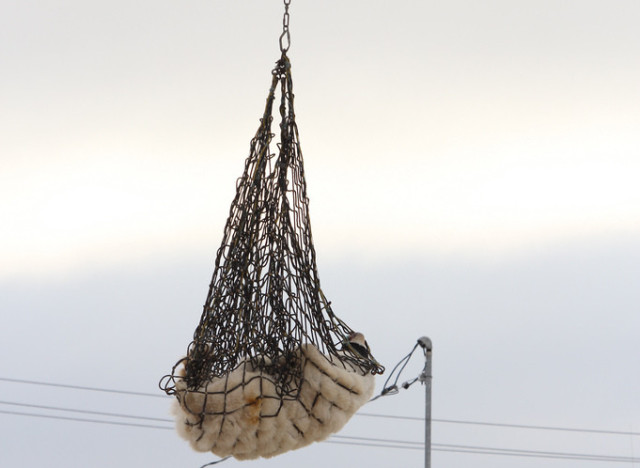
Figure 1. A bear is transported to Churchill’s polar bear holding facility, from a 2011 Huffington Post article “Polar Bear Prison.”

Photo above:  A bear is transported to Churchill’s polar bear holding facility (from a 2011 Huffington Post article, “Polar Bear Prison”).

Continue reading

Hudson Bay, Davis Strait and Foxe Basin sea ice highest since 1992

We are seeing one of the extremes in Hudson Bay sea ice variability this year, not only in extent but in distribution of ice. Ice coverage on Hudson Bay this year at 28 July was twice what it was in 2009, the last “late” ice breakup year for which detailed ice maps are available (409 vs. 204 thousand km2), according to NSIDC MASIE ice maps. Canadian Ice Service data show 2015 coverage for the week of 30 July was the highest since 1992.

Churchill_Polar_Bear_2004-11-15 Wikipedia

The odd pattern of ice distribution presents a conundrum. Have a look at the maps and graphs below.

Continue reading