Tag Archives: western hudson bay

W Hudson Bay polar bear season wrap-up: problem bear stats & sea ice vs. 2016

This year, due to an early freeze-up of the sea ice, many polar bears left the Western Hudson Bay area (including Churchill) the week of November 6-12. However, the folks who produce Churchill’s problem polar bear statistics did not generate a report for that week, so we are left with assessing the final freeze-up situation based on the previous report (see it here) and the one they have just released for the week of 13-19 November (below), the 18th week of the season (which began July 10):
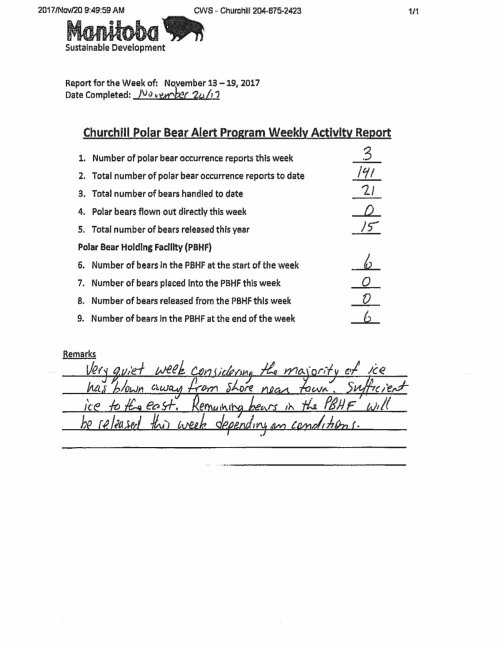
Churchill Polar bear alert report Nov 13-19_Nov 20 released

The “quiet” week was almost certainly due to the fact that very few bears were still around, having left the previous week.

While it is apparently true that a south wind briefly blew ice away from the area around the town of Churchill, most bears had left by that point and there was plenty of ice to the north and southeast for bears that had congregated outside the town to wait for the ice to form.

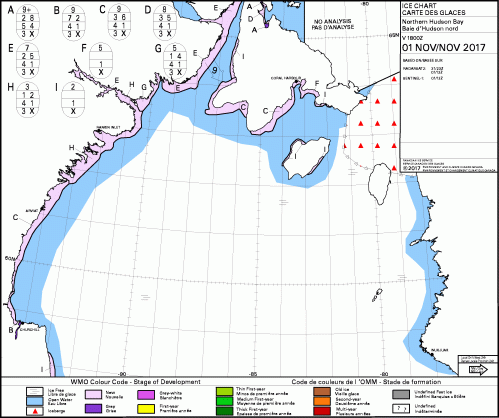
Churchill sits on a point of land (see map below) that makes new ice vulnerable to winds from the south but this year impact was small: the north winds returned within a few days and so did the ice.
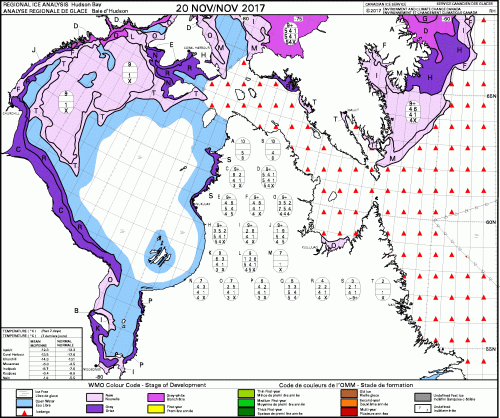
Hudson Bay weekly ice stage of development 2017 Nov 20

By this week there were still a few stragglers that hadn’t left shore but most of these were mothers with cubs, as well as young bears living on their own, who often hold back to avoid dangerous encounters with adult males at the ice edge.

A few adult males that were still in excellent condition after 4 months ashore without food seemed in no particular hurry to resume hunting. In part, this may have been due to the rather foul weather prevalent since the first week of November (with howling winds, low temperatures and blowing snow much of the time).

You can see in the chart below just how much more ice there was for the week of 20 November compared to average — all those dark and light blue areas along the west coast of Hudson Bay (and east of Baffin Bay) indicate more ice than usual. Even Southern Hudson Bay has enough shore ice for bears to resume hunting. Foxe Basin (to the north of Hudson Bay) has less ice than usual (red and pink) but there is still enough ice for polar bears there to begin their fall hunting, as the chart above makes very clear.
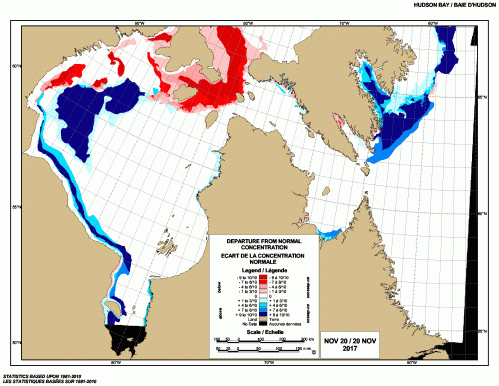
Hudson Bay weekly departure from normal 2017 Nov 20

Freeze-up and bear movement offshore were about three weeks earlier this year in Western Hudson Bay compared to 2016, which made a huge difference to the number of problem bears in Churchill, see below.

UPDATE 23 November 2017: CIS ice chart for today showing the ice forming in the northwest sector of Hudson Bay
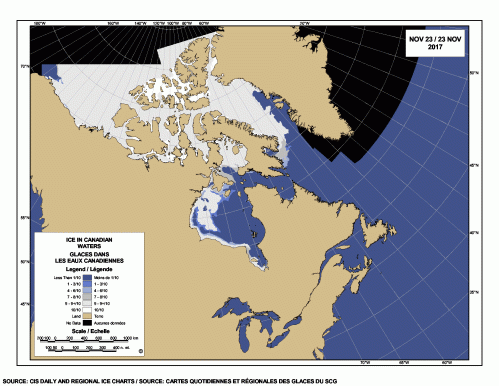
Sea ice Canada 2017 Nov 23

UPDATE 27 November 2017: Final problem polar bear report copied below, issued by the town of Churchill. As noted above, the fact that some bears remained onshore into last week was a very local anomaly not experienced over the rest of the region.

churchill-pb-reports_week-19_20-26-nov-2017_last-of-the-season.jpg

Continue reading

Experts talk of their bleak future, W Hudson Bay polar bears get earliest freezeup in decades

It seems that Churchill residents and visitors woke up this morning to find most local polar bears had left to go hunting — on the sea ice that supposedly doesn’t exist. Right in the middle of the Polar Bear Week campaign devised by Polar Bears International to drum up donation dollars and public sympathy for polar bear conservation!

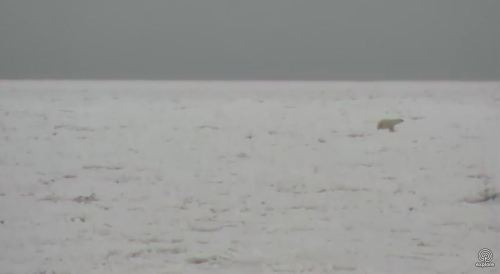
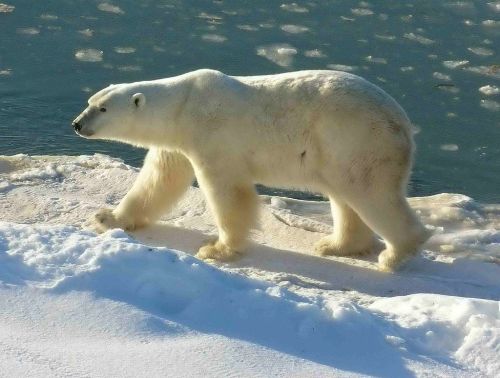
Polar bear on the sea ice_Churchill_8 Nov 2017_Explore dot org cam my photo 2Frigid temperatures and north winds last night helped the process along, but this early freeze-up has been in the works for almost a week. From what I can ascertain, it appeared the only bears around onshore today were a mother with her young cub moving out towards the ice (females with cubs are usually the last to move offshore, probably to reduce the risk of encounters with adult males who might kill the cubs).

Tundra Buggy cams at Explore.org have been showing markedly fewer bears today and those that have been seen were on the ice (see above and below) or heading out to it.

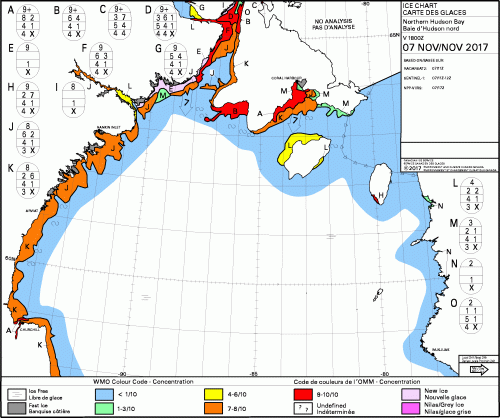
The chart below is for yesterday (7 November), before the cold and north winds hit the region. It shows the concentration of ice that’s >15 cm thick.

Hudson Bay North 2017 concentration Nov 7

The chart for 8 November is below, after the storm.

Hudson Bay North daily ice concentration 2017_Nov 8

This is ice thick and extensive enough for polar bears to go hunting. Some bears almost certainly left shore yesterday, with the rest following quickly on their heals today. There are sure to be some stragglers left ashore that will leave over the next few days but the fact remains: there is sea ice to be had for those polar bear willing to start hunting.

Watch polar bear on the WHB sea ice below (screen caps below – and one above – were taken the afternoon of 8 November, from the Tundra Buggy Cam live feed near Churchill).

Polar bear on the sea ice_Churchill_8 Nov 2017_Explore dot org cam my photo 3

Keep in mind that in the 1980s, bears left for the ice on 8 November, on average. That means we’re back to a 1980s freeze-up scenario, at least for this year.

Funny how no one bothered to mention the potential for an early freeze-up to the media last week, when scientist were so eager to talk about the imminent demise of WHB bears. And funny that Polar Bears International hasn’t tweeted a word today about the famous Churchill bears having enough sea ice to go hunting, smack in the middle of Polar Bear Week.

Yes, the “Save Our Sea Ice” PBI rallying cry sounds a bit hollow with sea ice as far as the eye can see off Churchill today. But will anyone in the mainstream media point out the irony?

See charts below for years back to 2004, on this date (2005 missing for some reason), to compare to the above 8 November image (2004 is as far back as the archive goes).

Continue reading

Problem bear report for Churchill might be second-last one this year

Good news for Western Hudson Bay polar bears that have been getting into trouble in Churchill, Manitoba: the seasons looks to be almost over.  Only a few more days of “Polar Bear Week” likely remain, as sea ice will build along the shoreline in response to severe cold and the north winds expected later today.

Churchill PB reports_week 17_30 Oct- Nov 5_2017_week 10 and 13 missing

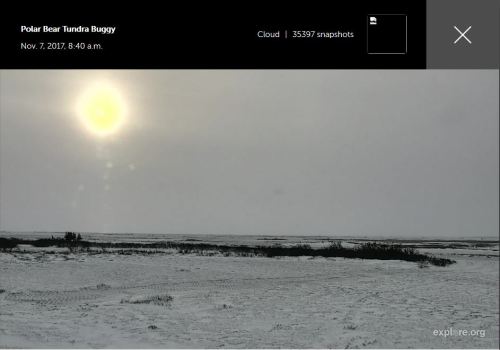
This morning near Churchill, from one of the tundra buggies, post at Explore.org:

Churchill on 7 Nov 2017_Explore dot org

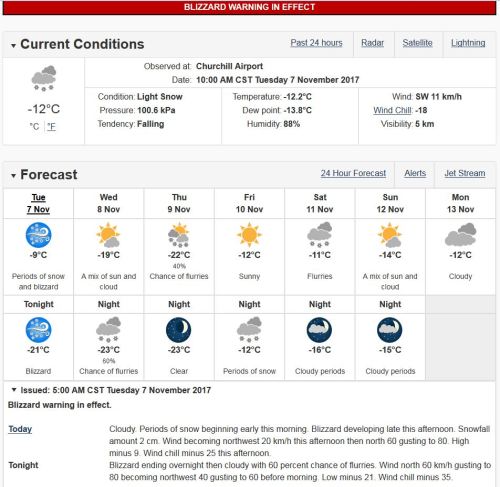
Churchill weather 2017 Nov 7

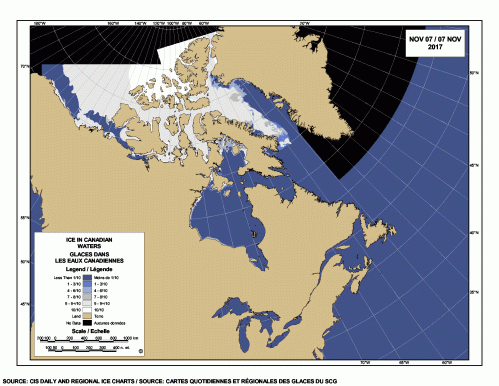
Sea ice at 7 November, will be updated so check back:

Sea ice Canada 2017 Nov 7

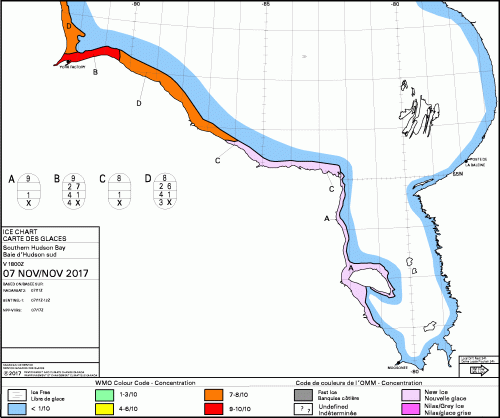
Ice forming all the way into James Bay (Southern Hudson Bay), as shown by the daily ice concentration charts for 7 November 2017 (Northern and Southern Hudson Bay) of ice thicker than 15 cm:

Hudson Bay North daily ice concentration 2017_Nov 7

Hudson Bay South daily ice concentration 2017_Nov 7 greater than 15 cm

Continue reading

Scientists and media continue to spread misinformation about polar bears & walrus

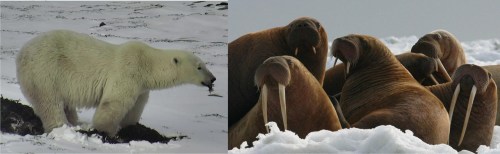
“Lies” might be a better word to characterize the misinformation that scientists and the media have been busy spreading to the public over the last few weeks. The information is either known to be false (by scientists whose job it is to relay facts honestly) or is easily shown to be false (by journalists whose job it is to fact-check their stories).

Churchill polar bear and walrus 2017

Continue reading

Early freeze-up in progress on Hudson Bay – what a difference a year makes

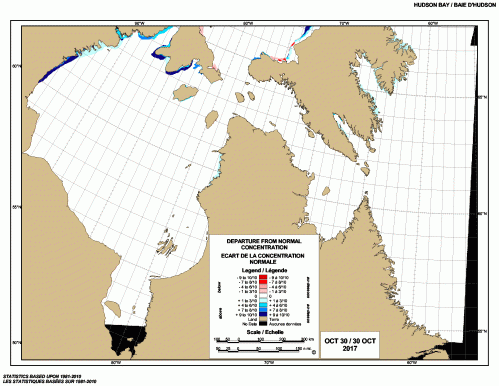
In contrast to 2016, when freeze-up along Western Hudson Bay was about as late as its ever been (early December), ice is already forming along the shore of northern Hudson Bay. There is much more ice than usual for this date, indicated by the dark blue in the latest weekly ice chart below:

Hudson Bay weekly departure from normal 2017 Oct 30

The ice is still thin, as the chart below indicates, but that’s how freeze-up starts. As long as strong winds don’t blow the ice away (as it sometimes does at this stage), the ice gets thicker day by day — and advances further and further off shore. Polar bears get out on the ice as soon as they are physically able, when the ice is about 3-4 inches thick (about 10 cm) or less.

Hudson Bay North daily ice stage of development 2017_Nov 1

Below is a video of a bear traversing that thin ice yesterday (1 November 2017), near Churchill. Is this a portend of a freeze-up date as early as occurred in the 1980s?
Continue reading

Breaking: 2016 W. Hudson Bay polar bear survey shows the population is still stable

A just-released report on the most recent (2016) survey shows Western Hudson Bay polar bear numbers were still stable despite predictions that this subpopulation would be wiped out completely (reduced to zero) due to low Arctic sea ice.

Churchill_Polar_Bear_2004-11-15 Wikipedia

The authors of the report on the August 2016 aerial survey of the Western Hudson Bay polar bear subpopulation (Dyck et al. 2017) state clearly that the only trends they could find were that the number of adult males increased somewhat over 2011 estimates and the number of females either declined or remained stable. The overall population estimate was a bit lower (11% less) compared to the 2011 survey but the difference is not statistically significant. Therefore, the population status must be stable.

2011 estimate: 949 bears (using comparable data, range 618-1280), litter size 1.43

2016 estimate: 842 bears (using comparable data, range 562-1121), litter size 1.63

[cf. Foxe Basin [stable], from 2009-2010 survey (Stapleton et al. 2016) litter size was 1.54]

An 11% decline in WH numbers since 2011 is most definitely NOT the decline to ZERO (extirpation) we were told to expect with Arctic sea ice as low as it has been since 2007 (Crockford 2017, see list of annual minimum extents 2007-2017 here).

Note: The percentage decline from 2011 to 2016 for Western Hudson Bay polar bears is 11%, NOT 18% as claimed recently by Andrew Derocher on twitter: it is not appropriate to compare the official 2011 estimate of 1030 (Stapleton 2014) to the 2016 estimate of 842 because the methods used to generate the estimates were different (Dyck et al. 2017). The authors of the report state that the estimate for 2011 that’s comparable to 2016 is 949.

An 11% decline from 1030 would be 917 bears, a statistically insignificant decline that is also biologically insignificant and therefore, so slight as to indicate a stable population.

https://twitter.com/AEDerocher/status/908423171967139840

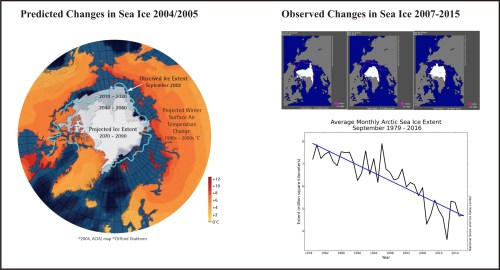
Predicted sea ice at 2050 and 2080 shown below (see Crockford 2017 for details):

Crockford 2017 sea ice graphic

Quotes, map, and table from the Dyck et al. 2017 report (pdf here) are copied below.

Continue reading

Problem polar bears in Churchill at this date show 2017 less than 2016 and 2015

Comparing Churchill problem bear statistics over a few years provides some critical perspective: this year, the bears are causing much fewer problems.

This 2nd week in September is no exception, being the 9th week ashore in all cases: 2017 (4-10 September, where I think “total number of polar bear occurrence reports to date” should be 64, not 53, see week 7 report here), 2016 (5-11 September), 2015 (7-13 September), where there were about 1/2 the number of bears in “jail” this year compared to the last two years (i. e., 6 vs. 11 and 12) and slightly more than 1/2 the number of occurrence reports in 2017 than in 2016 and 2015 (64 vs. 107 and 99):

2017 week 9 Sept 4-11 may be typo

2016-sept-5-11_week-9.jpg

2015 Sept 7-13_at Sept 14


Problem bear reports confirm Churchill polar bears are in excellent condition

Now that all bears are ashore for the season, the folks at the Polar Bear Alert program in Churchill note in their report for week 7 (21-27 August, 2017) that the bears ashore are in excellent condition (confirming reports on the first bears ashore in July):

Churchill PB reports_week 7_ Aug 21-27_2017_Aug 28

Rather marked contrast to the pessimistic spin on conditions from the field a few months ago:

[yes, a few bears fail to make it through the winter, especially young bears; but that has always been the case — it’s not a sign of human-caused global warming catastrophe]

Last week’s problem bear report also confirmed news from the Churchill Polar Bears website a few weeks ago that showed several images of very fat bears:

Churchill_PolarBears_FAT bear post_21 Aug 2017

See below for last year’s report for week 7 and this year’s report for week 8 (28 August-3 September). Western Hudson Bay polar bears that come ashore near Churchill, Manitoba are starting their third month on land this week, out of the five months or so they have spent ashore in recent years (about 3 weeks more than in the 1980s, no longer than they did in 2004 — conditions have not been getting worse).

Continuereading

Fat polar bears [and lots of them] drive public confidence in future of the species

What is causing the death of the polar bear as a climate change icon? Fat bears are part of it, but mostly it’s the fact that polar bear numbers haven’t declined as predicted.

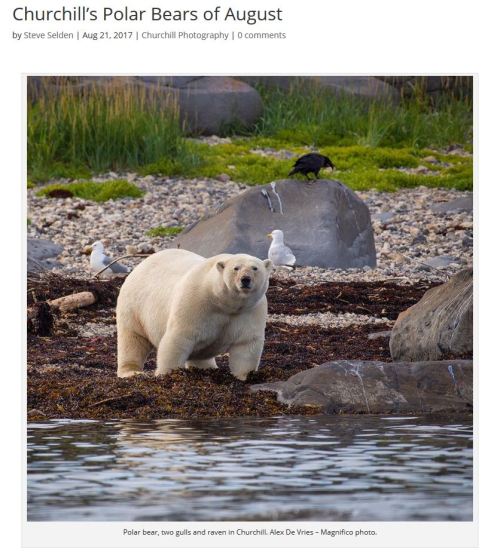
Western Hudson Bay polar bears around Churchill, Manitoba appear mostly in good shape this summer despite the very late freeze-up last fall, including the very fat bear caught on camera below (see more great pictures here):

Churchill_PolarBears_FAT bear post_21 Aug 2017

Not only have we been seeing pictures of fat bears rather than starving bears in recent years but there are lots of them, in Western Hudson Bay and other seasonal sea ice regions where there should be none (if the models had been correct). No wonder polar bears are falling out of favour as an icon for catastrophic human-caused global warming.

[Here’s another picture of a fat bear, this one from Svalbard]

Excuses for why the public is no longer worried about the future of polar bears include a recent claim by climate scientist Michael Mann that “by making polar bears and penguins the poster child for climate change, we have wrongly conveyed that this is some exotic problem far off.

But none of these apologists acknowledge the simple truth: the models that  predicted catastrophe for polar bears due to diminished summer sea ice turned out to be wrong. The sea ice declined but polar bears flourished. Polar bears in seasonal sea ice ecoregions like Western Hudson Bay and Baffin Bay didn’t die off due to climate change as people were told would happen — why should they believe any of the other scare stories?

In and around Churchill, where tourists flock to see Western Hudson Bay polar bears up close and personal, one bear in good condition recently ran through town:

Overall, there have been fewer problems or conflicts this year in Churchill compared to last (after 6 weeks of onshore living), see below.

Polar bears are no longer a useful global warming icon because they are thriving despite diminished sea ice: Churchill area polar bears are a good example.

Continue reading

Churchill polar bear reports to 6 August show fewer problems than last two years

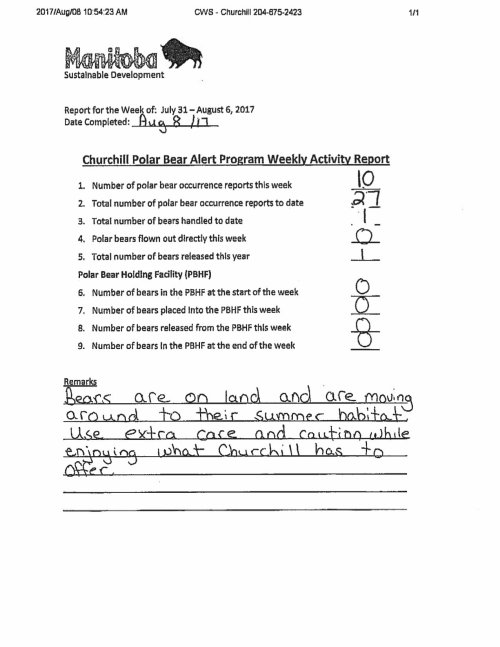
Churchill, Manitoba Polar Bear Alert Program problem bear reports for weeks 3 (24 July – 30 July 2017) and 4 (31 July – 6 August 2017) show much less activity and fewer problems in this Western Hudson Bay location than were reported for the last two years (2016 and 2015) at the same time (relative to the first reports of the season):

Churchill PB reports_week 4_ July 31- Aug 6_2017

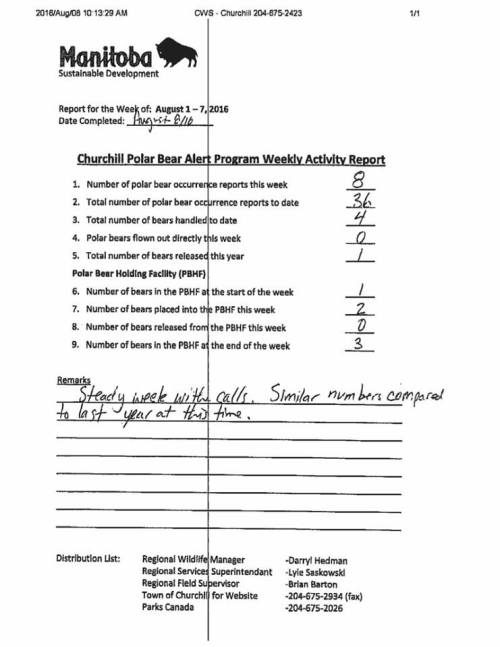
Compare 2017 to last year (2016) at this time, where the problem bear report claims numbers were similar to 2015 (for which I don’t have a week 4 report), with more bears handled and placed in “jail”:

2016 Aug 1-7_week 4

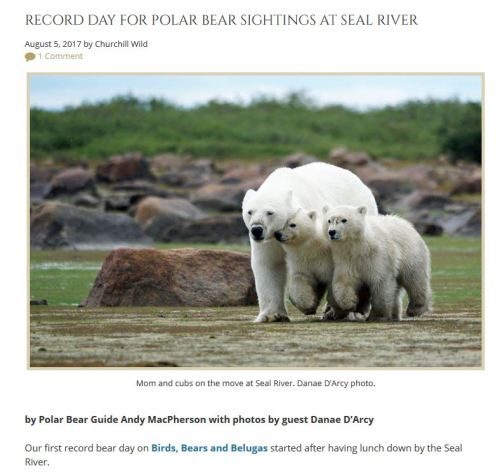
But most Western Hudson Bay bears are at their highest body weight when they come off the ice in early summer and present little risk to humans who keep their distance — few bears cause any real problems this time of year. Compare the above problem bear reports to the blog post from Seal River Lodge, just north of Churchill (5 August 2017, from Churchill Wild Eco-Lodge), which reports seeing 11 bears in one day of viewing. Great photos at this post confirm those bears are in good physical condition and interacting with each other without bothering people.

Seal River polar bear report for 2017 Aug 5

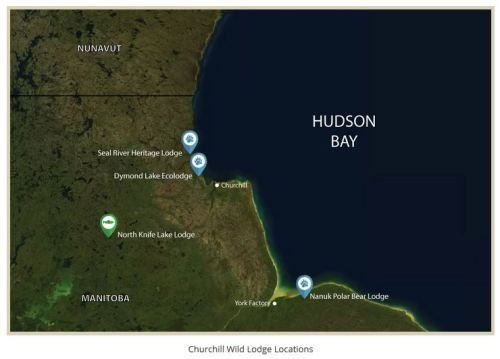
Seal River Lodge location 2017

Continue reading