Tag Archives: Derocher

Polar bear habitat at 26 January 2016

There is still below average ice extent in the Barents Sea but there is no data whatsoever to indicate that this situation poses a problem for polar bears, given that as far as researchers know, polar bears eat little or nothing during the winter. That’s why the bears are at their leanest at the end of winter and why seal pups born in early spring are such a critical food source.

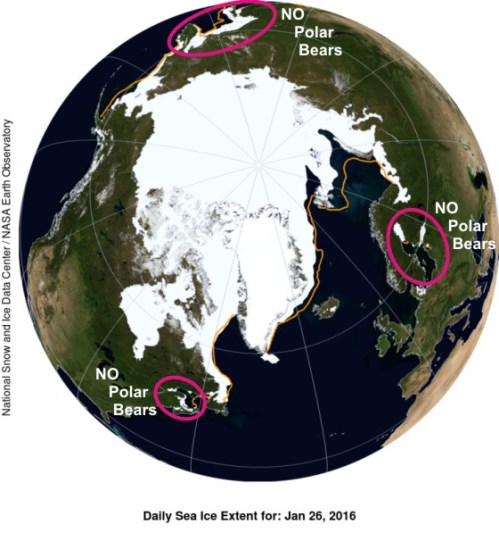
Note on map below (from WUWT Sea Ice Page, marked; original here) that polar bears are not found in three areas that are included in the total Arctic ice extent figures: below-average or above-average ice in the Sea of Okhotsk, Baltic Sea, and Gulf of St. Lawrence have no impact on polar bear health and survival.


Polar bear habitat at 26 Jan 2016_no bears marked_PolarBearScience_sm

Additional ice maps below. Continue reading

Polar bear survival: habitat 2013 vs. 2016 for 22 January

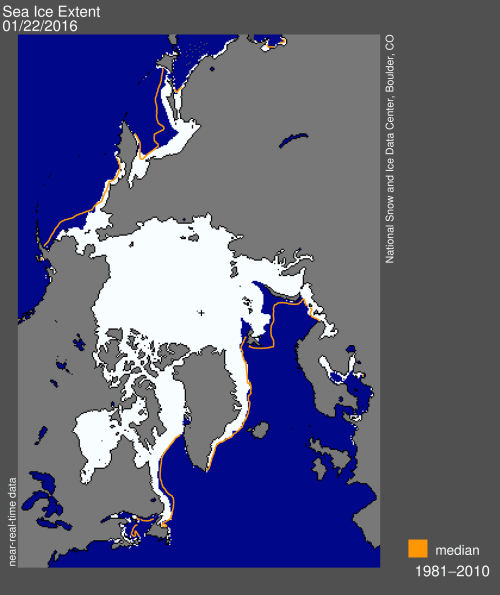
Using sea ice maps issued by the National Sea Ice Data Center (NSIDC), it’s interesting to compare these two years with respect to polar bear health and survival (keeping in mind that no polar bears live in what I like to call the armpits of the Arctic – the Sea of Okhotsk, the Baltic Sea or in the Gulf of St. Lawrence)1:

22 January 2016

Sea ice extent 2016 Jan 22 NSIDC

Continue reading

The old ‘website revision’ excuse for not updating polar bear status changes

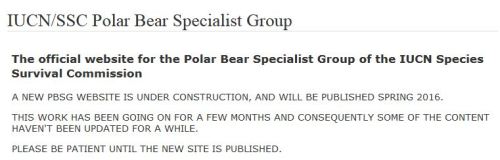
Apparently, the IUCN Polar Bear Specialist Group (PBSG) thinks that it’s OK to mislead the public on the conservation status of polar bears for half a year because its website is being revamped. This conservation organization is of the opinion that people landing on their website while searching for official polar bear status information don’t need to know right away that a new IUCN Red List document was published in November 2015. We know this because the message below appeared on the PBSG homepage 14 January 2016 (text in bold was there previously: the new message is in CAPS), screencap of entire page at 16 Jan 2016 pdf here:

PBSG website notice_2016 Jan 14 update

It appears that the PBSG feels that the public can wait to be told about 2015 Red List decision until the PBSG are ready for them to be told, which could be anywhere from March to the end of June 2016, depending on what definition of “spring” they use. Anyone (like moi) suggesting this tactic is paramount to withholding unpleasant information is just being “impatient.”

Decide for yourself but to me, this PBSG message speaks volumes: it says the 2015 IUCN Red List assessment is bad news for polar bear predictions of gloom and doom. Polar bear specialists don’t want to talk about it because it is a slap-down of all previous attempts at predicting a grim future for the bears (see the summary at the end of this post).
Continue reading

Some polar bears make poor choices, like this one in James Bay

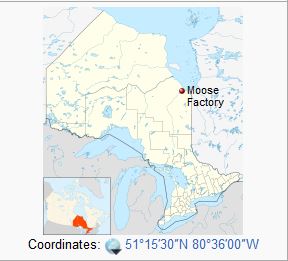
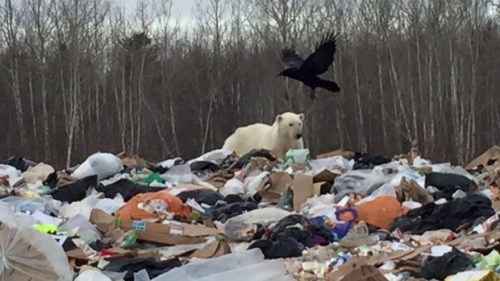
CBC reported this morning that a polar bear was shot last Friday (18 December) at the dump in Moose Factory, Ontario – long past the date when bears in Southern Hudson Bay are usually out on the ice. But a single bear in trouble does not spell catastrophe for the species or the local population: how many times does this need to be said?

Moose Factory_Wikipedia

Claims of “almost no ice” seem a bit disingenuous, since this seems to be the only bear caught in this situation (if there are others, no one has reported it): other bears appear to have either made use of the ice that was present (see map below) or walked north until they found more ice. This bear (picture below) seems to have decided that the fare on land might do for a while longer, which suggests he’s either a subadult bear (with little experience) or an old one – looks like the former to me in the picture below but the report doesn’t say.

Moose Factory_polar-bear-in-dump_CBC Dec 22 2015

Continue reading

Barents Sea polar bears adapt to changing sea ice conditions

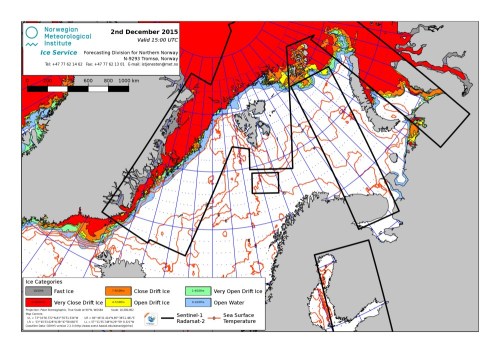
Sea ice development in eastern Svalbard this fall is lagging well behind the rest of the Arctic. Several polar bear researchers (e.g., Andrew Derocher here and here) have recently been raising the alarm that this might be devastating for Barents Sea females looking for suitable denning sites.

Barents Sea ice 2015 Dec 2_NIS_sm

The implication is that pregnant polar bear females are inflexible – so fixated on one location to give birth that they are unable or unwilling to choose an alternative if conditions preclude using their preferred location this year. However, the available facts do not support such a pessimistic attitude.
Continue reading

Russian polar bear scientist critical of using radio collars

In an update to an earlier story from last month about a male polar bear spotted near Kaktovik with a tight satellite radio collar, a Russian biologist has voiced some some serious criticisms of the use of these devises.

polar-bear-radio-collar_CBC Oct 28 2015

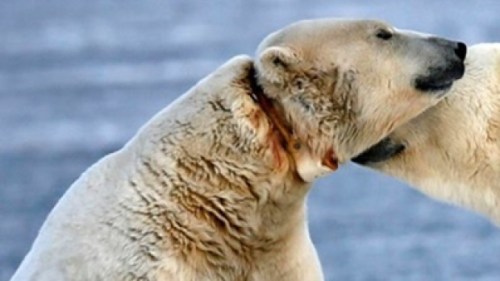
In another news outlet, Andrew Derocher has finally admitted publicly that the Kaktovik bear with the tight collar is a male and is”likely his” (Global News, 23 November 2015; “Is this polar bear really being choked by a research collar?”). The male bear appears to have been fitted with a collar some time between 2007 and 2011. The collar should have fallen off by now but hasn’t. Derocher suggested maybe the collar isn’t really too tight and the blood might not belong to the bear. And that if the bear really wanted the collar off, he “…will be able to remove it himself.”

The criticisms of the use of collars are well worth reading.

UPDATE 25 November 2015: Another CBC report, not much more useful information except confirmation this is a male bear.
Continue reading

IUCN Red Book officials forced scientific standards on polar bear predictive models

As I reported Thursday, the IUCN announcement of a new Red List assessment for polar bear got the usual overwrought attention from international media outlets. However, not one of these contained a quote from a polar bear biologist.
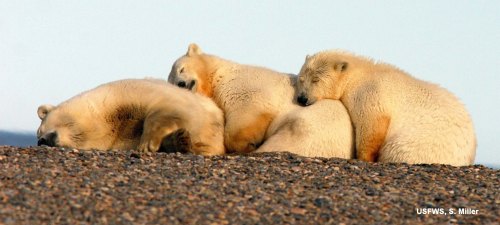
polarbears-arcticnatlwildliferefuge-suzannemiller-usfws_labeled_sm

Steven Amstrup, science spokesperson for activist conservation organization Polar Bears International, has so far had nothing to say to the media. Yet, Amstrup was a co-author of the IUCN Red List report. Not until late in the day following the release of the report did his his organization’s website post a short, bland news report (“Climate Change Still Primary Threat to Polar Bears”).

Similarly, Ian Stirling, Andrew Derocher, Nicholas Lunn (also a co-author of the IUCN Red List report), and former WWF employee Geoff York – who are usual go-to guys for polar-bears-are-all-going-to-die media frenzies – have so far been silent and invisible on this issue.

In addition, while the IUCN press release [backup here: 2015 IUCN Red List press release_Nov 19 2015] included a quote from IUCN Polar Bear Specialist Group (PBSG) chairman Dag Vongraven, as of this morning (21 November, PST), the website of the PBSG contains no mention of this decision – no item in the “News” category  and, more importantly, no update of the status table  or global estimates to reflect the changes contained in the report  (even though they obviously knew it was coming months ago: the report was submitted to the IUCN Red List 27 August 2015).

In my opinion, this silence says it all: polar bear specialists know this assessment is a severe de facto critique of their 2008 assessment (as well as Amstrup’s predictive models) and it’s a big step backwards for their conservation activism. I expect they are silent because they are royally pissed off.

However, this assessment is good news because finally, some standards of scientific rigor have been applied to polar bear predictive models – even though the PBSG were still been allowed to pretend that summer sea ice coverage is critical to polar bear health and survival (Crockford 2015).  Continue reading

Beaufort Sea swimming polar bears far from land but not very far from sea ice

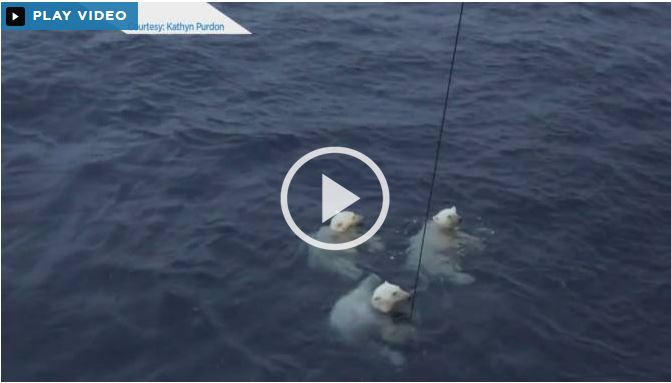
Recent accounts of an encounter with a curious polar bear female and her two older cubs in the Beaufort Sea on 16 September give contradictory details about the position of sea ice at the time. The same researcher told one reporter that the ship was 240 km from land, another that it was 240 km from the sea ice, and in another account (that he wrote himself), said the ship had been far from land and sea ice.

Beaufort swimming polar bears_Sept 30 2015_Global news

University of Victoria (Canada) chemical oceanographer Jay Cullen said on the expedition web site:

“After arriving on station and beginning work the crew noticed three polar bears in the water together which swam around to the ship when our water sampling system was nearly 3500 meters below the surface. The ship was located far from sea ice and land. Indeed, Arctic sea ice extent was the fourth lowest on record this year and there has been speculation that this imposes stress on polar bears which rely on the ice to hunt.”  [my bold]

But the maps below show that at the time of the incident (taken from the expedition web site) and the NSIDC Masie sea ice map for 16 September 2015, the ship [the CCGS Amundsen, acting as a research vessel] was actually quite close to an isolated large patch of sea ice, although further from the edge of the main pack. A patch of sea ice plenty big enough for a polar bear to rest upon – no wonder the bears did not appear stressed.

And the polar bear biologist Cullen consulted (Dr. Andrew Derocher) implied by his response that the bear was indeed far from sea ice. Reminds me of the swimming polar bear off the Hibernia oil platform off Newfoundland March 2015, which turned out to be not far from ice at all. See what you think.
Continue reading

Heavy ice in Hudson Bay derails ArcticNet global warming research plans: irony bites

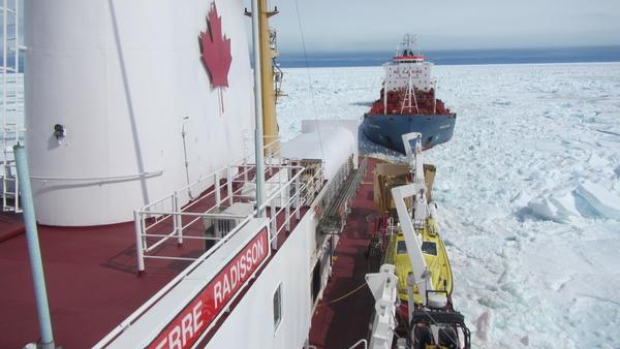
Heavy ice in Hudson Bay derails CCGS Amundsen’s research plans” – just in from the CBC (22 July 2015, via Twitchy). Worst ice in 20 years.

ccgs-pierre-radisson-in-sea-ice_to_Iqaluit_july 17_2015

[original caption for the above photo: “The CCGS Pierre Radisson escorts the oil tanker Havelstern to Iqaluit July 17. Tough ice conditions in area have delayed this summer’s annual resupply, and have now derailed the CCGS Amundsen from its carefully planned summer research program.”]

Worst ice conditions in 20 years force change of plans to icebreaker research program

That would be 1992 they’re talking about, the cold year that everyone blamed on the eruption of Mt. Pinatubo. Unfortunately, there are no good detailed ice maps from 1992 (see previous post here). What’s the excuse this year?

CCGS Amundsen is an icebreaker that is usually released from duty to serve as an Arctic research vessel in the summer. And who’s on board? GEOTRACES 2015 Arctic Expedition out of the University of British Columbia with a plan to study (in part) global warming caused “ocean acidification.” Their short blog post shows a map without ice and not a hint they see the irony of the situation.

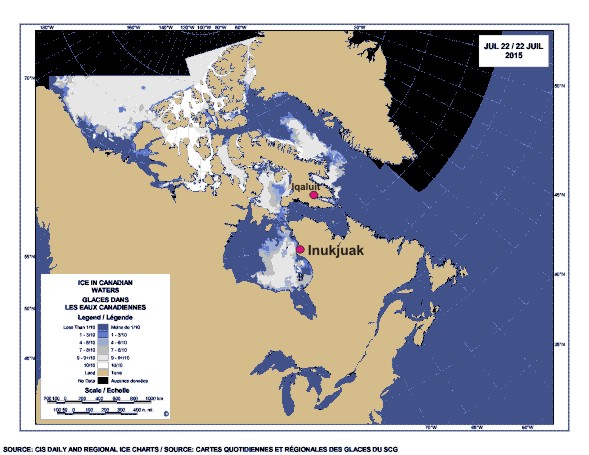
Here’s the ice they’re talking about (from the Canadian Ice Service), with the communities mentioned in the study marked:

Sea ice at 22 July 2015, with Inukjuak (EHB) and Iqaliuk, Baffin Island marked. Click to enlarge.

Sea ice at 22 July 2015, with Inukjuak, Eastern Hudson Bay, and Iqaliuk, Baffin Island, marked. CIS map. Click to enlarge.

Continue reading

Alarm over future summer polar bear habitat disguises how good conditions are right now

Despite the public outcry last week over future polar bear survival, the polar-bears-are-doomed crowd can’t hide the fact that this year, spring sea ice habitat for polar bears worldwide has been excellent.

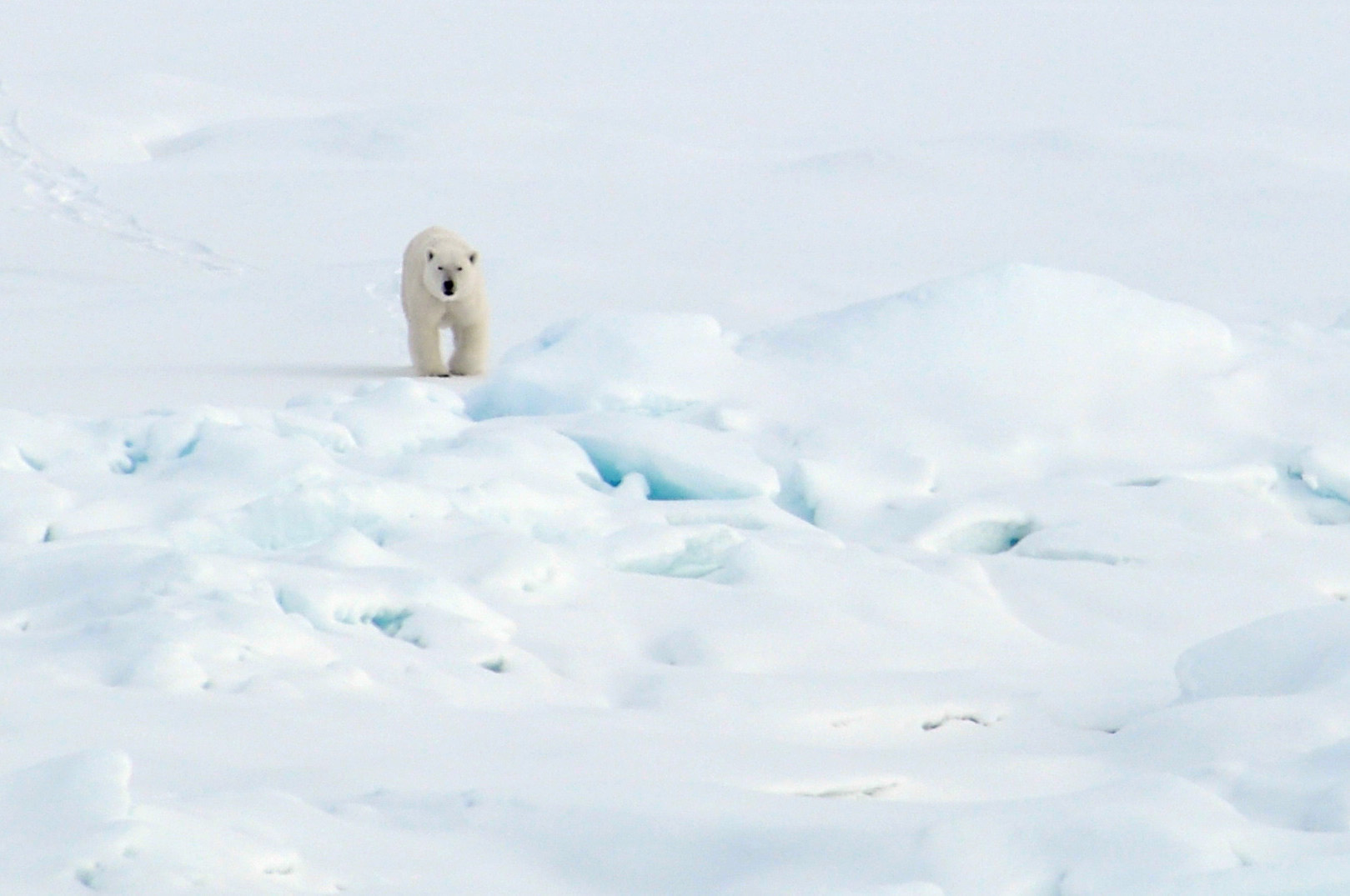
A polar bear walks on the Arctic Ocean ice Aug. 21, 2009.

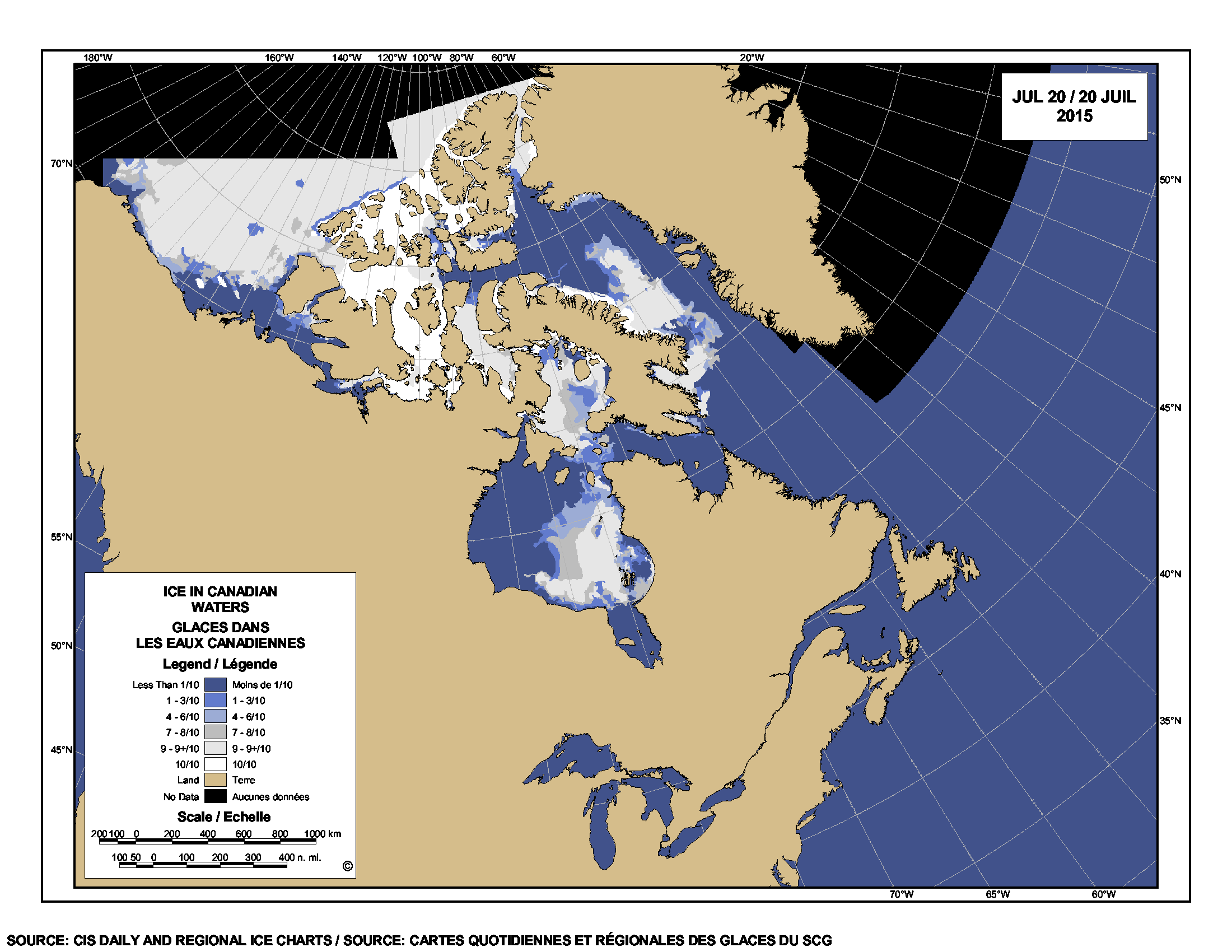
This year on 19 July, for example, Hudson Bay had greater than 150,000 square km more sea ice than there was in 2009 on that date (526.2 vs. 368.5 mkm2)(1992 was a particularly cold year and most bears left the ice as late in 2009 as they did in 1992).1 Conditions have also been excellent for pregnant females around Svalbard – Norwegian polar bear researchers recently reported a good crop of cubs this spring.

Hudson Bay breakup July 20 2015_CIS

Worldwide, there was exactly the same amount of Arctic sea ice present on 18 July 2015 as there was back in 2006 (Day 199) – 8.4 mkm2. By 19 July (day 200), 2015 had more ice than 2006 (8.4 mkm2 vs. 8.3).

All this means that recent summer ice melt has not impinged on the spring feeding period that is so critically important for polar bears. So much ice left in early summer means there was lots of sea ice in the spring (April-June), even in the Southern Beaufort Sea.

The only region with sea ice coverage well below the last five years is the Chukchi Sea (see plots below, click to enlarge). So why aren’t we hearing the-sky-is-falling stories about Chukchi bears? Because biologist have already demonstrated that polar bears in the Chukchi do very well even with no summer sea ice.
Continue reading