Tag Archives: sea ice

Superb sea ice conditions for polar bears worldwide during their critical feeding period

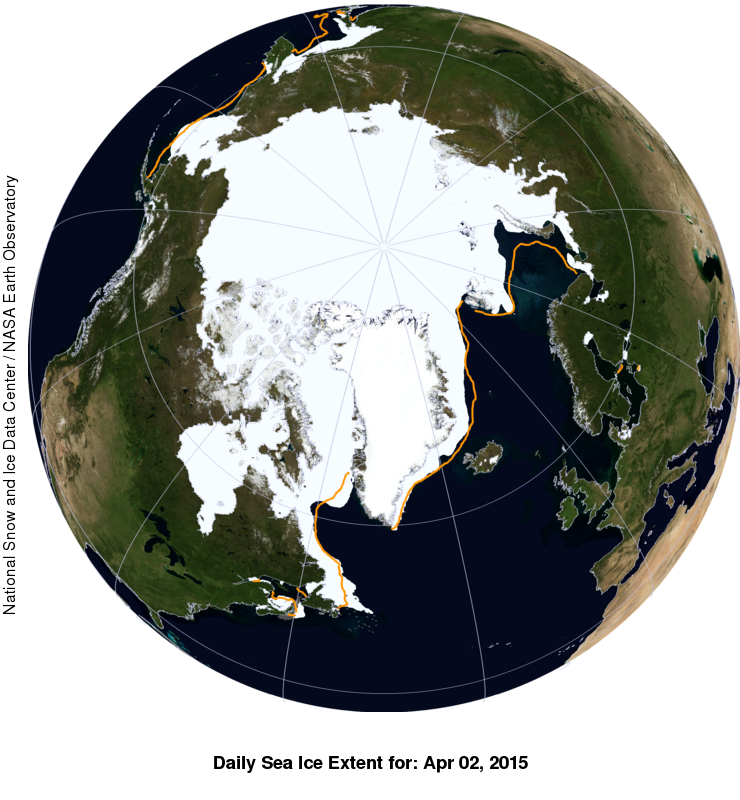
Prognosis, excellent. The sea ice hunting platform that polar bears require is everywhere and Davis Strait ice extent is the fourth-highest it’s ever been at this time of year.

Sea ice extent global 2015 April 2 NSIDC with anomaly WUWT

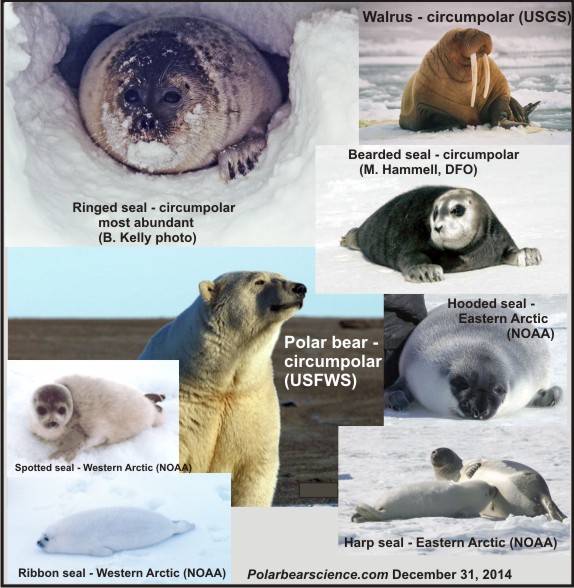
The spring feeding period is a messy, brutal business – many cute baby seals will die as polar bears consume 2/3rds of their yearly food supply over the next few months (April – June/early July), while sea ice is abundant.

Arctic marine mammals_Dec 31 2014_Polarbearscience

That leaves the remaining 1/3 of their energetic needs to be met over the following 9 months (most of it in late fall (late November/December) and hardly any during the summer months, regardless of whether the bears are on land or out on the sea ice) or over the winter. Continue reading

Polar bear consumption of terrestrial foods – new paper misses the point

A new paper by polar bear biologists (Rode et al. 2015) argues that terrestrial (land-based) foods are not important to polar bears now and will not be in the future – a conclusion I totally agree with – but they miss the point entirely regarding the importance of this issue.

Fat bears on land in the Southern Beaufort, Sue Miller photo, well-prepared for a brief summer fast.

Whatever food polar bears consume in the summer – whether they are on land or on the ice – doesn’t really matter. What matters is how many fat-rich seals they can consume between March and June each year. The fat put on in late winter/spring from gorging on baby seals carries polar bears over the summer, no matter where they spend it.

USGS polar bear biologist Karyn Rode and colleagues (press release here) have tried to frame this issue as one about future survival of polar bears in the face of declining sea ice. However, the fact that polar bears in the Chukchi Sea and Southern Davis Strait are thriving despite dramatic declines in summer sea ice (aka an extended open-water season), proves my point and disproves their premise. Bears in these regions are doing extremely well – contrary to all predictions – because they have had abundant baby seals to eat during the spring (see here and here).

Continue reading

Polar bear habitat update – even more ice this week in the Barents Sea

Polar bear habitat is close to average for this date all over the Arctic this week. Barents Sea pack ice has increased substantially since last week and the ice in Eastern Canada is still well above average (and higher than 1979-early 1980s). Arctic ice has grown since a preemptive call for “the lowest maximum extent on record” was made by NSIDC last week — there is now at least as much ice for this date as there was in 2011 and almost as much as there was last year (2014).

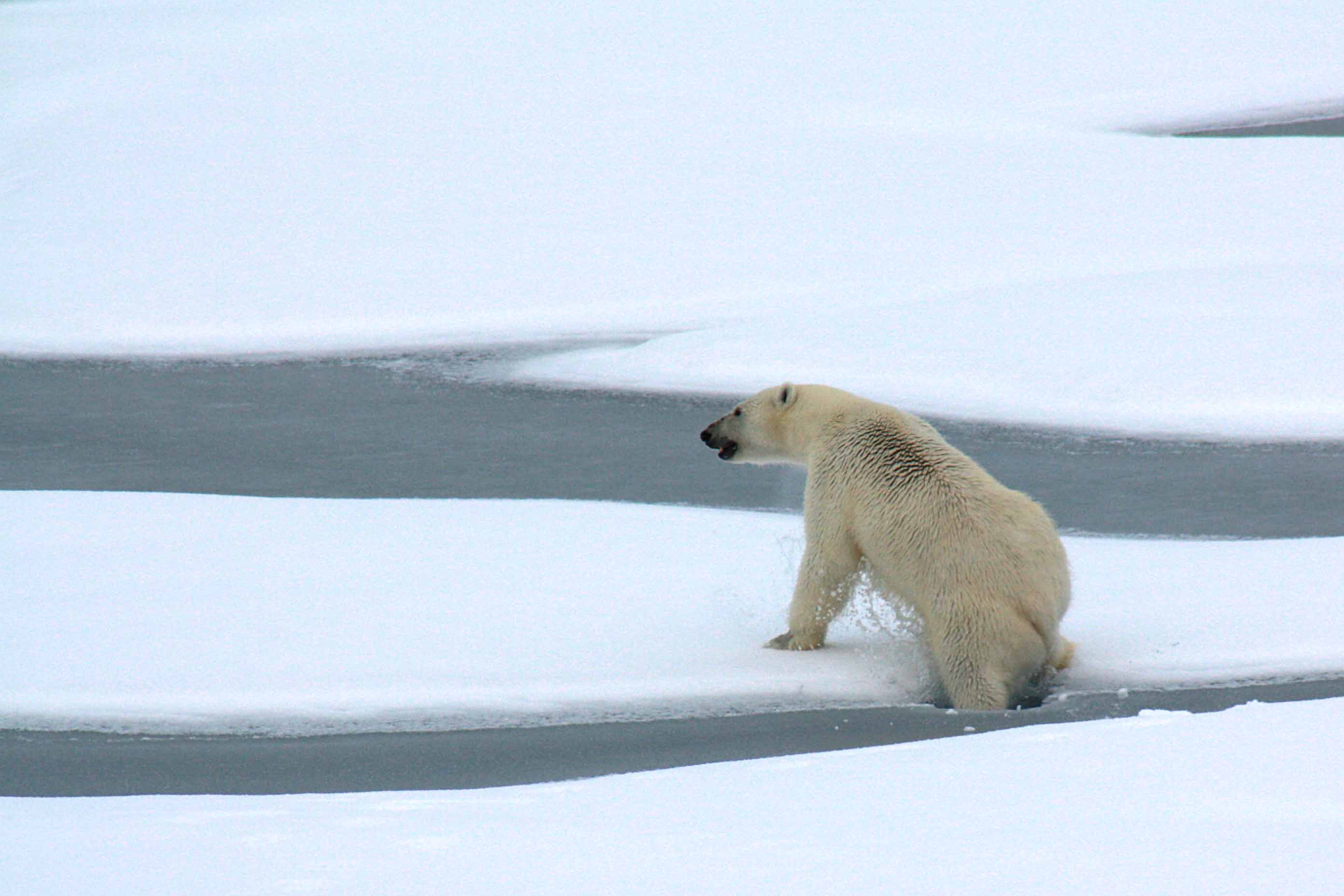
Polar Bear Breaks Ice

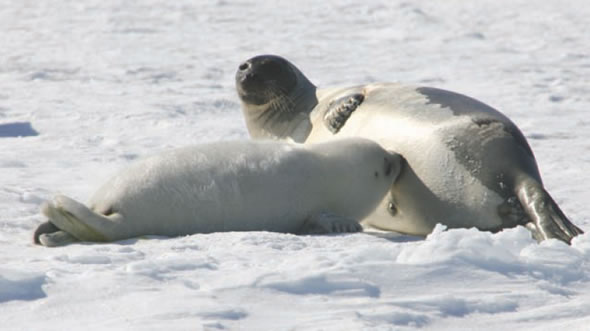
Southern Davis Strait polar bears are out feeding on the glut of harp seals in the pack ice off Labrador and Newfoundland (discussed in detail here). One or more bears strayed a bit from the pack and ended up swimming around near the Hibernia oil platform (not far from the ice edge, although the CBC reports didn’t mention that “minor” fact), discussed in this recently updated post (with maps).

Harp seal female with nursing pup, DFO Canada.

Harp seal female with nursing pup, DFO Canada.

Ice maps and graphs below: it’s worth a look.
Continue reading

Polar bear visiting Hibernia oil platform off Newfoundland was not far from sea ice

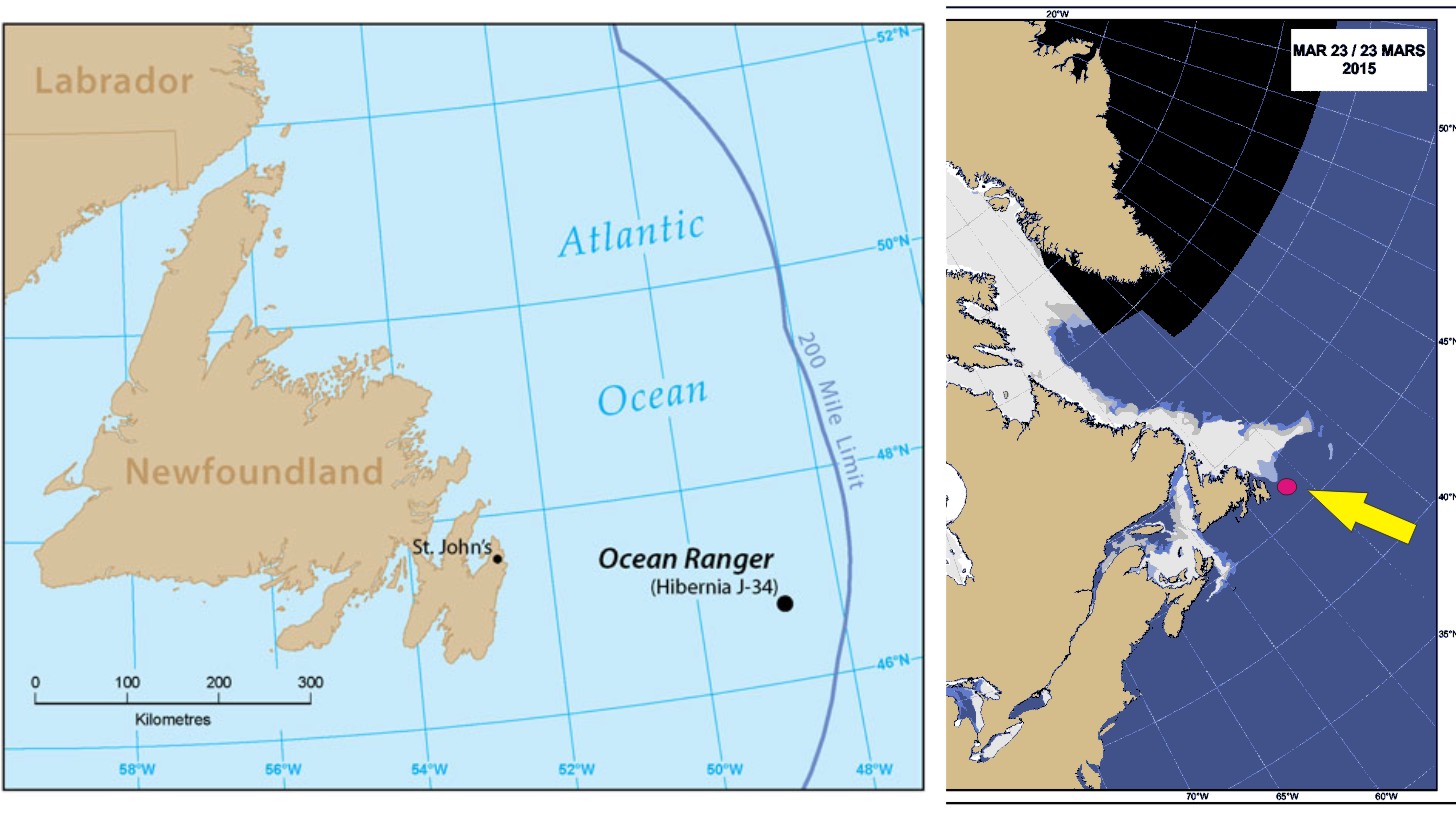
Perhaps the folks on the platform couldn’t see it, but sea ice wasn’t far off on Monday when a polar bear came to visit the Hibernia oil platform southeast of St. John’s, Newfoundland. See the map below (composite from Heritage Newfoundland and Canadian Ice Service):

Hibernia platform and sea ice at 23 March 2015_Polarbearscience
UPDATE 26 March 2015: Ian Stirling has added his expert comment on this incident, see below.

UPDATE 28 March 2015: Newfoundland’s Director of Wildlife has commented on this incident, see below.
Continue reading

Polar bear habitat update – more spring sea ice around Svalbard than 2014 & 2012

Polar bear habitat for the last week of March is well above average in eastern Canada for the second year in a row. The very low extent of ice in the Sea of Okhotsk – which has contributed strongly to the low maximum extent this year – is irrelevant to our discussion, since no polar bears live there.

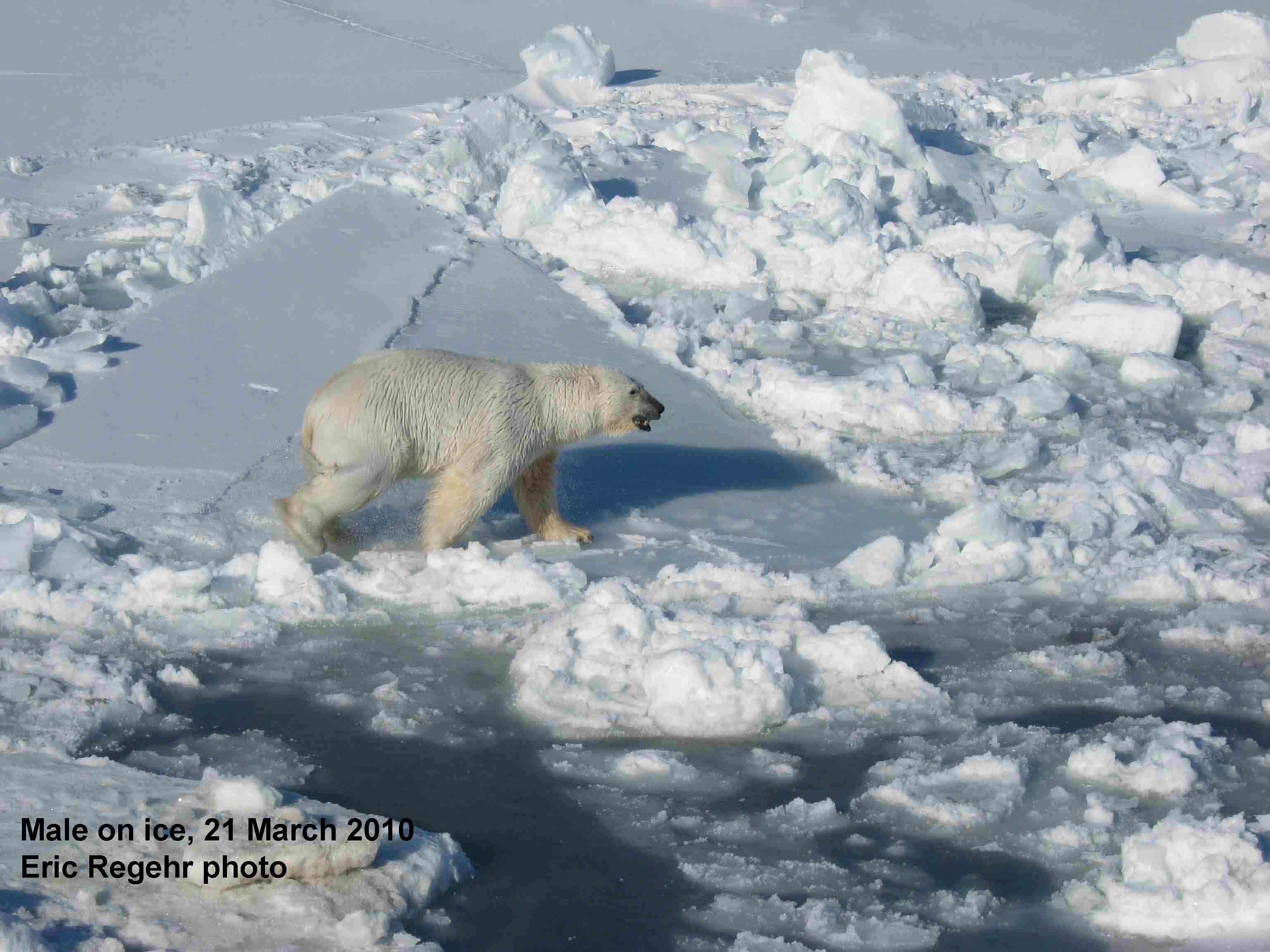
Polar_Bear_male_Regehr photo_March 21 2010_labeled

There is a bit more concentrated ice around Svalbard than last year (or in 2012), although ice in the Barents Sea in general is still below average due to the state of the Atlantic Multidecadal Oscillation (AMO). The state of the AMO and its effects on Barents Sea polar bear sea ice habitat has nothing to do with global warming: it’s a cycle that has been documented for centuries (Miles et al. 2014).

Still, there is plenty enough sea ice for polar bear hunting: this is the beginning of the critical feeding time for all polar bears (see here and here), but especially for the survival of new cubs-of-the-year, so I have a few words about Western Hudson Bay cubs below.

Have a look for yourself.
Update: Added 20 March 2015, comparison maps from Cryosphere Today for 2006 vs. 2015.
Continue reading

Supporting document for Canada’s polar bear status maps reveal surprises

My request to Environment Canada in early December 2014 for the documents supporting their polar bear status maps has finally generated results.

In an email dated 2 March 2015, I received the document produced by the EC Polar Bear Technical Committee (PBTC). I waited to see if it would be appended to the webpage where the maps were posted last year (reported here and here). However, as of today, that has not happened, so I am posting it here. There are some rather striking differences that may surprise you.

UPDATE 22 March 2015: A copy of the letter from the Director General of the Canadian Wildlife Service that accompanied the document below, which I forgot to include, is here. It states that the once a new status table has been compiled (provided below), “it is reviewed by the Polar Bear Administrative Committee and then becomes a public document.” The implication is that the reviewed document has not yet been produced.
Continue reading

Tracking polar bears in the Beaufort Sea – February 2015 map

Here is the February 2015 follow-up to my post on the July 2013 track map for female polar bears being followed by satellite in the Beaufort Sea by the US Geological Survey (USGS) – “Ten out of ten polar bears being tracked this summer in the Beaufort Sea are on the ice.”

polar_bear with collar_USGS

See that post for methods and other background on this topic, and some track maps from 2012 (also available at the USGS website here). The USGS track map for February 2015 is copied below.

There were 7 bears in February, up from 6 in January, because one of the bears has re-entered the area from elsewhere. However, many bears from the original sample have either had their collars fail, moved out of the area and stayed out, or they have died. We can’t tell from which of those options, or combinations of them, explain the reduced number still being followed.
Continue reading

IUCN Specialist Group quietly adds “sea ice changes” to their polar bear status table

In late January, the IUCN PBSG made significant changes to its polar bear status table but did not think it was worth bringing to the public’s attention via a tweet, press release or note on their web site’s home page.
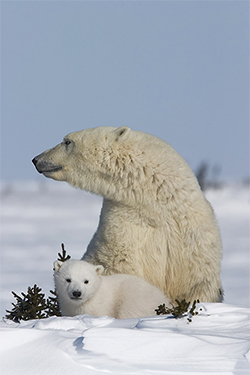
Hudson Bay female with cub_Wapusk_Thorsten Milse_Gov CA

What changes? Well, while the group did not see fit to agree with all of Environment Canada’s assessments (e.g. listing Davis Strait bears as “likely increasing” compared to the PBSG’s “stable”, see full list here), it did upgrade their status of Western Hudson Bay bears to ‘stable’ (which EC did back in June 2014).

More significantly, however, they also added two metrics of sea ice change to their assessment table, presumably because alongside ‘human-caused removals’ (which they also track in their tables)1, sea ice changes are supposedly critical ‘threats’ to polar bear health and survival.

So critical, in fact, that they’ve only just now gotten around to measuring it consistently across polar bear territory. Funny thing is, they cite no document that shows the sea ice change calculations for each subpopulation region, nor who generated them.

Let me be clear: no one has ever generated such a sea ice metric before – it is a unique PBSG construct that you will find nowhere else. By providing no documentation that lays out the calculations for inspection, the PBSG are simply insisting the public accept their unpublished, non-peer-reviewed work on faith. Details below.
Continue reading

International Polar Bear Day & Polar bears in the news this week

Today’s the day to celebrate the resilience and adaptability of polar bears.

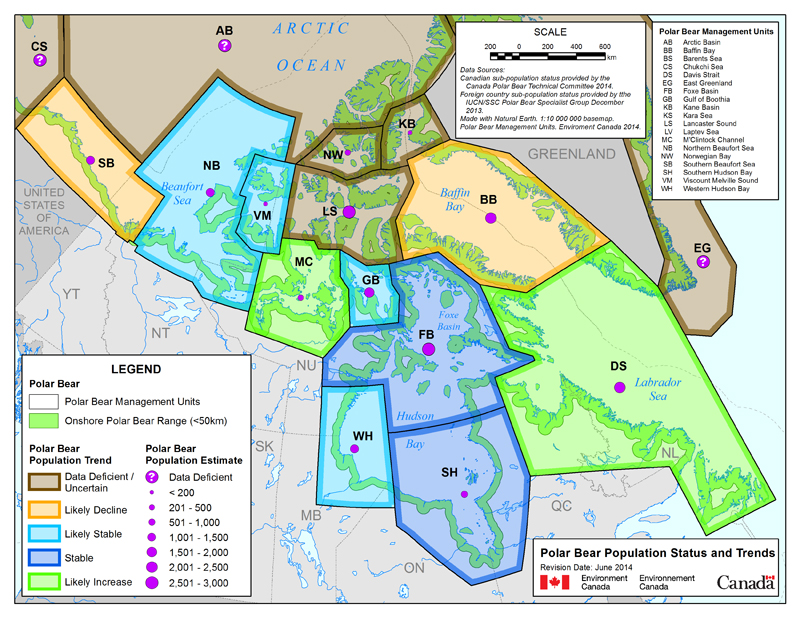
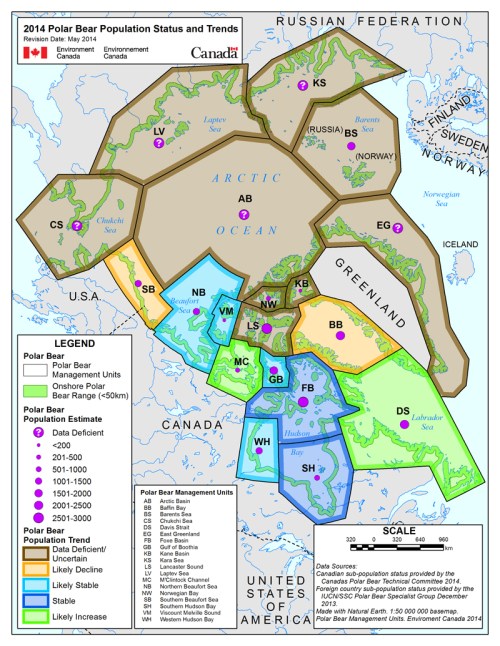
Not only did the record-breaking sea ice low of 2012 have virtually no effect on the bears but in 2014, only two subpopulations were classified as “declining” or “likely declining” – down from seven in 2010 and four in 2013 (see map below).

 Figure 6.  Most recent global polar bear population status assessment, using figures from the IUCN Polar Bear Specialist Group assessment (2013) and Environment Canada (May 2014). Note that of the two subpopulations denoted as being on a likely declining trend, BB (Baffin Bay) is suspected to be declining due to over-hunting and SB (Southern Beaufort) had an unfinished rebound caused by thick spring ice conditions in 2004-2006; a more recent survey (2012) indicated SB numbers were higher than the previous 10 years.

See my recent Twenty good reasons not to worry about polar bears.
[GWPF Briefing Paper version (pdf), just out today, here]

POLAR BEARS IN THE NEWS…

Kudos to the CBC for producing a propaganda-free polar bear “Fun Facts” page for kids that won’t give them nightmares – have a look.

Other news: Polar bears come early to Black Tickle, Labrador this year, a new population count is planned for the Barents Sea subpopulation, and The Times (UK) publishes some good news about polar bears. Details below.

UPDATE February 27, 2015. I’ve added another news item I missed below.

UPDATE APRIL 7, 2015. Correction to the February 27 update below.
Continue reading

Tracking polar bears in the Beaufort Sea – January 2015 map

Here is the January 2015 follow-up to my post on the July 2013 track map for female polar bears being followed by satellite in the Beaufort Sea by the US Geological Survey (USGS) – “Ten out of ten polar bears being tracked this summer in the Beaufort Sea are on the ice.”

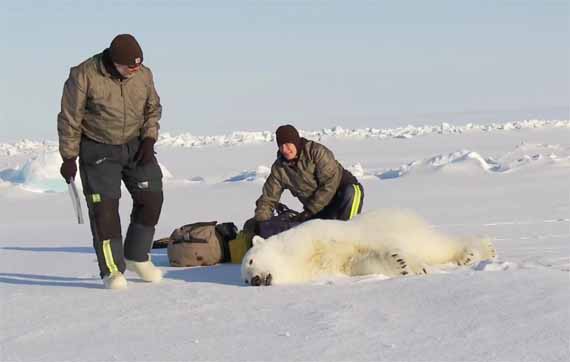
Tranquilized_pb570_S Beaufort March 2014_USGS

See that post for methods and other background on this topic, and some track maps from 2012 (also available at the USGS website here). The USGS track map for January is copied below.

There are only 6 bears being followed now, which means a few more collars have failed, or the bears have moved out of the area or died.
Continue reading