Tag Archives: western hudson bay

Declining polar bear weights and early breakup dates in WHB, Part I: What’s a starving bear?

The oft-repeated claim that polar bears are starving in Western Hudson Bay (e.g., here, here, here, and here) comes primarily from a 10 year old study that documented a declining trend in polar bear body condition (a biology euphemism for relative fatness) between 1980 and 2004, which appeared to correlate with earlier and earlier breakup dates for Hudson Bay.

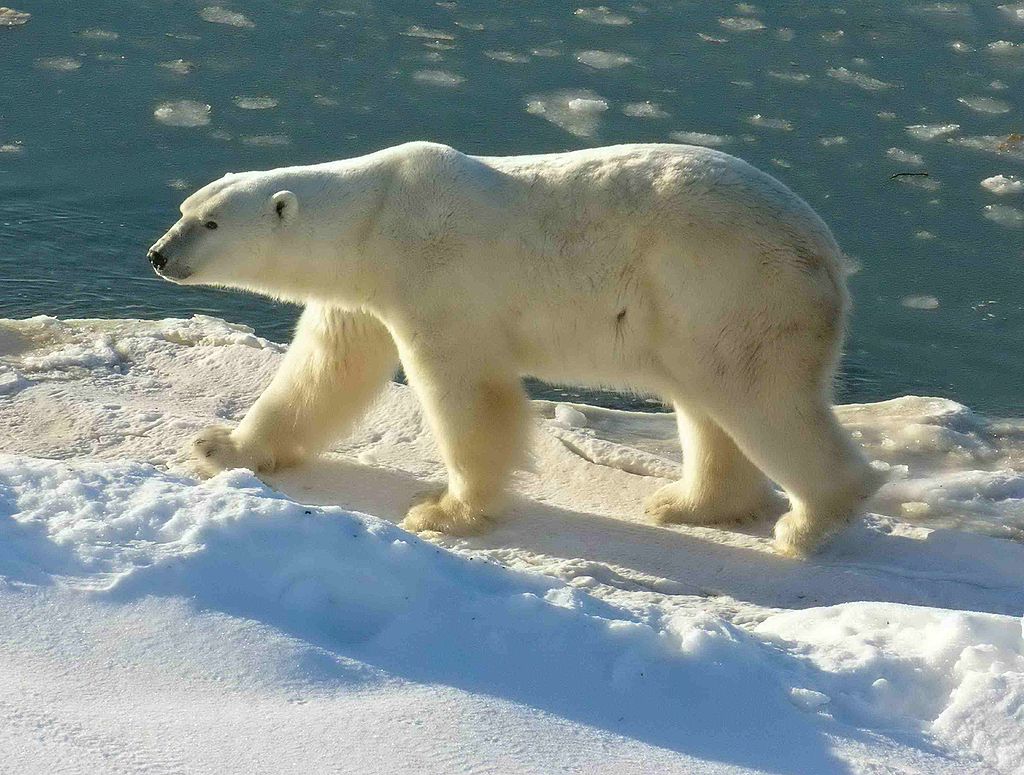
Figure 1. Polar bear female with cub, 2009, Churchill, Western Hudson Bay. Wikipedia.

Figure 1. Polar bear female with cub, 2009, Churchill, Western Hudson Bay. Wikipedia.

The authors of that study (polar bear specialist Ian Stirling and NASA sea ice researcher Claire Parkinson) reported the body weights of lone female bears captured in Western Hudson Bay between 1980 and 2004. The trend over time in those bear weights was then correlated with the overall change in dates of sea ice breakup on Hudson Bay for that period.

However, it turns out that while the trend of body condition and the trend in breakup dates indeed correlated over time, the actual year to year data did not. The question is, what does that mean for the claim that polar bears in WHB are starving?
Continue reading
Natural selection helps polar bears adapt to sea ice variability – which means some bears die

Evolution is not just for the long-term – natural selection also goes on over short time periods. In the case of polar bears, this adaptation is almost certainly critical for its long-term survival.

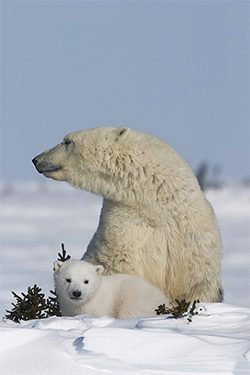
Hudson Bay female with cub_Wapusk_Thorsten Milse_Gov CA

Hudson Bay female with cub Wapusk National Park, Thorsten Milse, Government of Canada

Not all polar bears are identical — that is the reality that allows natural selection to operate.

I will argue that early breakup years in Western Hudson Bay weed out individual polar bears that do not have the physiological or behavioral characteristics necessary to be useful members of the population – and that this is a good thing for the entire population.

Continue reading

Journalists still pushing the “polar bears eat snow geese story,” as if it matters

I wrote about this issue in January (January – and journalists are still pushing it).

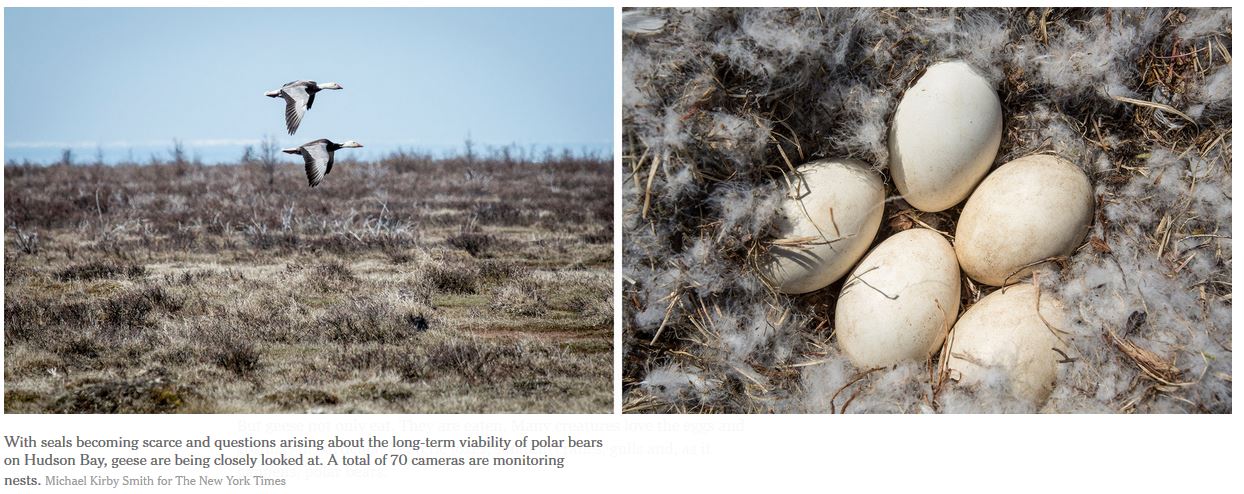
Courtesy NY Times, Sept. 22 2014.

Figure 1. Courtesy NY Times, Sept. 22 2014. Click to enlarge.

This month, the New York Times (September 22, 2014 James Gorman, “For Polar Bears, a Climate Change Twist”) is pushing it big-time (and so it’s been picked up elsewhere, like by the Anchorage Daily News).

Myths and misinformation about this phenomenon dispelled below.
Continue reading

Andrew Derocher raises the “starving polar bears” issue in DailyMail interview

In what looks like a follow-up to last week’s CBC documentary, The Politics of Polar Bears, the London (UK) based DailyMail published interviews with polar bear biologists Mitch Taylor and Andrew Derocher (September 9, 2014).

The CBC film did have a one scientist vs. another” flavor about it and this article definitely echoes that approach. My comments below on Derocher’s insinuations and questions about starving bears and global warming.
Continue reading

“The Politics of Polar Bears” lengthy excerpt airs across Canada – cue the outrage

Umbrage alert! Last night, a half-length short form of the powerful and balanced documentary “The Politics of Polar Bears” aired across Canada on the CBC’s flagship TV news program, The National.

Polar_Bear_2004-11-15_Wapusk Nat Park_Wikipedia

Right after it aired, they followed up with a lengthy online summary by the producer of the film, Reg Sherren (Polar bears: Threatened species or political pawn?”, September 2, with video of the 19 minute short program). Check out the comments below it! Excerpts and my comments below.

[Links to the full length film here and in my previous posts here and here]

UPDATED April 27 2015: Video now available on Youtube, imbedded below Full length video no longer available, short one at CBC here.

Continue reading

Has the tide turned on polar bears as icons of global warming?

The CBC in Canada is pretty much a mirror image of the BBC in the UK, ABC in Australia and PBS in the US. So you might appreciate my shock at the almost unbelievable balance contained in the recently broadcasted CBC documentary, “The Politics of Polar Bears: Tracking the Celebrity Bear.

The film is a profound change from the hype and pessimism that has dominated the polar bear issue in Canada and abroad, supported unchallenged by the CBC. Finally, TV viewers were given some decently balanced perspective on the status of polar bears in  Western Hudson Bay.

If the take-away message tipped towards reason and optimism rather than panic over the status of polar bears, it’s because the evidence was strongly in that direction.

Politics of polar bears title

Continue reading

Must watch – “The Politics of Polar Bears: Tracking the Celebrity Bear”

This powerful, balanced documentary, with a focus on the bears of Western Hudson Bay, can now be watched online. A Canadian Broadcasting Corporation (CBC) production, it includes interviews with polar bear biologists Mitch Taylor (screen-cap below) and Seth Stapleton – juxtaposed with statements from outspoken polar bear conservation advocate Andrew Derocher.

Politics of Polar bears_Mitch Taylor

I was not mentioned by name (making me “she who cannot be named” yet again?) but host Reg Sherren did discuss the contents of the email I received from PBSG chairman Dag Vongraven earlier this summer about their proposed clarification to the global population estimate (and posted here).

Politics of polar bears title

It can be viewed online at “CBC Player,” in its entirety (45 minutes long), without commercials – see it http://www.cbc.ca/player/Shows/Shows/Absolutely%20Canadian/Absolutely%20Manitoba/ID/2499492515/?cmp=rss

I can’t guarantee those outside Canada will be able to view it but I watched it Sunday night (August 31) from British Columbia. It’s well worth the time.

[Aired originally on “Absolutely Manitoba” (Season 2014, Episode 5, Aug 30, 2014), by Reg Sherren. See announcement article here]

[Note: the “Sharon Crockford” interviewed in the film is no relation to me, as far as I know!]

Summer sea ice melt and polar bear maternity dens

The yearly sea ice minimum extent is almost upon us, which has recently been the seasonal signal for excitable biologists and their activist groupies to resume their breathless rants about what sea ice loss could mean for polar bears.

Polar bear den_CreditUSFWS_labeled

Never mind that the summer minimum extent reached in September, no matter how low it goes, is pretty much irrelevant to polar bear health and survival. As I’ve discussed before, what’s really important is the presence of not-too-thick ice during the spring, so they can catch lots of young seals and put on lots of fat.

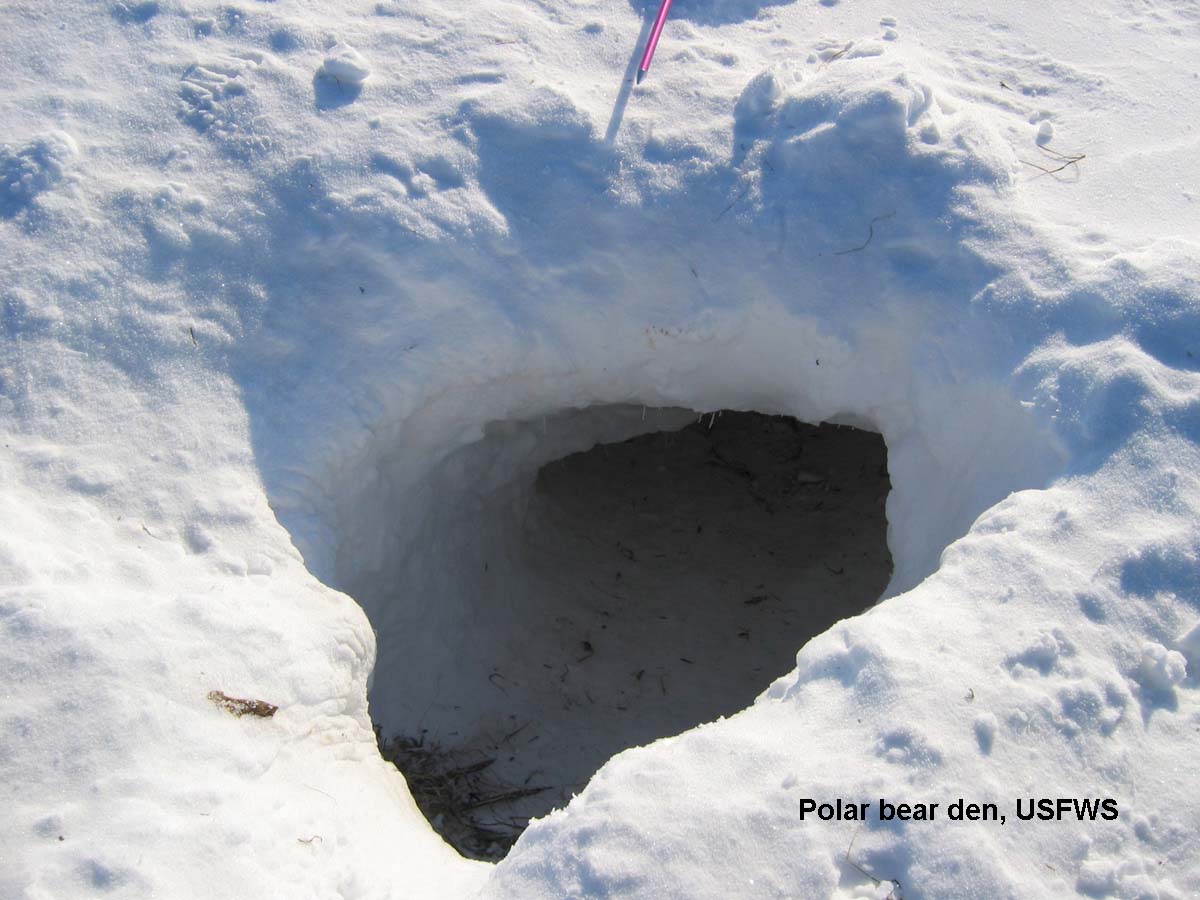
But to a lesser degree, the extent at mid-to-late summer is important because this is when pregnant females that prefer to make their maternity dens on shore are looking for good places to spend the winter.

So the topic for today is this: how much does the extent of ice at the height of summer dictate where polar bear females make their winter dens?
Continue reading

Foxe Basin and Hudson Bay have more than average polar bear hunting habitat

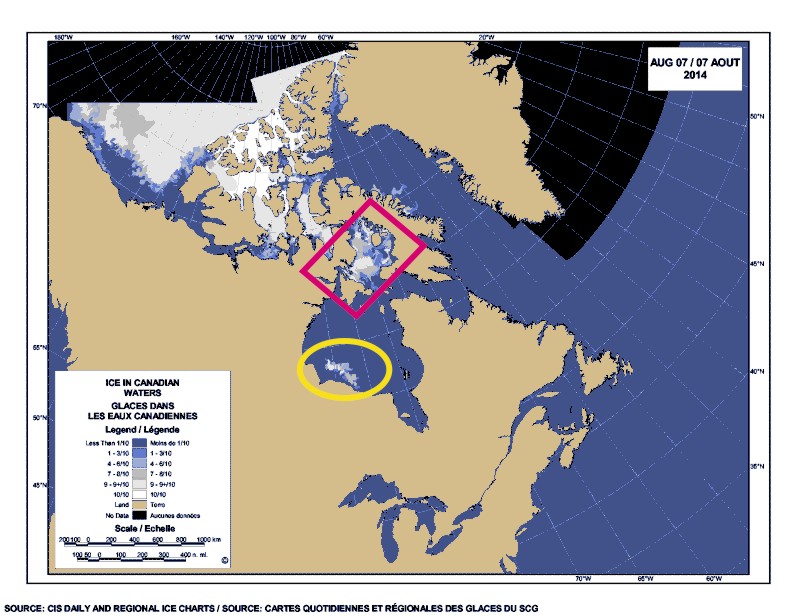
This is shaping up to be a banner year for polar bears in Foxe Basin (central Canada), with more ice in this region than there’s been since 1992. Hudson Bay still has a large patch of thick first year ice, more than there has been at this date since 2009, which was a late breakup year.

Hudson Bay Foxe Basin ice map Aug 7 2014 labeled_sm

Ice maps and charts below tell the story.
Continue reading

W Hudson Bay mark-recapture studies of polar bears were invalid, says peer-reviewed study

“Our results suggest that mark–recapture estimates may have been negatively biased due to limited spatial sampling. We observed large numbers of bears summering in southeastern WH, an area not regularly sampled by mark–recapture.” Stapleton et al. 2014.

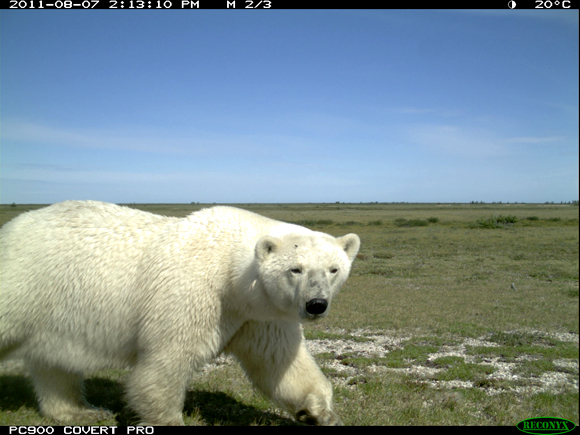
Polar bear at Wapusk National Park (just south of Churchill) in August 2011. Courtesy Parks Canada.

Polar bear at Wapusk National Park in August 2011. Courtesy Parks Canada.

We’ve seen the results of this 2011 study before, in government report format. But now it’s been revamped, peer-reviewed and published in a respected scientific journal – it actually came out in February, without fanfare, but I’ve only just come across it.

Some excerpts below, with conclusions that should raise some eyebrows.

Continue reading