Yearly Archives: 2014

Hudson Bay freeze-up: way more ice for this day than in 2013

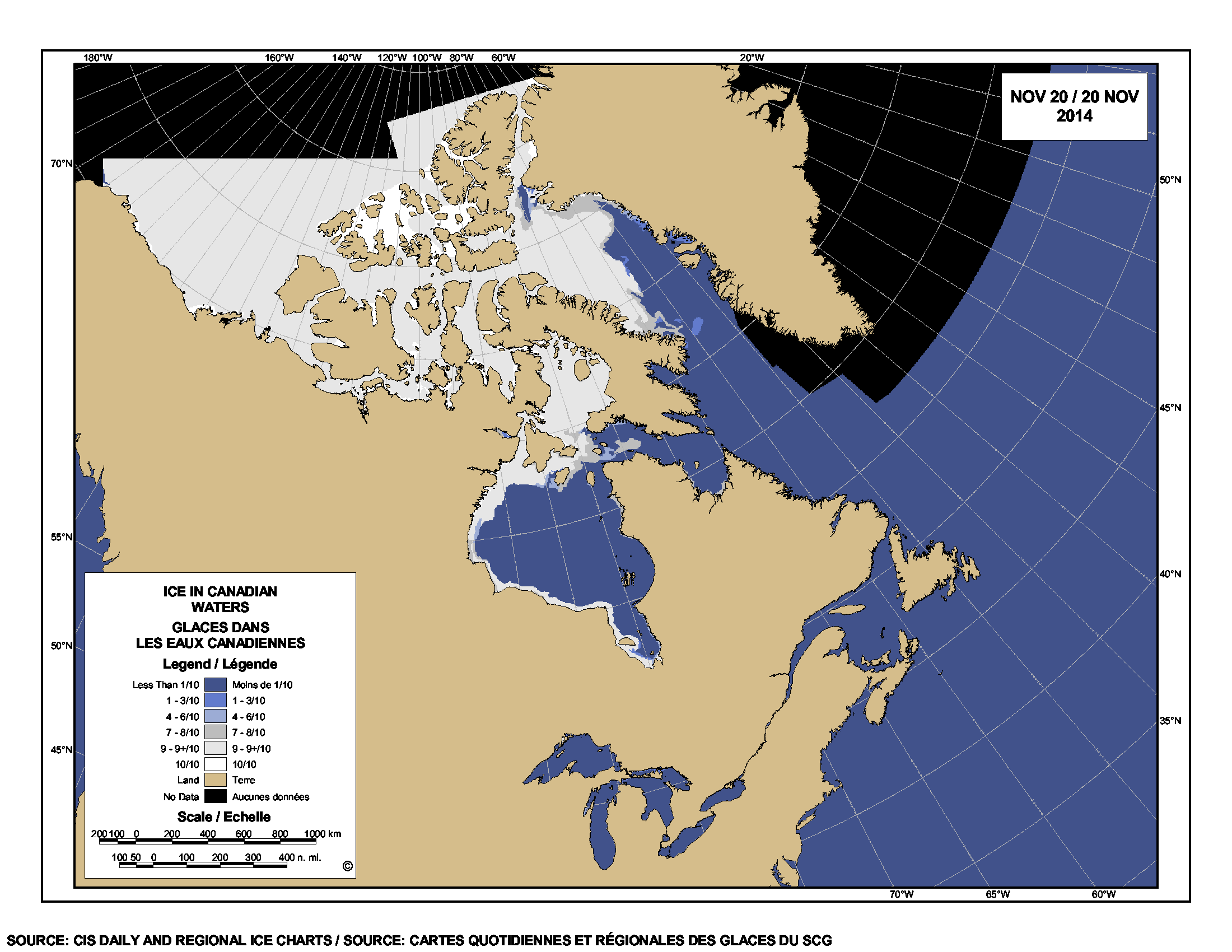
On this day (20 November 2014), there is way more sea ice over Hudson Bay and Foxe Basin than 2013, with ice starting to form in Hudson Strait.

The polar bears of Hudson Bay are on the ice (except pregnant females, who will be in their dens); Churchill polar bear season is over (see previous discussions here and here).

Ice maps and graph courtesy Canadian Ice Service.

Sea ice extent Canada 2014 Nov 20 CIS
Continue reading

Polar bear researchers knew S Beaufort population continued to increase up to 2012

Why did the Southern Beaufort polar bear population survey stop in 2010? It’s clear that the recently-published and widely-hyped new study stopped before the population rebound from a known decline was complete.

USFWS 2013-2014 PB News_cover_PolarBearScience

The researchers of the recently-published paper knew before starting their mark-recapture study in 2007 that the population decline had taken place. They also knew why the numbers dropped and that previous declines, caused by similar conditions, had been followed by a full recovery.

Did they really think a full recovery in population numbers was possible in only three four years, when cubs born in 2007 would not yet have been old enough to reproduce?

In fact, a US Fish and Wildlife Service (USFWS) fall survey of Southern Beaufort polar bears in 2012 found numbers were higher than they had been in a decade.
Continue reading

S Beaufort polar bears largely recovered from known 2004-2006 decline, says new study

A bit more good news about polar bear populations, this time from an abundance study in the Southern Beaufort Sea. A paper released yesterday showed a 25-50% decline in population size took place between 2004 and 2006 (larger than previously calculated). However, by 2010 the population had rebounded substantially (although not to previous levels).

All the media headlines (e.g. The Guardian) have followed the press release lead and focused on the extent of the decline. However, it’s the recovery portion of the study that’s the real news, as it’s based on new data. Such a recovery is similar to one documented in the late 1970s after a significant decline occurred in 1974-1976 that was caused by thick spring ice conditions.
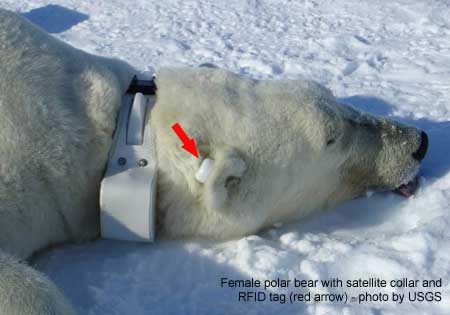
Polar bear with collar and tag_USGS_labeled

The title of the new paper by Jeffery Bromaghin and a string of polar bear biologists and modeling specialists (including all the big guns: Stirling, Derocher, Regehr, and Amstrup) is “Polar bear population dynamics in the southern Beaufort Sea during a period of sea ice decline.” However, the study did not find any correlation of population decline with ice conditions. They did not find any correlation with ice conditions because they did not include spring ice thickness in their models – they only considered summer ice conditions.

I find this very odd, since previous instances of this phenomenon, which have occurred every 10 years or so since the 1960s, have all been associated with thick spring ice conditions (the 1974-76 and 2004-2006 events were the worst). [Another incident may have occurred this spring (April 2014) but has not been confirmed].

Whoever wrote the press release for this paper tried hard to suggest the cause of the 2004-2006 event might have been “thin” winter ice caused by global warming that was later deformed into thick spring ice, an absurd excuse that has been tried before (discussed here). If so, what caused the 1974-1976 event?

It seems rather unscientific as well as implausible to even try to blame this recent phenomenon on global warming. However, neither the authors of the paper or the press release writers seemed to want to admit that 2-3 years of thick ice development in the Southern Beaufort could have been the cause of the population decline in 2004 (as for all of the previous events). No, that wouldn’t do, not in the age of global warming.

So, we are left with this equally absurd conclusion from the author:

The low survival may have been caused by a combination of factors that could be difficult to unravel,” said Bromaghin, “and why survival improved at the end of the study is unknown.

I’ve summarized the paper to the best of my understanding (there was a lot of model-speak to wade through), leaving out the prophesies of extinction, which in my opinion don’t add anything.

UPDATE November 19, 2014: Don’t miss my follow-up post, with some startling new information, Polar bear researchers knew S. Beaufort population continued to increase up to 2012
Continue reading

Russia the first to ban polar bear hunting in 1956, not a surprise why

Soviet soldier in a tank, feeding condensed milk to polar bears c. 1950 (i.imgur.com), via Redditt 16 November 2014.

Soviet soldier in a tank, feeding condensed milk to polar bears c. 1950 - Imgur

Sponsored by the Russian Dash Cams Association. Reminding you to drive your tank safely and avoid hitting polar bears.”

Apparently, polar bears are attracted to tanks as they are to ships and submarines, which made them easy targets for men with guns. This, along with the rather extensive use of so-called ‘set guns’ (a baited apparatus fixed with a loaded shotgun), led to a significant decline of polar bears in the U.S.S.R. and the Barents Sea area by the 1950s. See also, “The slaughter of polar bears that rarely gets mentioned (ca. 1890-1930)

This was the real threat to polar bears and it was successfully halted by international agreement in 1973. We should not forget that polar bears are a conservation success story.

Hudson Bay freeze-up update – most polar bears on the ice

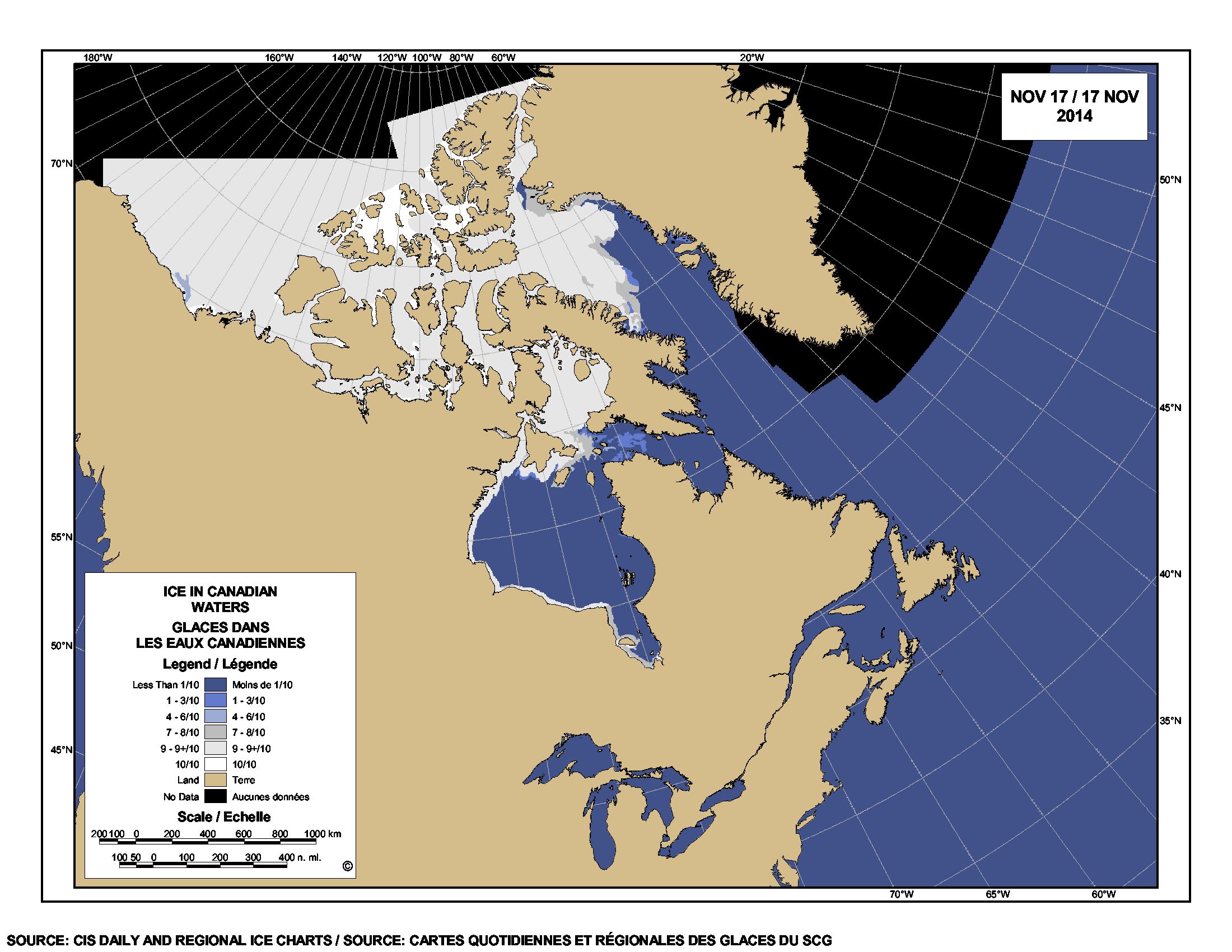
Latest sea ice maps and charts from the Canadian Ice Service show significant ice building quickly along the west coast of Hudson Bay, enough to allow polar bears out to hunt.

Kelsey Eliasson reported from Churchill earlier today that most of the polar bears have moved onto the ice.

Sea ice extent Canada 2014 Nov 17 CIS

Continue reading

Hudson Bay freeze-up 2014 – average again this year, not late

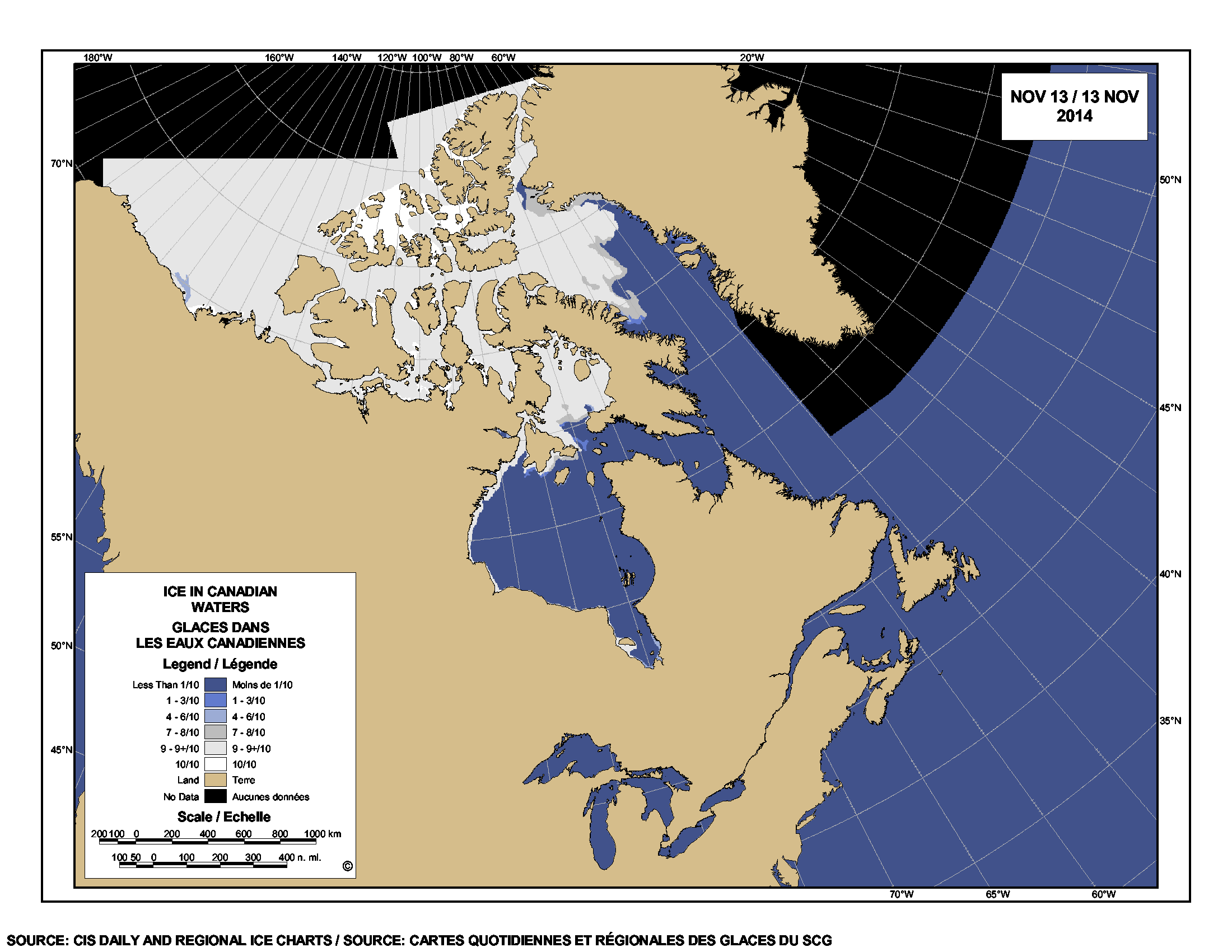
Freeze-up of Hudson Bay sea ice is well underway now, virtually the same time as it was the last three years, and in 2008. Bears in the north will be able to move out, while near Churchill and in Southern Hudson Bay, some bears will be able to successfully hunt for seals on the newly-formed ice close to shore.

Over the next week or so, all the bears onshore will gradually move out onto the ice as freeze-up progresses. By the time there is ~10% ice coverage on the bay, most bears will have moved onto the ice (except pregnant females that have made dens onshore).

The Arctic outbreak underway in over North America may hasten this process along (see 7-day and 14-day weather forecasts for Churchill). Ice maps below courtesy Canadian Ice Service.

Sea ice extent Canada 2014 Nov 13 CIS

It seems pretty clear now that time of freeze-up on Hudson Bay is not correlated with the extent of sea ice at the September minimum. Have a look at the maps and graphs below.  UPDATE: more recent maps added below (ice concentration 15 November; ice development 14 November).
Continue reading

“Meltdown: Terror at the Top of the World” — new book exploits polar bear attack to sell fear of sea ice decline

The polar bear attack that was all over the news last summer is now an ebook about global warming. The Maine lawyer who was mauled by a bear while on a hiking trip to Labrador (and lived to tell the tale) has allowed his story to be co-opted by an activist journalist to promote fears of sea ice decline, polar bear extinction, and man-made global warming.

Melt-down_Terror at the Top of the World_Nov 12 2014 press release book cover

The press release issued yesterday by the news group that published the book and employs author Sabrina Shankman (InsideClimateNews), described it this way:

“A riveting new e-book about the battle between man, beast and Nature in a warming world. Called Meltdown: Terror at the Top of the World, the e-book tells the story of the hikers’ harrowing encounter with a polar bear; of the plight of the polar bear in general, facing starvation and extinction as the sea ice melts and its habitat disappears; and of the Arctic meltdown, the leading edge of man-made climate change.”

I have little doubt the man mauled by the bear was indeed terrified and that his companions were as well. However, that horror is exploited shamelessly in this book as a means to promote anxiety over the future survival of polar bears and instill panic over a prophesied Arctic “meltdown.”
Continue reading

Tracking polar bears in the Beaufort Sea – October 2014 map shows most ice since 2010

Here is the October 2014 follow-up to my post on the July 2013 track map for female polar bears being followed by satellite in the Beaufort Sea by the US Geological Survey (USGS) – “Ten out of ten polar bears being tracked this summer in the Beaufort Sea are on the ice.”

See that post for methods and other background on this topic, and some track maps from 2012 (also available at the USGS website here). The USGS track map for October 2014 is copied below (Fig. 1).

For the end of October, there was more ice in the Southern Beaufort this year than there has been since 2010.

Eight bears (all females) were on the ice and four were onshore. Only six of the eight on-ice bears were actually in the Southern Beaufort – the other two were in the Chukchi Sea (west of Point Lay, see discussion here).

Note that the recent boundary change between the Southern and Northern Beaufort subpopulations (the US/Canada boundary of the Southern Beaufort), reported here, has not addressed the fact that many western “Southern Beaufort” bears move into the Chukchi Sea. Continue reading

A more optimistic view of Churchill polar bears and Hudson Bay freeze-up

Finally, an unbiased first-hand report about Churchill polar bears and freeze-up on Hudson Bay.

Over the last few weeks, biologists Andrew Derocher and Steve Amstrup have been repeating their tired old tales of doom and gloom about the polar bears around Churchill and I’ve done my best to refute the worst of their nonsense.

Figure 1. Polar bear female with cub, 2009, Churchill, Western Hudson Bay. Wikipedia.

Figure 1. Polar bear female with cub, 2009, Churchill, Western Hudson Bay. Wikipedia.

To that effort we can now add this report from PolarBearAlley, where Kelsey Eliasson has posted a good-news story about the bears of Cape Churchill and the progress of freeze-up, including sightings of a number of mothers with cubs.
Continue reading

No proof walrus are “struggling from the loss of sea ice” as new Earthjustice lawsuit claims

A new day, a new lawsuit by environmentalists: this time, the species-on-a-pedestal is the same population of Chukchi Sea walrus that generated a news frenzy last month, which apparently still has legs.

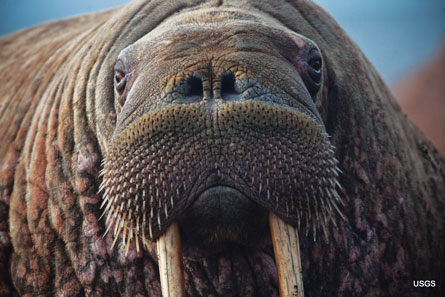
Walrus puss_USGS_IMG_4763
Continue reading