Posted onJuly 12, 2014|Comments Off on Counting bears from space can be just as accurate as by helicopter, claims new study
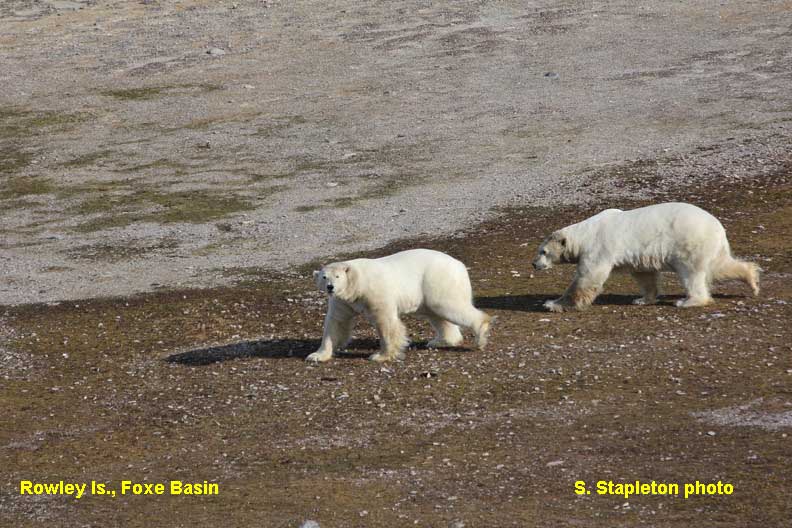
Satellites images might be able to replace aerial counts of polar bears in some places — if there are no clouds. But it seldom distinguishes cubs and can’t tell males from females, found a 2012 study of Foxe Basin bears that’s just been published.
Posted onJuly 10, 2014|Comments Off on Breakup date average for W. Hudson Bay is July 1 – this year, it’s late again
In the last few days, ice coverage on Western Hudson Bay finally dropped below the 30% level that now defines ‘breakup’ for polar bears: a few bears near Churchill started to come ashore late last week but most will stay on the ice until the end of July. That means breakup this year was unofficially July 8th, a week later than average (July 1) for the third year in a row.
Don’t’ tell that to the folks at Polar Bears International, though, because they’re busy telling people that the ice-free season for Western Hudson Bay bears is now longer than it was before the 1990s. What they mean is that the overall trend is toward early breakup dates.
But what they don’t admit is that over the last 44 years, breakup was a full two weeks earlier than average for Western Hudson Bay only six times and only three of those early breakups occurred within the last 13 years. See the calculations below and see what you think.
Posted onJuly 5, 2014|Comments Off on Are Polar Bears Really Endangered?
Christina Wu at the Urban Times (July 3, 2014) recently asked this question. She came up with a surprisingly balanced argument but some predictable responses from IUCN Polar Bear Specialist Group (PBSG) biologists. As a consequence, she overlooked some critical facts that make a big difference to the answer.
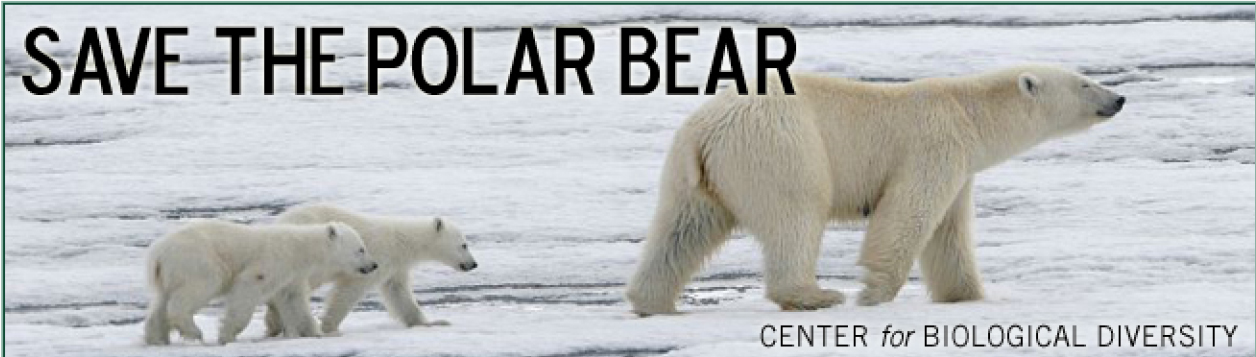
Figure 1. Predictions of polar bear population declines by 2050 are being used by the Center for Biological Diversity, WWF and Polar Bears International to solicit donations.
See that post for methods and other background on this topic, and some track maps from 2012 (also available at the USGS website here).
The USGS track map for June 2004 is copied below (Fig. 1).
Compare this to May’s map (Fig. 2) – the 20 bears from last month are down to 14, and all seven of the bears outfitted with glue-on satellite transmitters in April [either males or subadult animals] have either moved out of the area or their tags have fallen off or stopped transmitting. This means that all of the bears shown on the June map below are females with satellite radio collars. Continue reading
Comments Off on Tracking polar bears in the Beaufort Sea: June 2014 map
I came upon a notice about this meeting on the PBSG website, which apparently went up June 26, while looking for something else. There has been nothing about it in the media that I’ve seen.
And guess who were “invited specialists” at this meeting of “members-only,” called “to discuss internal matters crucial for the future functioning and capacity of the group”?
Posted onJuly 1, 2014|Comments Off on How long have polar bears – and people – lived around Hudson Bay?
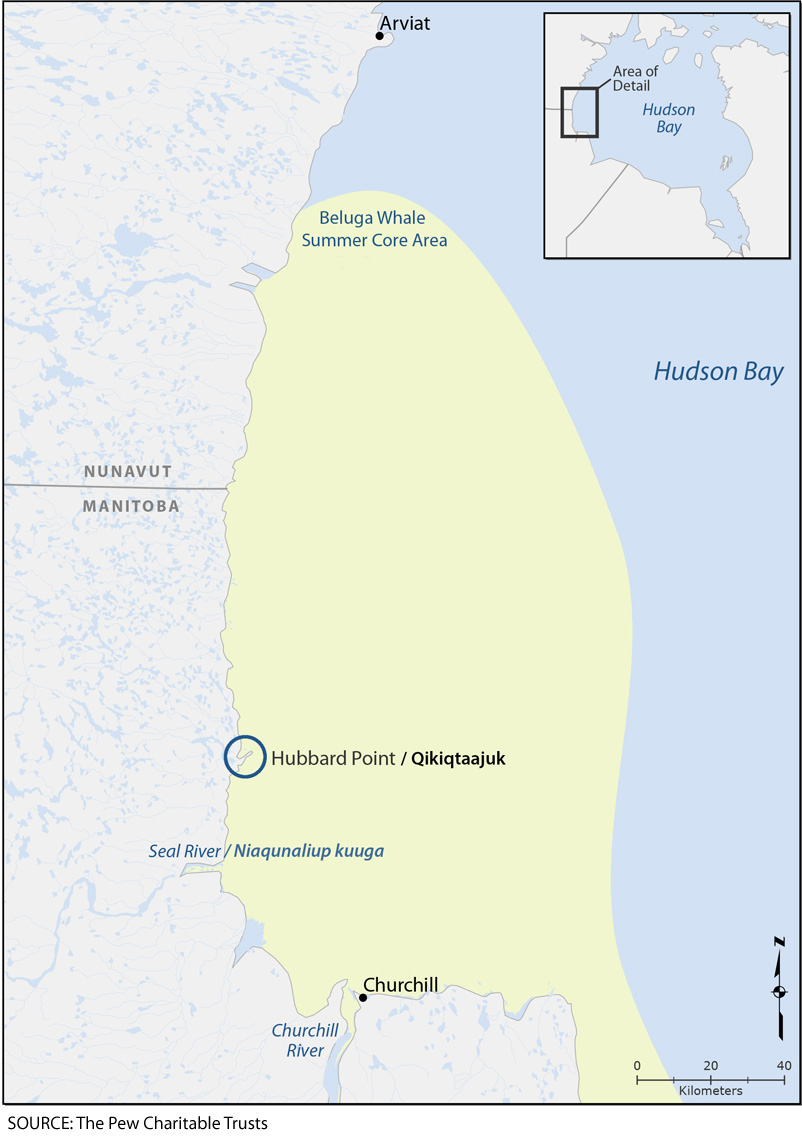
I came across a story in the news yesterday about the discovery of an archaeological site in northeastern Manitoba that brings to mind a post I wrote back in November 2012 on the geological and archaeological history of Hudson Bay.
As I noted then, most of the archaeological sites found on or near the coast of Hudson Bay are about 1,000 years old or less – and this new site fits that pattern perfectly.
A news report at the CBC (June 30, 2014) carried this description of the find, at a site called Hubbard Point, which sounds like it could yield polar bear remains: Continue reading
Comments Off on How long have polar bears – and people – lived around Hudson Bay?
A reader from Oregon questioned the filming techniques used for this video.
Revkin followed up.
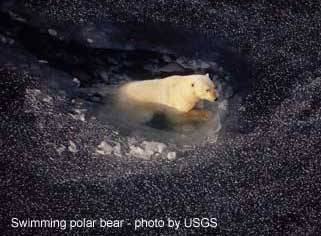
And it turned out, the reader from Oregon was correct — the film used in this video was shot with “an assortment of traditional methods,” not with the strapped on cameras that the USGS were using on the bears.
Revkin assumed from the background provided to him that this was leading-edge technology, bear-generated video. And even though he’d interviewed the filmmaker, the truth hadn’t come out.
Update June 29, 2014 – another damning comment made, added below.
Here are some background to the video you should be aware of:
1) The bears were swimming away from the USGS researchers and film crew who had shot them full of sedatives and attached a camera to one of their necks — they were not swimming toward sea ice 100 miles away.
2) The video was shot in the Bering Sea, in April 2014, when sea ice was about its maximum extent of the year — there was lots of ice around when this video was filmed.
3) The company doing the filming is using this video as a fundraiser.
Details below, including a sea ice map for April 2014.
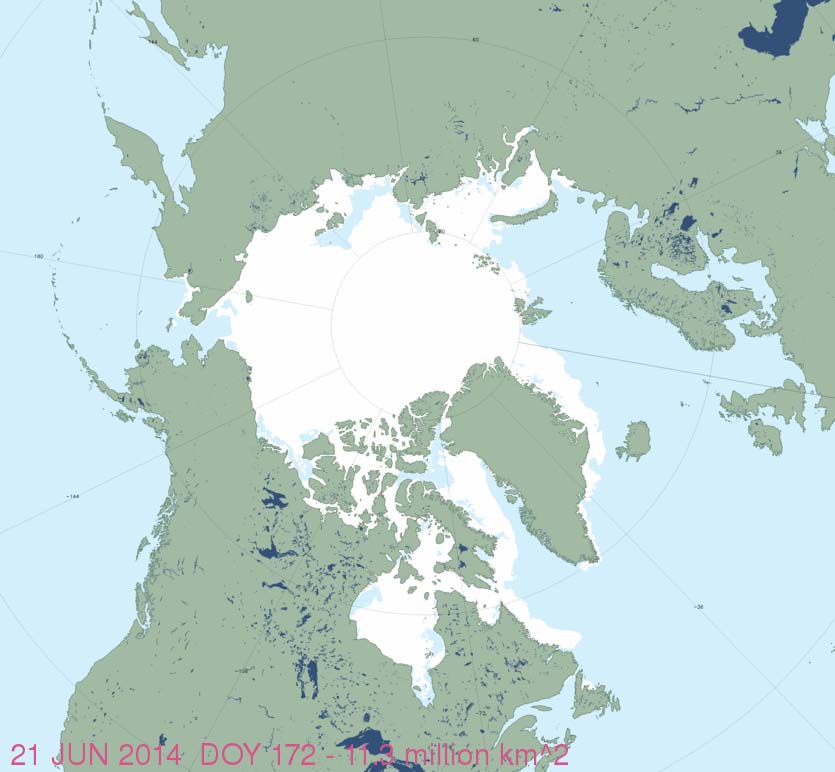
Posted onJune 24, 2014|Comments Off on Spring/summer sea ice bonanza for polar bears – conditions excellent again for 2014
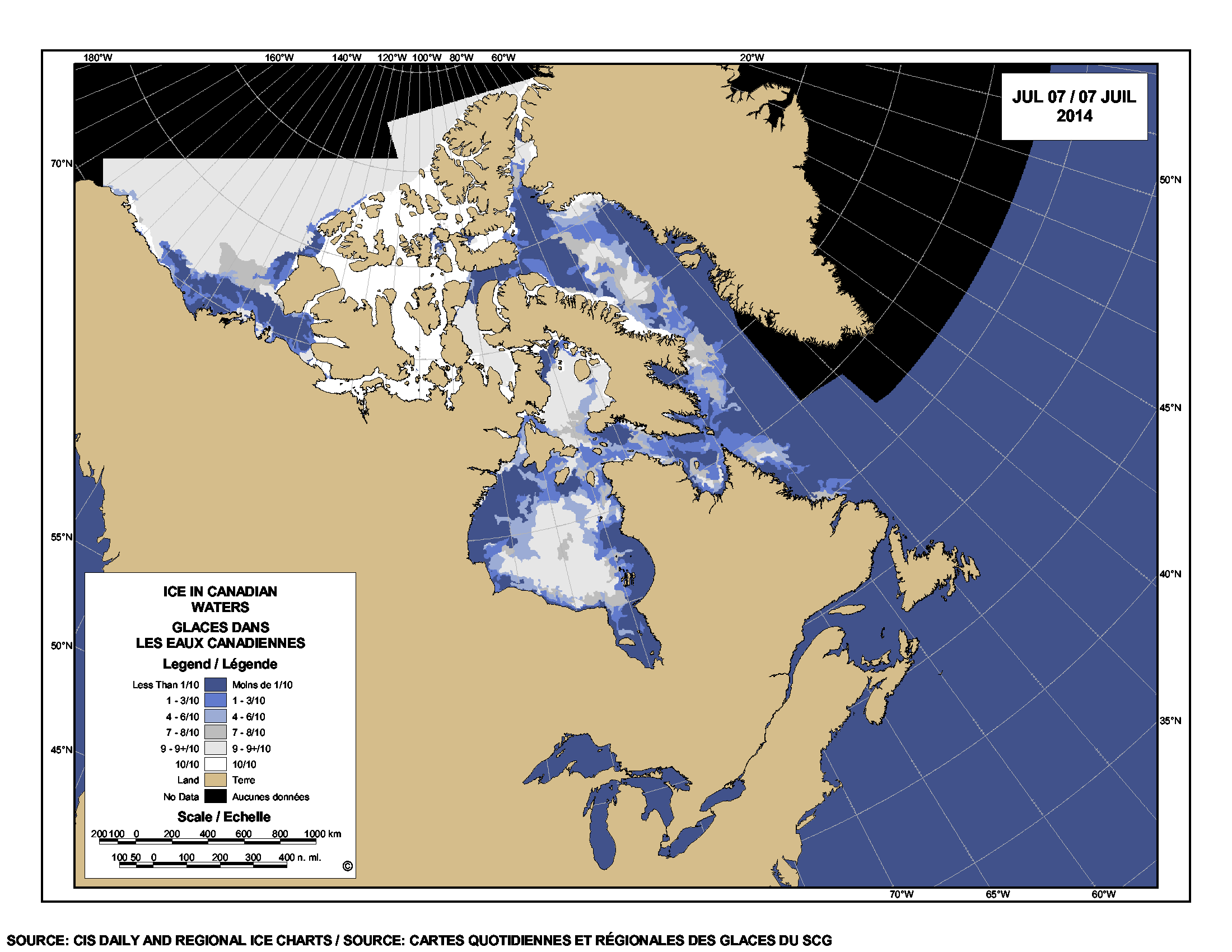
Again this year – contrary to predictions – there has been no early breakup of the sea ice on Hudson Bay and even though it’s the height of summer, there is plenty of ice throughout the Arctic to act as a feeding platform for polar bears. This makes it unlikely there will be a longer-than-average summer fast for polar bears again this year.
Watch polar bear habitat reform in the Canadian Arctic: “last 10 days” Canadian Ice Service animation (works anytime) HERE.
See Quote archive for details.








 polarbearscience
You must be logged in to post a comment.