Category Archives: Life History

Hudson Bay sea ice cover at early summer 2020 is similar to the 1980s

Don’t expect to hear this news from polar bear activists busy promoting the supposed threat to polar bears from declining Arctic sea ice but ice cover over Hudson Bay so far this summer has been very similar to what it was in the 1980s – often promoted as ‘the good old days’ for Western Hudson Bay polar bears. As of the end of June 2020, very concentrated ice (9/10-10/10) more than 1 metre thick still covered most of the bay and there was still no open water near Churchill along the west coast down into James Bay.
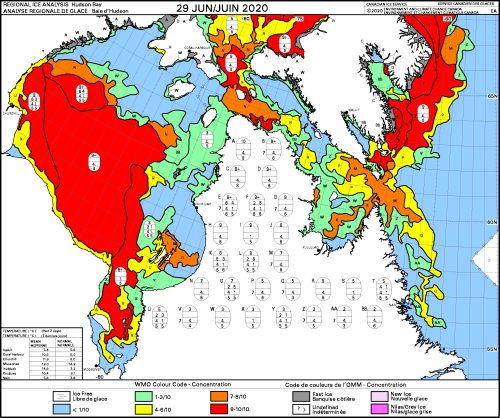
Hudson Bay weekly concentration 2020 June 29 PNG

Polar bear activists don’t like to have current Hudson Bay sea ice reality ruin their social and news media narrative that ‘polar bears are all gonna die’, so they instead emphasize the obsolete ‘declining trend’ for Western Hudson Bay breakup dates that haven’t been updated since 2015 (e.g. Castro de la Guardia et al. 2017; Lunn et al. 2016). They do this despite the fact their colleagues admit polar bears don’t catch many seals after late June (regardless of sea ice conditions) because it is past the peak spring feeding period (Obbard et al. 2016; Lippold et al. 2019). Like in the 1980s, in 2015 and 2019 some bears stayed on the ice until early August and 2020 is shaping up to be another 1980’s-like summer.
Continue reading

No early breakup for W Hudson Bay sea ice again this year: polar bears still on the ice

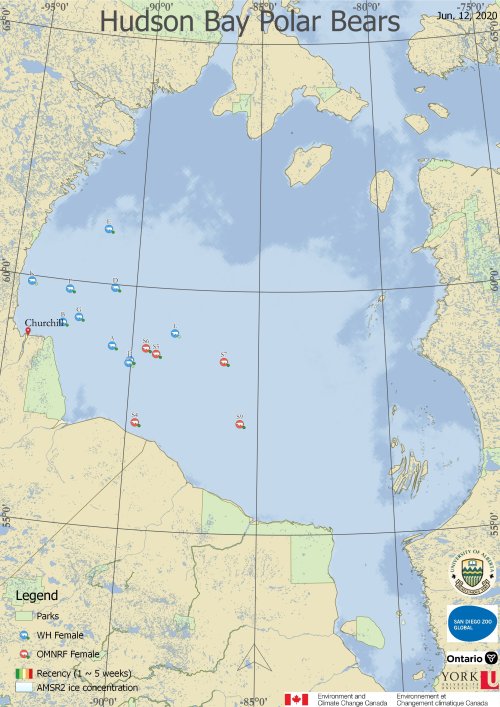
No early breakup of Hudson Bay sea ice again this year: there is still extensive thick first year ice over most of Hudson Bay and all female polar bears fitted with tracking collars in Western Hudson Bay are still on the ice:

W Hudson Bay polar bears still out on the ice that’s packed together by winds. AE Derocher, 12 June 2020

Dercocher June 12 2020 tracking map Hudson Bay

Breakup of Hudson Bay sea ice as it relates to polar bear movement to land has been about the same since 1999 (about 2 weeks earlier than in the 1980s) and this year is shaping up to be no different: there is still no declining trend in date of sea ice breakup in Western Hudson Bay despite repeated predictions of imminent doom. An especially ‘early’ breakup year would have bears ashore before 15 June. Last year (2019) the first WH bear onshore was caught on film 5 July and problem bears were not recorded onshore in Churchill until the 2nd week of July.

Continue reading

Spring feeding season almost over for polar bears & sea ice becomes less important

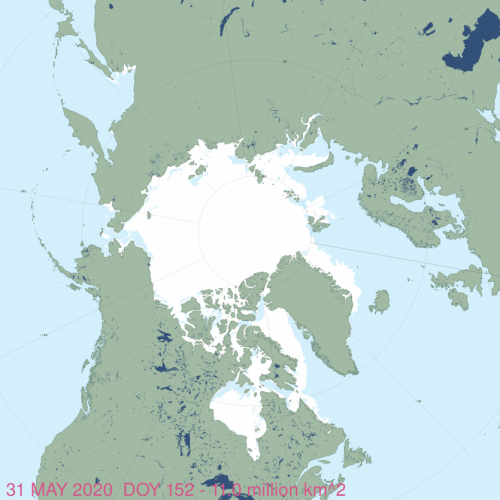
Here are ice conditions at the end of May, which signals the near-end of the critical spring feeding period for polar bears. This is because young-of-the-year seals take to the water to feed themselves, leaving only predator-savvy adults and subadults on the ice from some time in June onward (depending on the region).

masie_all_zoom_4km 2020 May 31_Day 152

Spring is the critical feeding period for polar bears (Crockford 2019, 2020; Lippold et al. 2020; Obbard et al. 2016):

“Unexpectedly, body condition of female polar bears from the Barents Sea has increased after 2005, although sea ice has retreated by ∼50% since the late 1990s in the area, and the length of the ice-free season has increased by over 20 weeks between 1979 and 2013. These changes are also accompanied by winter sea ice retreat that is especially pronounced in the Barents Sea compared to other Arctic areas. Despite the declining sea ice in the Barents Sea, polar bears are likely not lacking food as long as sea ice is present during their peak feeding period. Polar bears feed extensively from April to June when ringed seals have pups and are particularly vulnerable to predation, whereas the predation rate during the rest of the year is likely low. [Lippold et al. 2019:988]

Continue reading

New report: Harp seal population critical to Davis Strait polar bears is still increasing

The report on the latest population estimate for harp seals off the east coast of North America was released in late March without fanfare and therefore no media attention. This was one of the missing scientific reports mentioned in my State of the Polar Bear Report 2019 released in February (Crockford 2020): results of surveys promised for months or years by early 2020 but not delivered.

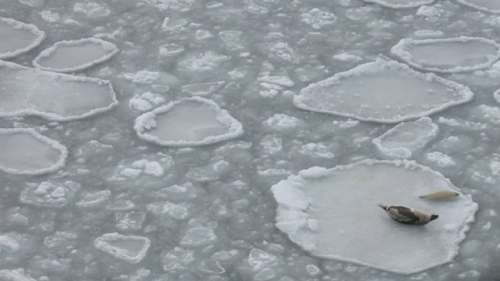
Harp seal on ice around PEI _DFO 2017

Not surprisingly then, we find the report has good news: the population estimate of harp seals in the NW Atlantic has risen to about 7.6 million (range 6.55-8.82) animals (DFO 2020), up from 7.4 million in 2014 (DFO 2014).

Note that the survey was done in March 2017, a low ice year for the Gulf of St. Lawrence (see discussion below) and while this may have resulted in some increased mortality for pups born there, it is also known that many ‘Gulf’ pregnant females will instead have given birth off Newfoundland and Labrador in a whelping region called ‘The Front’. Apparently, these factors were accounted for in the population model.

Harp seal pups born at the Front are an important food for Davis Strait polar bears. This increase in the prey base for Davis Strait polar bears suggests the bear population may have grown substantially since the last survey in 2007 (Peacock et al. 2013; Rode et al. 2012). Davis Strai is the only subpopulation of polar bears officially considered to have ‘likely increased’ at 2018 by Environment Canada. A new Davis Strait population size survey was apparently completed in 2018 but the results are not yet available (Crockford 2020).

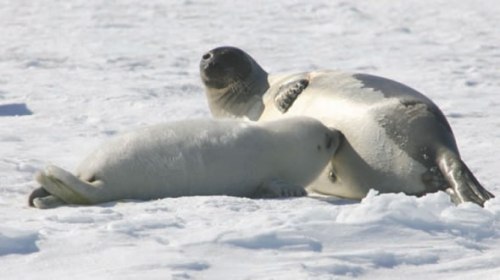
Harp seal pup_DFO Newfoundland

Highlights, quotes, and figures from the harp seal report below. Continue reading

Sea ice more than 1.2m thick over Hudson Bay portends a good year for polar bears

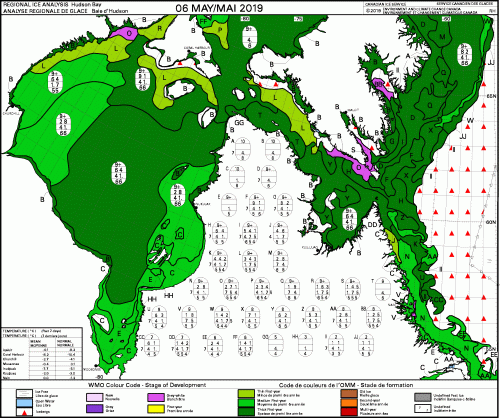
The chart below shows what sea ice thickness over Hudson Bay was like at the first week of May in a so-called a ‘good year’ (2019) – when polar bears came off the ice in excellent condition late in the summer and left early in the fall (‘thick first year ice’ is dark green and indicates ice greater than 1.2m thick):

Hudson Bay weekly stage of development 2019 May 6

Hudson Bay ice conditions this year appear to be shaping up to be as good or better than last year for polar bears yet specialist researchers and their cheerleaders have still been claiming that bears in this region – Western and Southern Hudson Bay – are doomed because of poor ice conditions. It’s no wonder they still haven’t published the data they’ve been collecting on polar bear body condition and cub survival over the last 15 years or so (Crockford 2020). With most field work cancelled for this year, what’s their excuse for not getting that done?
Continue reading

New Paper: Body condition of Barents Sea polar bears increased since 2004 despite sea ice loss

A recent paper that attempted to correlate pollution levels and body condition in Barents Sea polar bears reports it found body condition of female bears had increased between 2004 and 2017 despite a pronounced decline in summer and winter sea ice extent.

Svalbard polar bear Jon Aars_Norsk Polarinstitutt

“Unexpectedly, body condition of female polar bears from the Barents Sea has increased after 2005, although sea ice has retreated by ∼50% since the late 1990s in the area, and the length of the ice-free season has increased by over 20 weeks between 1979 and 2013. These changes are also accompanied by winter sea ice retreat that is especially pronounced in the Barents Sea compared to other Arctic areas” [Lippold et al. 2019:988]

Continue reading

Earth Day surprise: video of fat polar bear on Arctic sea ice contains no false facts

Shot during the 2015 Arctic GEOTRACES expedition aboard the U.S. Coast Guard Cutter Healy. The lack of narrated misinformation makes this video suitable for young children.

This looks to be a different bear than the one I discussed in 2015 here but was undoubtedly taken on the same cruise, because reports at the time (August 2015) said that ‘several’ bears were spotted. Video attributed to ‘Bill Schmoker, PolarTrek teacher 2015’, launched on the Woods Hole Youtube channel 1 April 2020 (no other info provided).

Continue reading

Winter sea ice maximum extent on March 5 was the highest since 2013

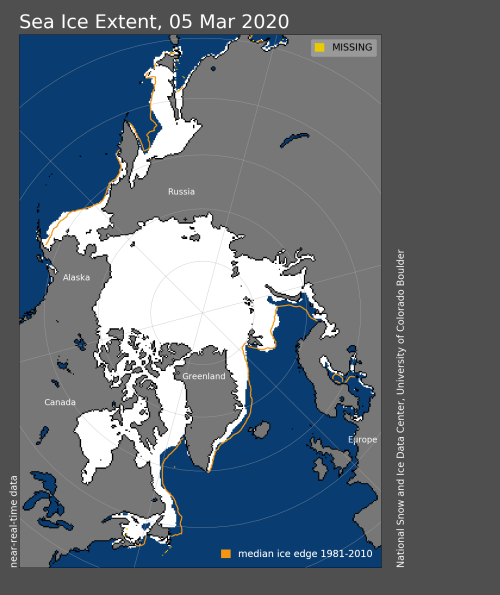
The most positive thing that US National Snow and Ice Data Center sea ice experts could say about this year’s winter sea ice maximum was that it wasn’t a record breaker. But it provides ample polar bear habitat when the bears need it most: just before the critical spring feeding season.

Sea ice extent 2020 March 5_sea ice maximum called_15 point 05 mkm2 NSIDC 24 March

In fact, they said: “The 2020 maximum sea ice extent is the eleventh lowest in the 42-year satellite record, but the highest since 2013.”  All that winter ice is essential polar bear habitat just before the critical spring feeding season (Crockford 2019, 2020) and it’s one of the reasons that polar bears are thriving.

Continue reading

Amid viral pandemic UK photographer captures images of Canadian polar bear cubs

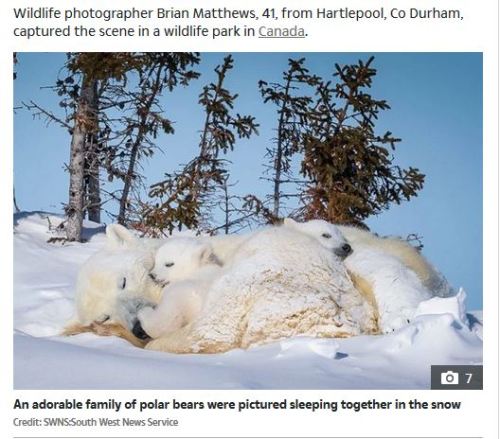
The Sun ran a photo-essay yesterday (22 March 2020, below) taken by a UK photographer who went to Wapusk National Park just south of Churchill, Manitoba in order to get much-coveted images of polar bear mothers and cubs newly emerged from winter maternity dens. The photos were said to have been taken “early last week” (16-17 March?).

Sun pb emerging with cubs feature 22 March 2020 lead photo

The trees in the photos are a give-away to the location: no other subpopulation regions except Western and Southern Hudson Bay are below the treeline. Scrubby little spruces but ‘trees’ nonetheless. Mothers in more northern regions won’t come out with their cubs until April.

The question is: what was this photographer thinking to travel to a remote Arctic location in the middle of a global pandemic?

UPDATE 24 March 2020 820am PT. I have just heard from photographer Brian Mathews and he had this to say about his trip to Wapusk National Park:

“Context and facts are key as ever. I left the U.K. before any of the measures where in place. I’ve just got back after being in Canada for nearly a month. When I returned to Churchill I self isolated then returned to the U.K. the coverage I got is good for the bears and the positive uplifting feedback I’ve had about the joy they brought into people lives had be brilliant.”

I noted in my response to him that I realize the tour company in Canada bears some responsibility for continuing to operate under the circumstances.

Continue reading

Polar bears prowling Newfoundland come on top of coronavirus fears

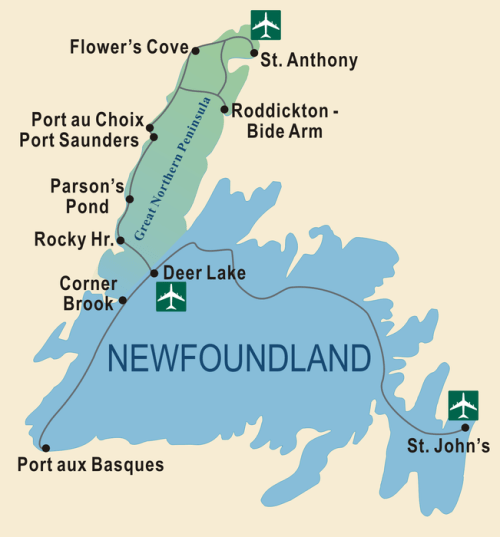
On Tuesday 17 March 2020, several polar bears were reported in and around the community of St. Anthony on the Northern Peninsula of Newfoundland, adding another threat on top of coronavirus concerns in the province. The photo below is from a 2018 Newfoundland sighting from the same region: none are available for the current report.

NP-PolarBearSighting 2018-6_large

There have been no reports of trouble but locals will have to stay vigilant to remain safe, which since 2008 has been a common concern from late winter to early spring. In 2012 in this area, a bear was shot after it destroyed homes and attacked livestock; another bear was shot the next week in the same area. And in 2016 and 2017, a bear had to be shot to protect residents. Bears at this time of year are in hunting mode, which is why my polar bear attack thriller novel, EATEN, is set in March.

Newfoundland Great Northern Peninsula map

Current sea ice conditions below.

UPDATE 22 March 2020: “Just after 1 p.m. on March 21, the RCMP St. Anthony advised they blocked off Goose Cove Road, St. Anthony, as a polar bear has been sighted in the area. Wildlife is en route to assess the situation. In the interest of public safety residents are asked to stay away from this area.” From Saltwire here. Another report on the same sighting here.

Continue reading