All three polar bear females tagged in the Southern Beaufort Sea far west of Kaktovik (near Barrow) spent all or most of September onshore in the Northern Beaufort area of Canada.
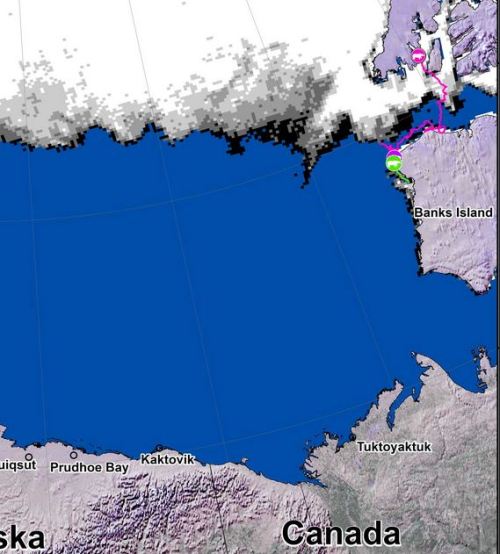

All three polar bear females tagged in the Southern Beaufort Sea far west of Kaktovik (near Barrow) spent all or most of September onshore in the Northern Beaufort area of Canada.
Comments Off on Tracking Western Alaskan polar bears in the Beaufort in Sept – all 3 chose Canada
Posted in Life History, Sea ice habitat
Tagged Banks Island, Barrow, Beaufort Sea, boundaries, Kaktovik, mixing, polar bear, satellite radio collars, sea ice, subpopulations, tracking polar bears, USGS, Western Arctic
A large polar bear population with lots of adult males – due to bans on hunting – means more survival pressure on young bears, especially young males. To blame more problems with young male bears on lack of sea ice due to global warming ignores the downside to the reality Norway asked for when it banned hunting more than 40 years ago.
More hungry young males coming ashore looking for food is one of the potential consequences of living with a large, healthy population of polar bears. Biologist Ian Stirling warned of such problems back in 1974.
UPDATE: added below 6 Oct. 2016, statistics of defense of life shootings of polar bears in Svalbard since 1973.
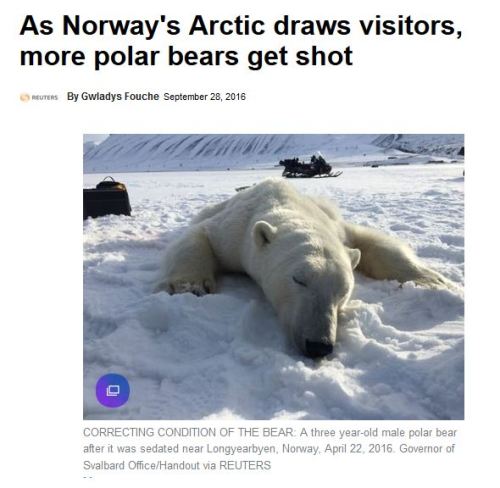
Svalbard area polar bear numbers have increased 42% since 2004 and more hungry young polar bears almost certainly mean more polar bear problems, as folks in Svalbard (see map and quotes below) have experienced this year.
Continue reading
Comments Off on The polar bear problem no one will talk about – the downside to large populations
Posted in Conservation Status, Life History, Polar bear attacks, Sea ice habitat
Tagged attack, competition, facts, feeding, global warming, human-polar bear conflicts, numbers, polar bear, population size, problem bears, sea ice, subadult males, Svalbard, young bears
This short BBC video shows why polar bears are so often unsuccessful in their summer hunts – adult bearded seals are the species most often available on the ice. These seals are not only predator-savvy but there are lots of escape routes in the melting ice, and this has always been so.
“Hungry polar bear surprises a seal – The Hunt: Episode 2 Preview – BBC One”
Melting ice in summer is not a new phenomenon (e.g. NASA photo below from mid-July 2016) – Thomas Grenfell and Gary Maykut described the process of melt pond development back in the 1970s:
“Melt ponds reach the maximum extent shortly after the disappearance of the snow, when they may cover upwards of 50% of the ice.”
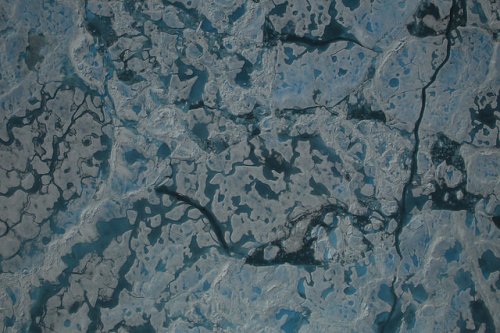
Melting summer ice has always made it challenging for polar bears to catch seals, as this quote from Ian Stirling (1974) show, based on his work in the Central Canadian Arctic in the summer of 1973 (July and August):
“There is a great abundance of natural holes in the ice during summer, anyone of which a seal could surface through. “
This is still true in areas like the Southern Beaufort Sea today (e.g. Whiteman et al. 2015): the ice melts and in some areas, disappears completely in summer.
It’s why polar bears – unlike other species of bears in summer – depend on their stored fat to see them through until the ice reforms in the fall.
The meme “If there’s no ice, there’s no ice bear” is political-style rhetoric, not science.
[When polar bear scientists say “sea ice” or “ice” – they mean summer sea ice. Sea ice in winter and spring are not predicted to decline by 2100 to any appreciable degree and that has been true since sea ice predictions began]
Polar bears in Hudson Bay and Davis Strait routinely go 4-5 months without sea ice in the summer and have done since studies on them began. Yet, all of the polar bear subpopulations in Hudson Bay and Davis Strait are stable or increasing.
Comments Off on Polar bears seldom catch seals they stalk in summer – it’s why they fast
Posted in Life History, Sea ice habitat
Tagged bearded seals, Davis Strait, facts, Hudson Bay, hunting, no ice, no ice bear, platform, polar bear, sea ice, seals, summer
Only three females with collars are still being tracked by USGS researchers in the Beaufort Sea and all of them spent August 2016 on the sea ice in the eastern portion, off the coast of Banks Island.
Meanwhile, as Arctic sea ice nears the annual low, NSIDC predicts that 2016 will likely not set a new record but may bottom-out below 2007 (the second-lowest since 1979). The impact of low September sea ice on polar bear health and survival, based on recent research reports, will be the topic of an upcoming post.
Continue reading
Comments Off on Tracking polar bears in the Beaufort Sea during August 2016
Posted in Life History, Sea ice habitat
Tagged Beaufort Sea, females, NSIDC, polar bear, satellite collars, sea ice, September minimum, summer, tracking, USGS
A part-time Arctic researcher eager for media attention suggested earlier today that the ice entrapment of narwhals in 2008 and again in 2015 at Pond Inlet (that made headlines around the world) was the result of “sudden changes in temperature” caused by climate change. This grossly misleading claim ignores the facts: ice entrapment of narwhals is an entirely natural feature of the Arctic that has been known about for hundreds of years.
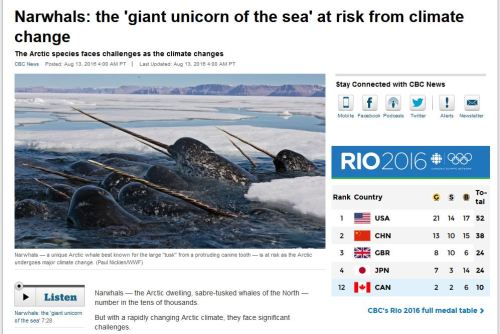
“Narwhals: the ‘giant unicorn of the sea’ at risk from climate change” (CBC, 13 August 2016), a print version of a CBC Radio interview with Clint Wright that aired 8 August 2016. Wright is the general manager at the Vancouver Aquarium and apparently has “joined a team of researchers to tag and study” narwhals for several years – but does not seem to know much about the history or circumstances of natural ice entrapment.
Ice entrapment of small whales is nothing new. The first formally documented incident – in English – occurred in 1915 (Porsild 1918) and the phenomenon has probably occurred as long as there has been ice in the Arctic (millions of years).
Animals routinely become trapped in a few specific areas due to local geography: when ice that forms in the north moves south quickly, it blocks the entrances to inlets or coastal bays that still have open water. The presence of the pack ice causes nearby temperatures to drop quickly. Rapid development of ice on the bay proceeds from the mouth toward the head of the bay. Any whales present cannot escape to open water and will eventually die or be eaten.
Pond Inlet at the north end of Baffin Island is one such place but Disko Bay in western Greenland is another. In fact, Pond Inlet and Disko Bay are almost identical in geographic layout even though they lie on opposite sides of Baffin Bay, so it’s not surprising that both are locations of repeated entrapment events.
Three highly informative journal articles on the phenomenon of ice entrapment of narwhals and beluga are open access documents that reveal some fascinating details of such incidents, including polar bear predation on trapped whales. h/t T. Nelson Continue reading
Comments Off on Narwhal and beluga ice entrapment is natural – not caused by global warming
Posted in History, Life History, Sea ice habitat, Uncategorized
Tagged Arctic, baffin bay, beluga, climate, climate change, Clint Wright, Disko Bay, entrapment, facts, global warming, narwhal, polar bear, Pond Inlet, predation, prey, risk, sea ice, threatened, trapped, unicorn, Vancouver Aquarium, weather, whales
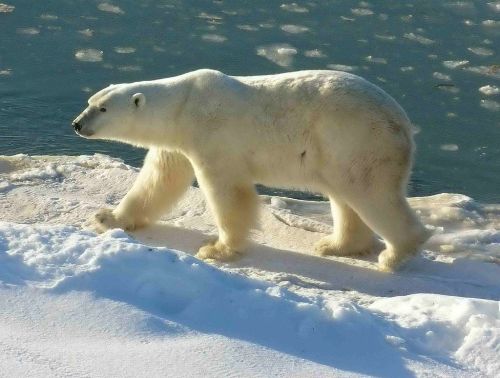
Reports from Seal River, just north of Churchill at Churchillwild, at July 26 were crowing about seeing lots of bears onshore, with a veritable beehive of activity the weekend of 16/17 July:
“This has without a doubt been Churchill Wild’s most spectacular start to the summer polar bear watching season. …Bear numbers are up spectacularly this year and all are looking very fat and healthy, perhaps much to the chagrin of climate change “experts.” Our best day for the seductive white carnivores over the past week featured 21 polar bears sighted between the Lodge and our whale swim spot!
…
The ice pack, which was still visible a week ago [i.e, 17 July or so], has finally dissipated and pushed a large number of bears on to our coastline here at Seal River, with the end result being many very happy cameras!” [my bold]
And in Churchill proper, the Polar Bear Alert program has issued three reports so far this season (courtesy the Town of Churchill), which confirm that bears in the Polar Bear Capital of the World are also in great shape.
For the week of July 11-17, 2016:
“Bears are off the sea ice and on land. They are looking well fed and in great shape.”
See all three PBA reports below, compared to one from last year at this time (as well as a map and some ice charts).
More fat, healthy bears than last year, enough to keep the Polar Bear Alert folks hopping and tourists in the north happy. Sure doesn’t sound like a suffering population to me. Continue reading
Comments Off on Polar bears off the ice in W. Hudson Bay are “well fed and in great shape” this year
Posted in Conservation Status, Life History, Sea ice habitat
Tagged body condition, breakup, Churchill, extirpation, health, onshore, polar bears, Seal River, threatened, western hudson bay
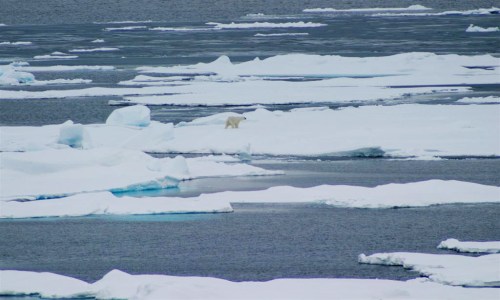
Walt Meier, sea ice scientist at NASA Goddard, made a statement yesterday about this year’s ice conditions [2016 Climate Trends Continue to Break Records: July 19, 2016]:
“It has been a record year so far for global temperatures, but the record high temperatures in the Arctic over the past six months have been even more extreme,” Meier said. “This warmth as well as unusual weather patterns have led to the record low sea ice extents so far this year.“ [my bold]
Well, except for Davis Strait/Labrador Sea this spring. And Western Hudson Bay/Foxe Basin this month – plus the fact that late July sea ice in the Laptev Sea is higher than it’s been for more than a decade (more on that below).
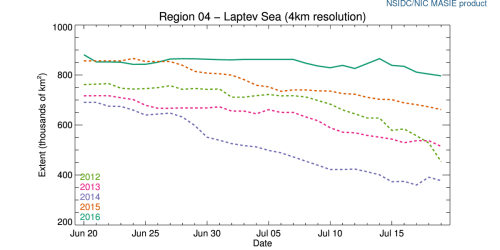
I guess totals matter for some things – just not for polar bears. However, it’s nice to see the issue of melt ponds get some attention, since they are such a prominent feature of polar bear habitat during the summer melt season.
Comments Off on Arctic melt ponds get media spotlight as Laptev Sea ice hits an 11 year high
Posted in Life History, Sea ice habitat
Tagged accuracy, Beaufort, Chukchi, extent, ICEBRIDGE, Laptev Sea, melt ponds, NASA, Northeast Passage, satellite radio collars, sea ice, summer
There is slightly less ice this year in Hudson Bay than last year but it is hugging tight against the western shore, which means polar bears in Western and Southern Hudson Bay will be able to stay out on the ice (if they want to) until August.
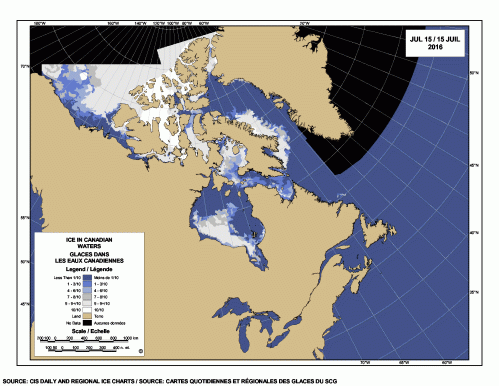
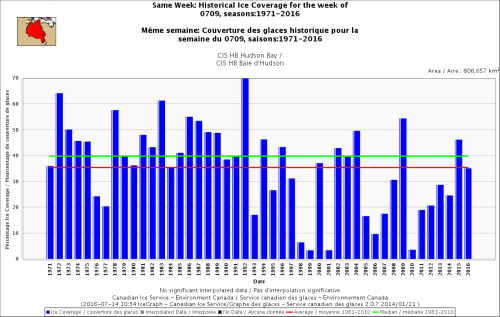
The latest weekly ice graph from the Canadian Ice Service (for 9 July) below shows average ice coverage this year (and more than there was in 1976 and 1977):
[By the way, the IUCN Polar Bear Specialist Group website is still “under construction” allowing them to avoid mentioning the less-than-dire conclusions contained in the 2015 IUCN Red List assessment]
More ice maps below, comparing previous years.
Comments Off on Hudson Bay update – lots of sea ice well positioned for polar bears to get ashore
Posted in Life History, Sea ice habitat
Tagged breakup, habitat, Hudson Bay, ice maps, polar bear, sea ice, summer
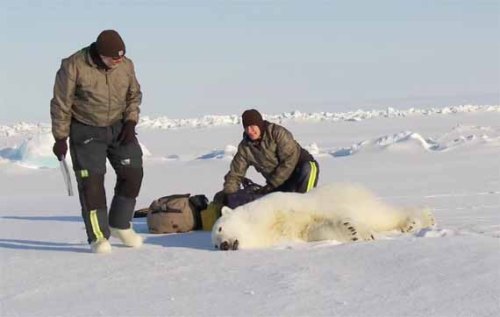
Even though it is well known that subadult male polar bears (≤ 4 years old) continue to grow in mass and bulk as they mature – so that their thick necks get even larger – in recent years Andrew Derocher and his students at the University of Alberta potentially endangered the lives of many subadult males in the Southern Beaufort in the process of learning relatively little they didn’t already know.
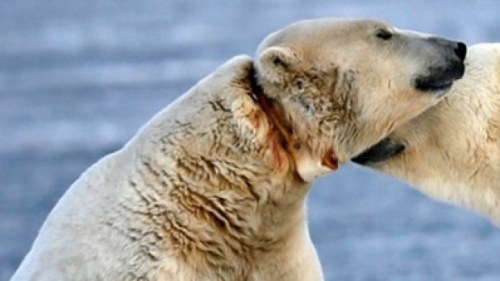
Money quote from a just-accepted paper by Master’s student Jody Pongracz and supervisor Derocher (“Summer refugia of polar bears (Ursus maritimus) in the southern Beaufort Sea” Polar Biology, in press 2016):
“The number of bears tracked varied over time due to collar design, deployment, and both planned and unplanned collar retention.”
So, how much “unplanned collar retention” issues [collars that did not fall off as expected] went on during this 2007-2010 study? They don’t say.
Is this paper saying U of A researchers knew they had ‘collar retention’ issues as far back as 2010 but continued to deploy them on subadult males after that study was over? It seems so, because they had an issue with just such a bear last year.
The bear with an apparently tight collar that was photographed last fall (see photo above) went out onto the ice and no one knows what happened – there has been no more information on him since, although researchers have apparently been watching for him, updated just yesterday). The University of Alberta statement says (under the June 2 update):
“Ongoing research at the University of Alberta is shifting to ear tag radios as required”
So now they realize that putting collars on subadult males is not such a good idea. Brilliant!
CBC News (28 October 2015): “Photo shows polar bear injured by tight radio collar“. See previous posts here and here. In a Global News interview (23 November 2015), Derocher admitted his team had “likely” put the collar on that bear, prompting the University of Alberta to issue a “Q & A” statement on the incident – which continues to insist that failure of collars to release is “rarely seen.”
Comments Off on New paper: U of A put collars on subadult SB polar bear males since 2007
Posted in Life History, Sea ice habitat, Uncategorized
Tagged Andy, Derocher, failures, problems with collars, satellite collars, sea ice, Southern Beaufort, subadult males, thick spring ice, tight collar, University of Alberta
The recent open water in the Southern Beaufort didn’t seem to change what polar bears were doing – bears tracked by USGS show them on the ice, likely trying to hunt. More ice edge means more hunting habitat at this time of year.
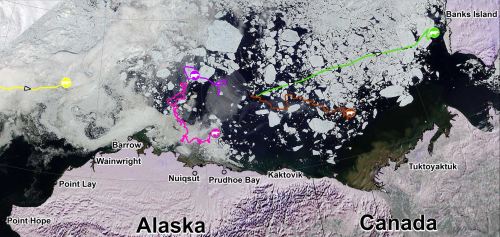
However, few hunts are likely successful at this time of year – because only older seals are on the ice and the broken ice makes escape so much easier for the seals (see previous post here). Fat bears on shore this summer (like the ones seen at Kaktovik in September) will tell us that they got enough to eat earlier in the season. Note that bears in good condition that appear at the whaling bone piles in September are there by choice (not stranding) and they got fat by feeding in the spring (March-May), not by picking at leftover whale scraps. Calories from terrestrial sources (for most bears) just reduce the amount of weight they lose over the summer.
More maps below. Continue reading
Comments Off on Tracking polar bears in the Beaufort Sea – all bears on the ice in June
Posted in Life History, Sea ice habitat
Tagged Beaufort Sea, fat bears, feeding, satellite radio collars, sea ice, spring feeding, summer fast, tracking polar bears, USGS






 polarbearscience
You must be logged in to post a comment.