Category Archives: Sea ice habitat

M’Clintock polar bear survey’s first year plagued by fog in an area thick with heavy ice

“Blizzards, we had fog — we had to sleep in the helicopter, on the sea ice one night, because we couldn’t fly anywhere,” Markus Dyck, senior polar bear biologist with the GN, told Nunatsiaq News Sept. 5.”
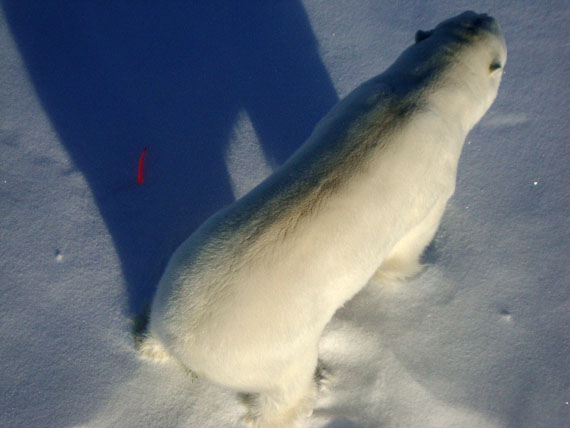
Polar bear with dart_bear_570_2012 Kane Basin_M Dyck photo

Fog was the theme of polar bear research this summer in Queen Maud Gulf, otherwise known as the M’Clintock Channel polar bear subpopulation region.

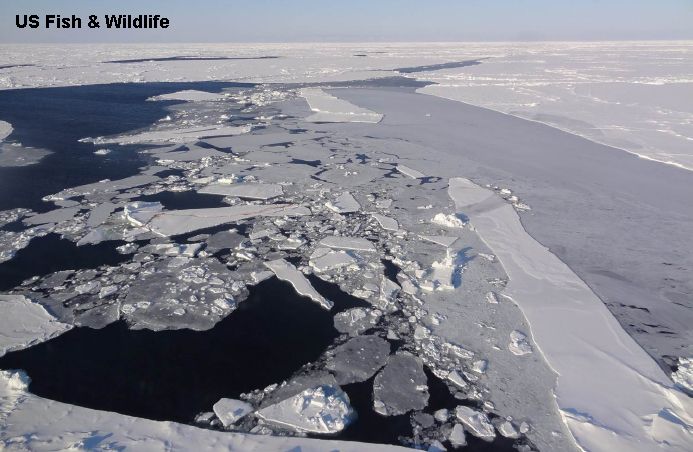
The ice has been heavy in that region as well, according to a the National Snow and Ice Data Center (NSIDC) and reported yesterday in another story (Heavy pack ice in NW Passage ice creates tough conditions this year: Pack ice clogs Queen Maud Gulf).

For maps showing where M’Clintock Channel and Queen Maud Gulf actually are, see the maps — and more quotes — below.
Continue reading
Tracking polar bears in the Beaufort Sea – August 2014 map

Here is the August 2014 follow-up to my post on the July 2013 track map for female polar bears being followed by satellite in the Beaufort Sea by the US Geological Survey (USGS) – “Ten out of ten polar bears being tracked this summer in the Beaufort Sea are on the ice.”

See that post for methods and other background on this topic, and some track maps from 2012 (also available at the USGS website here).

The USGS track map for August 2014 is copied below (Fig. 1).

Compare this to July’s map (Fig. 4). The 20 bears from May (down to 13 in June) are now down to 11. All seven of the bears outfitted with glue-on satellite transmitters in April [either males or subadult animals] have either moved out of the area or their tags have fallen off or stopped transmitting. This means that all of the bears shown on the maps below are females.

At the end of August, nearing the minimum extent of ice for this year, seven bears were on the ice and only four were on land.
Continue reading

Polar Bears International responds to “The Politics of Polar Bears”

Well, sort of — what they did was provide a logical fallacy reply to an almost incoherent comment by a PBI Facebook supporter who had watched the documentary and complained of bias (such a predictable response).

See what you think, screen-cap below (taken September 3, 2014 at about 2PM Pacific Time.
[UPDATE added September 4, 2014 at 8:30PM Pacific, see below]

Continue reading

Has the tide turned on polar bears as icons of global warming?

The CBC in Canada is pretty much a mirror image of the BBC in the UK, ABC in Australia and PBS in the US. So you might appreciate my shock at the almost unbelievable balance contained in the recently broadcasted CBC documentary, “The Politics of Polar Bears: Tracking the Celebrity Bear.

The film is a profound change from the hype and pessimism that has dominated the polar bear issue in Canada and abroad, supported unchallenged by the CBC. Finally, TV viewers were given some decently balanced perspective on the status of polar bears in  Western Hudson Bay.

If the take-away message tipped towards reason and optimism rather than panic over the status of polar bears, it’s because the evidence was strongly in that direction.

Politics of polar bears title

Continue reading

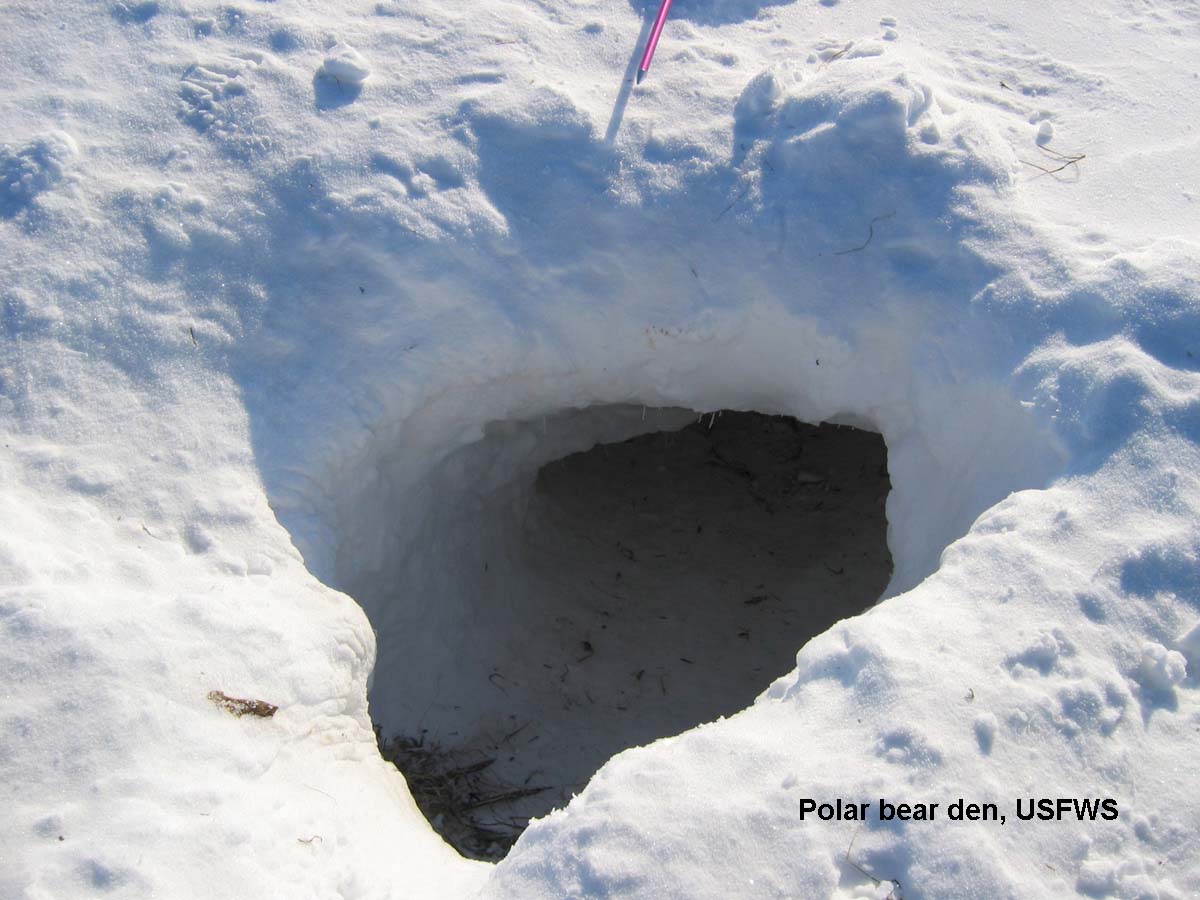
Summer sea ice melt and polar bear maternity dens

The yearly sea ice minimum extent is almost upon us, which has recently been the seasonal signal for excitable biologists and their activist groupies to resume their breathless rants about what sea ice loss could mean for polar bears.

Polar bear den_CreditUSFWS_labeled

Never mind that the summer minimum extent reached in September, no matter how low it goes, is pretty much irrelevant to polar bear health and survival. As I’ve discussed before, what’s really important is the presence of not-too-thick ice during the spring, so they can catch lots of young seals and put on lots of fat.

But to a lesser degree, the extent at mid-to-late summer is important because this is when pregnant females that prefer to make their maternity dens on shore are looking for good places to spend the winter.

So the topic for today is this: how much does the extent of ice at the height of summer dictate where polar bear females make their winter dens?
Continue reading

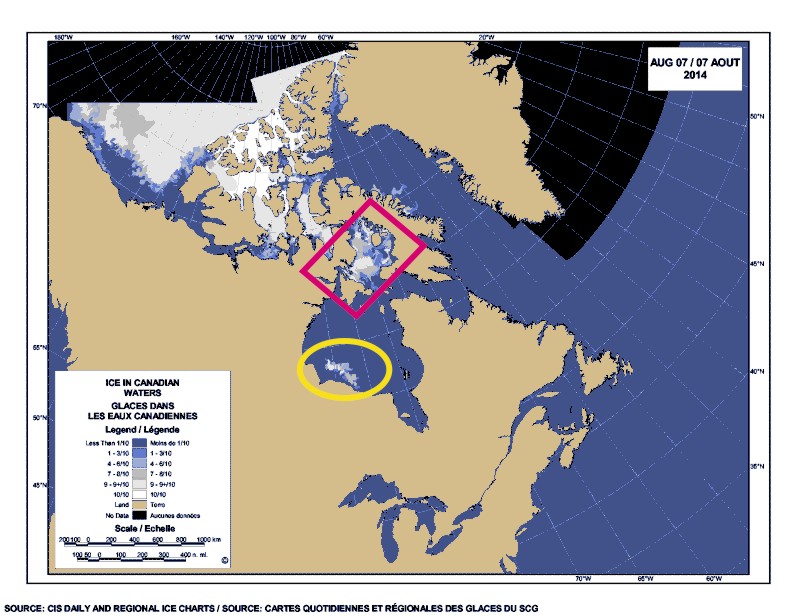
Foxe Basin and Hudson Bay have more than average polar bear hunting habitat

This is shaping up to be a banner year for polar bears in Foxe Basin (central Canada), with more ice in this region than there’s been since 1992. Hudson Bay still has a large patch of thick first year ice, more than there has been at this date since 2009, which was a late breakup year.

Hudson Bay Foxe Basin ice map Aug 7 2014 labeled_sm

Ice maps and charts below tell the story.
Continue reading

Tracking polar bears in the Beaufort Sea – July 2014 map and subpopulation boundary issues

Here is the July 2014 follow-up to my post on the July 2013 track map for female polar bears being followed by satellite in the Beaufort Sea by the US Geological Survey (USGS) – “Ten out of ten polar bears being tracked this summer in the Beaufort Sea are on the ice.”

See that post for methods and other background on this topic, and some track maps from 2012 (also available at the USGS website here).

The USGS track map July 2004 is copied below (Fig. 1).

Compare this to June’s map (Fig. 4). The 20 bears from May (down to 14 in June) are now down to 13. All seven of the bears outfitted with glue-on satellite transmitters in April [either males or subadult animals] have either moved out of the area or their tags have fallen off or stopped transmitting. This means that all of the bears shown on the June and July maps below are females.

One bear has moved into Canadian territory and another is well into the Chukchi Sea. This is now known to be a typical rather than unusual phenomenon, and is pertinent to the bigger picture of what constitutes a discrete geographic subpopulation for polar bears.
Continue reading

Up to 20% of collared polar bears located on ice that officially does not exist, says the PBSG

Here are two more priceless quotes from the minutes of the last meeting of the IUCN Polar Bear Specialist Group (PBSG) – on issues with sea ice percentages used to define “ice-free” and the problem of bears with collars showing up on sea ice that, according to ice data, does not exist. These quotes are in addition to the ones I posted earlier this week (here and here).

Polar bear with collar and tag_USGS_labeled

See the original document for the context here.
Continue reading

Sea ice experts make astonishing admissions to polar bear specialists

Climate scientists specializing in future sea ice predictions made some remarkable statements to polar bear scientists at their last meeting – admissions that may really surprise you.

USFWS_PolarBearNews2013_pg5 labeled

Back on June 26 (reported here), the IUCN Polar Bear Specialist Group (PBSG) posted a summary of its last meeting. So, I was very surprised to find (while there looking for something else), that on 18 July 2014 they had added minutes from the meeting to that summary.

These minutes are a bonanza because among the juicy nuggets of information is a summary of what the three invited climate scientists from Colorado (Jennifer Kay, Mark Serreze, and Marika Holland) had to say and what questions were asked. While real transparency would have involved posting copies of the sea ice presentations and transcripts of the question and answer sessions, this is certainly better than nothing.
Continue reading

Bearded seals in Alaska face no serious threat of reduction, let alone extinction, judge rules

Here’s a significant turn of events involving a story I reported on earlier: a US District Court judge ruled on Friday 25 July 2014 that the Bering/Chukchi Sea population of bearded seal (Erignatha barbatus) was improperly given ‘threatened’ species status in 2012. Judge Beistline ordered the National Marine Fisheries Service (NMFS) to correct deficiencies in its study of the population.

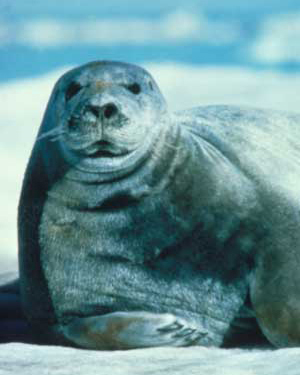
Bearded seals are important secondary prey species for polar bears in some regions of the Arctic (Thiemann et al. 2008), after ringed seals (which were also listed as ‘threatened’ in 2012).

beardedseal-mspindler-usfws

Among other points made in his written decision, the judge is quoted as saying (reported here):

“A listing under the ESA based upon speculation, that provides no additional action intended to preserve the continued existence of the listed species, is inherently arbitrary and capricious.” [my emphasis]

Arbitrary and capricious — now that’s a slap-down. He also reportedly called the ESA listing “an abuse of discretion.”

The question is, how often have other ESA listings – not challenged in court – been based on similarly arbitrary and capricious decisions that also involved an abuse of discretion?

More quotes from Judge Beistline’s decision, and reaction to it, below.
Continue reading