Tag Archives: Barents Sea

Polar bear habitat update – more spring sea ice around Svalbard than 2014 & 2012

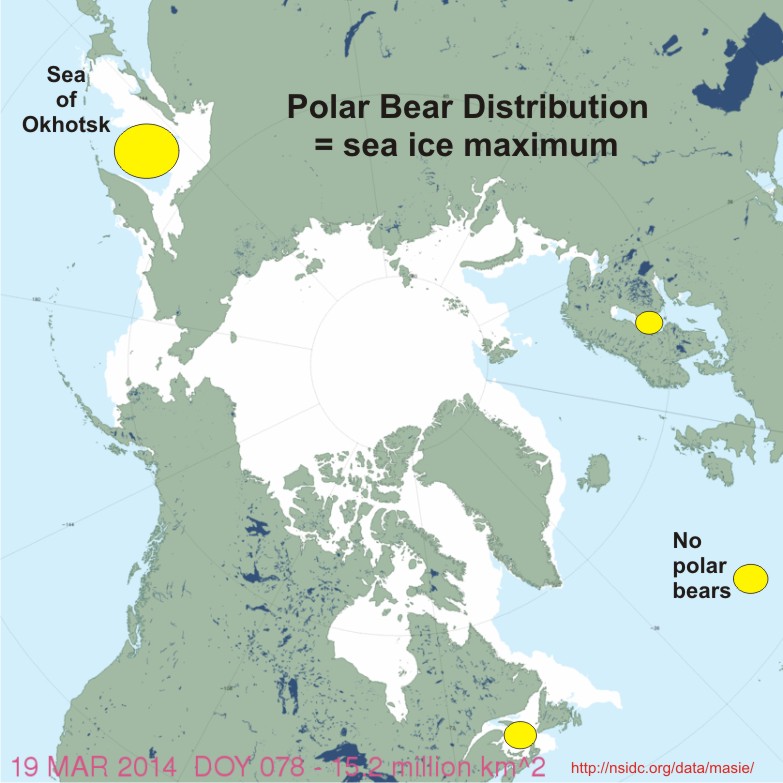
Polar bear habitat for the last week of March is well above average in eastern Canada for the second year in a row. The very low extent of ice in the Sea of Okhotsk – which has contributed strongly to the low maximum extent this year – is irrelevant to our discussion, since no polar bears live there.

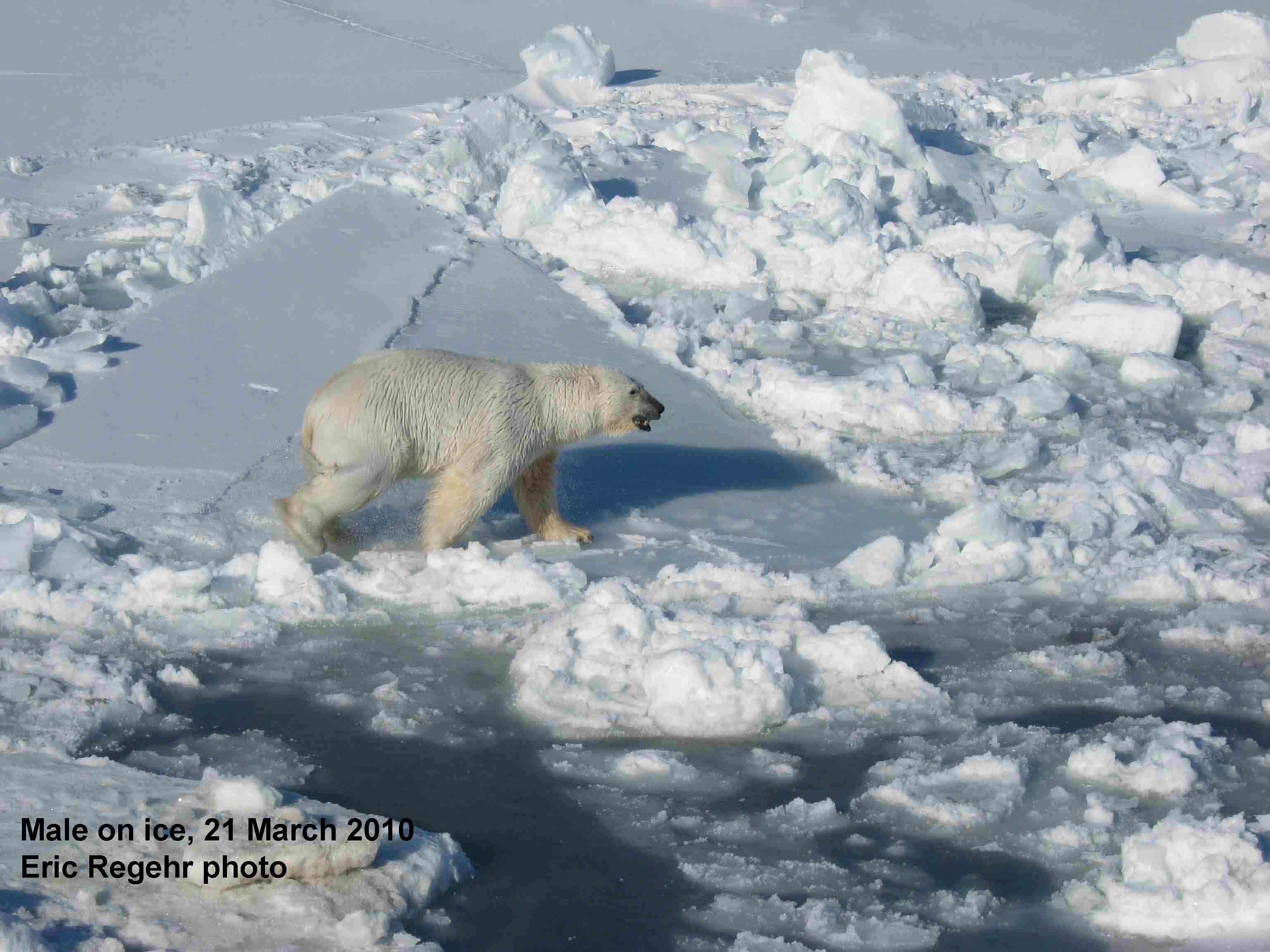
Polar_Bear_male_Regehr photo_March 21 2010_labeled

There is a bit more concentrated ice around Svalbard than last year (or in 2012), although ice in the Barents Sea in general is still below average due to the state of the Atlantic Multidecadal Oscillation (AMO). The state of the AMO and its effects on Barents Sea polar bear sea ice habitat has nothing to do with global warming: it’s a cycle that has been documented for centuries (Miles et al. 2014).

Still, there is plenty enough sea ice for polar bear hunting: this is the beginning of the critical feeding time for all polar bears (see here and here), but especially for the survival of new cubs-of-the-year, so I have a few words about Western Hudson Bay cubs below.

Have a look for yourself.
Update: Added 20 March 2015, comparison maps from Cryosphere Today for 2006 vs. 2015.
Continue reading

International Polar Bear Day & Polar bears in the news this week

Today’s the day to celebrate the resilience and adaptability of polar bears.

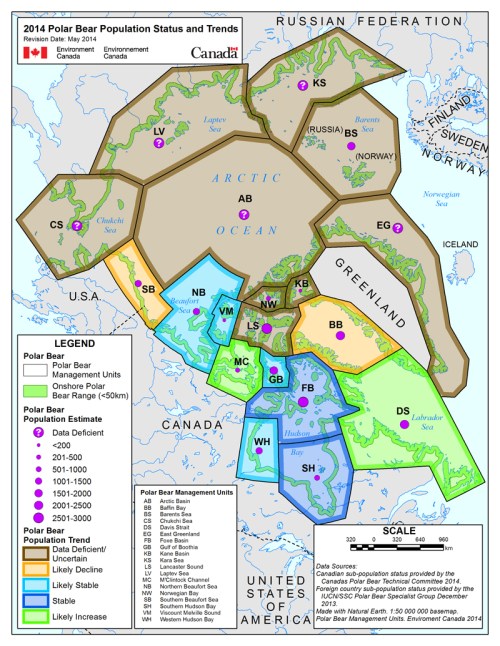
Not only did the record-breaking sea ice low of 2012 have virtually no effect on the bears but in 2014, only two subpopulations were classified as “declining” or “likely declining” – down from seven in 2010 and four in 2013 (see map below).

 Figure 6.  Most recent global polar bear population status assessment, using figures from the IUCN Polar Bear Specialist Group assessment (2013) and Environment Canada (May 2014). Note that of the two subpopulations denoted as being on a likely declining trend, BB (Baffin Bay) is suspected to be declining due to over-hunting and SB (Southern Beaufort) had an unfinished rebound caused by thick spring ice conditions in 2004-2006; a more recent survey (2012) indicated SB numbers were higher than the previous 10 years.

See my recent Twenty good reasons not to worry about polar bears.
[GWPF Briefing Paper version (pdf), just out today, here]

POLAR BEARS IN THE NEWS…

Kudos to the CBC for producing a propaganda-free polar bear “Fun Facts” page for kids that won’t give them nightmares – have a look.

Other news: Polar bears come early to Black Tickle, Labrador this year, a new population count is planned for the Barents Sea subpopulation, and The Times (UK) publishes some good news about polar bears. Details below.

UPDATE February 27, 2015. I’ve added another news item I missed below.

UPDATE APRIL 7, 2015. Correction to the February 27 update below.
Continue reading

Russia the first to ban polar bear hunting in 1956, not a surprise why

Soviet soldier in a tank, feeding condensed milk to polar bears c. 1950 (i.imgur.com), via Redditt 16 November 2014.

Soviet soldier in a tank, feeding condensed milk to polar bears c. 1950 - Imgur

Sponsored by the Russian Dash Cams Association. Reminding you to drive your tank safely and avoid hitting polar bears.”

Apparently, polar bears are attracted to tanks as they are to ships and submarines, which made them easy targets for men with guns. This, along with the rather extensive use of so-called ‘set guns’ (a baited apparatus fixed with a loaded shotgun), led to a significant decline of polar bears in the U.S.S.R. and the Barents Sea area by the 1950s. See also, “The slaughter of polar bears that rarely gets mentioned (ca. 1890-1930)

This was the real threat to polar bears and it was successfully halted by international agreement in 1973. We should not forget that polar bears are a conservation success story.

Polar bear habitat update: regional differences, melting vs. freezing

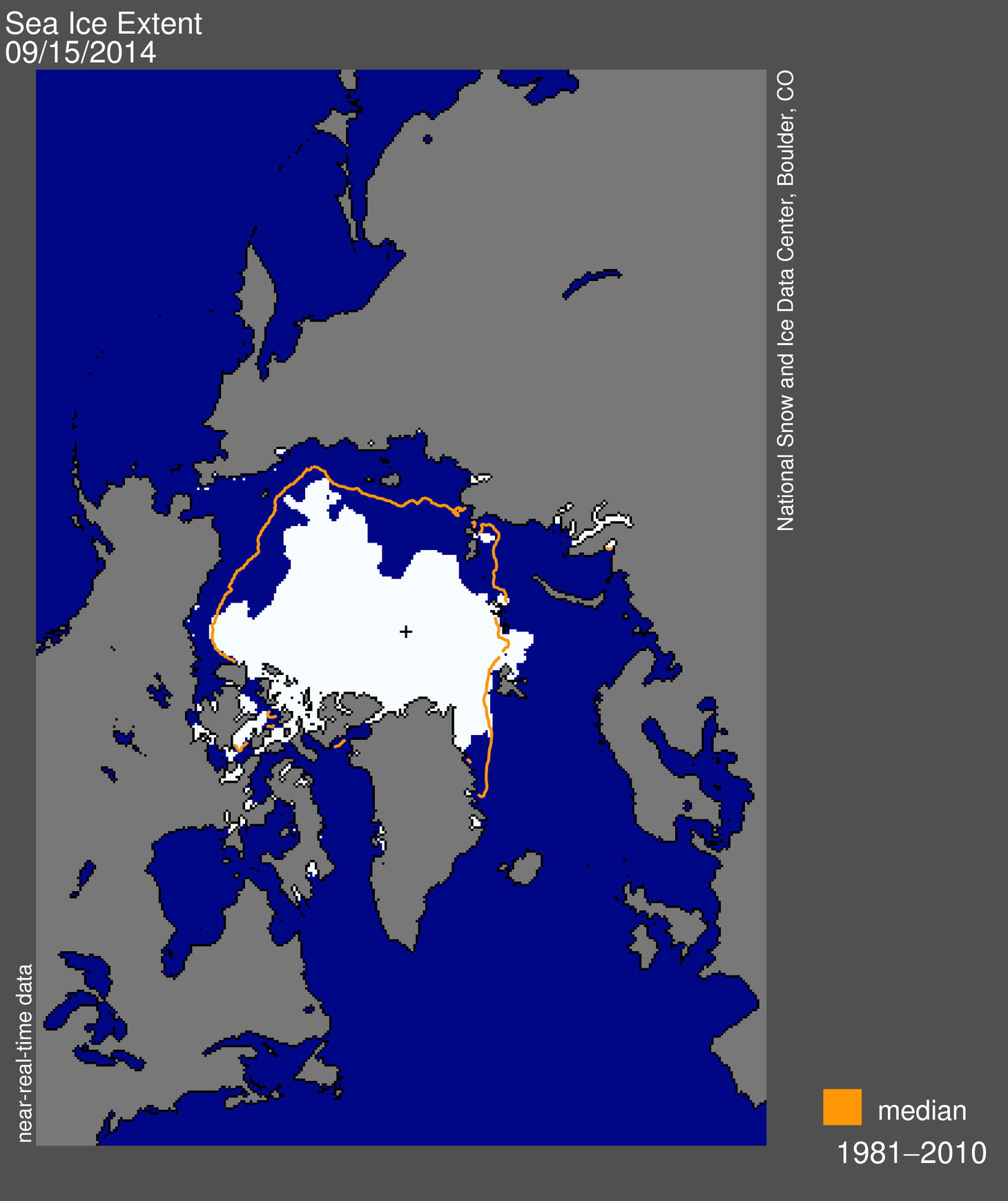
The freeze is on: from an annual low of ~5.1 m sq km at 15 September 2014, the sea ice that provides a hunting platform for polar bears is rapidly reforming.

Note that polar bear habitat world-wide is pretty well defined by the extent of sea ice in spring, with three notable exceptions. There are no polar bears (or fossil evidence of polar bears), in the Sea of Okhotsk, the Gulf of St. Lawrence, or the Baltic Sea.

Bears in some areas spend time on land in late summer/early fall but the amount of time varies widely.

Polar bear distribution and ice extent_PolarBearScience
Have a look at the maps below: the difference in regional coverage between the sea ice at 4 August and 16 October (73 days apart, both covering 7.3 mkm2) might surprise you.
Continue reading

Ian Stirling now says the polar bear that “died of climate change” last year was “in his prime”

With Barents Sea ice way above average this summer, Polar Bear Specialist Group biologist Ian Stirling now claims the old polar bear that he said died of climate change last year on Svalbard was “in his prime” and still blames the bear’s death on lack of sea ice — despite all evidence to the contrary.

UPDATE Sept. 19, 2014 typo fixed in Fig. 1 caption [sea ice low for 2012 was 3.41 m2km, not 4.1, see here.]

Figure 1. The National Snow and Ice Data Center (NSIDC) says the September minimum for 2014 is “imminent” and suggests the low may come in at 5.1 million square kilometers (far short of the 4.1 m2km low reached in 2012. About the much larger than average amount of ice around Svalbard and Franz Josef Land, they said only: “As was the case for the beginning of the month, extent remains below average in all sectors of the Arctic except for a region in the Barents Sea, east of Svalbard.”

Figure 1. The National Snow and Ice Data Center (NSIDC) says the September minimum for 2014 is “imminent” and suggests the low may come in at 5.1 million square kilometers (far short of the 4.1 3.41 m2km low reached in 2012. About the much larger than average amount of ice around Svalbard and Franz Josef Land, they said only: “As was the case for the beginning of the month, extent remains below average in all sectors of the Arctic except for a region in the Barents Sea, east of Svalbard.”

Continue reading

Summer sea ice melt and polar bear maternity dens

The yearly sea ice minimum extent is almost upon us, which has recently been the seasonal signal for excitable biologists and their activist groupies to resume their breathless rants about what sea ice loss could mean for polar bears.

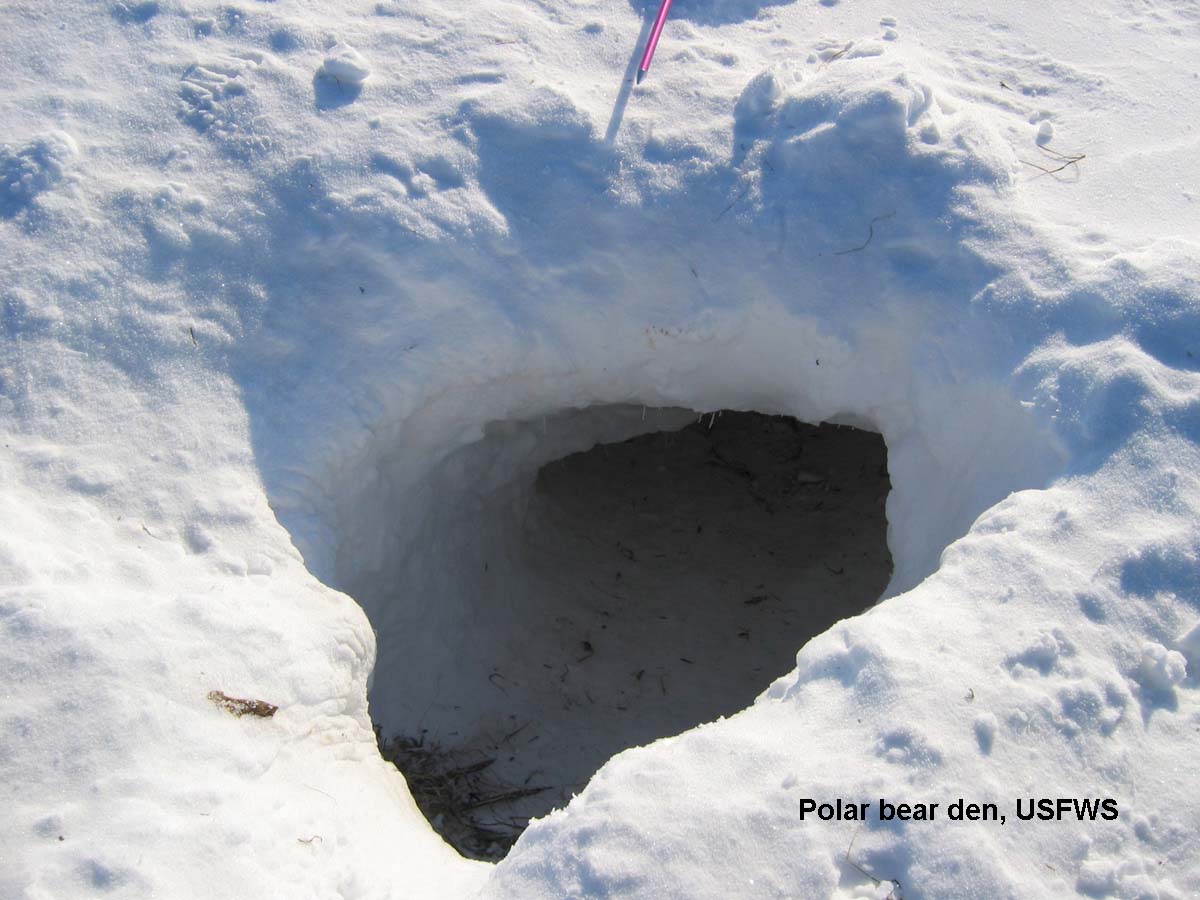
Polar bear den_CreditUSFWS_labeled

Never mind that the summer minimum extent reached in September, no matter how low it goes, is pretty much irrelevant to polar bear health and survival. As I’ve discussed before, what’s really important is the presence of not-too-thick ice during the spring, so they can catch lots of young seals and put on lots of fat.

But to a lesser degree, the extent at mid-to-late summer is important because this is when pregnant females that prefer to make their maternity dens on shore are looking for good places to spend the winter.

So the topic for today is this: how much does the extent of ice at the height of summer dictate where polar bear females make their winter dens?
Continue reading

Barents Sea polar bear cubs – new data for 2014 made to sound ominous

Last week, Damian Carrington (May 28, 2014) at The Guardian offered a scary-sounding polar bear story, based on the work of Jon Aars and colleagues from the Norwegian Polar Institute (Fewer polar bear cubs are being born in the Arctic islands, survey finds). As often is the case however, once you see the scientific data, you will sleep better.

[Dr Aars also gave a radio interview with CBC Canada (May 29): Is climate change the cause of lower polar bear birth rates in Norway?”; audio available]

[Update June 24, 2014 — see below]

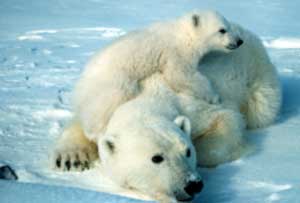
Female polar bear with cubs. (U.S. Fish & Wildlife Service/AP)

Female polar bear with cubs. (U.S. Fish & Wildlife Service)

Continue reading

Polar bear habitat update – ice coverage at the beginning of this year’s critical feeding period

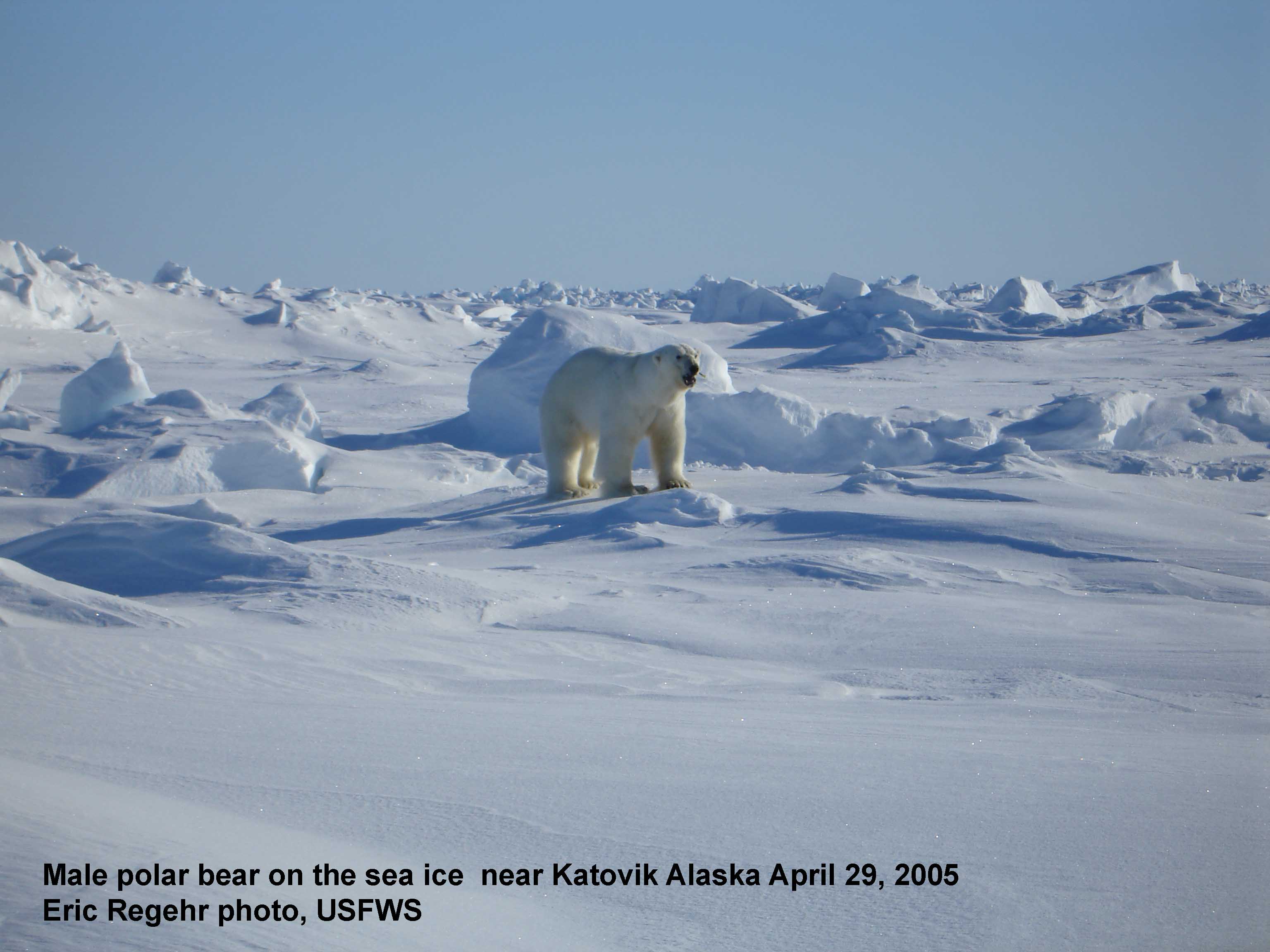
Polar bears are all out on the sea ice at this time of year, feeding on new-born seal pups. Here’s a look at what the ice conditions are like at this critical time.

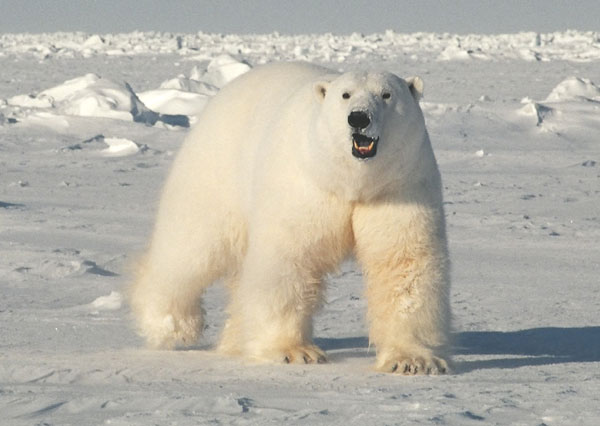
Polar_Bear_male on sea ice_Alaska Katovik Regehr photo_April 29, 2005_sm labeled

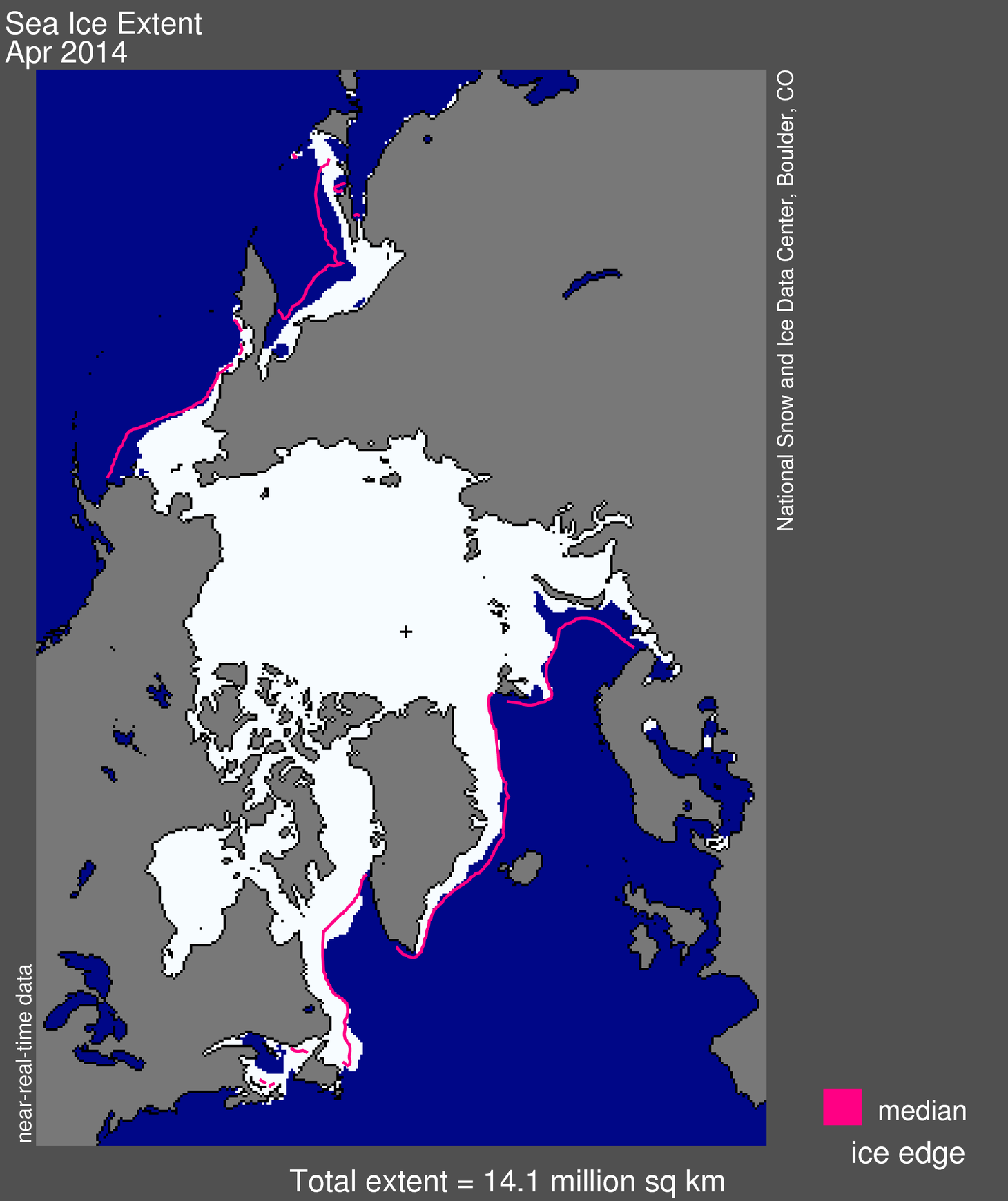
end April extent NSIDC May 4

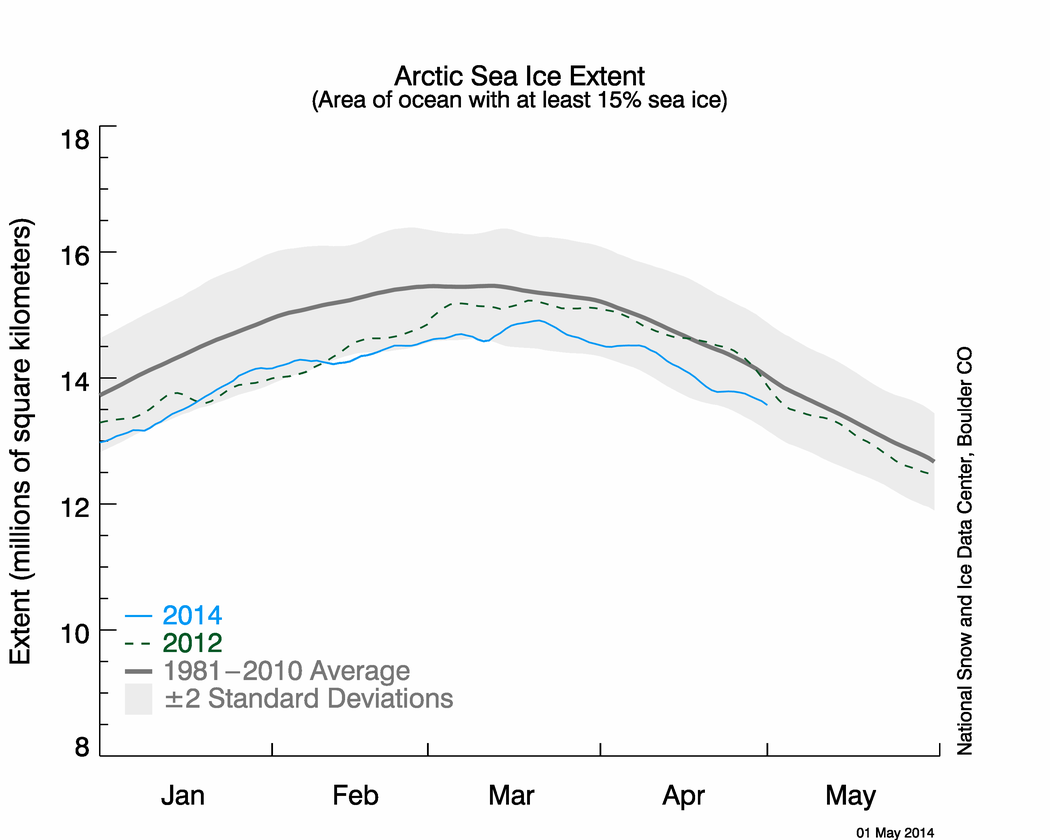
The ice extent is still well within two standard deviations from the 1981-2010 average, which indicates no deviation from natural variation, as the graph (below) for May 1, 2014 from the US National Snow and Ice Data Center (NSIDC) shows.

Sea ice extent 2014 May 1_NSIDC_graph

Between the official spring maximum (according to the NSIDC ) on March 21, with a total extent of 14.8 million km2, the ice slowly retreated in some regions and increased in others, while most regions remained pretty much the same. This is an important reminder that the Arctic as a whole is not a homogeneous region but one with marked regional variation.

As has been noted elsewhere (Sunshine Hours), ice in the Greenland Sea (habitat of ‘East Greenland’ bears) and the Barents Sea both increased in extent over this period. Bering Sea ice (habitat of southern ‘Chukchi Sea’ bears) declined markedly but Baffin Bay/Gulf of St. Lawrence ice (habitat of ‘Davis Strait’ bears) declined much less, as NOAA’s MASIE maps copied below show very well.

Continue reading

Polar bears move around as sea ice habitat changes – this is what resilience looks like

Oddly, it seems some people expect polar bears to sit around and suffer (or die) when local conditions deteriorate, rather than move elsewhere.

PolarBear_2008_USGS

While there are perhaps a few places where moving is not really an option over the short term, over the long term (more than one season) polar bears are free to shift to another locale if ice conditions change (either too much ice or too little).

An announcement by the WWF last week (10 April) caught my eye, as it talked about bears moving from one area to another because of changing ice conditions — as if this was surprising, extraordinary and newsworthy. That said, at least they weren’t suggesting the bears are all going to die because of declining ice, which is a huge improvement.

See what you think of this part of the press release (below), in the context of what we know about the movement of bears between regions:

Continue reading

Barents Sea polar bear condition varies with AMO and spring sea ice conditions

Fig. 1. NSIDC sea ice extent at March 8, 2014 (a "MASIE" product), with labels added. Click to enlarge.

Figure 1. NSIDC sea ice extent at March 8, 2014 (a “MASIE” product), with labels added. Click to enlarge.

In its end of February report, the US National Snow and Ice Data Center (NSIDC) noted that Barents Sea ice was below average for this time of year (see Fig. 1 above, and Fig. 5 below) but suggested this was primarily due to natural variation driven by the Atlantic Multidecadal Oscillation (AMO):

“The Barents Sea has experienced consistently low extents, particularly in winter, and this year has been no different. While the Barents and Kara seas normally have close to 2 million square kilometers (772,000 square miles) of ice in February, recent years have seen 500,000 square kilometers (193,000 square miles) of ice extent or lower. This year, the Kara Sea is near average, but the Barents Sea remains low (Figure 4a). Unlike other regions in the Arctic, longer records of Barents Sea ice extent exist from records of fishing, whaling, and other activities. A recent paper (Miles et al., 2013 [2014, now in print]) examined these records, along with paleoproxy data, to examine extent over the past four hundred years. They found a 60- to 90-year cycle in Barents and Greenland seas ice extent related to the Atlantic Multidecadal Oscillation (AMO); the AMO is a basin-wide cycle of sea surface temperature variability similar to the El Niño and La Niña cycles in the Pacific, but varying over much longer periods. This research shows that in addition to the warming trend in the Arctic, some sea ice regions are likely also responding to natural climate variability.” [my bold]

The paper they cite (Miles et al. 2014, discussed elsewhere in December 2013 here) described the AMO this way:

“The AMO is a coherent pattern of basin-wide sea surface temperature (SST) variations with a period of roughly 60–90 years. ..Paleoenvironmental studies suggest that the AMO has persisted through previous centuries [Gray et al., 2004] and even millennia [Knudsen et al., 2011].”

Note that Miles and colleagues were looking at ice records on or around the sea ice maximum in winter/spring.

The Polar Bear Twist: Norwegian biologists Jon Aars and Magnus Andersen, who I’ve discussed before, have pointed out that the condition of polar bear males and females around Svalbard (Fig. 2) they examined over the last 20 years varied with the AMO and sea ice levels in spring and early summer. [research results posted at the website for Environmental Monitoring of Svalbard and Jan Mayen (MOSJ), Norwegian Polar Institute].
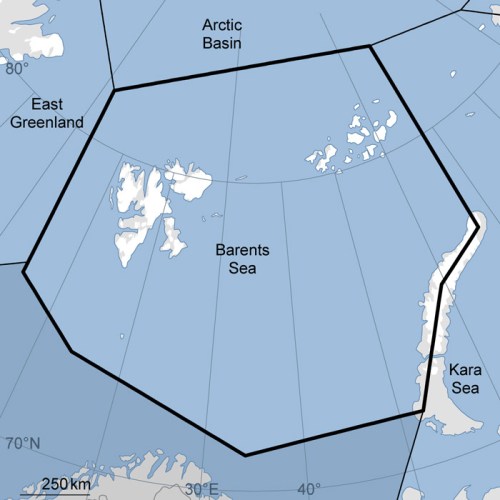
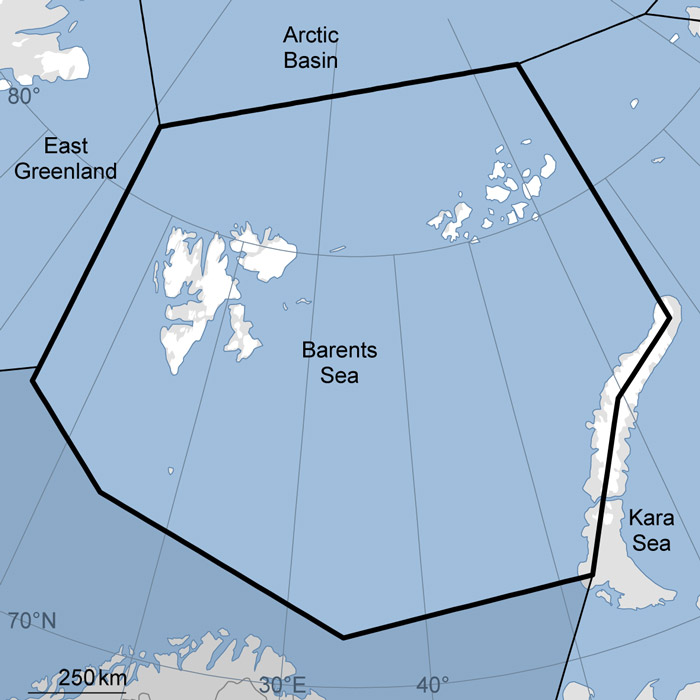
Figure 1. The Barents Sea polar bear subpopulation, courtesy the IUCN Polar Bear Specialist Group. "Svalbard" is the largest archipelago, in the eastern portion.

Figure 2. The Barents Sea polar bear subpopulation boundaries, courtesy the IUCN Polar Bear Specialist Group. Svalbard is the largest archipelago, closest to the East Greenland Sea.

That makes a lot of sense to me, given that spring/early summer is the most critical feeding season for polar bears because it’s when fat young seals are most easily available.

It also makes sense to me that you may need a record hundreds of years long to understand the natural variability of Arctic Sea ice in its various regions. Recall that natural variation, not global warming, is now being used to explain the large variation in annual sea ice cover in the Bering Sea (home to Chukchi Sea polar bears). Continue reading