Tag Archives: polar bear

Status of Canadian polar bear populations has been changed – more good news

According to maps dated June 2014, Environment Canada (EC) has changed the trend status of several Canadian subpopulations — without any announcement or publicly-available documents explaining the basis of the changes.
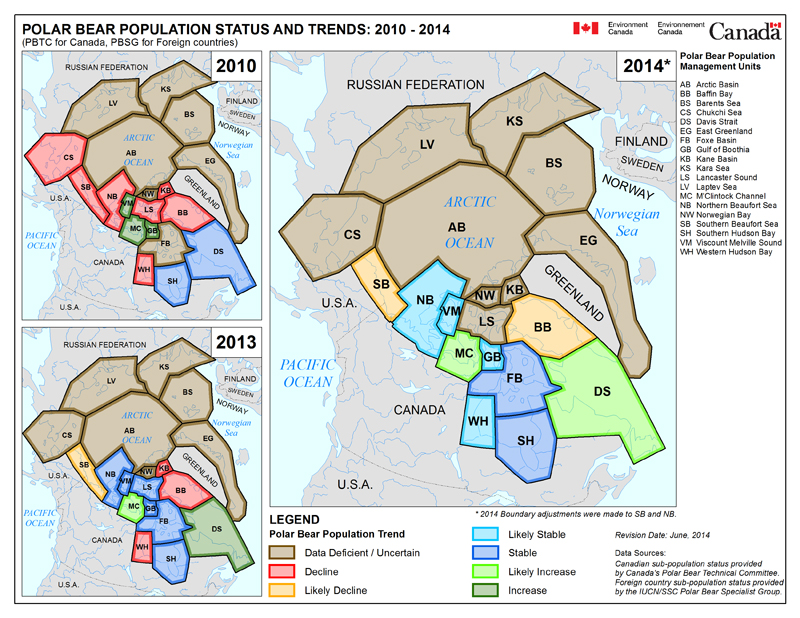
Figure 3. "Series of Circumpolar Polar Bear Subpopulation and Status Trend Maps 2010, 2013 & 2014" Note the asterisk below the 2014 map, which is dated "June 2014" and is different in its status assessment from the one released in February 2013 by the PBSG. Original here.

Figure 1. Environment Canada’s “Map 4: Series of Circumpolar Polar Bear Subpopulation and Status Trend Maps 2010, 2013 & 2014.” Original here.

And would it surprise you to learn that virtually all of these status changes reveal more good news about polar bears?
Continue reading
Inuit resist government requests to tag and collar polar bears in MClintock Channel

Inuit residents of Cambridge Bay in the Central Canadian Arctic are resisting requests by the Nunavut Government to tranquilize, collar and tag polar bears to assist in their population survey.

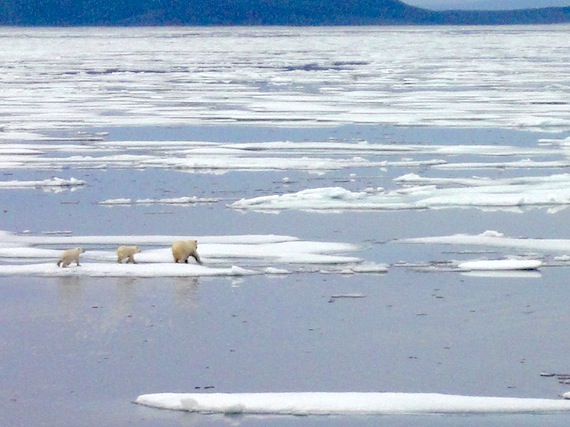
“A female polar bear and her two cubs dash across the ice near Gjoa Haven, where the polar bear hunt has been limited for nearly 15 years. (PHOTO BY JANE GEORGE)” Story here, also by Jane George.

“A female polar bear and her two cubs dash across the ice near Gjoa Haven, where the polar bear hunt has been limited for nearly 15 years. (PHOTO BY JANE GEORGE)” Story here, also by Jane George.

Continue reading

Polar bear habitat update: regional differences, melting vs. freezing

The freeze is on: from an annual low of ~5.1 m sq km at 15 September 2014, the sea ice that provides a hunting platform for polar bears is rapidly reforming.

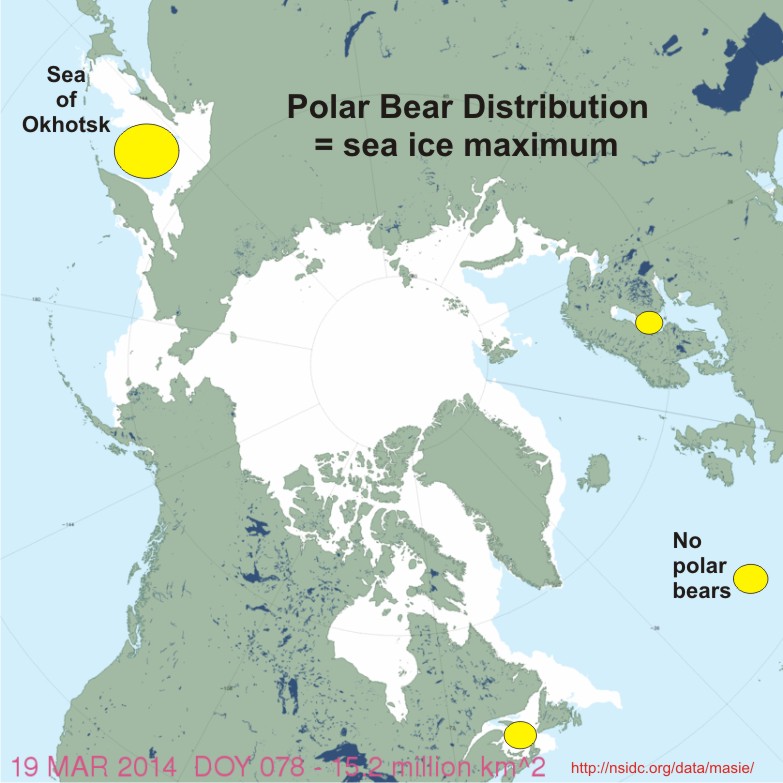
Note that polar bear habitat world-wide is pretty well defined by the extent of sea ice in spring, with three notable exceptions. There are no polar bears (or fossil evidence of polar bears), in the Sea of Okhotsk, the Gulf of St. Lawrence, or the Baltic Sea.

Bears in some areas spend time on land in late summer/early fall but the amount of time varies widely.

Polar bear distribution and ice extent_PolarBearScience
Have a look at the maps below: the difference in regional coverage between the sea ice at 4 August and 16 October (73 days apart, both covering 7.3 mkm2) might surprise you.
Continue reading

Churchill problem bears and early breakup dates in WHB: The 1983 & 2004 anomalies

In this part of my critique of Stirling and Parkinson (2006), regarding breakup dates in Western Hudson Bay (see Part I here), I will show that these authors also left out critical data.

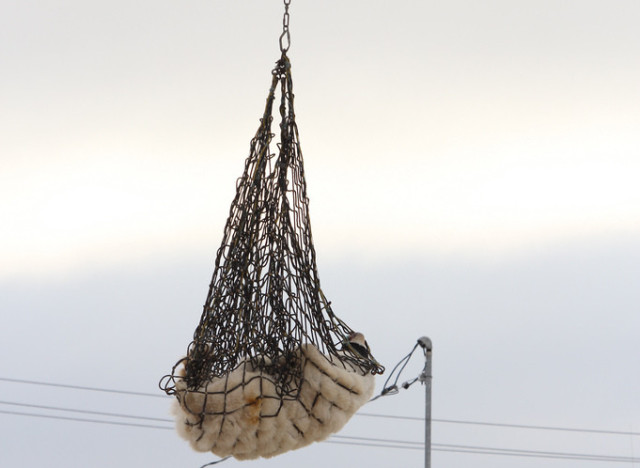
Figure 1. A bear is transported to Churchill’s polar bear holding facility, from a 2011 Huffington Post article “Polar Bear Prison.”

Figure 1. A bear is transported to Churchill’s polar bear holding facility, from a 2011 Huffington Post article “Polar Bear Prison.”

Their correlation between number of problem bears in Churchill and breakup dates for WHB worked because some very inconvenient data were simply left out: problem bear data for 1983 and 2004.

Inclusion of that information would have shown 1983 and 2004 were two of the worst years for polar bear problems in recent history despite being late breakup years (1983 also had the last human fatality from a polar bear attack). They could have explained why they did not use the data but they did not — they simply left it out.

Amazingly, this work is being touted as “evidence” that global warming is harming Western Hudson Bay polar bears.
Continue reading

Natural selection helps polar bears adapt to sea ice variability – which means some bears die

Evolution is not just for the long-term – natural selection also goes on over short time periods. In the case of polar bears, this adaptation is almost certainly critical for its long-term survival.

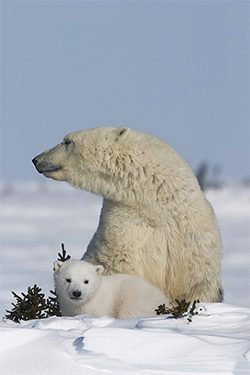
Hudson Bay female with cub_Wapusk_Thorsten Milse_Gov CA

Hudson Bay female with cub Wapusk National Park, Thorsten Milse, Government of Canada

Not all polar bears are identical — that is the reality that allows natural selection to operate.

I will argue that early breakup years in Western Hudson Bay weed out individual polar bears that do not have the physiological or behavioral characteristics necessary to be useful members of the population – and that this is a good thing for the entire population.

Continue reading

Journalists still pushing the “polar bears eat snow geese story,” as if it matters

I wrote about this issue in January (January – and journalists are still pushing it).

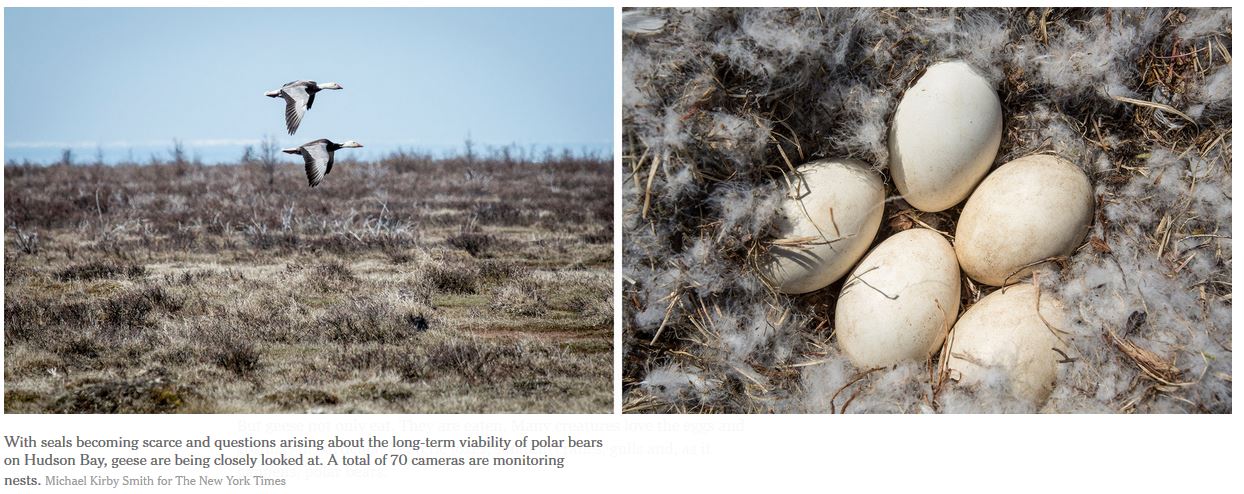
Courtesy NY Times, Sept. 22 2014.

Figure 1. Courtesy NY Times, Sept. 22 2014. Click to enlarge.

This month, the New York Times (September 22, 2014 James Gorman, “For Polar Bears, a Climate Change Twist”) is pushing it big-time (and so it’s been picked up elsewhere, like by the Anchorage Daily News).

Myths and misinformation about this phenomenon dispelled below.
Continue reading

Polar bears are not in peril due to recent sea ice changes

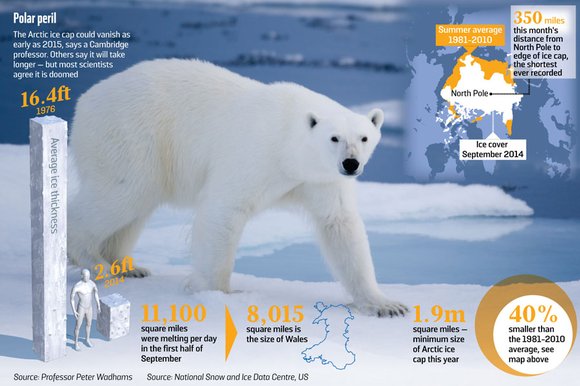
To counter the misleading ploy used by the Sunday Times — of implying polar bears are in peril because of recent changes in Arctic sea ice (Sunday Times & The Australian, 21/22 Sept. 2014 Arctic ice cap in a ‘death spiral’) — I’ll go over again why the polar bear as a species is not threatened by declines in summer sea ice or even winter ice that is predominantly “thin” (first year) ice.

Polar Peril_Arctic ice cap in a death spiral_SundayTimes_Sept 21 2014_21_NWS_20_POLAR_1096592k
Graphic above from the Sunday Times, September 21, 2014
Continue reading

M’Clintock polar bear survey’s first year plagued by fog in an area thick with heavy ice

“Blizzards, we had fog — we had to sleep in the helicopter, on the sea ice one night, because we couldn’t fly anywhere,” Markus Dyck, senior polar bear biologist with the GN, told Nunatsiaq News Sept. 5.”

Polar bear with dart_bear_570_2012 Kane Basin_M Dyck photo

Fog was the theme of polar bear research this summer in Queen Maud Gulf, otherwise known as the M’Clintock Channel polar bear subpopulation region.

The ice has been heavy in that region as well, according to a the National Snow and Ice Data Center (NSIDC) and reported yesterday in another story (Heavy pack ice in NW Passage ice creates tough conditions this year: Pack ice clogs Queen Maud Gulf).

For maps showing where M’Clintock Channel and Queen Maud Gulf actually are, see the maps — and more quotes — below.
Continue reading

“The Politics of Polar Bears” lengthy excerpt airs across Canada – cue the outrage

Umbrage alert! Last night, a half-length short form of the powerful and balanced documentary “The Politics of Polar Bears” aired across Canada on the CBC’s flagship TV news program, The National.

Polar_Bear_2004-11-15_Wapusk Nat Park_Wikipedia

Right after it aired, they followed up with a lengthy online summary by the producer of the film, Reg Sherren (Polar bears: Threatened species or political pawn?”, September 2, with video of the 19 minute short program). Check out the comments below it! Excerpts and my comments below.

[Links to the full length film here and in my previous posts here and here]

UPDATED April 27 2015: Video now available on Youtube, imbedded below Full length video no longer available, short one at CBC here.

Continue reading

CBC to air “The Politics of Polar Bears” Tomorrow (Saturday, August 30)

polar-bears_CBC news_Aug 28 2014From CBC News (28 August 2014):

The Politics of Polar Bears” airs Saturday, August 30, at 7 p.m. on CBC Manitoba. (CBC)

Which of the following statements do you think is true?

A) Polar bear populations have been in decline for some time
B) Polar bear populations are healthy

The answer may surprise you

“In The Politics of Polar Bears, Reg Sherren will pick his way through the message track to help you decide what is really happening with the largest land carnivore on the planet.”

See the rest here: http://www.cbc.ca/news/canada/manitoba/are-polar-bears-an-endangered-species-1.2747376?cmp=rss
[Includes a short video trailer]

Will we finally see some balance?

UPDATE: Reg Sherren tells me that “A shorter version will air next Tuesday on The National” an hour-long news and current affairs CBC program which can be viewed live online 9-10PM ET.