Tag Archives: polar bear

Summer sea ice melt and polar bear maternity dens

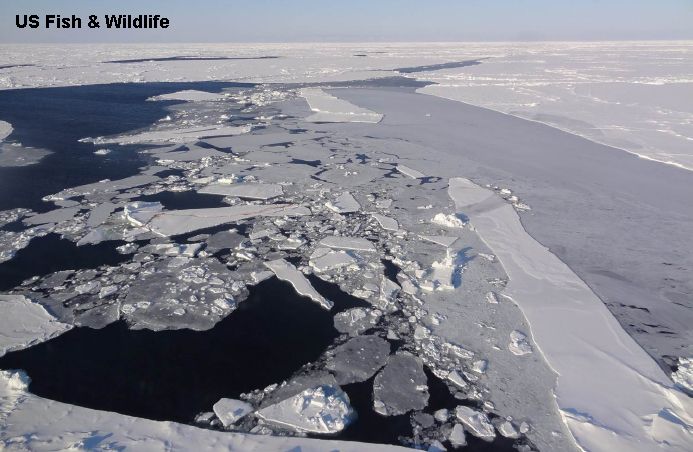
The yearly sea ice minimum extent is almost upon us, which has recently been the seasonal signal for excitable biologists and their activist groupies to resume their breathless rants about what sea ice loss could mean for polar bears.
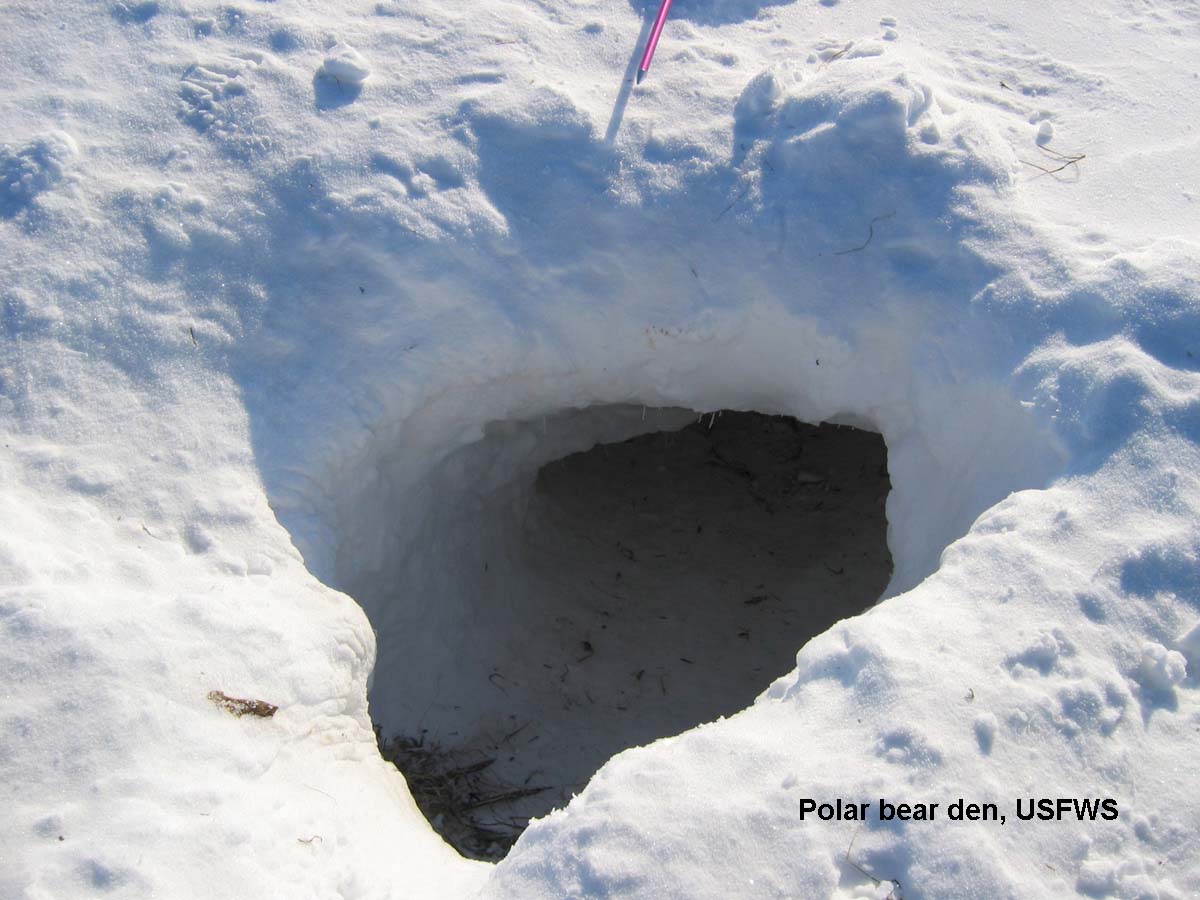
Polar bear den_CreditUSFWS_labeled

Never mind that the summer minimum extent reached in September, no matter how low it goes, is pretty much irrelevant to polar bear health and survival. As I’ve discussed before, what’s really important is the presence of not-too-thick ice during the spring, so they can catch lots of young seals and put on lots of fat.

But to a lesser degree, the extent at mid-to-late summer is important because this is when pregnant females that prefer to make their maternity dens on shore are looking for good places to spend the winter.

So the topic for today is this: how much does the extent of ice at the height of summer dictate where polar bear females make their winter dens?
Continue reading
PBSG determined to see polar bears listed as threatened by the IUCN in 2015

IUCN Polar Bear Specialist Group conservation biologists are determined to have polar bears listed as ‘threatened with extinction’ by the International Union for Conservation of Nature (IUCN) in 2015 – even though the bears would not meet that classification if assessed today.

According to the minutes of their last meeting (in addition to the astonishing admissions from sea ice experts I reported yesterday), PBSG members are busy planning their strategy. They have thrown objectivity to the wind and are certain they can find a way to mask overcome the inadequacies of their case and see polar bears remain listed as ‘vulnerable’ (IUCN-equivalent to ‘threatened’ in the US) on the 2015 IUCN Red List update.

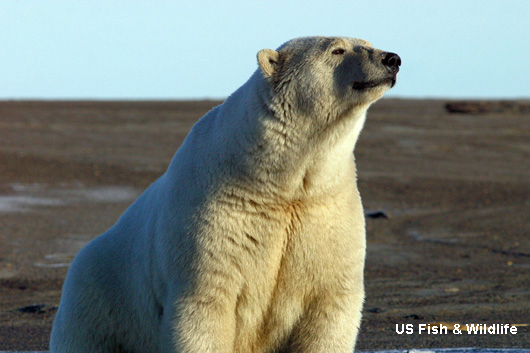
polar-bear_USFWS labeled

Along with some other priceless quotes, the minutes reveal their plan. See the original document for the context of these quotes here and an excerpt of “the plan” (pgs. 12-17) here. Continue reading

Sea ice experts make astonishing admissions to polar bear specialists

Climate scientists specializing in future sea ice predictions made some remarkable statements to polar bear scientists at their last meeting – admissions that may really surprise you.

USFWS_PolarBearNews2013_pg5 labeled

Back on June 26 (reported here), the IUCN Polar Bear Specialist Group (PBSG) posted a summary of its last meeting. So, I was very surprised to find (while there looking for something else), that on 18 July 2014 they had added minutes from the meeting to that summary.

These minutes are a bonanza because among the juicy nuggets of information is a summary of what the three invited climate scientists from Colorado (Jennifer Kay, Mark Serreze, and Marika Holland) had to say and what questions were asked. While real transparency would have involved posting copies of the sea ice presentations and transcripts of the question and answer sessions, this is certainly better than nothing.
Continue reading

Low genetic diversity will not make polar bears more vulnerable to extinction

You’ve probably heard the argument: animal populations that have been through a major decline in numbers often have such low genetic diversity that they are extremely vulnerable to subsequent extinction.

Photo credit USGS

Photo credit USGS

In an interview in late March regarding a new genetic paper on polar bear evolution (by Matt Cronin and colleagues), polar bear biologist and Polar Bears International spokesperson Steve Amstrup made a ridiculous statement: that polar bears have never experienced a rate of warming like they’ve seen over the last 30 years. I countered that easily here.

In that same interview about the Cronin et al. paper, fellow geneticist Charlotte Lindqvist offered an outdated argument against future polar bear survival that is as easy to refute as Amstrup’s “unprecedented rate of warming” nonsense.

I didn’t have time to deal with it back in April [where has the time gone?] but want to get back to it now because it’s important: there is lots of evidence to support my contention that polar bears are not more vulnerable to extinction just because they have low genetic diversity.
Continue reading

Polar bears and melting ice: three facts that shouldn’t surprise you

If I was invited by USA TODAY to discuss how climate change is affecting polar bears now – summed up in three talking points – this is what I’d say. I’d use some meaningful images rather than cute pictures of cuddly bear cubs and I’d provide links to my work with references and details to back up my answers.

Compare my responses to those supplied by Steve Amstrup in his capacity as spokesperson for Polar Bears International (“Save our sea ice!”) to Jolie Lee at USA TODAY last week, who’s word is expected to be taken as gospel.

AK PB N Shore-USFWS Barrow_labeled

Continue reading

W Hudson Bay mark-recapture studies of polar bears were invalid, says peer-reviewed study

“Our results suggest that mark–recapture estimates may have been negatively biased due to limited spatial sampling. We observed large numbers of bears summering in southeastern WH, an area not regularly sampled by mark–recapture.” Stapleton et al. 2014.

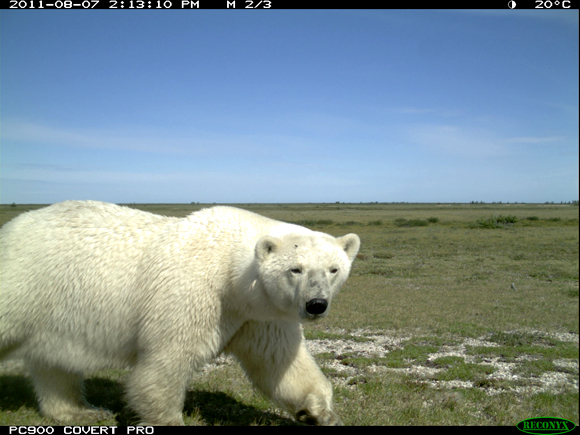
Polar bear at Wapusk National Park (just south of Churchill) in August 2011. Courtesy Parks Canada.

Polar bear at Wapusk National Park in August 2011. Courtesy Parks Canada.

We’ve seen the results of this 2011 study before, in government report format. But now it’s been revamped, peer-reviewed and published in a respected scientific journal – it actually came out in February, without fanfare, but I’ve only just come across it.

Some excerpts below, with conclusions that should raise some eyebrows.

Continue reading

Counting bears from space can be just as accurate as by helicopter, claims new study

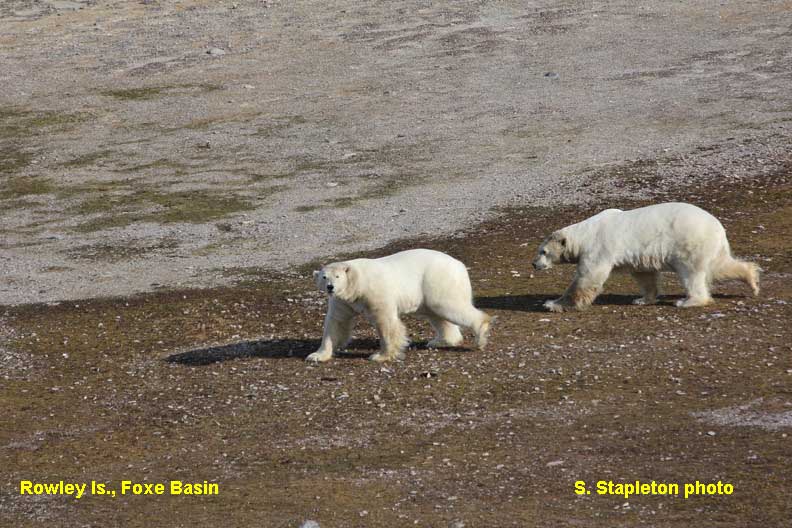
Satellites images might be able to replace aerial counts of polar bears in some places — if there are no clouds. But it seldom distinguishes cubs and can’t tell males from females, found a 2012 study of Foxe Basin bears that’s just been published.

Foxe Basin polar_bears_rowley_island_Stapleton 2012 press photo labeled sm

Note: This is my 200th post since July 26, 2012!

Continue reading

Are Polar Bears Really Endangered?

Christina Wu at the Urban Times (July 3, 2014) recently asked this question. She came up with a surprisingly balanced argument but some predictable responses from IUCN Polar Bear Specialist Group (PBSG) biologists. As a consequence, she overlooked some critical facts that make a big difference to the answer.

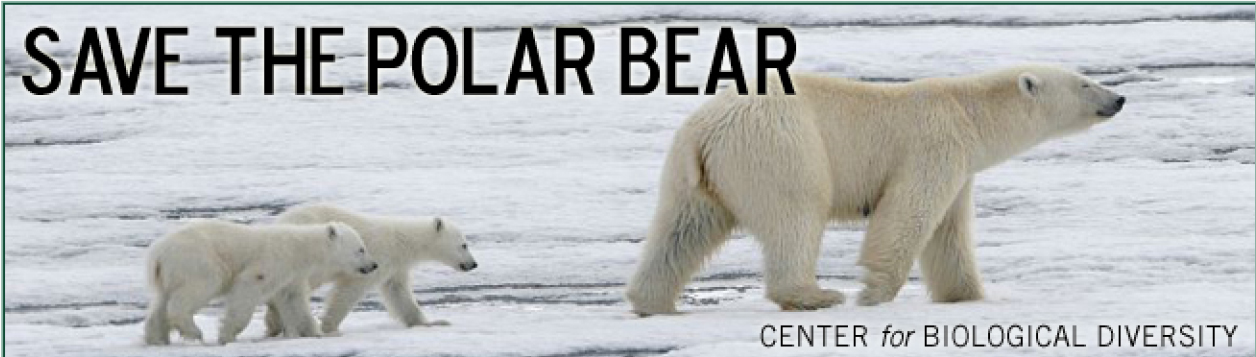
Figure 1. Are polar bears really endangered? The US Fish and Wildlife Service thinks so, but only because Steven Amstrup, based on a computer model projecting sea ice out to 2050, said so (Amstrup et al. 2007). This information has been used by the Center for Biological Diversity and other NGOs, like WWF and Polar Bears International (where Amstrup is now employed), to solicit donations.

Figure 1. Predictions of polar bear population declines by 2050 are being used by the Center for Biological Diversity, WWF and Polar Bears International to solicit donations.

UPDATED 18 May 2015 – see below.

Continue reading

Polar Bear Specialist Group just had another secret meeting

Well, well, well — it looks the Polar Bear Specialist Group (PBSG) just had itself another secret meeting with some extra special guests.

pbsg logoPolar bear scientists and PBSG-approved activists got together a few weeks ago (June 9-13), with no notice beforehand, to continue discussions how (sic) to solve issues of future capacity.”

This was their “second intersessional members-only meeting in a row” (the first one was in October 2012), but they still haven’t had their regular, now long-overdue, “working meeting.” [they had the last one in 2009].

I came upon a notice about this meeting on the PBSG website, which apparently went up June 26, while looking for something else. There has been nothing about it in the media that I’ve seen.

And guess who were “invited specialists” at this meeting of “members-only,” called “to discuss internal matters crucial for the future functioning and capacity of the group”?

Three “climate scientists“!

Continue reading

How long have polar bears – and people – lived around Hudson Bay?

I came across a story in the news yesterday about the discovery of an archaeological site in northeastern Manitoba that brings to mind a post I wrote back in November 2012 on the geological and archaeological history of Hudson Bay.

As I noted then, most of the archaeological sites found on or near the coast of Hudson Bay are about 1,000 years old or less – and this new site fits that pattern perfectly.

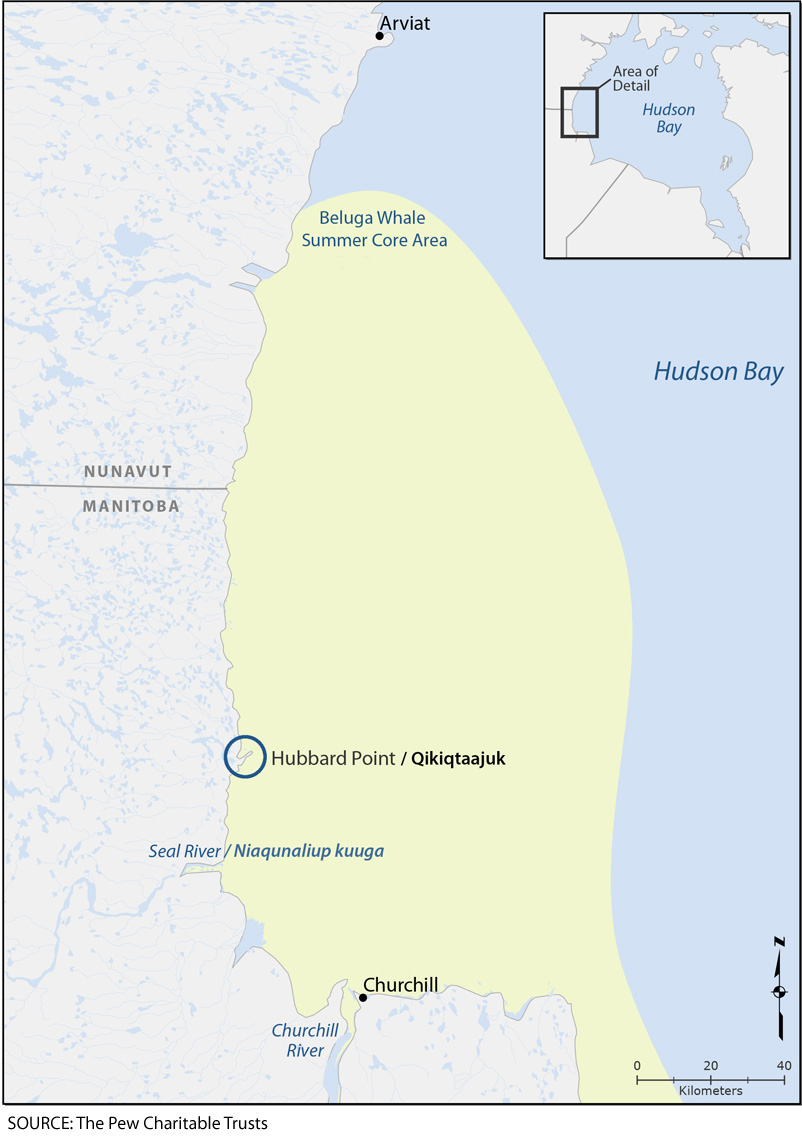
Hubbard Point Location Map with summer core area v1

A news report at the CBC (June 30, 2014) carried this description of the find, at a site called Hubbard Point, which sounds like it could yield polar bear remains: Continue reading