Tag Archives: Polar Bears International

Zoos abrogate their position of trust by misleading the public about polar bears

Since at least 2007, zoos around the world have proudly partnered with climate change activist organization Polar Bears International to ‘educate’ the public about the plight of polar bears. Although contrary to all expectations, polar bear numbers have increased slightly since the abrupt decline of sea ice in 2007 yet zoos are still promoting the false message that polar bears have already been gravely harmed by lack of sea ice.
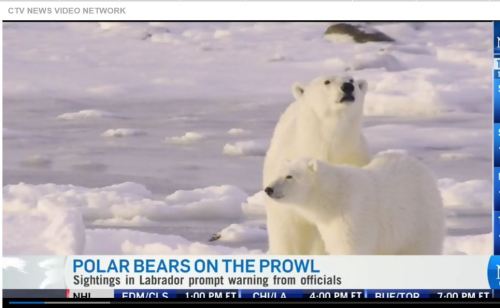
CTV News on pb sightings Labrador as climate change warning

A news clip that aired on Canadian television in April 2019 was ostensibly about recent sightings of polar bears in Labrador (which I discussed here). But it digressed rapidly into a baseless diatribe about polar bears as victims of climate change, delivered by an animal keeper from the Toronto Zoo presented as an ‘expert’ on this topic.

See it here (about 4 minutes long).

And while I have no doubt that Toronto Zoo curator Maria Frankie is indeed an expert in keeping mammals in captivity, she appears to have zero qualifications to speak with any critical scientific authority on climate change, sea ice variability, or polar bear survival in the wild.

Frankie is complicit in spreading misinformation about polar bears to an unwary public (including children) as a method of spurring political action on climate change as surely as David Attenborough is to blame for spreading misinformation about Pacific walrus. She is being used by PBI but is too naive to realize it.
Continue reading

Blog uses my polar bear info but no link to PBS means they are ‘science-based’

According to Harvey and colleagues (2017), any internet posting that discusses polar bears without a link to PolarBearScience or a mention of my name can be considered a ‘science-based’ blog. But they missed an obvious catch: bloggers who use my content without attribution.

Churchill Polar Bears dot org_header

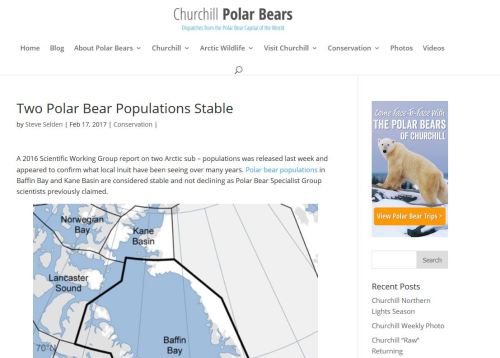
For example, so-called ‘science-based’ blog Churchill Polar Bears, written by Churchill polar bear guide Steve Seldon, used text and two of the four figures provided in a 15 February 2017 post at PolarBearScience to create a Churchill Polar Bears post on 17 February but did not include a single link to PolarBearScience indicating that’s where he got his information (Wayback machine link here).

Churchill polar bears blog headline 17 Feb 2017

A few would not consider this plagiarism but most do. That is to say, failure to attribute a source when work or information is not your own is a big no-no in science, as it is in all of academia.

Consider this evidence: Continue reading

No correlation between freeze-up dates for Hudson Bay & total Arctic ice cover

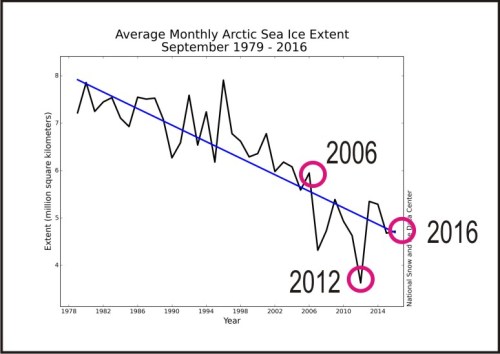
Guess which year between 2006 and 2016 had the latest start to freeze-up on Hudson Bay, given that 2012 had the lowest September average and 2007 and 2016 tied for second-lowest (see graph below, from NSIDC), and that sea ice in the Arctic right now is the lowest it’s been for this date since 1979?

sea-ice-sept-averages-graph-only-marked-for-2006-up

If you guessed anything other than 2010, you guessed wrong – in addition, 2006 (not 2016) was second latest.

There is no correlation between Arctic sea ice coverage and freeze-up dates for Western Hudson Bay.

Yet, Polar Bears International (“Save Our Sea Ice”) –  who were surely in and around Churchill in 2010 and 2006 watching polar bears – just posted an alarming statement about local conditions, implying that slow freeze-up of Hudson Bay this year is a reflection of the fact that “sea ice is at a record low across the Arctic.”

They also claim that “…the weather is the warmest we’ve ever seen at this time of year.” That may be true, but if so, it is also meaningless with respect to the progress of freeze-up.

Does no one at PBI remember the very late freeze-up of 2010 or 2006? Odd, that.

Continue reading

Polar bear capital of the world stuck between fear-mongering and science

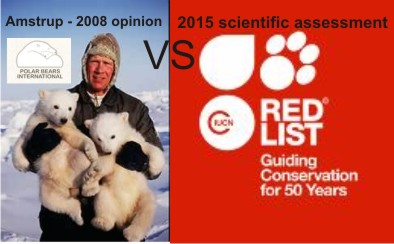
CBS News published a predictably one-sided “Cover Story” this morning (14 February 2016) about Churchill, Manitoba – the self-proclaimed Polar Bear Capital of the World. 

This is the online version of a Sunday morning TV special that’s not available where I live. It’s yet another example of how the media feeds the politics of polar bears and prevents the advancement of science. Here’s my take on this CBS effort.

Amstrup vs IUCN science_Feb 14 2016_PolarBearScience

Continue reading

Zoos use polar bears to spur action on climate change – not to save them

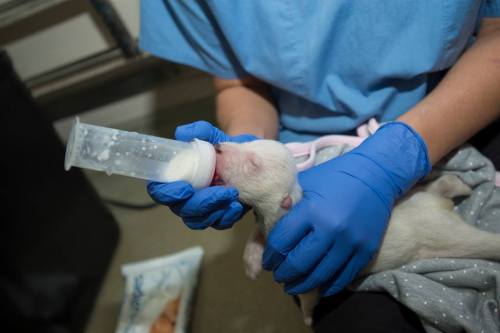
Media outlets have recently been having collective orgasms over photos and videos of a three month old polar bear cub born at the Columbus Zoo in Ohio, which has again raised the issue of why it is now acceptable for polar bears to be held and bred in captivity.

Zoo bear at Columbus_after birth in November 2015

Newborn polar bear cub ‘Nora’ Columbus Zoo handout

The myth being propagated by zoos and their supporters is that it’s necessary to save polar bears from extinction.

Actually, nothing could be further from the truth – this is all about pressuring people to care about climate change. Polar bears are merely  a marketing tool to spur action on climate change.  That’s not my opinion but the plan put in place in 2012 by the Association of Zoos and Aquariums and Polar Bears International.

Oddly, few animal rights activists are objecting (or at least, not objecting very strenuously) to zoo displays of captive polar bear cubs – obvious money-making draws for zoos – which were so vehemently condemned in the 1970s that most zoos gave them up.

Now, the practice is defended and everyone seems to feel this is the greatest thing since the invention of the telephone. [Update 19 February 2016: courtesy the BBC, we can add Highland Wildlife Park in Scotland to the list of zoos using “we’re saving the polar bears” justification for breeding the bears in captivity]

The surprise is that disgraced climate scientist Michael Mann, promoter of the infamous hockey stick of global temperatures, is involved in all this.

Continue reading

Organizations fail to acknowledge 2015 Red List polar bear assessment info

You have to know that the 2015 IUCN Red List assessment for polar bears contains good news because no one is talking about it – and none of the online information sources I’ve checked have updated their polar bear profiles to reflect it.

For all its flaws (including the deceptive focus on summer sea ice), this Red List update is the most statistically robust, in-depth study of the conservation status of polar bears – why is it being ignored, especially by the conservation organizations people turn to for information online?

UPDATE: see 18 January 2016 post here.

Continue reading

Researcher says most S. Hudson Bay polar bears still on the ice, may have to swim home

More than half of Southern Hudson Bay polar bears under study are still out on the thick Hudson Bay sea ice that’s been giving Canadian Coast Guard icebreakers so much trouble.

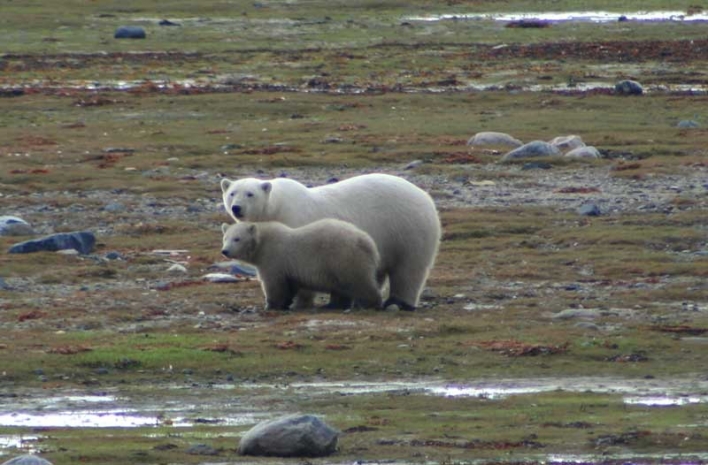
Figure 6. James Bay polar bear female and her cub during the ice-free period. Notice how fat they both are. Courtesy Ministry of Natural Resources, News Ontario, June 2, 2009.

James Bay polar bear female and her cub on shore. Courtesy Ministry of Natural Resources, News Ontario, June 2, 2009.

As I pointed out a few days ago, most of the ice remaining on Hudson Bay is in the region used by Southern Hudson Bay polar bears. While you wouldn’t know it from the Polar Bears International “Bear Tracker” – which hasn’t been updated since 2 July – on Friday (24 July 2015) Ontario polar bear researcher Martyn Obbard used the PBI website to reveal where his study sample of polar bears are located.

Obbard posted a little essay on PBI’s “Save our sea ice!” website which had, buried near the end, the admission that on 20 July, five out of his nine Southern Hudson Bay females with satellite radio collars were still out on the ice, “far from the Ontario coast.
Continue reading

Hudson Bay breakup later than average, longer hunting season for polar bears

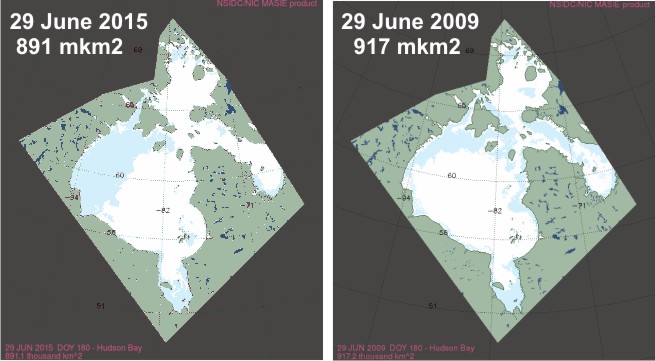
Due to the atypical pattern of sea ice melt on Hudson Bay this year, 2015 will definitely be a later than average breakup year – perhaps not as late as 1992 but maybe almost as late as 2009. Easing into the first days of Arctic summer, there is still a lot of polar bear habitat left on Hudson Bay, especially in the east.

Hudson Bay breakup 2015 vs 2009 at 29 June_MASIE

Although official breakup in 2009 was only a little later than usual (9 July), bears came ashore about the same time (after mid-August) as they did in 1992, when breakup was very late (30 July). With the pattern this year being so unusual (and the melt so slow over the last few weeks), who knows how late it could be before the last bears leave the ice in 2015?

There is definitely more sea ice this year on the bay than there was last year, when breakup was about average for the last 24 years.

UPDATE 2 July 2015: CIS weekly ice coverage graphs added to the end of this post. Hudson Bay ice highest since 2009 and Davis Strait highest since 1994! Have a look.
Continue reading

Polar bear news: 1st fat bear ashore in WHB, trouble in S. Greenland, and more hybrid hype

Last week, among other events, the first fat polar bear of the season was photographed on shore in Western Hudson Bay, a fat bear was run out of town in South Greenland, and media outlets spread misinformation – apparently preferring global warming hype to rational facts.

1) First polar bears have been seen onshore in Western Hudson Bay in Wapusk National Park near Cape Churchill (map below) on 18 June this year, apparently fat and well prepared for the summer fast. My informants tell me a few bears usually come ashore in June near Churchill before ice conditions make this necessary; the bulk of the population will probably continue seal hunting for a few more weeks. Those bears will come ashore along the southwest coast (near Polar Bear Provincial Park, in Ontario, see Fig. 2 below). They’ll make their way north to the Churchill area in time for freeze-up in the fall. Watch one fat bear caught on camera on 18 June, below :

2) Fat polar bear spotted in Nanortalik, Southern Greenland 18 June 2015, a bit further south than usual. People from the community drove it away, but not before taking lots of pictures.

Greenland South_polar-bear-nanortalik-08_henrik-hansen_June_18_2015

Some very cool photos, including the one above (taken by Henrik Hansen), worth a look. This bear was in excellent condition, well prepared for the summer fast ahead, whether he ends up spending it on shore somewhere (but not near this community!) or on the sea ice further north in SE Greenland (Fig. 1 below). The ice in that areas is probably broken up (~15-30% concentration) but this is enough for the bear to swim from flow to flow to make it’s way up the northeast coast where most East Greenland bears spend the summer.
Continue reading

Same amount of sea ice for Hudson Bay polar bears as 2013, bears still on the ice

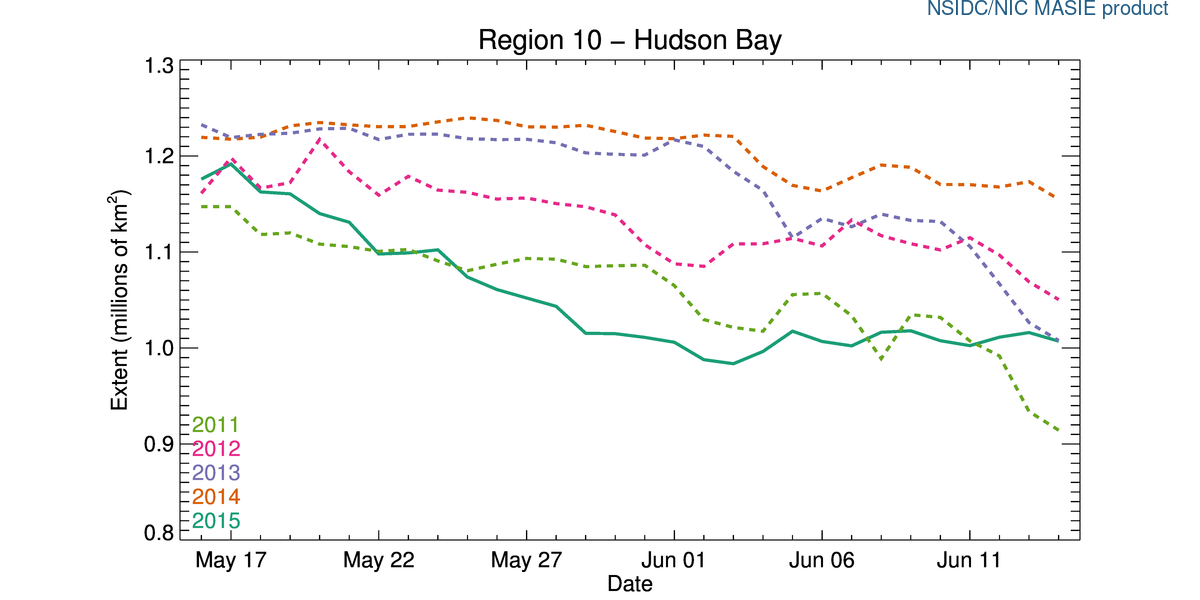
Sea ice coverage for Hudson Bay on 14 June converged on levels recorded in 2013, when breakup was slightly later than the average of the last two decades.

r10_Hudson_Bay_ts

There is also more ice over Hudson Bay than there was in 2011, which was an early breakup year (charts for other Arctic regions here, originals here).

Andrew Derocher notes (via twitter) that rather than heading to shore, most of the Hudson Bay bears with satellite tracking collars (7/10) are out on the ice (Fig. 1 below). They appear to be hunting along the ice edge, where they are most likely to find seals.

Update 17 June 2015: Sea ice images for the week 18 June 2015 compared to other years added below, for Hudson Bay and the Beaufort Sea.

Continue reading