Tag Archives: threatened

No evidence of actual damage to polar bear brains from environmental contaminants

Earlier this year we had polar bear penis bones supposedly breaking due to environmental toxins; this week we have their brains damaged.

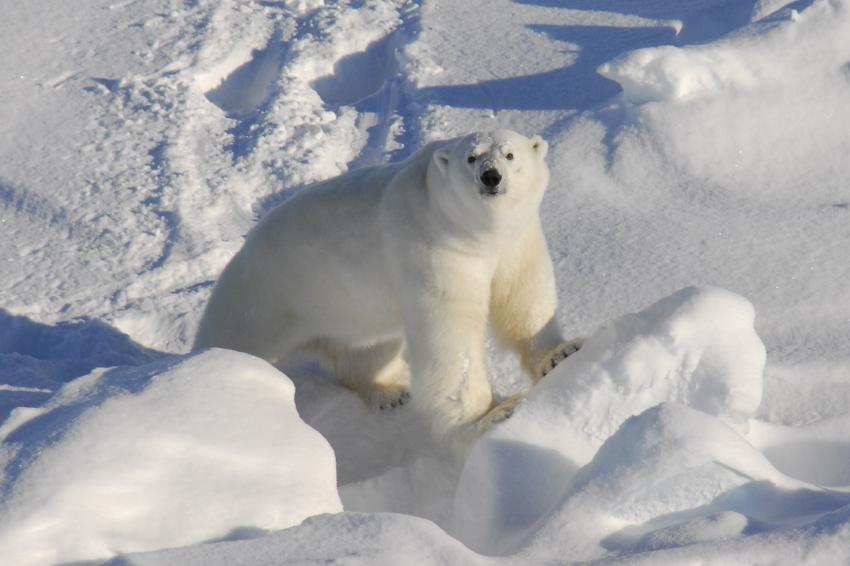
The March 15 ScienceNordic story (“Chemical pollution is causing brain damage in polar bears”) came complete with a photo of a bear (copied below, provided by research co-author Rune Dietz) that is presumably meant to convey what a “brain damaged” polar bear might look like — if not, perhaps another photo would have been a better choice?

Polar bear looking brain damaged Rune Dietz photo Science Nordic

Except, the research only showed there theoretically might be damage but the researchers didn’t bother looking for it before shouting out their findings. All about the scary message, these folks: the very large uncertainties and speculation in their research be damned.
Continue reading

PolarBearScience has been ‘Carbon Briefed’ – success at last!

Not just anyone warrants the attention of the European rapid response team: only those who get media attention and refuse to stay ‘on message’ about global warming issues get the Carbon Brief treatment.

Pidcock tweet on polar bears at 5 March 2015 6_20PM Pacific

After years of being ignored, I have finally been acknowledged as a worthy adversary [a force to be reckoned with] by those who spin the science of polar bears.

Carbon Brief folks got their knickers in a knot over my “Twenty Good Reasons Not to Worry about Polar Bears” blog post that the Global Warming Policy Foundation released as a Briefing Paper (pdf here). All timed for release on International Polar Bear Day (27 February 2015), which got mainstream media attention galore in the UK.
Continue reading

Twenty good reasons not to worry about polar bears

PB  logo coloured Here’s a new resource for cooling the polar bear spin, all in one place. I’ve updated and expanded my previous summary of reasons not to worry about polar bears, which is now two years old. In it, you’ll find links to supporting information (including previous blog posts of mine that provide background, maps and extensive references), although some of the most important graphs and maps have been copied into the summary. I hope you find it a useful resource for refuting the spin and tuning out the cries of doom and gloom about the future of polar bears — please feel free to share. Pdf here of the text below.

This is the 1st anniversary of Canada providing population estimates and trends independent of the pessimistic prognostications of the IUCN/SSC Polar Bear Specialist Group (PBSG) — so let’s celebrate the recent triumphs and resilience of polar bears to their ever-changing Arctic environment.

AK PB N Shore-USFWS Barrow_labeled
Continue reading

Polar bear biologists try – again – to blame S. Beaufort thick spring ice on global warming

The trouble is, sea ice researchers and atmospheric scientists have not drawn that conclusion, despite what a new paper by Pilfold and colleagues imply. It shows just what lengths desperate IUCN Polar Bear Specialist Group  (PBSG) biologists will go to in order to link the recent decline of Southern Beaufort bear numbers to global warming while ignoring similar past declines.

Beaufort Sea pressure ridges_Spring 1949 wikipedia sm

Continue reading

East Greenland polar bears – said to be the most polluted but appear to be doing just fine

I’ve not written much about this subpopulation before but with the flurry of interest over “weakened” penis bones and toxic chemicals, I thought it was time to remedy the situation.

East Greenland Scorsby Sound March 2011 on Kap Tobin, Rune Dietz (press photo) Rune Dietz

East Greenland Scorsby Sound March 2011 on Kap Tobin, Rune Dietz, press photo

Continue reading

Editorial calls for more jobs for polar bear biologists

An editorial in the Edmonton Journal this morning (“Stand on guard for polar bears”) takes a most extraordinary position: that the results of two recent papers of dubious value should motivate Canada to create more jobs for polar bear biologists, “protect” the Canadian Arctic Archipelago (from what, they don’t say), and galvanize Canada’s position with respect to curtailing carbon dioxide emissions. In that order.

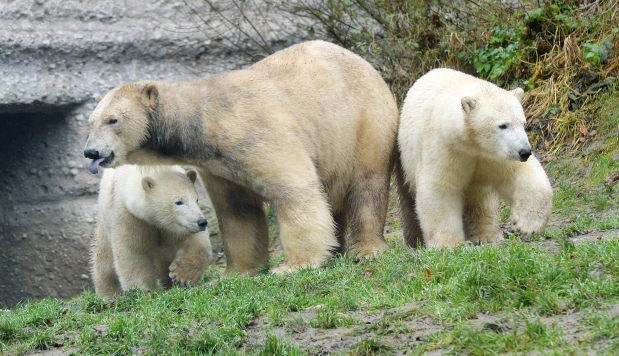
Edmonton Journal editorial photo 22 January 2015

Edmonton Journal editorial photo 22 January 2015. Munich Zoo bears.

First, the unnamed editors1 say: “This country needs more eyes and ears monitoring the health, numbers and locations of its polar bear populations.

Why would they come to that conclusion? They quote University of Alberta’s Andrew Derocher (who supervises a number of students doing polar bear research in Western Hudson Bay):

“If Canada was doing the right thing, we’d have extensive monitoring,” University of Alberta polar bear researcher Andrew Derocher said to the Journal in late 2014.

Continue reading

Faux polar bear figures – my editorial in the National Post

Published in the Business section (Financial Post “Comments”) of the National Post this morning:

Paul J. Richards/AFP/Getty Images [NP story]

Paul J. Richards/AFP/Getty Images [from original NP essay]

“Faux polar bear figures” [not my choice of title, by the way]

In which I conclude:

We admire polar bear biologists for their professional dedication to this iconic species, and rightly so. However, while it’s understandable that polar bear biologists are conservation-minded, the public and policy makers need them to be scientists first and advocates for polar bear protection second. Polar bears are currently doing well – data shenanigans to keep them classified as “threatened” undermine the whole point of doing science.”

I have written extensively about the Southern Beaufort issue — below are links to some of these, which have links to the rest. References are included in these individual posts. Contact me if there is a reference you cannot find: Continue reading

‘Threatened’ status for Arctic ringed seals under ESA makes no sense

Recent research (Crawford and Quakenbush 203; Rode et al. 2014) has shown that sea ice declines in the Chukchi and Beaufort Seas have made life better for ringed seals, not worse (as predicted) – ringed seals are in better condition and reproducing better than they were in the 1970s. Why? Ringed seals do most of their feeding in the open-water period (Young and Ferguson 2013), so a longer open-water season means fatter, healthier seals and more fat pups for polar bears to hunt the following spring.

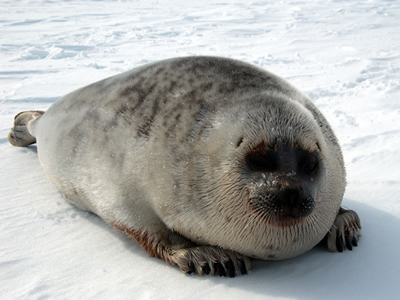
Ringed_seal_2_NOAA

However, Arctic ringed seals (as well as bearded seals) were designated as ‘threatened’ by the USA in 2012 under the Endangered Species Act, based on predicted ice and snow declines due to prophesied global warming. These listings are all about future threats, with no pretense of on-going harm.

Virtually no other Arctic nation has taken this step for Arctic seals — see previous discussion here. There are lots of ringed seals — an estimated 3-4 million world-wide and about 1.7 million within the critical habitat proposed by NOAA (see below).

As weak as the case for listing polar bears as ‘threatened’ has proven to be, the case for listing ringed and bearded seals is even more feeble (a judge has already sent the bearded seal listing back to the drawing board).
Continue reading

IUCN Polar Bear Specialist Group out-lived its usefulness 20 years ago

The IUCN Polar Bear Specialist Group (PBSG) should have been disbanded in 1996, the year polar bears were down-graded from a status of ‘vulnerable to extinction’ to ‘lower risk – conservation dependent’ (now called ‘least concern’) on the IUCN Red List.

Bumpersticker from Cambridge Bay, Nunavut, courtesy Joe Prins.

Bumpersticker from Cambridge Bay, Nunavut, courtesy Joe Prins.

Polar bears had recovered from previous decades of wanton over-hunting — by all measures used by the International Union for the Conservation of Nature, they were a conservation success story.

Why did the IUCN and Arctic governments not break up the PBSG back in 1996? Leaving the group intact once polar bears were down-graded to ‘least concern’ simply made its members desperate to justify their existence. That’s precisely what we’ve seen over the last 20 years — PBSG members working tirelessly to ensure the organization didn’t go extinct.

pbsg logo

In fact, polar bears are in no more danger of extinction now than they were in 1996, despite dedicated efforts of the PBSG to convince the world otherwise. Take a look at the history and see if you come to a different conclusion.
Continue reading

Amstrup knows his polar bear predictions are flawed – but continues to promote them

The largest conservation organization in the world says that predictive models developed by polar bear biologist Steven Amstrup are utterly unsuitable for scientifically estimating future populations. Earlier this year, mathematical modeling experts  at the International Union for the Conservation of Nature, who maintain the Red List of Threatened Species, made it clear that Amstrup’s models (used in 2008 to convince the US Fish and Wildlife Service to list polar bears as ‘threatened’ due to predicted global warming) do not meet IUCN standards.

I’d say this makes Amstrup’s polar bear projections (Amstrup et al. 2008, 2010) no more scientifically useful than a crystal ball prophesy, but you wouldn’t know it by his recent actions — or the silence of his fellows.

crystal ball_3c

Continue reading