Category Archives: Conservation Status

Summer refuge for polar bears in Arctic Basin only 0.3 mkm2 below its possible maximum

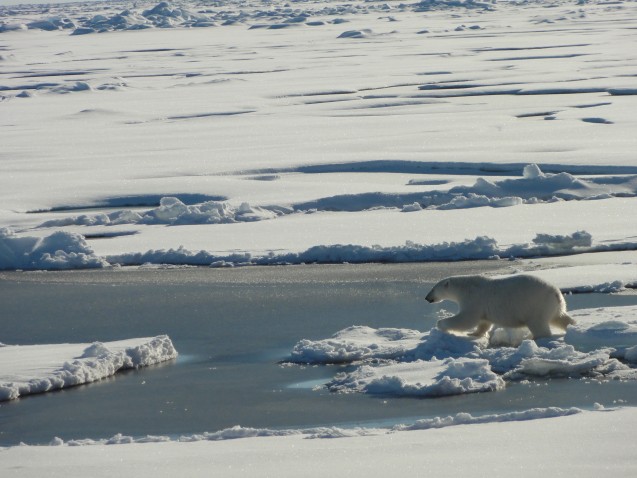
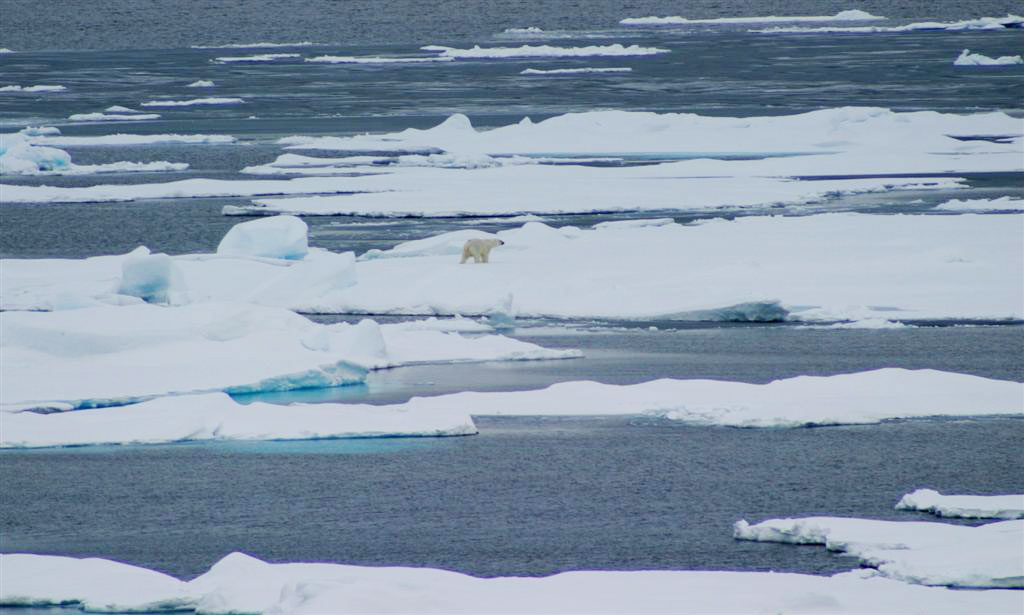
At the seasonal minimum 2015, the Arctic Basin was still almost full of sea ice, down only 0.3 mkm2 below the maximum it could ever be.

Healy Aug 24 2015 Polar-Bear III Tim Kenna

Remember that spending the summer in the Arctic Basin for most polar bears is just like sitting on the western shore of Hudson Bay – they are all waiting for the refreeze. In either location, they might find something to eat, they might not.

Below are NSIDC MASIE sea ice maps for 10 April 2015 (as big as it gets, basin filled) vs. 17 September 2015: Continue reading

Polar bears will not be considered for severe CITES trade restrictions

The CITES working group meeting that just concluded in Tel Aviv, Israel a few days ago decided it would not recommend a vote to move polar bears from Appendix II, where they are now, to Appendix I, at the next general CITES meeting in 2016.

CITES 2015 meeting logo

It appears, however, that the US – which was behind failed petitions in the past (in 2010 and 2013) and voiced an official objection to this 2015 decision – is threatening to raise the issue again at the next all-nations meeting of CITES in September 2016 (probably with a petition at that meeting).

The USA is trying to bully Canada and the international community to adopt its own shaky interpretation of what constitutes good polar bear science and it looks like it may refuse to give up until it has won.

UPDATE: 7 September 2015,  CITES press release (pdf here, relevant passage marked by me):

“The Committee’s Review of Significant Trade concluded that the current level of trade in polar bears, amongst others, is not detrimental to the survival of the species in the wild.
Continue reading

Polar bear habitat update: Eastern Canada well above normal, lots of sea ice worldwide

Sea ice in at least three Eastern Canadian polar bear subpopulations is well above normal for this time of year, which means many bears are likely not ashore yet. The same is true in the Beaufort and Barents Seas – ice is melting but there is still a fair amount of sea ice close to popular shores. Cause for cheering, not raising alarms.

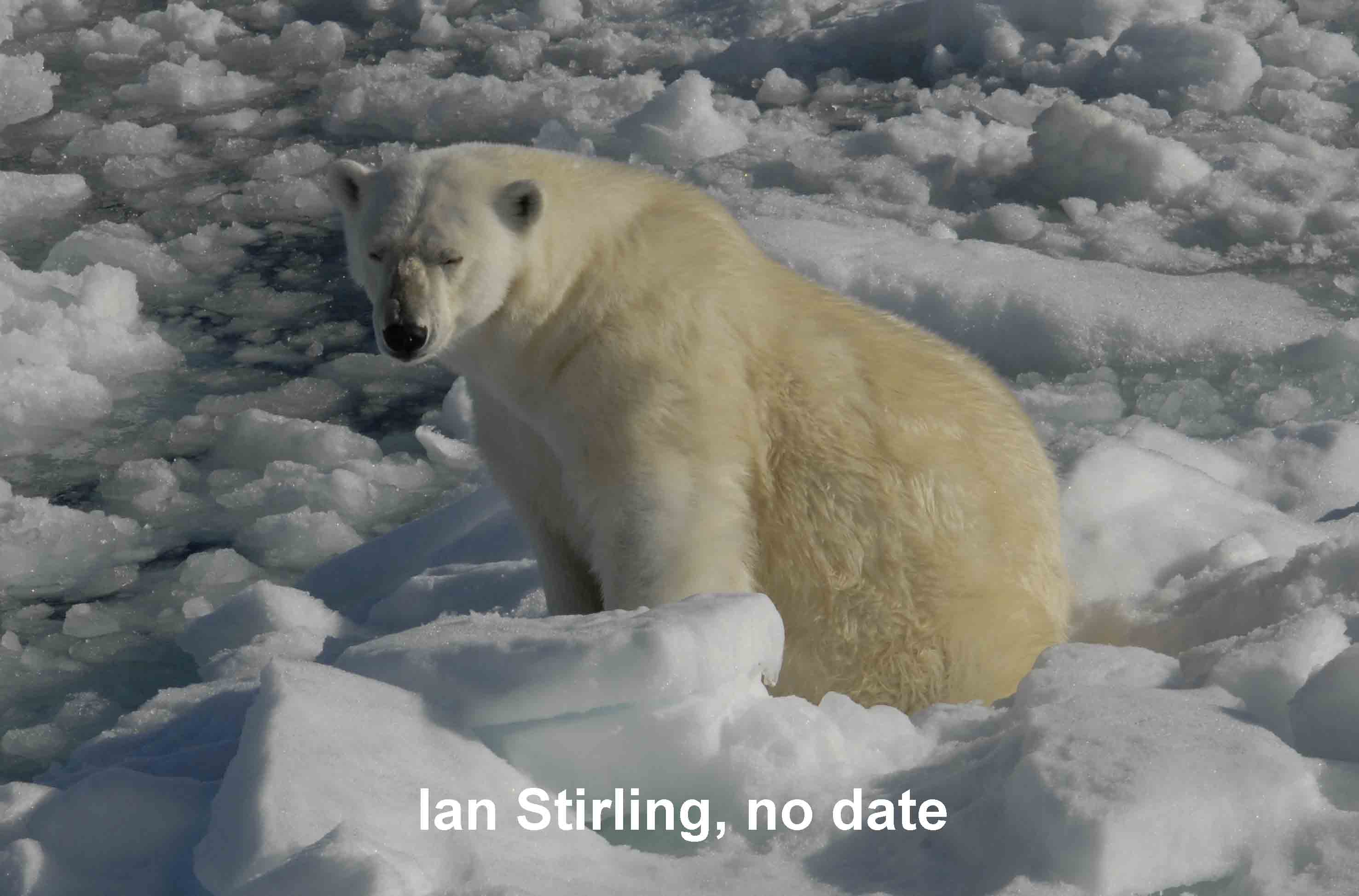
Stirling 01 no date_sm

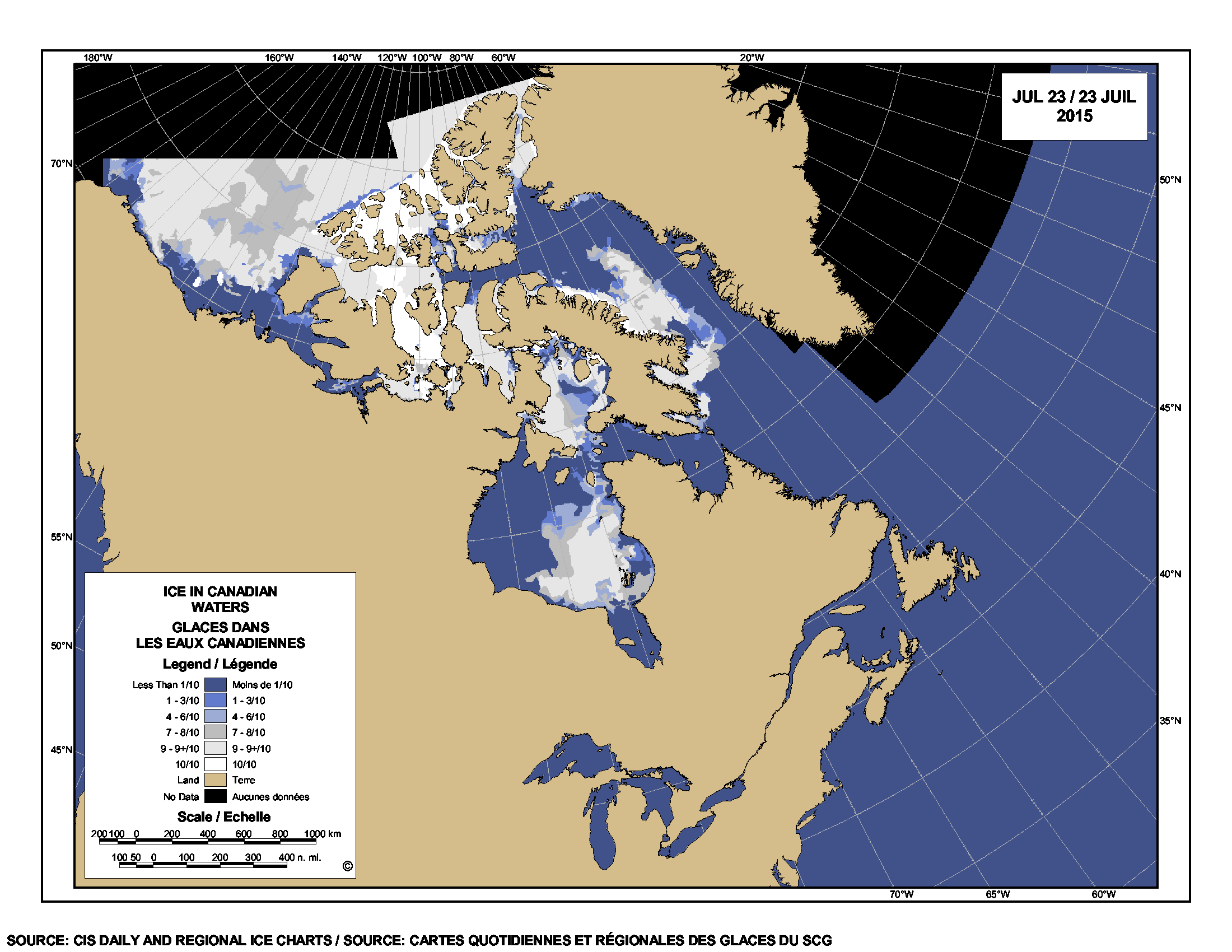
Southern Hudson Bay, Foxe Basin, and Davis Strait, all have above average sea ice coverage, according to the Canadian Ice Service (see charts below).

Sea ice concentration in Canadian waters at 23 July 2015. Canadian Ice Service. Click to enlarge.

Sea ice concentration in Canadian waters at 23 July 2015. Canadian Ice Service. Click to enlarge.

Hudson Bay ice levels are particularly striking: the anomaly map below (“departure from normal”) is almost entirely blue (positive), showing how far it is above average. No wonder supply ships needed icebreaker help yesterday to get into Inukjuak on the eastern shore. Most of the ice is technically in the Southern Hudson Bay polar bear subpopulation region, which has a stable population.

Continue reading

Polar bear doom and gloom from USGS vs. biologist Mitch Taylor’s reasoned thoughts

A few days ago polar bear biologist Mitch Taylor and Nunavut’s Gabriel Niryungaluk talked to Toronto radio host Roy Green about the recent USGS dire model predictions for the future of polar bears.

Taylor interview_5 July 2015 Polar bear numbers_radio

There’s an audio podcast and, courtesy of the valuable efforts of fellow blogger Alex Cull, a transcript. Links below, plus some excerpts of Mitch Taylor’s commentary.
Continue reading

USGS promotes another flawed polar bear model: GHG emissions still “primary threat”

It’s still based on the same flawed ecological premise as all previous models – it assumes that sea ice was a naturally stable habitat until human-caused global warming came along. It also uses slight-of-hand maneuvers to correlate declining summer sea ice and declining polar bear population numbers.

PolarBearCV1_USGS_2009

Just because they keep repeating the same hype doesn’t make it true.
Continue reading

Many polar bears cubs seen in Svalbard this year, says Norwegian biologist

Good news from Norway: polar bears around Svalbard are in excellent condition this spring and many females with new cubs have been spotted. This is a marked turn around from conditions just last year.

 Roy Mangersnes / Wildphoto


Roy Mangersnes / Wildphoto

According to a Norwegian news outlet yesterday, Jon Aars (Fig. 1, below), from the Norwegian Polar Institute, confirms that this has been an excellent year for polar bear cubs around Svalbard because there has been abundant sea ice near denning areas on the east coast.

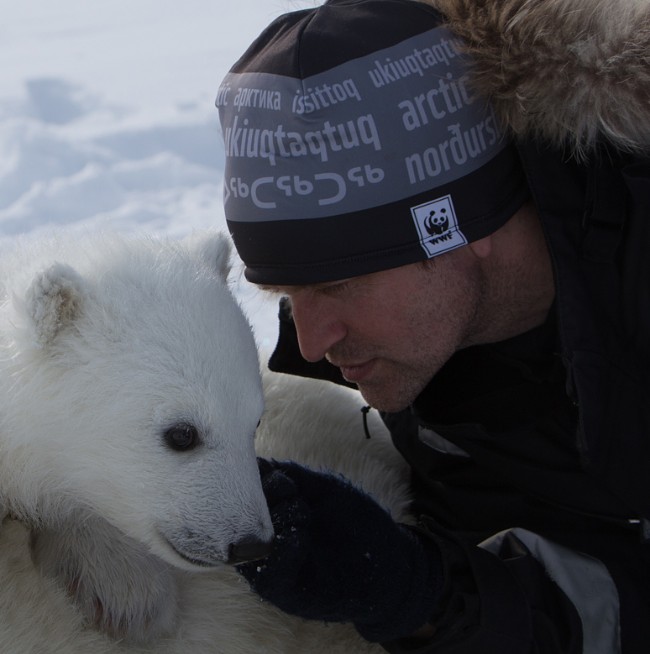
Figure 1. Biologist Jon Aars with a Svalbard cub.

Figure 1. Biologist Jon Aars with a Svalbard cub.

Continue reading

Polar bear news: 1st fat bear ashore in WHB, trouble in S. Greenland, and more hybrid hype

Last week, among other events, the first fat polar bear of the season was photographed on shore in Western Hudson Bay, a fat bear was run out of town in South Greenland, and media outlets spread misinformation – apparently preferring global warming hype to rational facts.

1) First polar bears have been seen onshore in Western Hudson Bay in Wapusk National Park near Cape Churchill (map below) on 18 June this year, apparently fat and well prepared for the summer fast. My informants tell me a few bears usually come ashore in June near Churchill before ice conditions make this necessary; the bulk of the population will probably continue seal hunting for a few more weeks. Those bears will come ashore along the southwest coast (near Polar Bear Provincial Park, in Ontario, see Fig. 2 below). They’ll make their way north to the Churchill area in time for freeze-up in the fall. Watch one fat bear caught on camera on 18 June, below :

2) Fat polar bear spotted in Nanortalik, Southern Greenland 18 June 2015, a bit further south than usual. People from the community drove it away, but not before taking lots of pictures.

Greenland South_polar-bear-nanortalik-08_henrik-hansen_June_18_2015

Some very cool photos, including the one above (taken by Henrik Hansen), worth a look. This bear was in excellent condition, well prepared for the summer fast ahead, whether he ends up spending it on shore somewhere (but not near this community!) or on the sea ice further north in SE Greenland (Fig. 1 below). The ice in that areas is probably broken up (~15-30% concentration) but this is enough for the bear to swim from flow to flow to make it’s way up the northeast coast where most East Greenland bears spend the summer.
Continue reading

My new Arctic Fallacy paper- Sea ice stability and the polar bear

I have a new paper out that explains a fundamental problem with polar bear conservation.
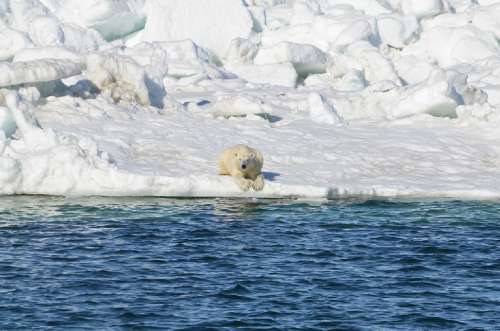
Chukchi June 15 2014_USGS_Brian Battaile_after swim_sm

I’m convinced that a flawed and out-dated ecological concept — that sea ice, under natural conditions, provides a stable, predictable habitat — is what has allowed the present doom and gloom attitude of most polar bear specialists to develop.

Sea ice changes, of course, from season to season. However, the concept that sea ice is a stable habitat assumes that these seasonal changes are predictable and virtually the same from one year to the next – at least, similar enough that the differences are not responsible for causing marked declines in population size.

The assumption is that under natural, stable conditions populations of Arctic animals will either stay the same over time or increase. Biologists were taught at university that sea ice should be a stable habitat and as a result, they’ve glossed over evidence they collected to the contrary. [see recent posts here and here, for example]

Negative effects on populations of short-term natural variations in spring sea ice or spring snow cover on sea ice have been entirely ignored in modeled predictions of future conditions. The focus has been on summer ice extent.

I have summarized this evidence in a fully referenced, peer-reviewed essay that explores how the acceptance of this fallacy (“sea ice is a stable habitat”) has so skewed the conservation biology of polar bears that to outsiders it may look like a scientific integrity issue.

The summary and the essay are below (with embedded links and references). The Global Warming Policy Foundation (GWPF) has published the essay in their “Briefing Paper” series (#16, The Arctic Fallacy: Sea Ice Stability and the Polar Bear), which includes a must-read foreword by Dr. Matthew Cronin, Professor of Animal Genetics at the University of Alaska Fairbanks. Press release here, pdf here.

I think you’ll find it timely and thought-provoking.

Continue reading

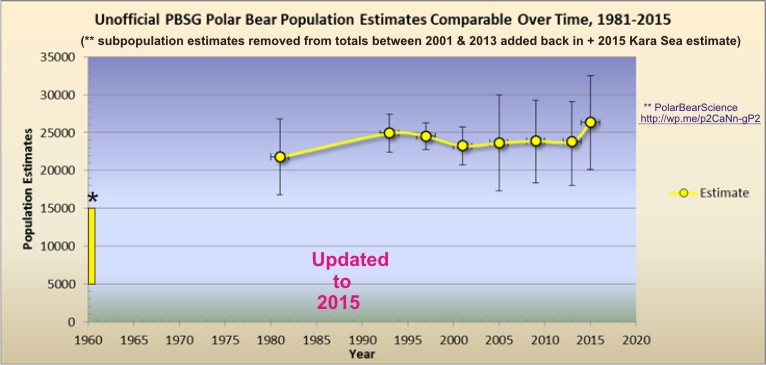
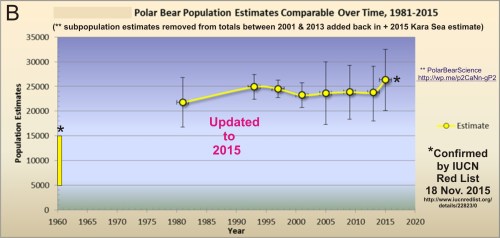
Global polar bear population size is about 26,000 (20,000-32,000), despite PBSG waffling

The IUCN Polar Bear Specialist Group admits its global population estimate is simply a qualified guess with a large potential error.  So perhaps it’s time to acknowledge that for the purpose of comparing polar bears to other species of concern, the upper limit for polar bear numbers worldwide could be more than 30,000?

Polar bears USFWS_cover PolarBearNews2013_2014

See previous posts on this global population size issue (here and here); updated information below, including the most recent IUCN PBSG statement.

UPDATE 1 September 2015: here is an updated graph of polar bear population numbers that undo the “subtractions” of the PBSG between 2001 & 2013, giving a final global estimate of about 26,000. Click to enlarge:

Crockford unofficial polar bear numbers to 2015 Sept 1 FINAL

UPDATE 25 November 2015: The 2015 update of the IUCN Red List for polar bears essentially concurs with my assessment about polar bear numbers. They estimate the current global population is 20,000-31,000 (average of 25,500, see below, without considering the number of bears in the Arctic Basin, so not far off my assessment) but say the trend in the population is “Unknown.”

Crockford OFFICIAL polar bear numbers to 2015_IUCN concurrs Nov 18

UPDATE 23 February 2017: A new population estimate update is available based on three new survey counts that add about 2,000 bears to the average total, bringing it to almost 30,000 (28,500). Details here.

Continue reading

University newspaper misleads readers on status of Western Hudson Bay polar bears

Even though polar bear experts admit there has been no trend in sea ice breakup or freeze-up dates since 2001 – and both Canadian and International experts say this subpopulation is stable – the public is still being misled about the status and condition of polar bears in Western Hudson Bay.

WHB status 2015 IUCN PBSG_PolarBearScience

The latest example of misinformation about Western Hudson Bay polar bears appears in a feature story carried by the campus newspaper of York University (Ontario, Canada), meant to highlight the work of biology graduate student Luana Sciullo.1
Continue reading