Category Archives: Life History

Long underwater stalk by polar bear shows how hard it is to catch seals in summer

The longest-ever-recorded underwater dive by a polar bear, stalking three bearded seals, shows in striking fashion how truly difficult it is for a polar bear to catch a seal from summer sea ice. After the long dive, the bear (see below screen capture) erupts from the water to try and take the seal resting on the ice but it escapes.
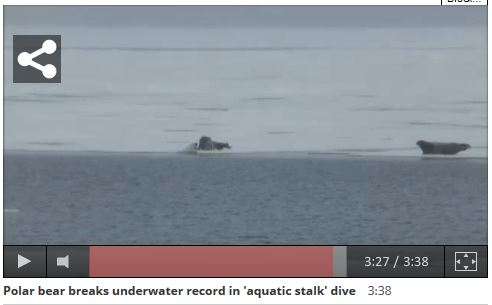
Underwater stalk_01

The paper reporting this dive, by Ian Stirling and photographer and Arctic expedition organizer Rinie van Meurs, has hit the news again in a big way, as it finally appeared in print. I wrote about it in June here, when it came out in press. The video was shot on 19 August 2014, at the height of the Arctic summer (July, August, September).

CBC Radio posted the video and interviewed  van Meurs yesterday (“As It Happens” 4 August), in which he reportedly made this astonishing statement:

“…after 27 years working, I have seen clearly changes in the sea ice. I don’t need to see the NASA records and graphs and all that.”

Indeed, who needs science and all that? You just have to look out the window of your ship! Anecdotal reports are what count as evidence to people who are not scientists. Van Meurs, who is not a scientist, is who the media gets to interview. Where’s co-author Stirling, the scientist?

More stills from the van Meurs video below – too bad, so sad, the bear gets no seal. Why polar bears eat little in the summer even if they are out on the ice hunting, as I discussed here.
Continue reading

July 2015: all 13 collared polar bears in the Southern Beaufort are out on the sea ice

Most of these bears are close enough to shore to hit the beach if that’s where they wanted to be but they’re on the sea ice.

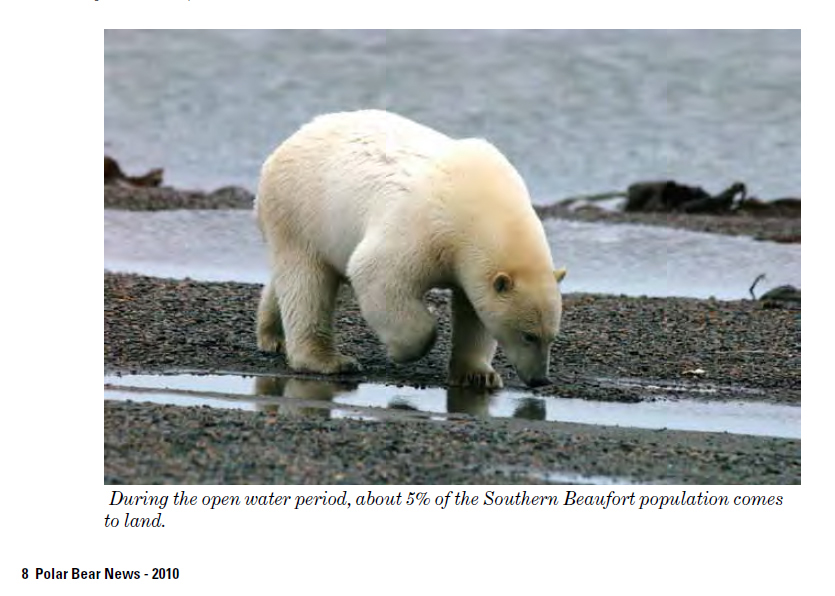
Polar bear S Beaufort_PolarBearNews2010

I’ve been posting these USGS tracking maps for two years.1  The map archive at USGS goes back to December 2009.  Seeing all animals on the ice in July is usual for Southern Beaufort polar bears.

During August, a few of these females usually come ashore (see here and here), probably because they plan to den there later. But most polar bear females stay out on the ice, no matter how far it contracts into the Arctic Basin. Only about 5% of SB bears spend time on land during the summer.

See the July track map below and some sea ice maps and graphs for the region.
Continue reading

Researcher says most S. Hudson Bay polar bears still on the ice, may have to swim home

More than half of Southern Hudson Bay polar bears under study are still out on the thick Hudson Bay sea ice that’s been giving Canadian Coast Guard icebreakers so much trouble.

Figure 6. James Bay polar bear female and her cub during the ice-free period. Notice how fat they both are. Courtesy Ministry of Natural Resources, News Ontario, June 2, 2009.

James Bay polar bear female and her cub on shore. Courtesy Ministry of Natural Resources, News Ontario, June 2, 2009.

As I pointed out a few days ago, most of the ice remaining on Hudson Bay is in the region used by Southern Hudson Bay polar bears. While you wouldn’t know it from the Polar Bears International “Bear Tracker” – which hasn’t been updated since 2 July – on Friday (24 July 2015) Ontario polar bear researcher Martyn Obbard used the PBI website to reveal where his study sample of polar bears are located.

Obbard posted a little essay on PBI’s “Save our sea ice!” website which had, buried near the end, the admission that on 20 July, five out of his nine Southern Hudson Bay females with satellite radio collars were still out on the ice, “far from the Ontario coast.
Continue reading

Alarm over future summer polar bear habitat disguises how good conditions are right now

Despite the public outcry last week over future polar bear survival, the polar-bears-are-doomed crowd can’t hide the fact that this year, spring sea ice habitat for polar bears worldwide has been excellent.

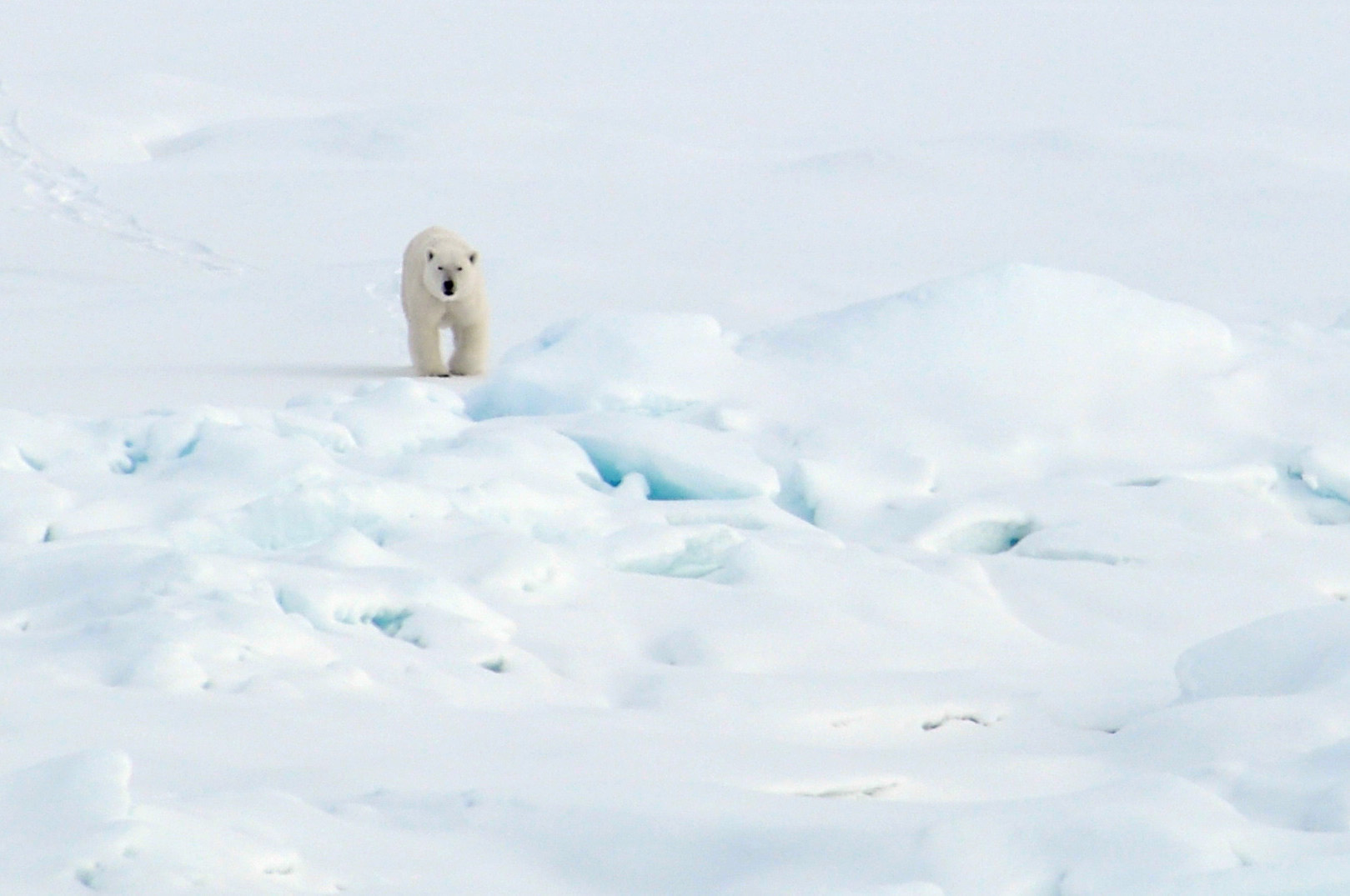
A polar bear walks on the Arctic Ocean ice Aug. 21, 2009.

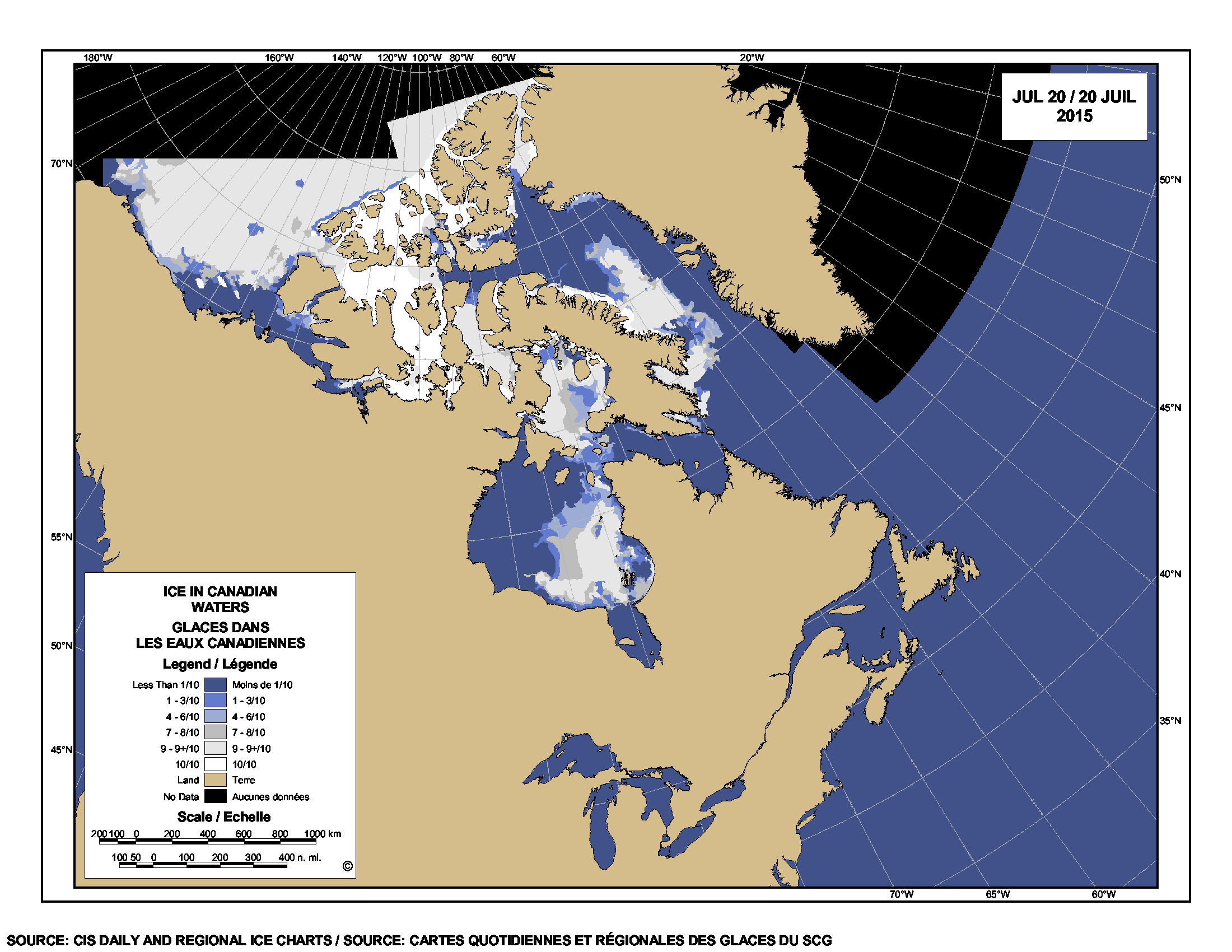
This year on 19 July, for example, Hudson Bay had greater than 150,000 square km more sea ice than there was in 2009 on that date (526.2 vs. 368.5 mkm2)(1992 was a particularly cold year and most bears left the ice as late in 2009 as they did in 1992).1 Conditions have also been excellent for pregnant females around Svalbard – Norwegian polar bear researchers recently reported a good crop of cubs this spring.

Hudson Bay breakup July 20 2015_CIS

Worldwide, there was exactly the same amount of Arctic sea ice present on 18 July 2015 as there was back in 2006 (Day 199) – 8.4 mkm2. By 19 July (day 200), 2015 had more ice than 2006 (8.4 mkm2 vs. 8.3).

All this means that recent summer ice melt has not impinged on the spring feeding period that is so critically important for polar bears. So much ice left in early summer means there was lots of sea ice in the spring (April-June), even in the Southern Beaufort Sea.

The only region with sea ice coverage well below the last five years is the Chukchi Sea (see plots below, click to enlarge). So why aren’t we hearing the-sky-is-falling stories about Chukchi bears? Because biologist have already demonstrated that polar bears in the Chukchi do very well even with no summer sea ice.
Continue reading

New paper finds experts were wrong: polar bears are not “walking hibernators”

A polar bear paper just out in Science concludes the experts were wrong, polar bears are not “walking hibernators” – in summer, they slow down and live off their accumulated fat just like other mammals. Take home message: experts are not infallible and spring fat is critical for polar bear survival over the summer.

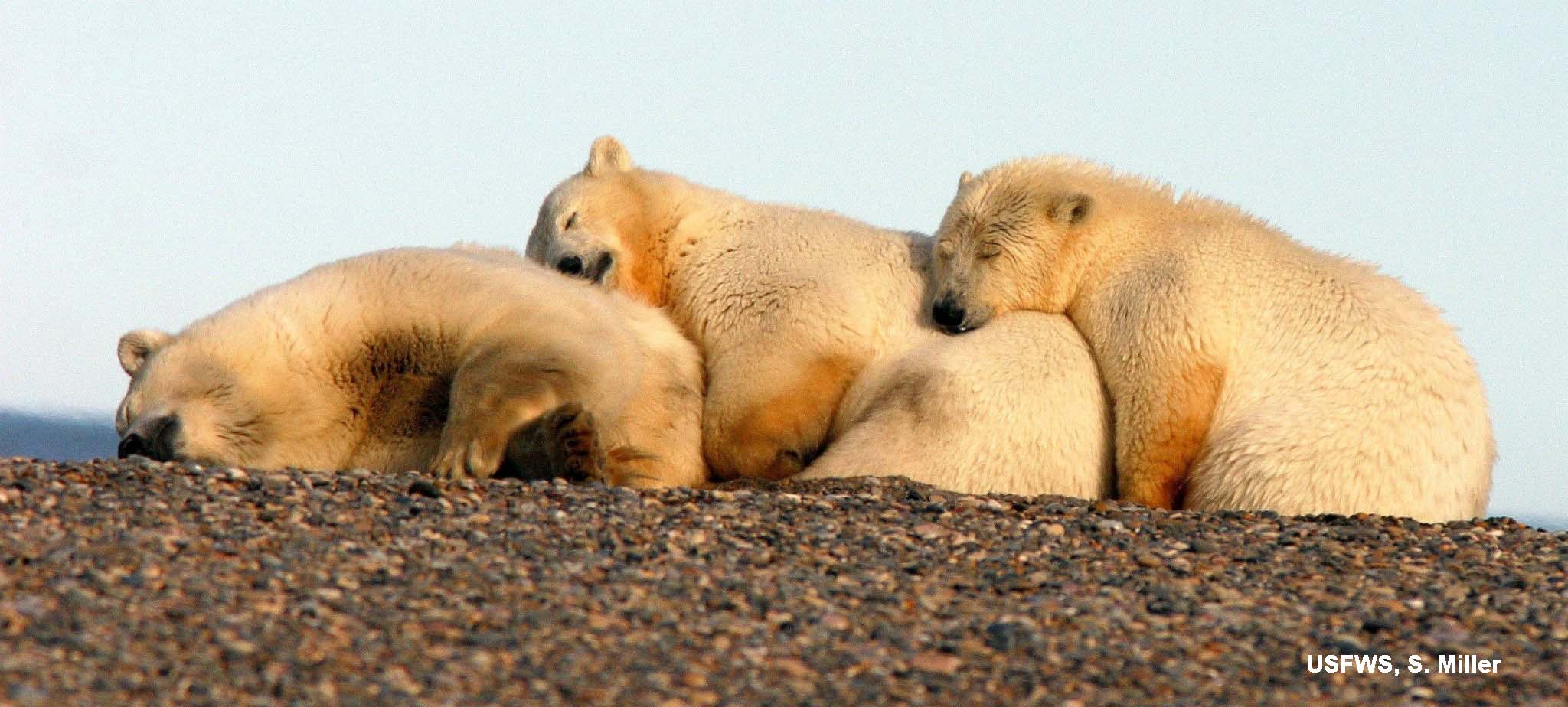
polarbears-arcticnatlwildliferefuge-suzannemiller-usfws_labeled_sm

This paper presents no compelling evidence that Southern Beaufort polar bears, or those in any other region, lack the ability to survive predicted summer sea ice declines in future decades – although they claim it does. See what you think.
Continue reading

Tracking polar bears in the Southern Beaufort June 2015 – all 17 bears out on the sea ice

Sixteen females with satellite collars plus one with a glue-on transmitter – down from 17 with collars and 6 with tags last month – all out on the ice during the month of June 2015.

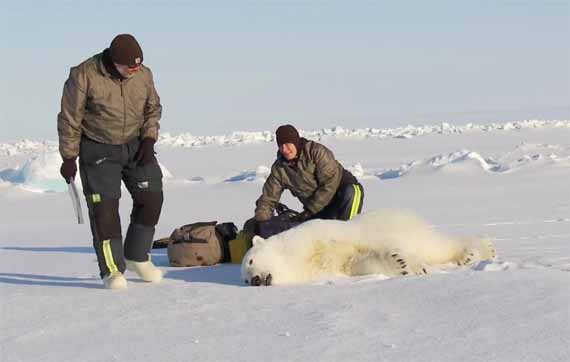
Tranquilized_pb570_S Beaufort March 2014_USGS

Polar bears were captured by USGS biologists in 2014 and 2015 on the spring-time sea ice of the southern Beaufort Sea. The glue-on tags don’t seem to be holding up very well, with only one remaining out of the original eight deployed this spring.
Continue reading

Polar bear habitat update: many bears on the ice in Hudson Bay, lots of sea ice globally

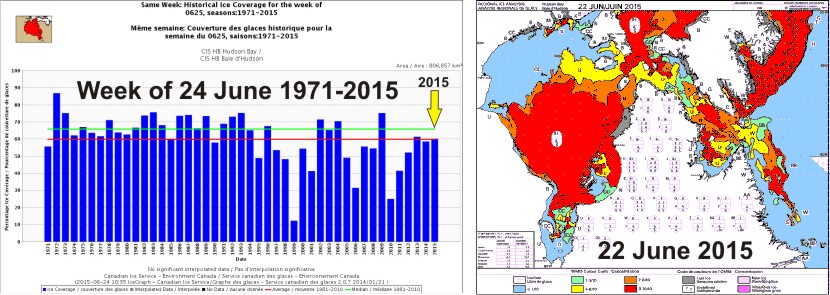
Polar bear habitat over Hudson Bay was average this week (at 60% coverage), despite the odd pattern of breakup – but the end of spring in the Arctic is only 5 days away and there is still plenty of polar bear habitat in all regions.

Hudson Bay breakup 2015 June 22 and 24_sm

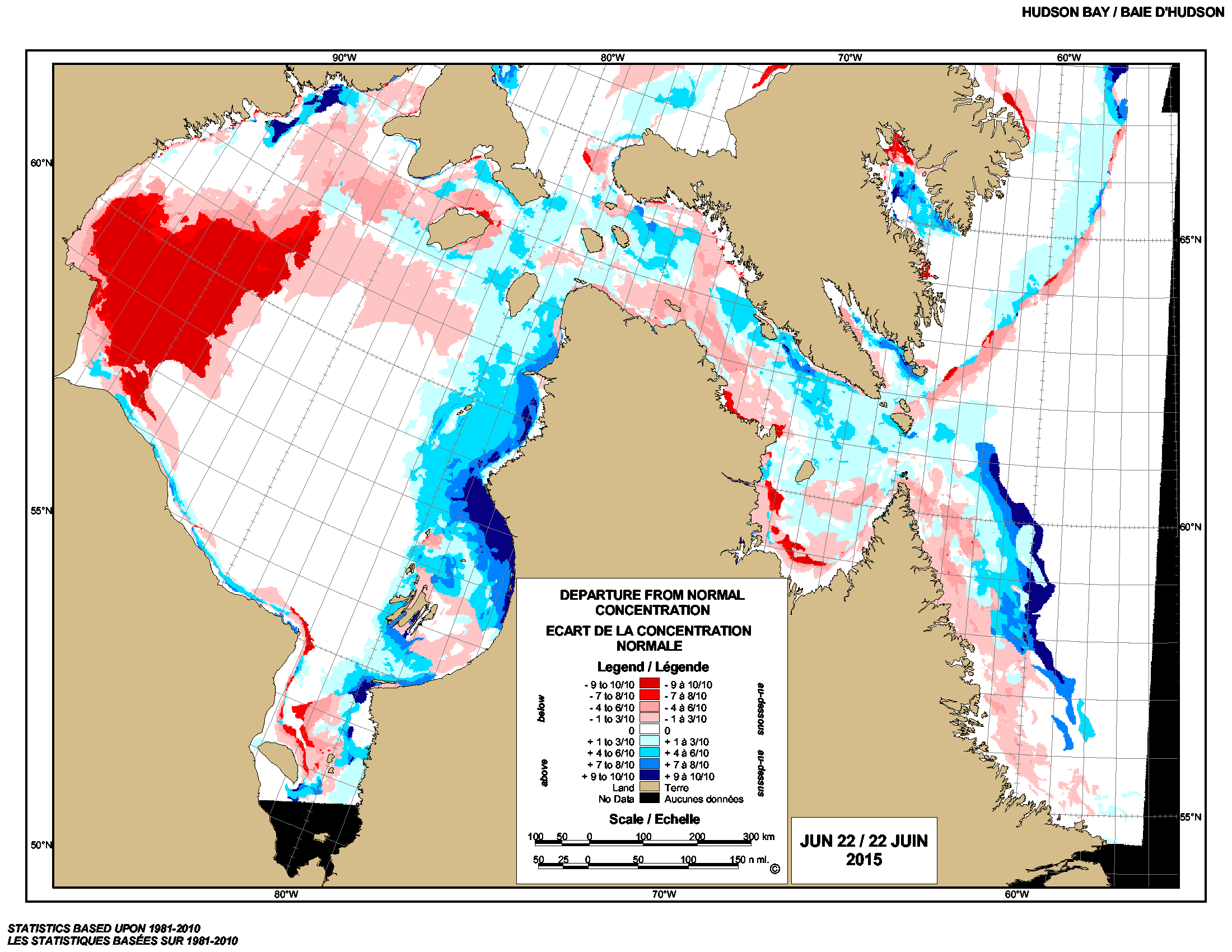
According to the Canadian Ice Service (CIS), there is still more ice in the eastern portion of the bay than usual and much less in the northwest (Fig. 1 below). There is far more ice than average ice in Hudson Strait, the approach to southern Davis Strait.

Figure 1. Hudson Bay sea ice, difference from average at 22 June 2015. Blue is less than average, red is more than average. CIS.

Figure 1. Hudson Bay sea ice, difference from average at 22 June 2015. Blue is less than average, red is more than average. CIS. Click to enlarge.

Continue reading

Many polar bears cubs seen in Svalbard this year, says Norwegian biologist

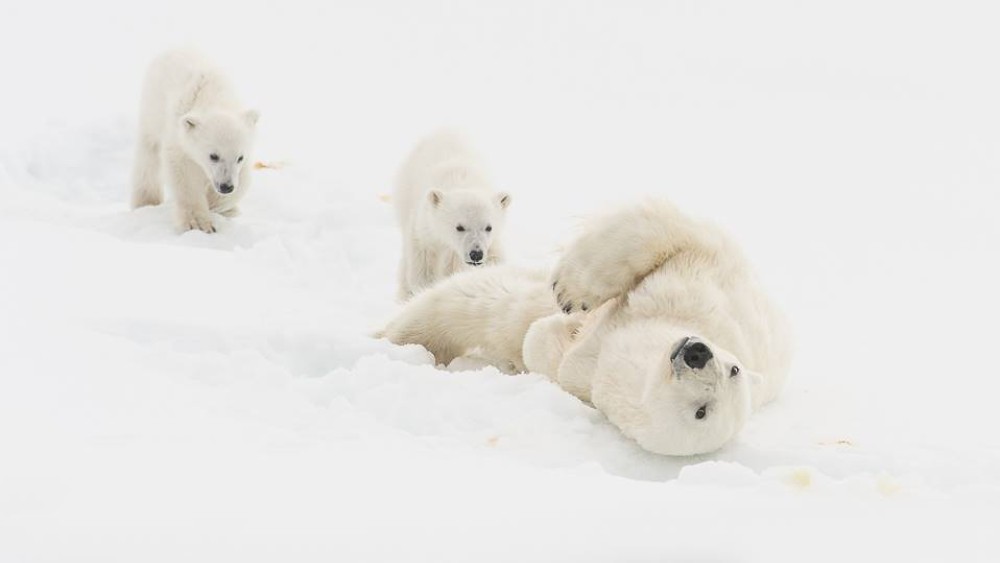
Good news from Norway: polar bears around Svalbard are in excellent condition this spring and many females with new cubs have been spotted. This is a marked turn around from conditions just last year.

 Roy Mangersnes / Wildphoto


Roy Mangersnes / Wildphoto

According to a Norwegian news outlet yesterday, Jon Aars (Fig. 1, below), from the Norwegian Polar Institute, confirms that this has been an excellent year for polar bear cubs around Svalbard because there has been abundant sea ice near denning areas on the east coast.

Figure 1. Biologist Jon Aars with a Svalbard cub.

Figure 1. Biologist Jon Aars with a Svalbard cub.

Continue reading

Same amount of sea ice for Hudson Bay polar bears as 2013, bears still on the ice

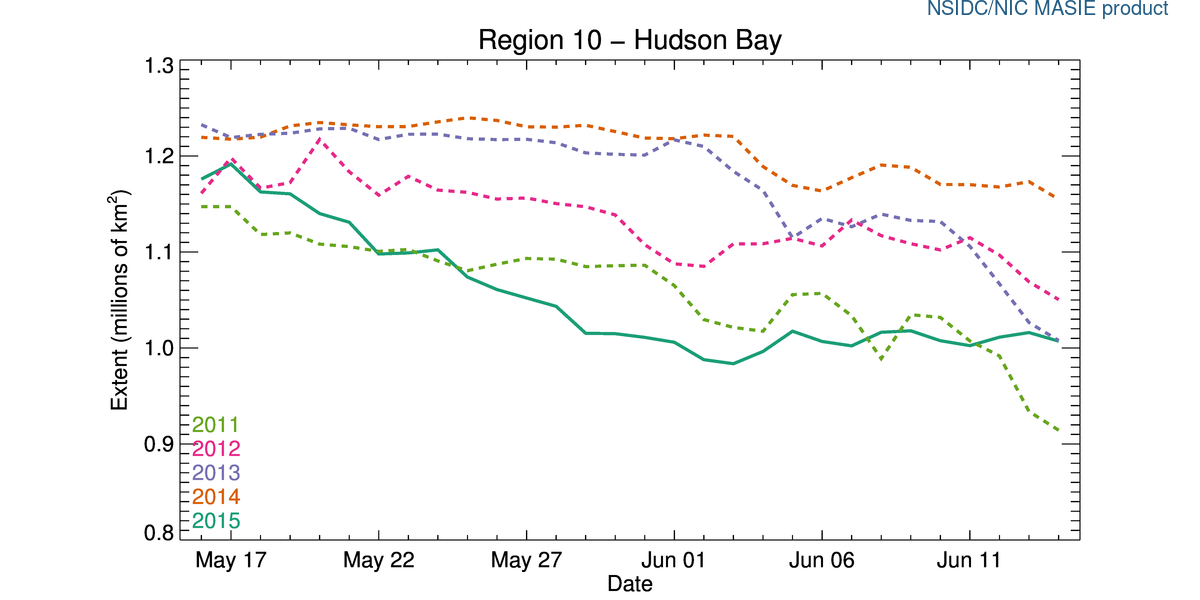
Sea ice coverage for Hudson Bay on 14 June converged on levels recorded in 2013, when breakup was slightly later than the average of the last two decades.

r10_Hudson_Bay_ts

There is also more ice over Hudson Bay than there was in 2011, which was an early breakup year (charts for other Arctic regions here, originals here).

Andrew Derocher notes (via twitter) that rather than heading to shore, most of the Hudson Bay bears with satellite tracking collars (7/10) are out on the ice (Fig. 1 below). They appear to be hunting along the ice edge, where they are most likely to find seals.

Update 17 June 2015: Sea ice images for the week 18 June 2015 compared to other years added below, for Hudson Bay and the Beaufort Sea.

Continue reading

Polar bear behaviour gets the animal tragedy porn treatment – two new papers

Recently, several polar bear biologists have teamed up with photographers to get pictures of starving bears into the scientific literature – and picked up by the media, with mixed results.

doi:10.3402/polar.v34.26612
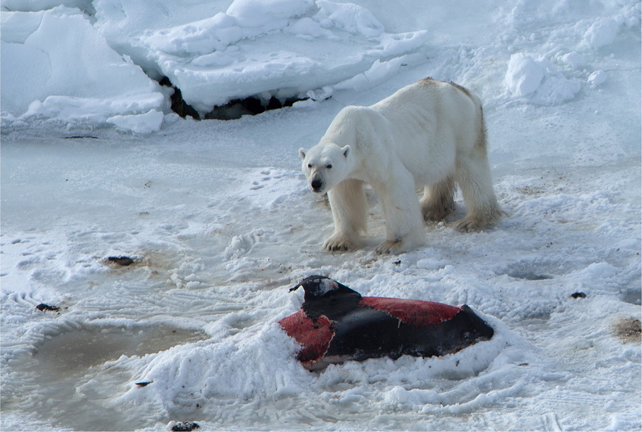
For the second time in five years, polar bear biologist Ian Stirling has teamed up with a photographer to give unwarranted scientific credence to an anecdotal account of polar bear behaviour. It included a picture of a pitifully thin animal  (classic animal tragedy porn) and was framed to increase alarm over predicted effects of global warming. It got little media attention.

His Norwegian colleagues Jon Aars and Magnus Andersen have just done the same with a bear caught eating a white-beaked dolphin (photo above) – but this time the media took the bait.

Update 13 June 2015 – Information added on white-beaked dolphin distribution, sea ice conditions in 2014 and a correction. See below.
Continue reading