Category Archives: Sea ice habitat

Head of IPCC resigns in disgrace – says protection of species is “my religion”

Rajendra Pachauri, who led the Intergovernmental Panel on Climate Change (IPCC) since 2002, resigned today. He faces possible arrest on accusations of sexual assault, stalking, and harassment of several female employees.
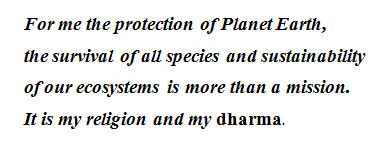
Pachauri quote_resignation letter 24Feb2015You might be as appalled as I was to read the statement above, quoted from Pachauri’s resignation letter — which has nothing to do with the allegations and everything to do with his attitude to science and thus his leadership of the IPCC.

Journalist Donna Laframboise could not have said it better than I regarding Pachauri’s statement:

“Yes, the IPCC – which we’re told to take seriously because it is a scientific body producing scientific reports – has, in fact, been led by an environmentalist on a mission. By someone for whom protecting the planet is a religious calling.

Even here, at the end, Pachauri fails to grasp that science and religion don’t belong in the same sentence; that those on a political mission are unlikely to be upholders of rigorous scientific practice.” [emphasis in original]

The IUCN Polar Bear Specialist Group and conservation organizations like Polar Bears International routinely tout the IPCC as the highest arbiter of science on issues of present and future climate. For 13 long years this man has been their leader.

Add this to “The Politics of Polar Bears.

Read the rest of Donna’s commentary here, and the Pachauri resignation letter here.

UPDATE 1 (24 Feb 2015): Amazingly, the press release issued by the IPCC makes no mention of why Pachauri has resigned: http://www.ipcc.ch/pdf/ar5/P41_acting_chair.pdf

Polar bear biologists try – again – to blame S. Beaufort thick spring ice on global warming

The trouble is, sea ice researchers and atmospheric scientists have not drawn that conclusion, despite what a new paper by Pilfold and colleagues imply. It shows just what lengths desperate IUCN Polar Bear Specialist Group  (PBSG) biologists will go to in order to link the recent decline of Southern Beaufort bear numbers to global warming while ignoring similar past declines.

Beaufort Sea pressure ridges_Spring 1949 wikipedia sm

Continue reading

Polar bears out on the sea ice eat few seals in summer and early fall

We hear endlessly about the polar bears ‘forced’ to go without food for months because of receding summer sea ice — what about all the bears that stay out on the ice over the summer? Presumably, those bears keep hunting for seals – but how many do they actually catch?

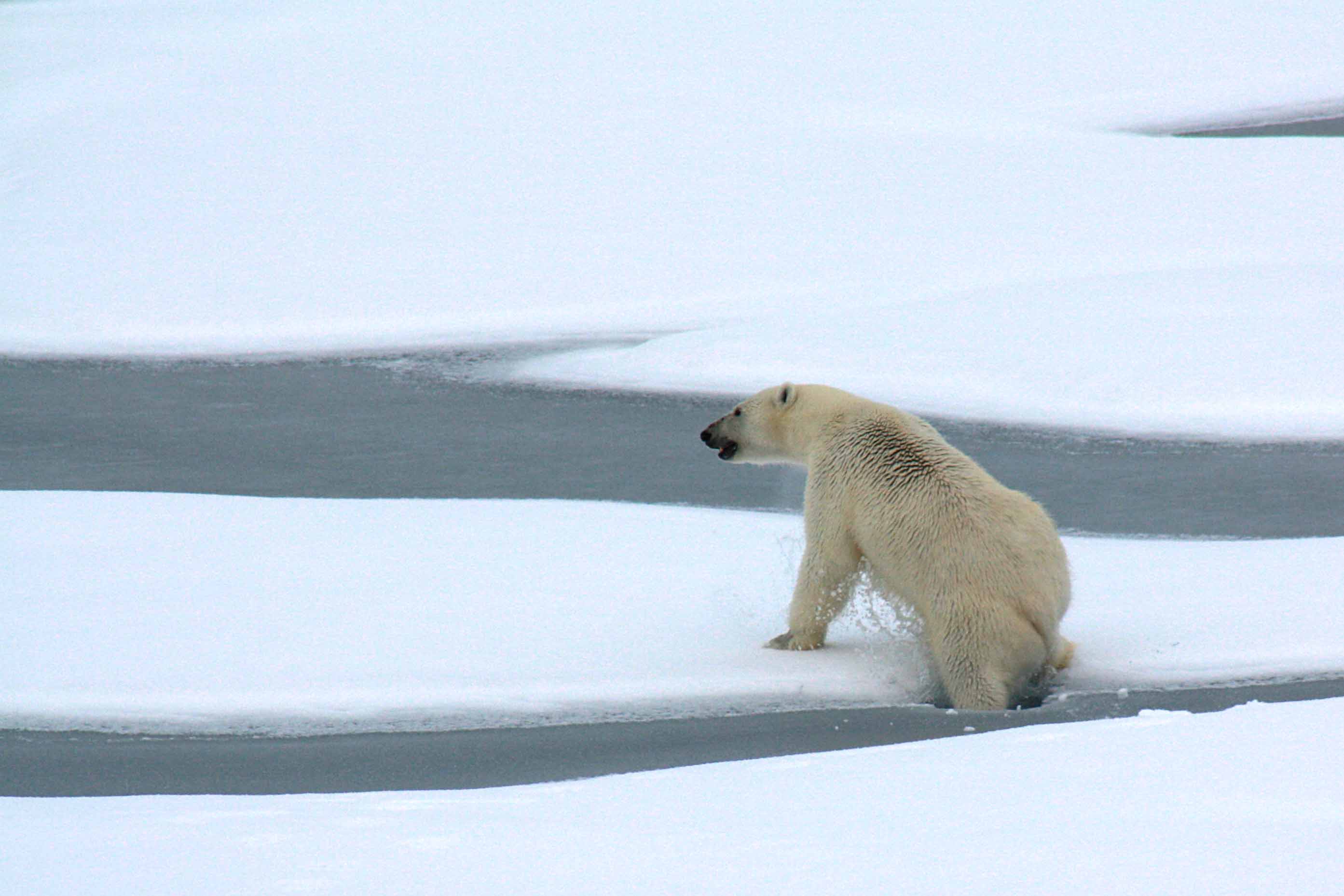
Polar Bear Breaks Ice

[Update 9 February 2015: Just to be clear, this post is based on the facts available in the peer reviewed literature — if you think I have missed something, let me know via the “Contact us” page above]
Continue reading

East Greenland polar bears – said to be the most polluted but appear to be doing just fine

I’ve not written much about this subpopulation before but with the flurry of interest over “weakened” penis bones and toxic chemicals, I thought it was time to remedy the situation.

East Greenland Scorsby Sound March 2011 on Kap Tobin, Rune Dietz (press photo) Rune Dietz

East Greenland Scorsby Sound March 2011 on Kap Tobin, Rune Dietz, press photo

Continue reading

Tracking polar bears in the Beaufort Sea – January 2015 map

Here is the January 2015 follow-up to my post on the July 2013 track map for female polar bears being followed by satellite in the Beaufort Sea by the US Geological Survey (USGS) – “Ten out of ten polar bears being tracked this summer in the Beaufort Sea are on the ice.”

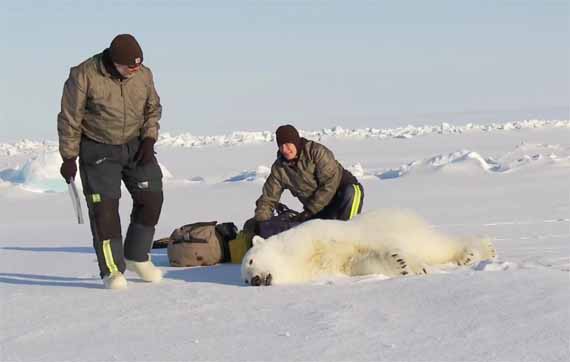
Tranquilized_pb570_S Beaufort March 2014_USGS

See that post for methods and other background on this topic, and some track maps from 2012 (also available at the USGS website here). The USGS track map for January is copied below.

There are only 6 bears being followed now, which means a few more collars have failed, or the bears have moved out of the area or died.
Continue reading

Claim of range-contraction of polar bears due to declines in summer sea ice doesn’t hold up

Have polar bears suffered a contraction of their historical range due to recent declines in summer sea ice? Buried in a recent journal article lies such a claim, one I can’t recall having seen before. That makes it worth close examination.

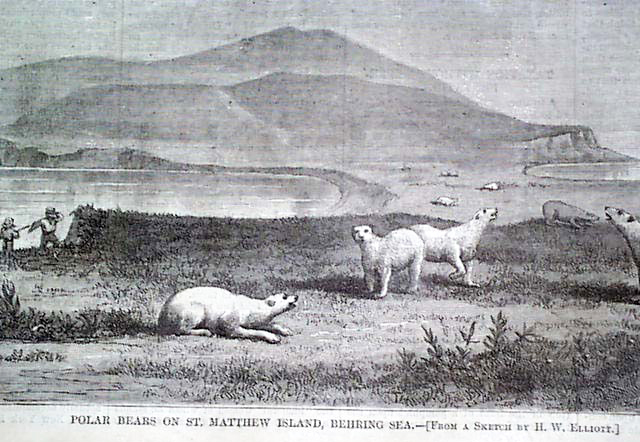
Figure 2. A drawing of polar bears on St. Matthew Island that accompanied the May 1, 1875 Harper’s Weekly Journal of Civilization article written by Henry Elliot. See here.

A drawing of polar bears on St. Matthew Island that accompanied the May 1, 1875 Harper’s Weekly Journal of Civilization article written by Henry Elliot. See here.

The assertion appears in the introduction of a recently published paper that got a lot of attention online (“Implications of the Circumpolar Genetic Structure of Polar Bears for Their Conservation in a Rapidly Warming Arctic” by Peacock and colleagues (2015), discussed previously here, news coverage here and here).

Here is how the authors put it:

There is already evidence of change in the contemporary distribution of polar bears. For example, polar bears, once common in Newfoundland [29], are now seen there only infrequently and in small numbers. Similarly, polar bears once regularly summered on St. Lawrence and St. Matthew islands in the Bering Sea [30–32]. Now they are irregularly observed in the Bering Sea and do not spend summers on St. Matthew Island. Although these changes in polar bear distribution may also have been related to overharvest, the recent reductions in the extent of sea-ice due would prevent current and regular use of these areas.[my emphasis]

There are three main reasons the claim doesn’t hold up to scrutiny:
Continue reading

Arctic National Wildlife Refuge in Alaska won’t protect polar bears from thick spring ice

And the proposed coastal refuge won’t protect the denning areas of the majority of Southern Beaufort Sea polar bears, because most females den out on the sea ice, not on land.

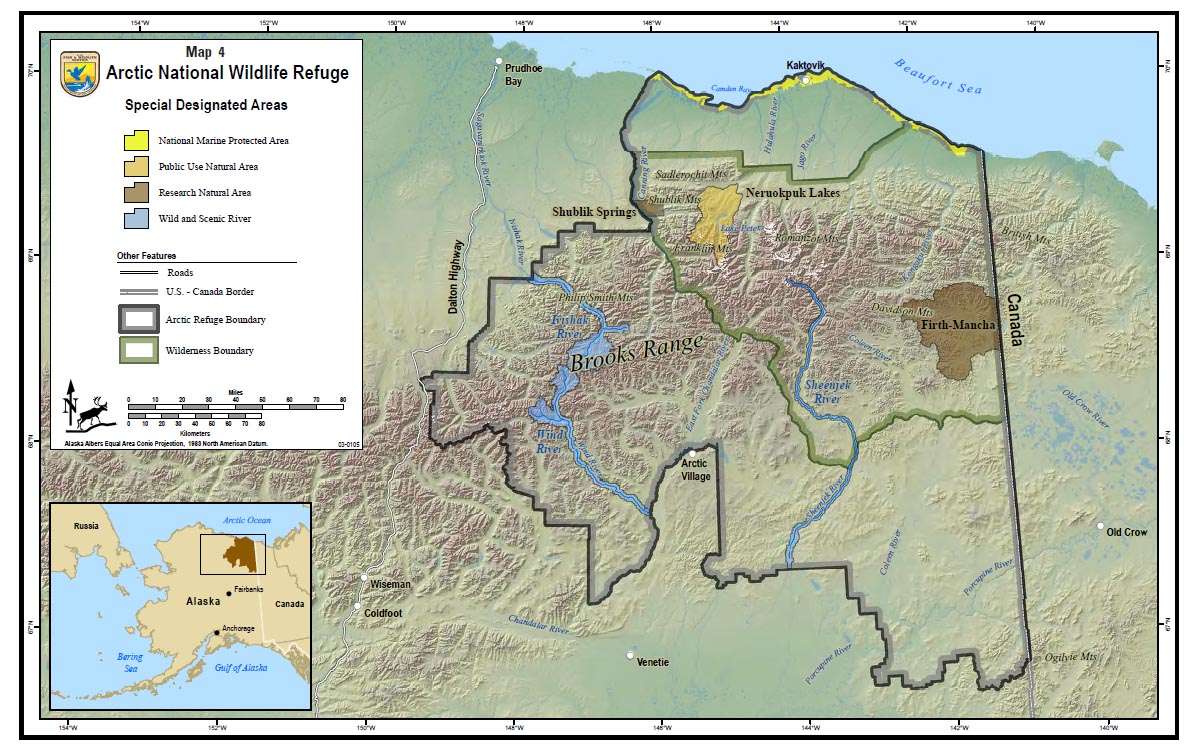
Arctic Nat Wildlife Refuge proposed_USFWS_map 4 designated areas

The folks at Polar Bears International (PBI) are crowing with delight at the announcement today that US President Obama has recommended that congress approve plans to implement a proposed an Arctic wildlife refuge area that would include the Arctic coastal plain [see links below, including Obama video].

And in doing so, they mislead the public about how many polar bears use this region of coastal Alaska — as do the US Fish and Wildlife Service on their Refuge website.
Continue reading

Editorial calls for more jobs for polar bear biologists

An editorial in the Edmonton Journal this morning (“Stand on guard for polar bears”) takes a most extraordinary position: that the results of two recent papers of dubious value should motivate Canada to create more jobs for polar bear biologists, “protect” the Canadian Arctic Archipelago (from what, they don’t say), and galvanize Canada’s position with respect to curtailing carbon dioxide emissions. In that order.

Edmonton Journal editorial photo 22 January 2015

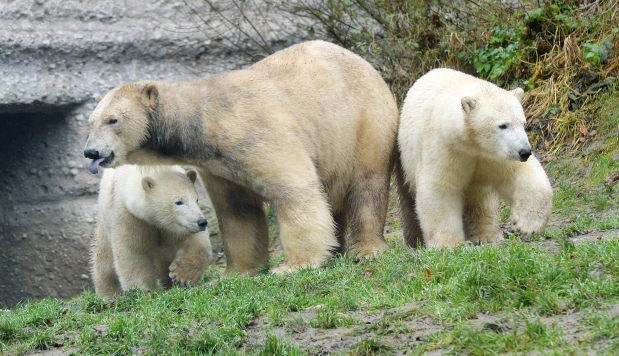
Edmonton Journal editorial photo 22 January 2015. Munich Zoo bears.

First, the unnamed editors1 say: “This country needs more eyes and ears monitoring the health, numbers and locations of its polar bear populations.

Why would they come to that conclusion? They quote University of Alberta’s Andrew Derocher (who supervises a number of students doing polar bear research in Western Hudson Bay):

“If Canada was doing the right thing, we’d have extensive monitoring,” University of Alberta polar bear researcher Andrew Derocher said to the Journal in late 2014.

Continue reading

‘Threatened’ status for Arctic ringed seals under ESA makes no sense

Recent research (Crawford and Quakenbush 203; Rode et al. 2014) has shown that sea ice declines in the Chukchi and Beaufort Seas have made life better for ringed seals, not worse (as predicted) – ringed seals are in better condition and reproducing better than they were in the 1970s. Why? Ringed seals do most of their feeding in the open-water period (Young and Ferguson 2013), so a longer open-water season means fatter, healthier seals and more fat pups for polar bears to hunt the following spring.

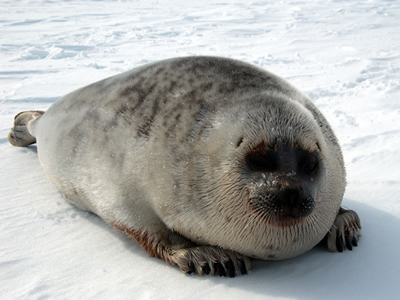
Ringed_seal_2_NOAA

However, Arctic ringed seals (as well as bearded seals) were designated as ‘threatened’ by the USA in 2012 under the Endangered Species Act, based on predicted ice and snow declines due to prophesied global warming. These listings are all about future threats, with no pretense of on-going harm.

Virtually no other Arctic nation has taken this step for Arctic seals — see previous discussion here. There are lots of ringed seals — an estimated 3-4 million world-wide and about 1.7 million within the critical habitat proposed by NOAA (see below).

As weak as the case for listing polar bears as ‘threatened’ has proven to be, the case for listing ringed and bearded seals is even more feeble (a judge has already sent the bearded seal listing back to the drawing board).
Continue reading

If summer ice was critical for S. Beaufort polar bears, 2012 would have decimated them

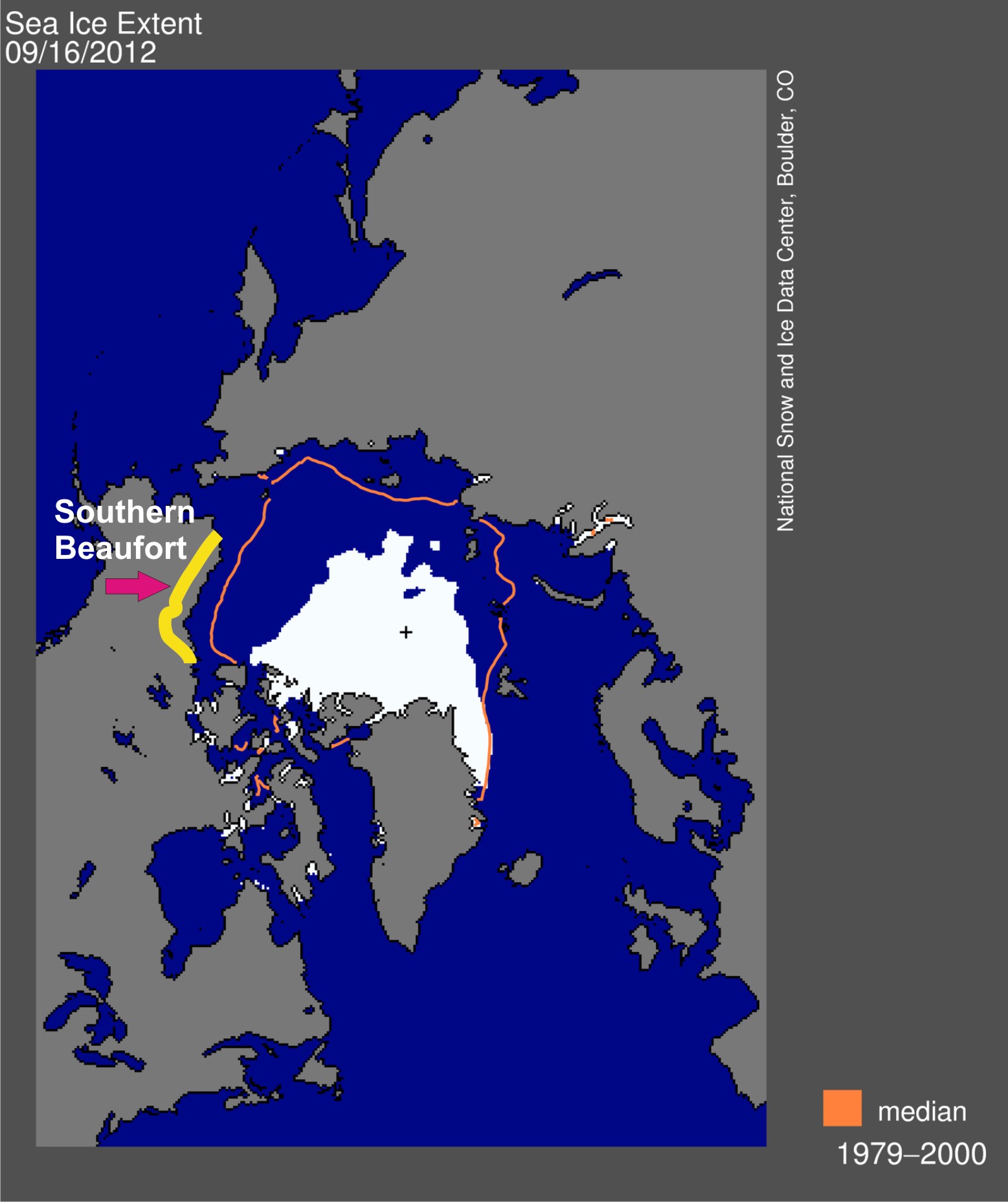
Did we hear a huge hue and cry in 2013 about starving polar bears and low cub survival in the Southern Beaufort Sea? No, we did not. Despite the record-breaking low summer sea ice extent the year before (2012), and despite the fact that USGS biologists were putting collars on polar bear females there the spring of 2013 (Rode et al. 2014), we heard not a peep about a polar bear catastrophe in the Southern Beaufort. Odd, isn’t it?

Sea ice extent 2012 Southern Beaufort_PolarBearScience

Several polar bear biologists and sea ice experts were busy late last fall suggesting to the media that a decline in polar bear numbers in the Southern Beaufort was due to declines in summer sea ice, which they blamed on global warming (see quotes below and earlier discussions here, here and here). However, they made no mention of the fact that the record-breaking September ice extent in 2012 did not seem to have any noticeable effect on polar bear health or survival in 2013.

Sea ice maps from the National Snow and Ice Data Center (NSIDC) tell most of the story about what the media were, and were not, told about summer sea ice in the Southern Beaufort between 2001 and 2013.  Continue reading