Posted onAugust 26, 2015|Comments Off on Polar bear habitat update – more ice than 2012 when all the bears didn’t die
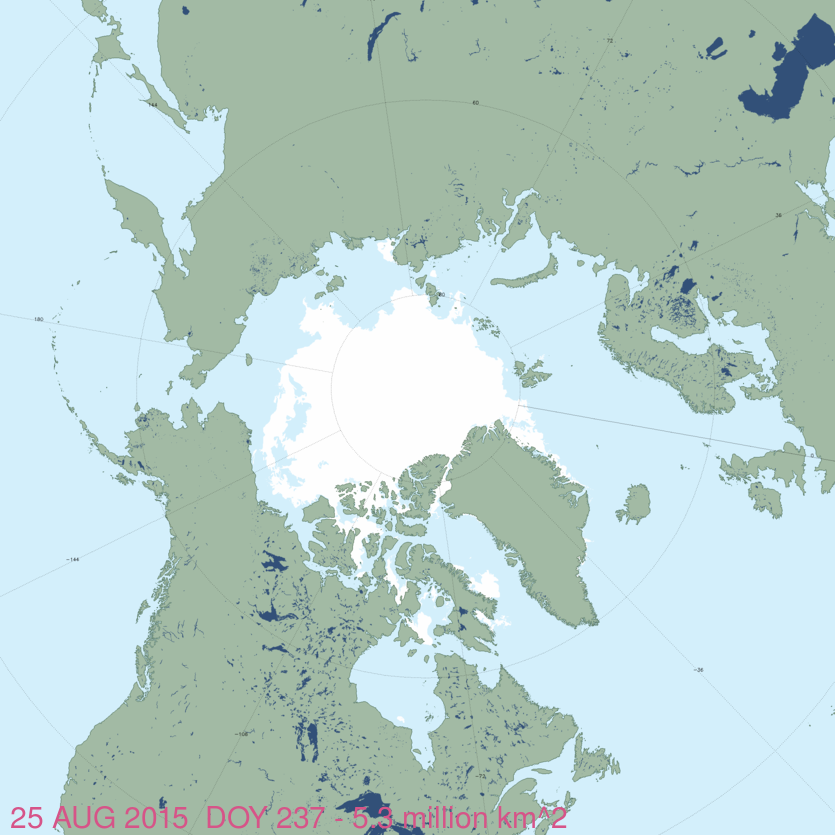
Overall, the situation is better than many recent years – lower than average but higher than even 2012 and 2007, when all the polar bears didn’t die despite record-low extents for September. In several areas of the Eastern Arctic, sea ice levels continue to run higher than average. There is plenty of ice in the Arctic Basin for polar bears spending the summer under the midnight sun.
Posted onAugust 16, 2015|Comments Off on Barents Sea polar bear research in the good old days – 1968/69 – with video
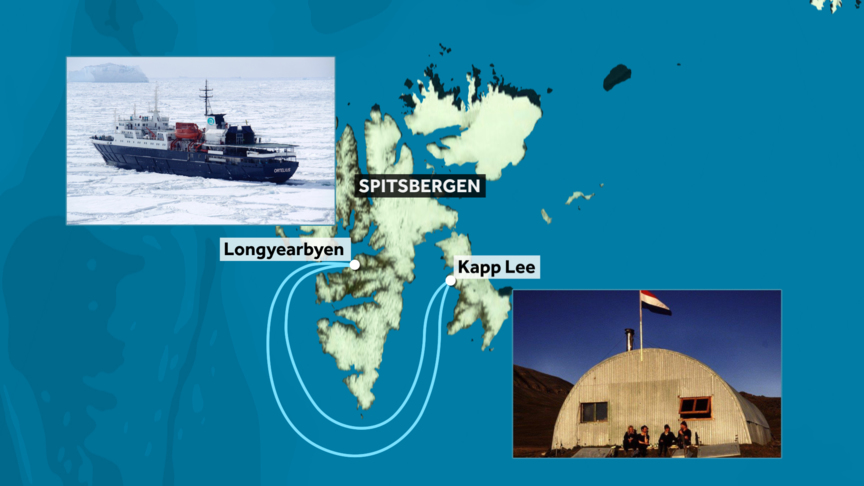
Here is some old footage shot in 1968-1969 of four Dutch researchers – none of whom had any experience with large carnivores – sent to study polar bears at Kapp Lee on Edgeøya (eastern Svalbard). It’s in Dutch so I don’t know what they’re saying but given the choice of music (Beatles, “All You Need is Love”) I can guess the message.
Still, the images are kind of cool, it’s interesting to see how research was conducted at the time by inexperienced personnel. FYI, I began my university studies in 1968, I was not much younger than these students at the time.
Overwintering Spitsbergen 1968-1969 [Uploaded to youtube 21 October 2012; length 45:55]
Description:In the winter of 1968-1969 stayed four Dutch students on the island Edgeøya east of Spitsbergen to do research as to polar bears. During that expedition, this film made by Paul van de Bosch and Hans Sweet and exhibited by the NOS on Dutch television in 1969.
[Barents Sea polar bear subpopulation background here and here]
I found some additional background that I’ve included below, which shows how naive these young men were, although clearly they had enthusiasm. Dutch researcher Piet Oosterveld was one of the original four on the 1968 expedition and according to a recent news report (see below), will accompany a new expedition to study the effects of global warming. Map below is from the Dutch News story cited below. Spoiler alert: in 1987, Oosterveld was attacked by a polar bear and seriously injured, blamed in part on the rapid increase in polar bear numbers due to their protected status.
Posted onJune 25, 2015|Comments Off on Polar bear habitat update: many bears on the ice in Hudson Bay, lots of sea ice globally
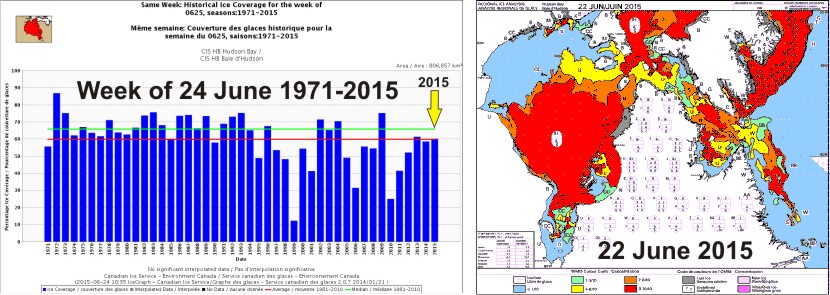
Polar bear habitat over Hudson Bay was average this week (at 60% coverage), despite the odd pattern of breakup – but the end of spring in the Arctic is only 5 days away and there is still plenty of polar bear habitat in all regions.
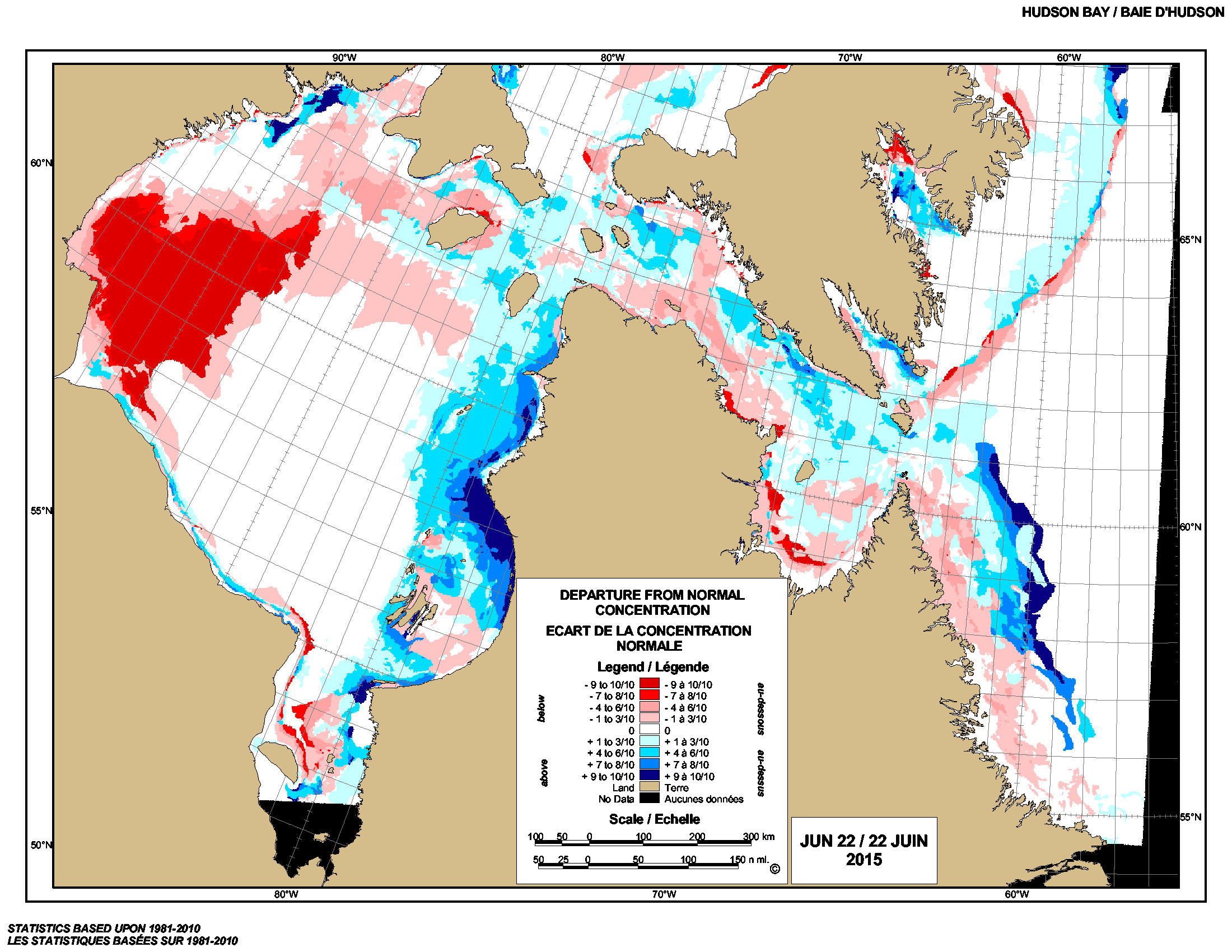
According to the Canadian Ice Service (CIS), there is still more ice in the eastern portion of the bay than usual and much less in the northwest (Fig. 1 below). There is far more ice than average ice in Hudson Strait, the approach to southern Davis Strait.
Figure 1. Hudson Bay sea ice, difference from average at 22 June 2015. Blue is less than average, red is more than average. CIS. Click to enlarge.
Posted onJune 24, 2015|Comments Off on Many polar bears cubs seen in Svalbard this year, says Norwegian biologist
Good news from Norway: polar bears around Svalbard are in excellent condition this spring and many females with new cubs have been spotted. This is a marked turn around from conditions just last year.
According to a Norwegian news outlet yesterday, Jon Aars (Fig. 1, below), from the Norwegian Polar Institute, confirms that this has been an excellent year for polar bear cubs around Svalbard because there has been abundant sea ice near denning areas on the east coast.
Posted onJune 12, 2015|Comments Off on Polar bear behaviour gets the animal tragedy porn treatment – two new papers
Recently, several polar bear biologists have teamed up with photographers to get pictures of starving bears into the scientific literature – and picked up by the media, with mixed results.
For the second time in five years, polar bear biologist Ian Stirling has teamed up with a photographer to give unwarranted scientific credence to an anecdotal account of polar bear behaviour. It included a picture of a pitifully thin animal (classic animal tragedy porn)and was framed to increase alarm over predicted effects of global warming. It got little media attention.
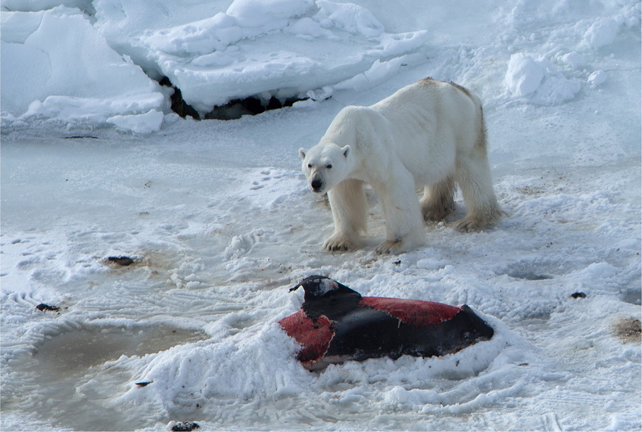
His Norwegian colleagues Jon Aars and Magnus Andersen have just done the same with a bear caught eating a white-beaked dolphin (photo above) – but this time the media took the bait.
Update 13 June 2015 – Information added on white-beaked dolphin distribution, sea ice conditions in 2014 and a correction. See below. Continue reading
Comments Off on Polar bear behaviour gets the animal tragedy porn treatment – two new papers
Posted onMay 8, 2015|Comments Off on Polar bear habitat update – sea ice for hunting plentiful in all subpopulation regions
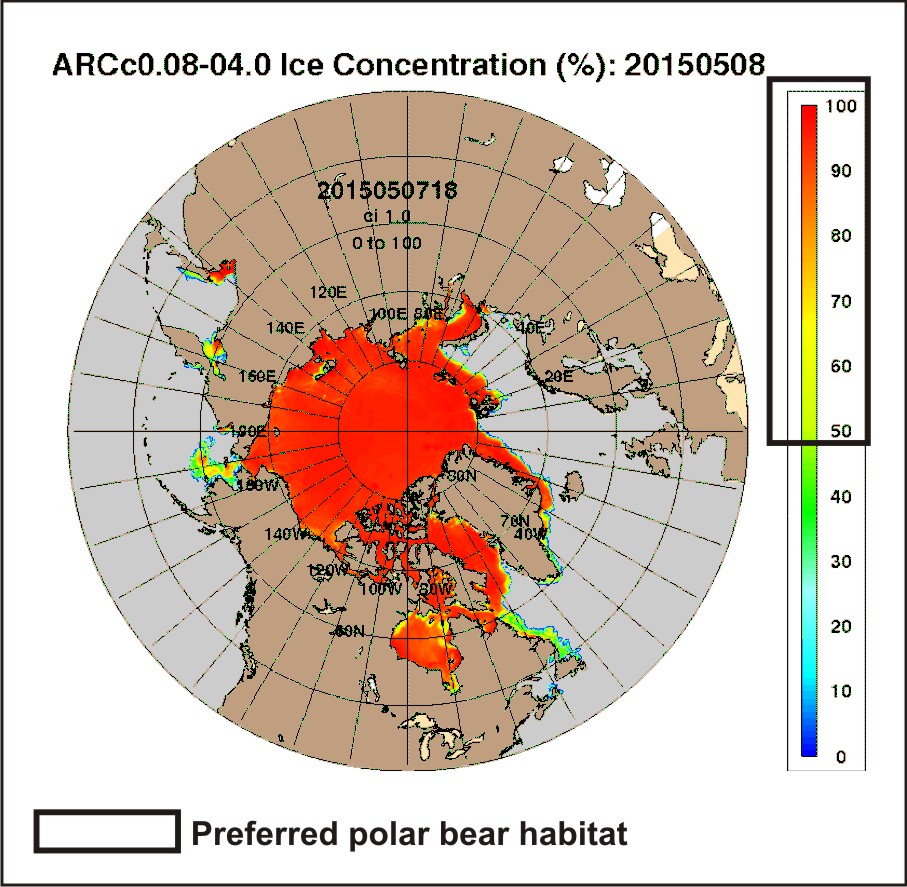
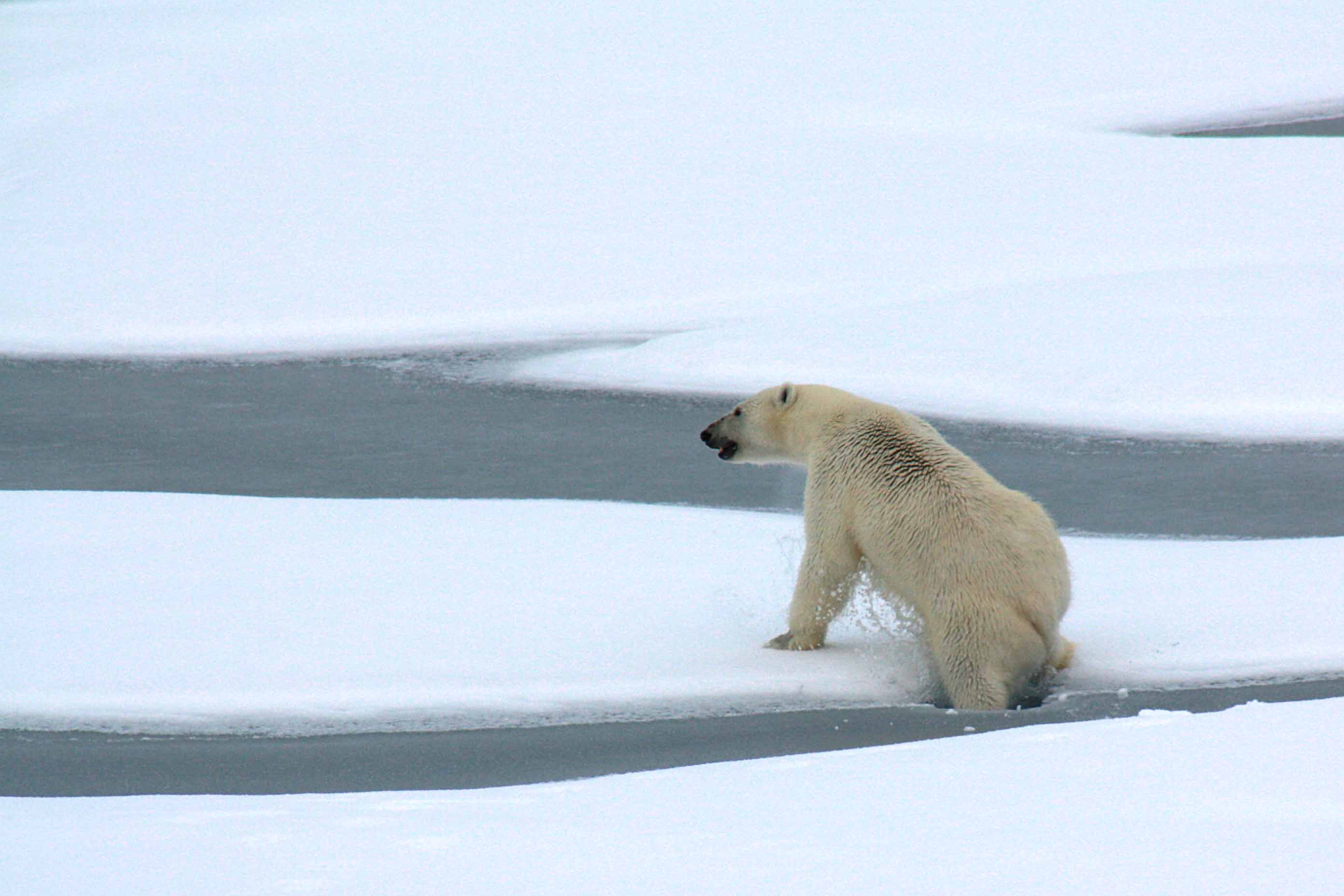
Preferred polar bear habitat is said to be 50% concentration or higher over continental shelves, which describes all but the fringes of sea ice extent today, including Hudson Bay, the Southern Beaufort, and the Barents Sea.
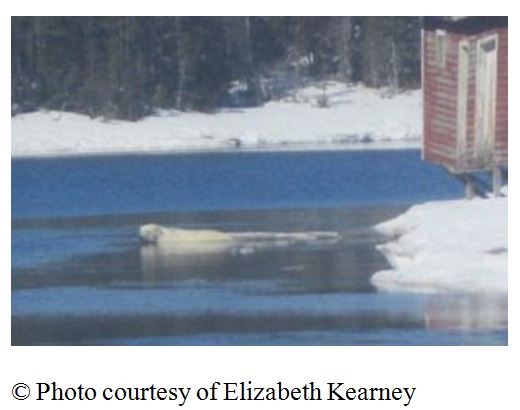
However, polar bears – excellent swimmers that they are – are quite capable of utilizing areas with 15-50% sea ice concentration if necessary (Durner et al. 2004; Rode et al. 2014:79), especially when prey are plentiful. This would account for the fact that there are still sightings of polar bears in and around northern Newfoundland (see previous post here and photo below1), where ice concentration is in the 30-50% range.
Posted onApril 24, 2015|Comments Off on Melt season update – Bering Sea ice abundant & Davis Strait ice 2nd highest since 1971
Polar bear habitat in the eastern Bering Sea has expanded since the official spring “maximum extent” was called for late February, and Davis Strait sea ice is tied for 2nd highest since 1971 for this week. Both regions have healthy polar bear populations and spring conditions suggest this will continue into this year.
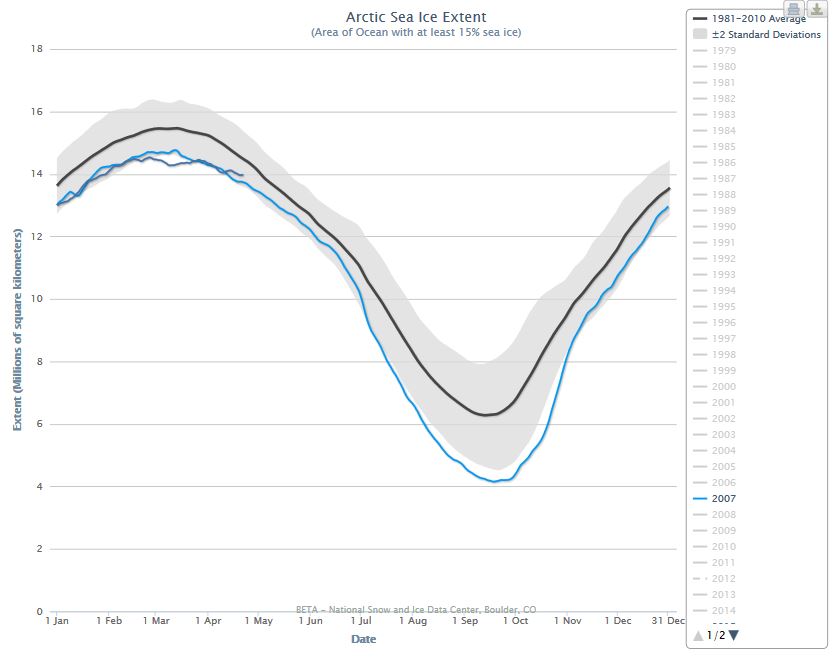
Although the melt season is underway, as of yesterday (22 April, Julian day 112) overall Arctic sea ice extent (Fig. 1) was higher than it was on the same date in 2014, 2007, and 2004 (see also Fig. 2). Despite the record low extent in February (Fig. 3), that pessimists at Polar Bears Internationalsuggested was relevant to polar bear heath and survival, I showed that was misleading.
Figure 1. Sea ice extent at 22 April (Julian day 112) for 2015, at 13.976 mkm2, was well within 2 standard deviations and higher than 2007 (shown), as well as higher than 2004 and 2014 (not shown – see it for yourself here). Click to enlarge.
Sea ice maps and charts tell the story of current polar bear habitat throughout the Arctic. Continue reading
Comments Off on Melt season update – Bering Sea ice abundant & Davis Strait ice 2nd highest since 1971
Posted onApril 16, 2015|Comments Off on Spring ice alarm deflated – 2015 ice now as high as 2014 & Davis Strait highest since 1971
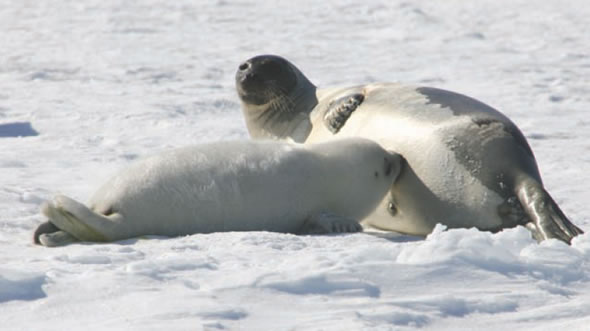
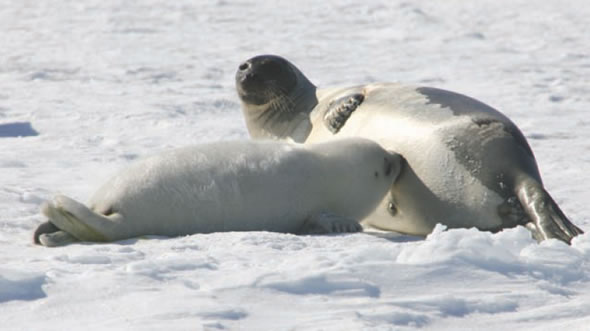
Arctic ice extent (at 14.1mkm2) on 15 April, was virtually identical to 2014 on that date, and higher than 2006. But the record goes to Davis Strait, which recorded the highest ice extent since 1971 for the week of April 16, while the waters of Eastern Newfoundland to the south (where most harp seals have their pups) had the third highest ice extent since 1969. Lots of fat baby seals are just what polar bears need at this time of year.
Posted onApril 12, 2015|Comments Off on Challenging polar bear fearmongering about Arctic sea ice extent for March 2015
Here are some facts to counter the misinformation and fearmongering being spread via twitter by a polar bear biologist who is getting carried away with his conservation activism.
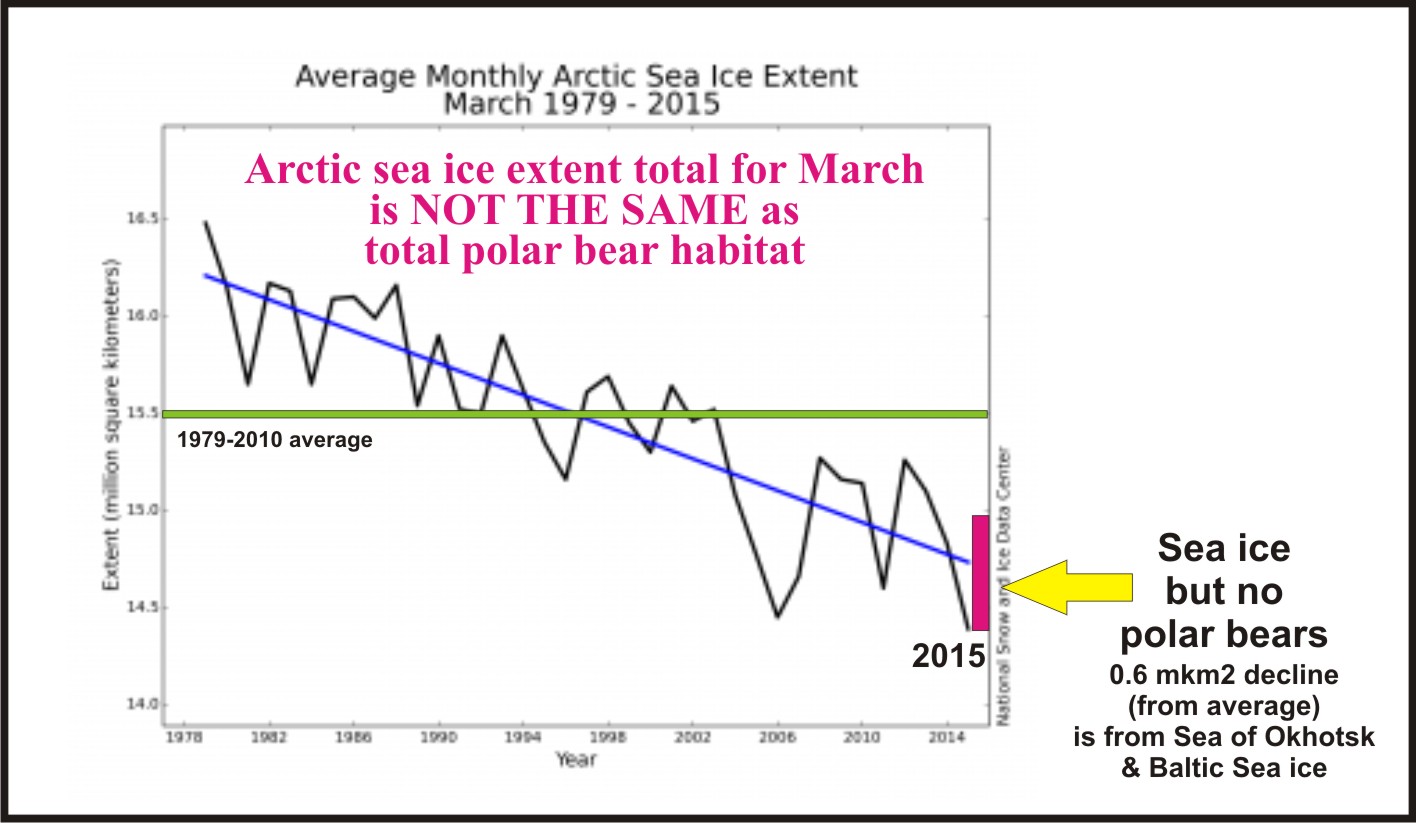
Following up on my last post, I note that Arctic regions with sea ice but not polar bears were about 0.32 mkm2 below last year’s March average extent – which means the total ice decline from 2014 (0.4 mkm2) represents only a slight decline in polar bear habitat, most of which is in the Barents Sea (and due primarily to the state of the AMO, not global warming).
Sea ice extent for the Sea of Okhotsk and Baltic Sea combined (both areas without polar bears)1 were about 0.6 mkm2 below average this year for March. Average extent for March (according to NSIDC) is 15.5 mkm2, which means this year’s extent (14.4 mkm2) was 1.1 mkm2 below average, of which less than half (0.5 mkm2) was “lost” polar bear habitat.
IUCN Polar Bear Specialist Group biologist Andrew Derocher has been saying this is a “huge loss for polar bears”(see below): rational analysis of the facts show it is not. Continue reading
Comments Off on Challenging polar bear fearmongering about Arctic sea ice extent for March 2015
Posted onMarch 26, 2015|Comments Off on Polar bear habitat update – even more ice this week in the Barents Sea
Polar bear habitat is close to average for this date all over the Arctic this week. Barents Sea pack ice has increased substantially since last week and the ice in Eastern Canada is still well above average (and higher than 1979-early 1980s). Arctic ice has grown since a preemptive call for “the lowest maximum extent on record” was made by NSIDC last week — there is now at least as much ice for this date as there was in 2011 and almost as much as there was last year (2014).
Southern Davis Strait polar bears are out feeding on the glut of harp seals in the pack ice off Labrador and Newfoundland (discussed in detail here). One or more bears strayed a bit from the pack and ended up swimming around near the Hibernia oil platform (not far from the ice edge, although the CBC reports didn’t mention that “minor” fact), discussed in this recently updated post(with maps).
Watch polar bear habitat reform in the Canadian Arctic: “last 10 days” Canadian Ice Service animation (works anytime) HERE.
See Quote archive for details.





 polarbearscience
You must be logged in to post a comment.