Tag Archives: summer

Most polar bears easily deterred this time of year, lucky Labrador boaters discover

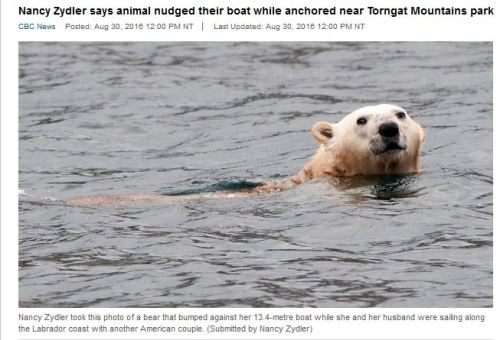
A polar bear female accompanied by a cub recently attempted to board a small sailboat anchored in a remote harbour off central Labrador – giving the two American boaters below deck a mighty big surprise.

Labrador polar bear encounter Torngat boat_CBC 30 Aug 2016

‘He said ‘it’s a bear, it’s right on the boat, make some noise.'” – Nancy Zydler

The encounter occurred south of the same national park where a much-publicized attack occurred in July 2013 (see previous posts here and here) but had a happier ending. See more below from a CBC report released this morning (based on a radio interview) and some ecological context for the sighting not mentioned by the reporter.
Continue reading

Sea ice habitat Canada update for 23 July 2016 vs. 2014 & the start of bear problems

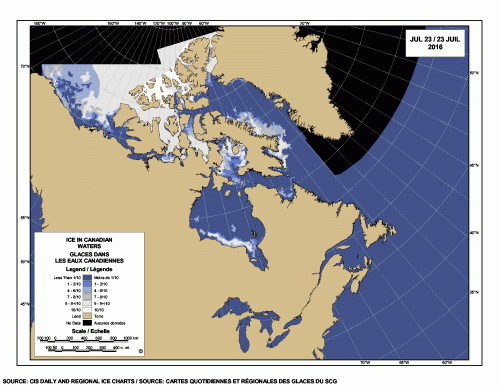
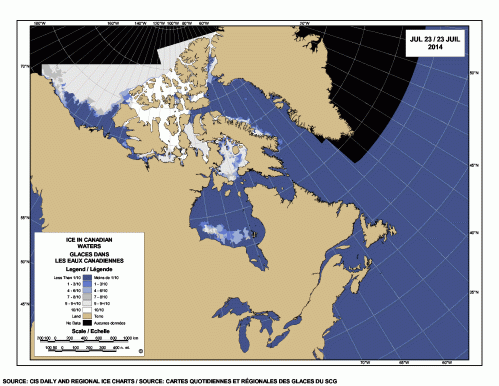
Sea ice breakup is always a little bit different year to year but since I have the maps archived, take a look at the differences and similarities at this date for this year compared to 2014…

Sea ice extent Canada 2016 July 23_CIS

Sea ice extent Canada 2014 July 23 CIS

Is there evidence that any polar bears – say Western Hudson Bay bears, for example – were negatively affected by sea ice levels in 2014? Not that I’ve heard. In fact, quite the opposite.

Polar bear guide and blogger Kelsey Eliasson, writing from Churchill, Manitoba, had this to say about the condition of bears and freeze-up that year (16 Nov. 2014):

“With these families appearing [heading out to the ice], it really sums up at just what a productive season this has been for the western Hudson Bay population. Any guide who knows their stuff will tell you this was a banner year for cubs, one we haven’t seen in a long time.”

Meanwhile, bears are starting to come ashore and cause a bit of grief:

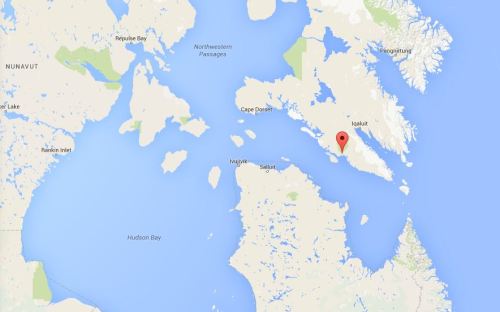
Southern Hudson Bay (two days ago): “Polar bear shot after wandering through Kashechewan” [see map below for location: the bear shot was a cub that appears to have been separated from its mother and sibling, who were spotted several km away not causing any trouble]

Iqaliut, Baffin Island (this morning): “Polar bear rips 6 tents pitched in Iqaluit park”

Continue reading

Arctic melt ponds get media spotlight as Laptev Sea ice hits an 11 year high

PolarBearCV1_USGS_2009

Walt Meier, sea ice scientist at NASA Goddard, made a statement yesterday about this year’s ice conditions [2016 Climate Trends Continue to Break Records: July 19, 2016]:

“It has been a record year so far for global temperatures, but the record high temperatures in the Arctic over the past six months have been even more extreme,” Meier said. “This warmth as well as unusual weather patterns have led to the record low sea ice extents so far this year. [my bold]

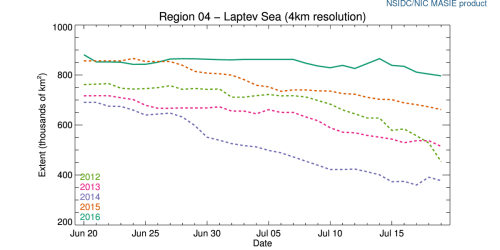
Well, except for Davis Strait/Labrador Sea this spring. And Western Hudson Bay/Foxe Basin this month – plus the fact that late July sea ice in the Laptev Sea is higher than it’s been for more than a decade (more on that below).

r04_Laptev_Sea_ts_4km 2016 July 19

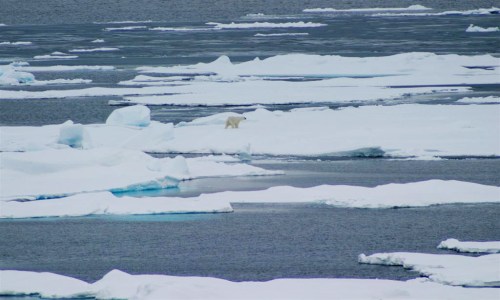
I guess totals matter for some things – just not for polar bears. However, it’s nice to see the issue of melt ponds get some attention, since they are such a prominent feature of polar bear habitat during the summer melt season.

Continue reading

Hudson Bay update – lots of sea ice well positioned for polar bears to get ashore

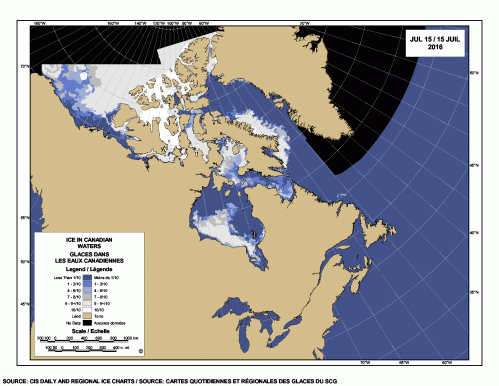
There is slightly less ice this year in Hudson Bay than last year but it is hugging tight against the western shore, which means polar bears in Western and Southern Hudson Bay will be able to stay out on the ice (if they want to) until August.

Sea ice extent Canada 2016 July 15_CIS

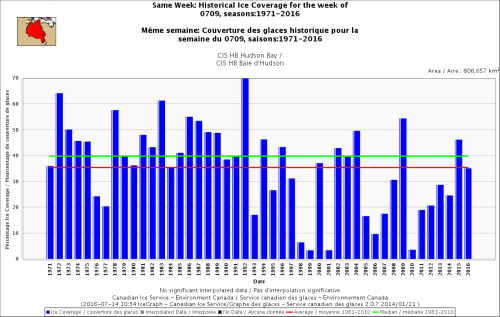
The latest weekly ice graph from the Canadian Ice Service (for 9 July) below shows average ice coverage this year (and more than there was in 1976 and 1977):

Hudson Bay same week 9 July 1971-2016

[By the way, the IUCN Polar Bear Specialist Group website is still “under construction” allowing them to avoid mentioning the less-than-dire conclusions contained in the 2015 IUCN Red List assessment]

More ice maps below, comparing previous years.

Continue reading

Critical spring feeding for polar bears is over – sea ice levels are now irrelevant

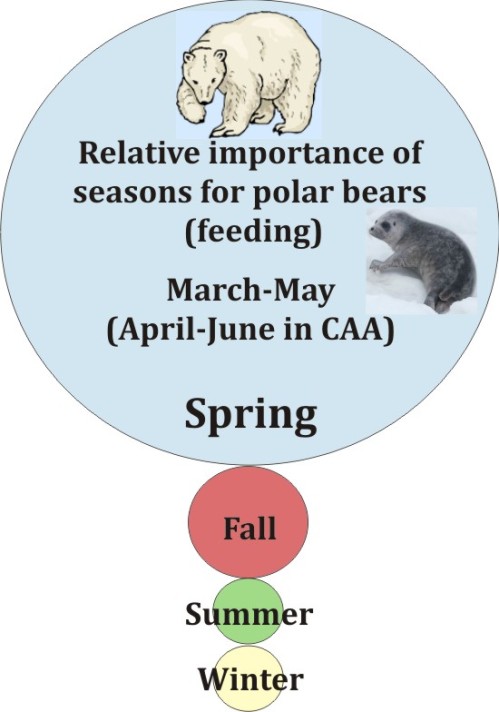
Polar bears in virtually all regions will now have finished their intensive spring feeding, which means sea ice levels are no longer an issue. A few additional seals won’t make much difference to a bear’s condition at this point.

Relative importance of seasons polar bear graphic_PolarBearScience_June2016

The only seals available on the ice for polar bears to hunt in early July are predator-savvy adults and subadults but since the condition of the sea ice makes escape so much easier for the seals, most bears that continue to hunt are unsuccessful – and that’s been true since the 1970s. So much for the public hand-wringing over the loss of summer sea ice on behalf of polar bear survival! Continue reading

Most Beaufort polar bears swim from ice floe to floe during breakup, study shows

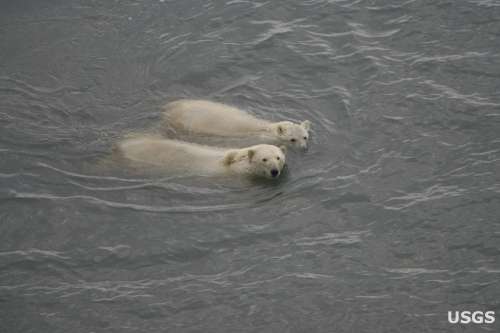
swimming3_USGS

You may have seen the headlines in Canadian news outlets over the last 2 days.
“Polar bears swimming farther as sea ice recedes, study shows”

“Melting sea ice forces polar bears to swim longer, farther: study”  [“Bear biologist Andrew Derocher says the forced swims are particularly hard on mothers with young cubs”]

“Polar bears swimming longer, farther because of melting sea ice, study finds”

Oddly, none of the above news reports said where the paper was published or mentioned the name of the lead author – only University of Alberta co-author Andrew Derocher was interviewed (see the only press release I could find here, issued by the San Diego Zoo where the lead author is now employed).[update: CBC ran another story a day later that corrected these omissions]

But what did the study actually say?

Significantly, no bears died while swimming during the two lowest sea ice extent summers since 1979 and no evidence was presented that swims were “particularly hard on mothers with young cubs.” The quotes from the paper below sum it up for Beaufort Sea (BS) bears (the inclusion of Hudson Bay (HB) bears in this study seems gratuitous and potentially misleading, since only a few swam anyway – only 15 out of 59):

“….91% (91/100) of the swims in the BS occurred before the annual September minimum sea ice extent had been reached.  In the BS, 81% (29/36) of swims started and ended in pack ice…

So, despite what may be implied during media moments, Beaufort Sea polar bears were  not frantically trying to reach the sea ice from land so that they could attempt to keep feeding over the summer – most of their swimming was done during breakup in July and August from one bit of pack ice to another and they showed no evidence of harm from doing so. Map from the study and more quotes below.
Continue reading

Nunavut survivor describes what a polar bear attack is like

From NunatsiaqOnline yesterday, a detailed description of a polar bear attack that took place along Hudson Strait, within the Davis Strait polar bear subpopulation.

Kimmirut Nunavut_Google maps

Kootoo Shaw was wearing nothing but long johns and a T-shirt when a 400-pound polar bear dragged him by his toes along the tundra towards the ocean outside Kimmirut in September 2003.

Shaw, 46, was working as a guide on a sport-hunting trip when the attack occurred in the early morning. Continue reading

Beaufort Sea polar bear habitat highest since 2008 at this date

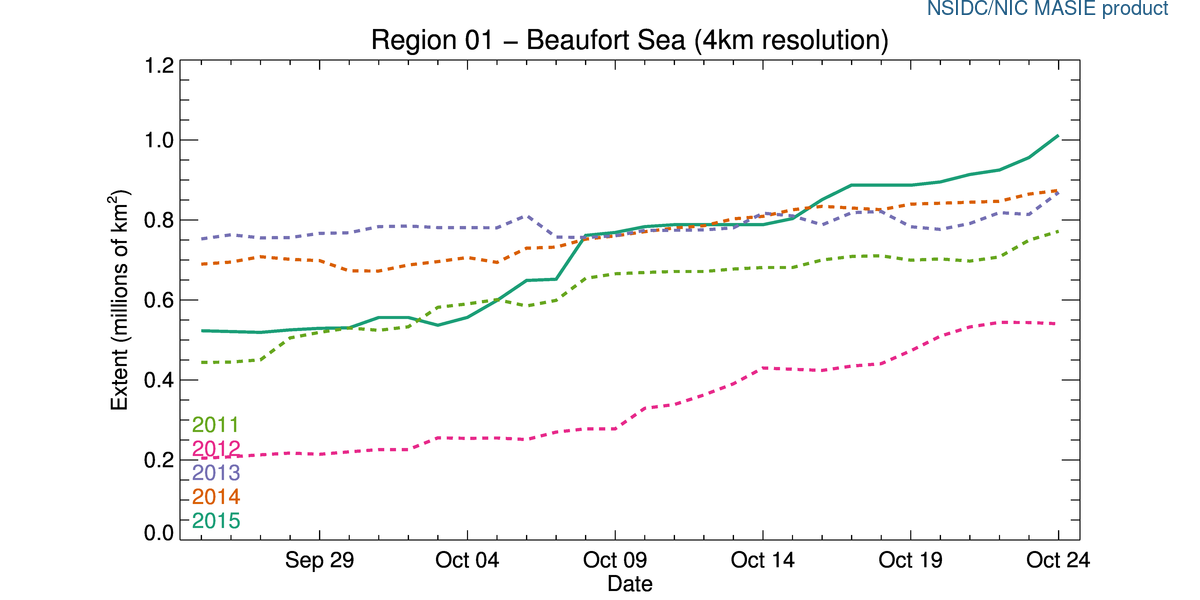
Good news for Southern Beaufort polar bears! Sea ice converging on the north shore of Alaska earlier than any year since 2011 at least, according to NSIDCs regional ice plots (below).

r01_Beaufort_Sea_ts_4km

But wait, their Masie ice maps show it’s actually the earliest since 2008 (although the ice movement onshore was also earlier than 2006 and 2007, see below). And it’s still a full week before the end of October, the first month of Arctic fall (October-December). Lot’s of seal hunting habitat.

This emphasizes the fact that the primary problem faced by Southern Beaufort sea polar bears is not scarce summer ice but by thick sea ice conditions in the spring. Bears photographed near Kaktovik this year were in excellent condition (see here and here, taken by Kelsey Eliasson, Polar Bear Alley). If folks have been seeing starving bears, they haven’t said anything that I’ve been able to find.

Ice maps below.
Continue reading

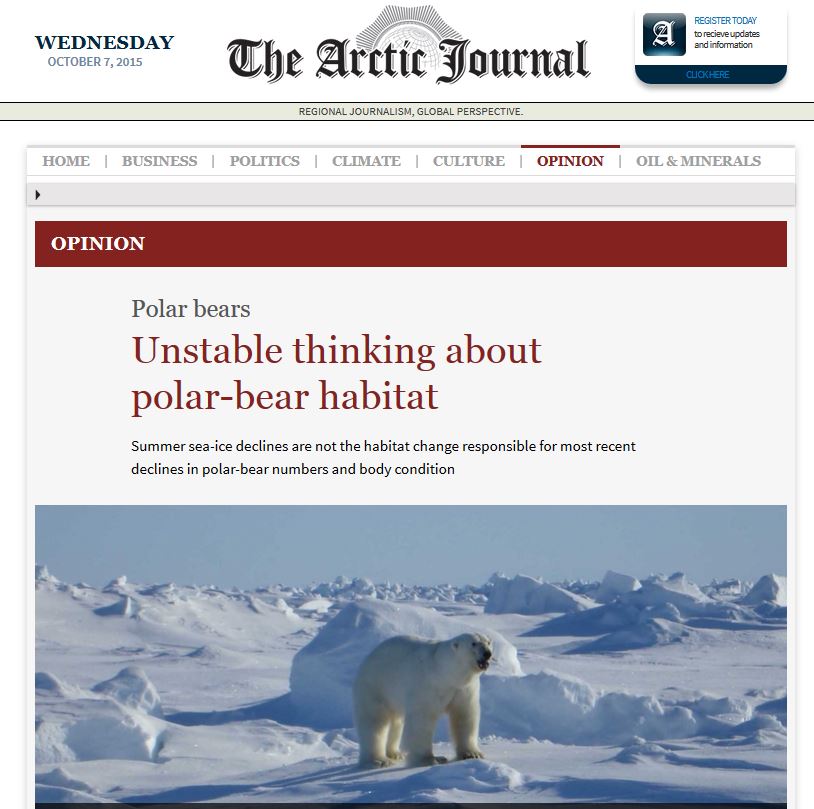
Sea ice is not a stable habitat for polar bears – summarized today in The Arctic Journal

In The Arctic Journal, 7 October 2015: Unstable thinking about polar bear habitat [not my title choice]

Unstable thinking about polar bear habitat_Oct 7 2015 title page

This is a previously unpublished summary, written exclusively for The Arctic Journal, of my peer-reviewed, fully referenced essay on this topic that was published earlier this year by the Global Warming Policy Foundation in their “Briefing Paper” series (#16, June 8, 2015: The Arctic Fallacy: Sea Ice Stability and the Polar Bear), which includes a foreword by Dr. Matthew Cronin, Professor of Animal Genetics at the University of Alaska Fairbanks. Pdf here.

Here are the essential points, one by one:
Continue reading

Summer refuge for polar bears in Arctic Basin only 0.3 mkm2 below its possible maximum

At the seasonal minimum 2015, the Arctic Basin was still almost full of sea ice, down only 0.3 mkm2 below the maximum it could ever be.

Healy Aug 24 2015 Polar-Bear III Tim Kenna

Remember that spending the summer in the Arctic Basin for most polar bears is just like sitting on the western shore of Hudson Bay – they are all waiting for the refreeze. In either location, they might find something to eat, they might not.

Below are NSIDC MASIE sea ice maps for 10 April 2015 (as big as it gets, basin filled) vs. 17 September 2015: Continue reading