Yearly Archives: 2014

Public misled about W Hudson Bay bears since November 2013

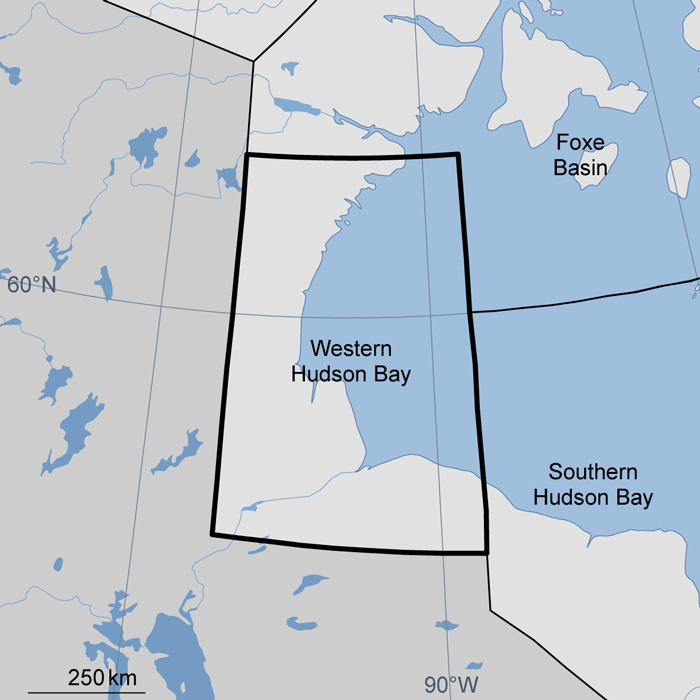
Leading polar bear biologists knew by November 2013 that mark-recapture studies showed the Western Hudson Bay subpopulation had not changed appreciably since 2004 but none said so. This includes Steven Amstrup and Ian Stirling at Polar Bears International, Andrew Derocher (University of Alberta), and Nick Lunn (Canadian Wildlife Service), all of whom are (or have been) extensively involved in Western Hudson Bay polar bear research and have made recent statements to the media on this topic.
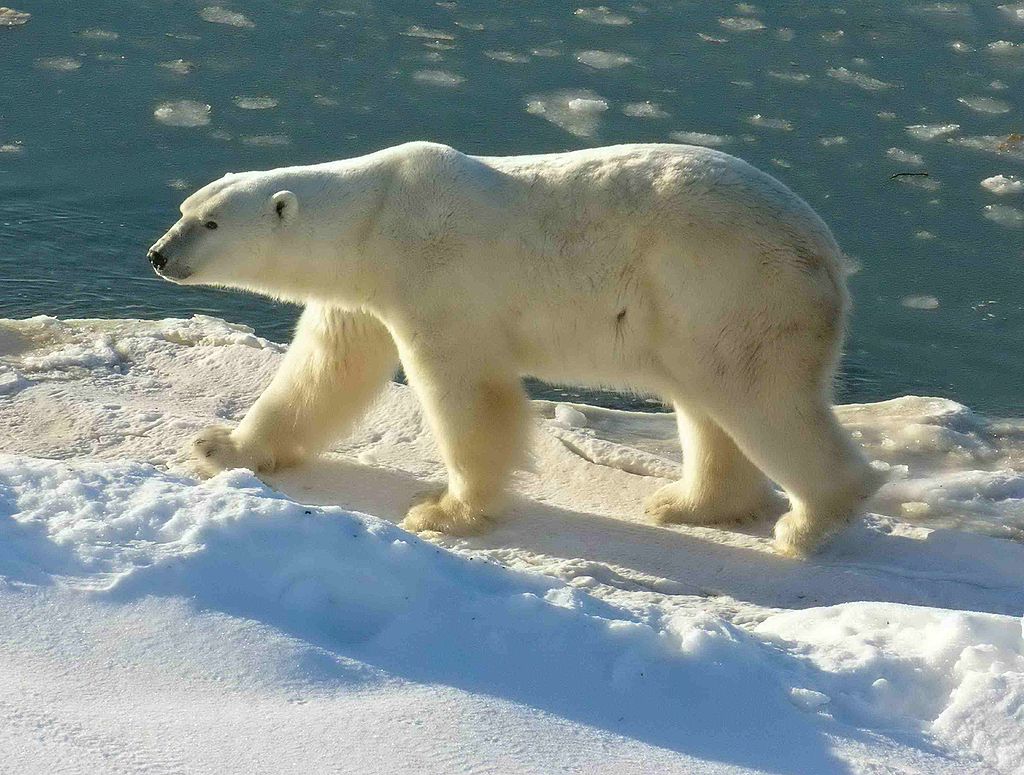
Polar_Bear_2004-11-15_Wapusk Nat Park_Wikipedia

More details have emerged about the status of Western Hudson Bay (WHB) polar bears (reported a few days ago here), reported this morning in NunatsiaqOnline, excerpts below.

The story reveals that there are two Canadian Wildlife Service (Environment Canada) reports containing population estimates of Western Hudson Bay polar bears – one produced in 2011 and another in November 2013 (reversing the 2011 conclusion) – that have not been made public.

[In contrast, Nunavut Government reports on their 2011 population estimate, based on aerial surveys, were made public in both draft and final report formats (and have since been peer-reviewed and published)]

The conclusion of the 2013 report, quoted in this mornings article, suggests that some of our most vocal polar bear specialists have been misleading the public about the status of the Western Hudson Bay population for the last year.
Continue reading

Tracking polar bears in the Beaufort Sea – November 2014 map

Here is the November 2014 follow-up to my post on the July 2013 track map for female polar bears being followed by satellite in the Beaufort Sea by the US Geological Survey (USGS) – “Ten out of ten polar bears being tracked this summer in the Beaufort Sea are on the ice.”

See that post for methods and other background on this topic, and some track maps from 2012 (also available at the USGS website here). The USGS track map for November 2014 is copied below.

 Figure 1. Original caption: "Movements of 12 satellite-tagged polar bears for the month of November, 2014. Polar bears were tagged in 2014 on the spring-time sea ice of the southern Beaufort Sea. All twelve of these bears have satellite collar transmitters. Polar bear satellite telemetry data are shown with AMSR2 remotely-sensed ice coverage for 30 November, 2014." Click to enlarge, original here.


Original caption: “Movements of 12 satellite-tagged polar bears for the month of November, 2014. Polar bears were tagged in 2014 on the spring-time sea ice of the southern Beaufort Sea. All twelve of these bears have satellite collar transmitters. Polar bear satellite telemetry data are shown with AMSR2 remotely-sensed ice coverage for 30 November, 2014.” Click to enlarge, original here.

All twelve bears (all females) are finally visible on this map, confirming my suspicion that two were so close together they overlapped. Three out of the twelve “Southern Beaufort” bears were in the Chukchi Sea at the end of November (west of Point Lay, see discussion here). If you missed it, my October 2014 post on the progress of these bears has some maps from previous years that are worth reviewing.

Western Hudson Bay polar bear population is stable: press release

Slowly but surely, word is leaking out: the Western Hudson Bay polar bear population is stable at ~1000 bears, confirming the good news contained in maps posted on the Environment Canada website a few months ago (discussed by me here and here). Environment Canada has apparently been giving presentations in local Western Hudson Bay communities relaying their decision.

Courtesy IUCN PBSG

Courtesy IUCN PBSG

Yesterday, a press release was issued by one of the official Inuit organizations in Nunavut announcing the new official status of the Western Hudson Bay polar bear population.
Continue reading

Hudson Bay sea ice above average for this date – more good news for polar bears

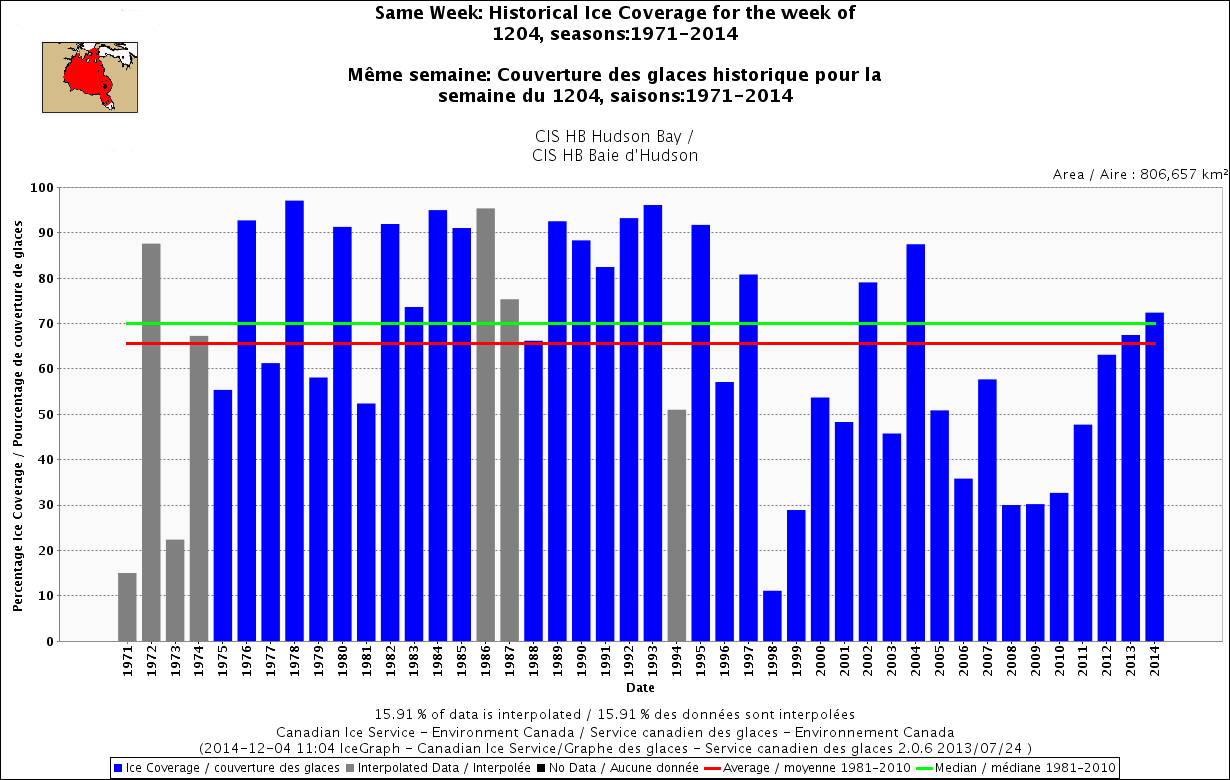
It’s only the 4th of December and Hudson Bay ice formation is way up over late 2000s coverage for this date — and higher than 2012, which had the lowest overall September ice extent for the Arctic since 1978.

Hudson Bay freeze-up same week_Dec 4 1971_2014 w average

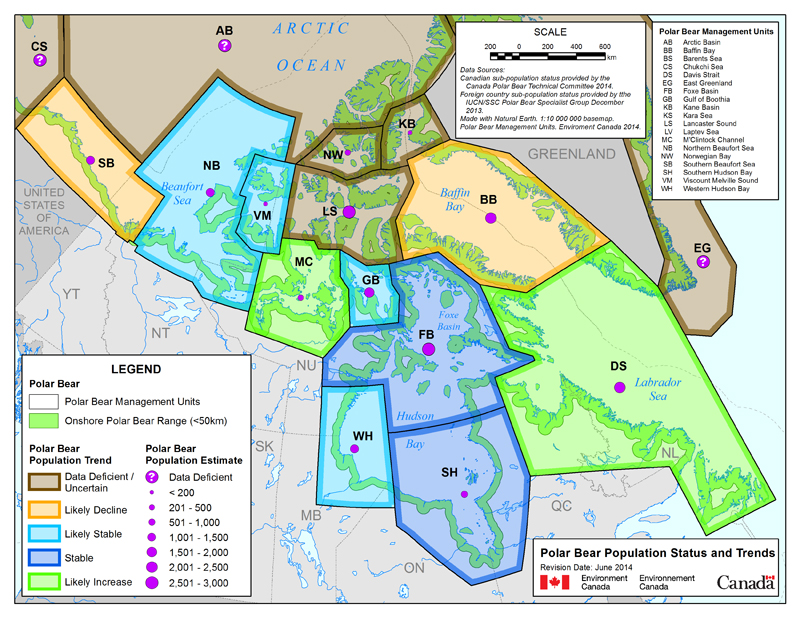
This means boom times for Western and Southern Hudson Bay polar bears as sea ice formation is several days to a week ahead of last year. And as I mentioned in my last post, average November ice coverage across the Arctic this year was higher than 2003. Don’t forget that 2/3’s of the world’s polar bears live in Canada (see recent status update here; map below).

Figure 4. The Davis Strait (DS) subpopulation region runs from just below the Arctic Circle at the north end to at least 470N in the south. About half of DS lays at the same latitude as Western Hudson Bay (WH). Courtesy Environment Canada.

Polar bear population status in Canada. Courtesy Environment Canada.

More maps and charts below.
Continue reading

Polar bear habitat update – November 2014 average sea ice levels higher than 2003

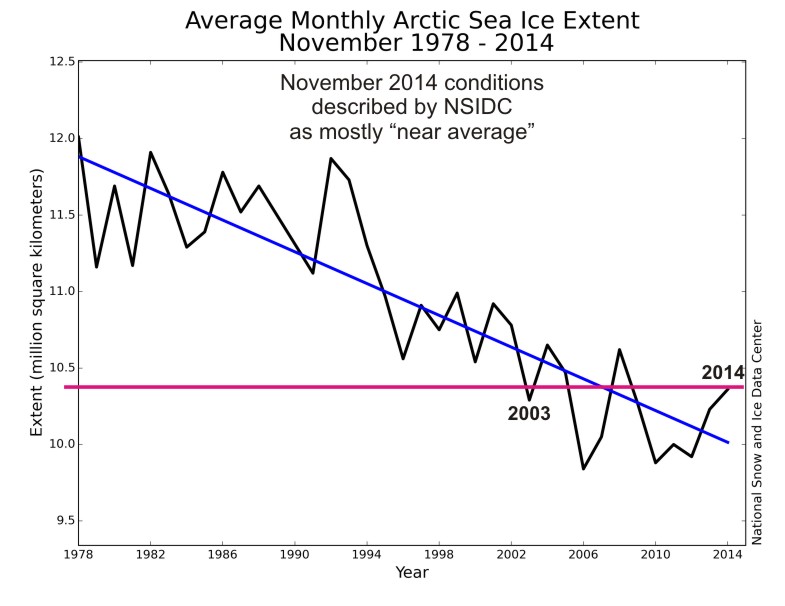
Average polar bear habitat for November 2014 was well within two standard deviations1 and higher than 2003, according to the November report from the National Snow and Ice Data Center (line and labels added, below).

Arctic ice Nov aver_NSIDC_sm_PolarBearScience

Notice that the lowest average November level occurred in 2006not 2007 (after the second lowest September extent since 1978) and not 2012 (after the lowest September extent since 1978). Take note that the scale on the graph above does not go to zero but to a whopping ~9.5 million square km!

Quotes from the NSIDC monthy report and sea ice maps for November 2014 and 2 December 2014 below.

UPDATE 3 December 2014: CIS has issued a new ice map corrected for ice level on Hudson Bay – new map below.
Continue reading

Amstrup knows his polar bear predictions are flawed – but continues to promote them

The largest conservation organization in the world says that predictive models developed by polar bear biologist Steven Amstrup are utterly unsuitable for scientifically estimating future populations. Earlier this year, mathematical modeling experts  at the International Union for the Conservation of Nature, who maintain the Red List of Threatened Species, made it clear that Amstrup’s models (used in 2008 to convince the US Fish and Wildlife Service to list polar bears as ‘threatened’ due to predicted global warming) do not meet IUCN standards.

I’d say this makes Amstrup’s polar bear projections (Amstrup et al. 2008, 2010) no more scientifically useful than a crystal ball prophesy, but you wouldn’t know it by his recent actions — or the silence of his fellows.

crystal ball_3c

Continue reading

Davis Strait polar bear habitat – the sea ice is forming, but it’s late!

Since 1971, there have been only two years with as little sea ice in Davis Strait as there was this year at this time – 2003 and 2010. But the ice is forming rapidly and history shows it will likely catch up enough by next week to allow most Davis Strait polar bears to start hunting seals except along the Labrador coast.

Courtesy IUCN PBSG

Courtesy IUCN PBSG

Have a look at the ice maps and charts below from the Canadian Ice Service for the status of freeze-up in Davis Strait.

UPDATE 30 November 2014: Sea ice extent map from NSIDC added.

Continue reading

Winnipeg zoo unashamedly frightens children about polar bear extinction, for a price

The Assiniboine Park Zoo in Winnipeg is selling Polar Bears International-style1 “save our sea ice” global warming propaganda to children, which it calls “messaging.”

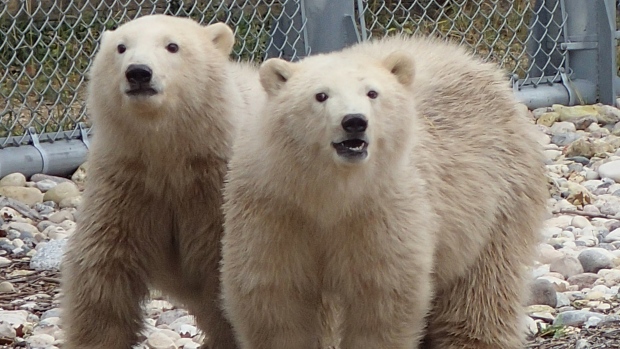
“The centre is deliberately targeting children, fully aware that there is a magical connection between the cuddly, entertaining orphan cubs and young visitors.”

Orphaned cubs from Churchill now on display in Winnipeg

Orphaned cubs from Churchill now on display in Winnipeg

That’s the money quote, in more ways than one, from an article at The Globe and Mail earlier this week (23 November 2014), “Innovative Winnipeg zoo experiment shares the plight of polar bears” in which the author promotes the new “Journey to Churchill” exhibit at the Assiniboine Park Zoo in Winnipeg as “an ambitious experiment.”
Continue reading

Labrador polar bears face a longer ice-free season than Hudson Bay bears, but do well

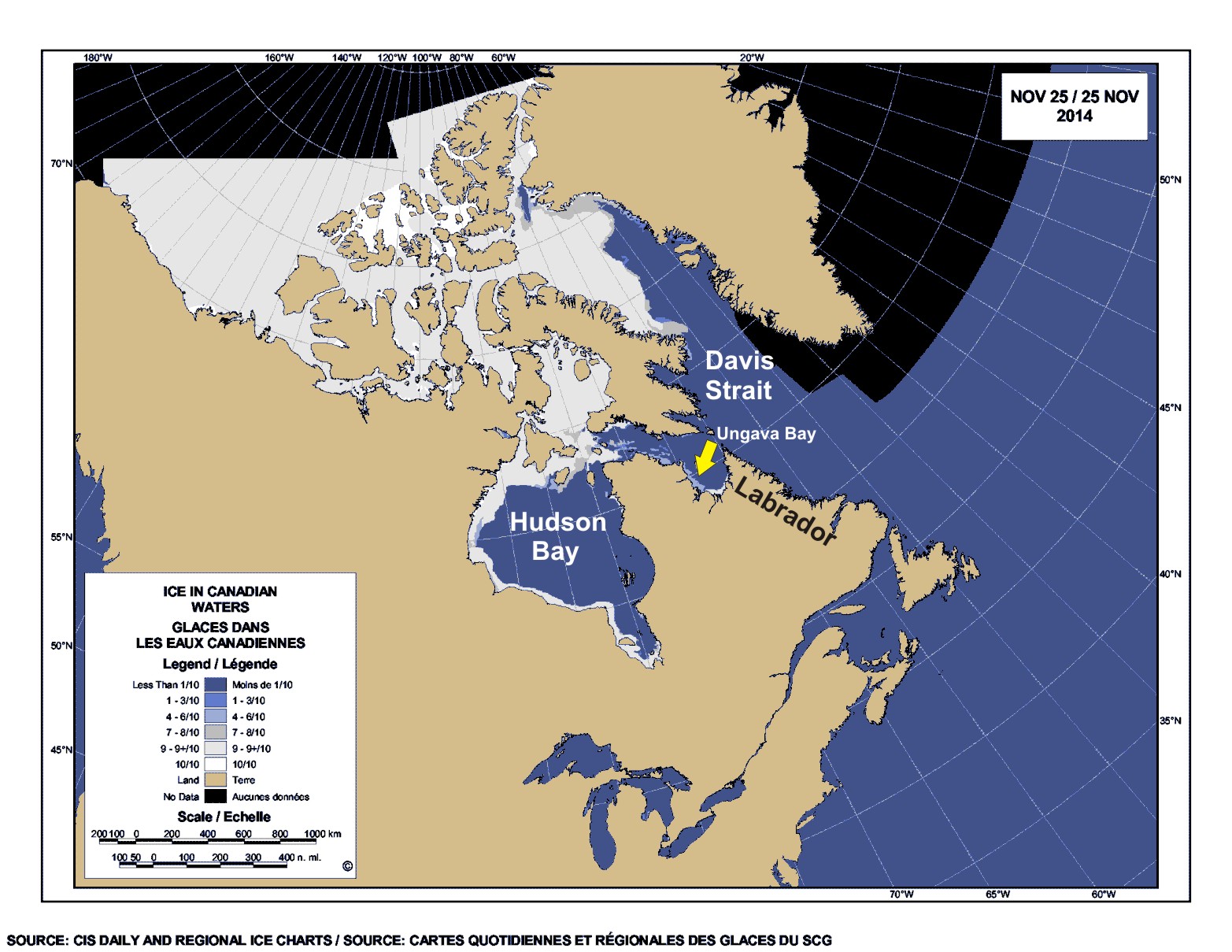
Pretty typical ice levels in both regions for this time of year – Davis Strait polar bears (especially those in Labrador) are still onshore while Hudson Bay bears (even those in the south) have their sea ice hunting platform back.

Davis Strait Hudson Bay freeze-up at Nov 25 2014_PolarBearScience

Funny thing is, the Davis Strait subpopulation may still be increasing despite a longer ice-free season than Western Hudson Bay. And bears in the south of that region – who spend the summer onshore in Labrador – have the longest ice-free season of all1 yet according to the latest survey they were even doing better than bears in northern Davis Strait.

That apparent paradox has an easy explanation – sea ice extent in late summer/early fall (length of the ice-free season) has much less of an impact on polar bear health and abundance than the state of the food supply in the spring. More seals in spring, polar bears do well; few seals in spring, polar bears starve.

Continue reading

Lake-effect snow in NY just like Victoria, B.C. blizzards of 1996 & 1916

The Victoria blizzard of 1996 (Dec. 28-29) dropped 124 centimetres (48.8 inches) of snow. Not too far off some recent accumulations around Buffalo and other western New York State communities (great photos here). Just wacky weather (and nothing to do with polar bears) but memorable if you’ve lived through it and the stories out of NY have twigged my memories.

We get a maritime version of “lake-effect” snow here in Victoria (which is on Vancouver Island), where cold air moves offshore from the Interior of the province, travels over the relatively warm Strait of Georgia (see map below) and dumps snow on south island communities. Victoria is renowned for mild winters but when these cold conditions all line up just right, Victoria might as well be Buffalo.

Snow at "Bob's" front door.  A Flickr photo, hope you don't mind, Bob!

Snow at the front door, original here, taken 28 December 1996 in Victoria, B.C.

I didn’t have a camera then, which is a pity, but others did. Someone downtown (where accumulations were somewhat less than 48 inches) made a video, copied below. A diversion from polar bear shenanigans that you might find of interest.
Continue reading