Category Archives: Sea ice habitat

Davis Strait polar bear habitat well above average for the first week of winter

The region inhabited by the Davis Strait subpopulation of polar bears dips as far south as James Bay and has a history of highly variable sea ice coverage.
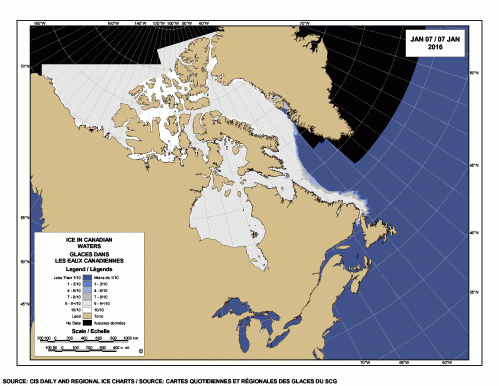
Canadian Arctic Jan 7 2016_CIS

For the last two years Davis Strait sea ice in March has been well above average, while other years it been well below. You might be surprised to hear that 1969 had the lowest February/March ice coverage over the entire the 1969-2002 record (Johnston et al. 2005: 211), which ice charts show now extend to 2015 (see below). Reports of sealers working north of Newfoundland and in the Gulf of St. Lawrence in the first few decades of the 20th century show this variability has likely always been a characteristic of the area (Ryan 2014).

Remarkably, this year’s ice coverage for the first week in January is well above what they were in 2014 and 2015 – even though those two years were above average by March. In fact, there hasn’t been this much polar bear habitat in the Southern Labrador Sea in the first week of January since at least 1993.
Continue reading
Tracking polar bears in the Beaufort Sea – one tagged bear left at year end 2015

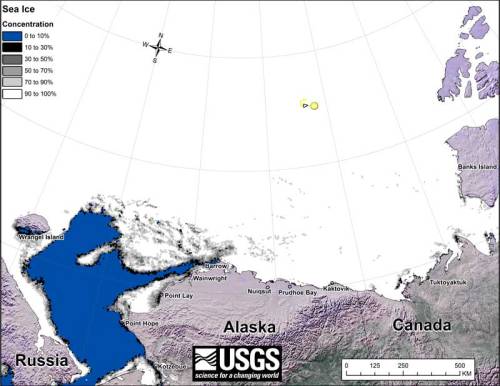
I’ve combined the months of November and December for this post on USGS polar bear tracking in the Beaufort Sea because there’s not much to tell: there’s one tagged bear left and she’s going almost nowhere. Where’s the news in that?

Beaufort tracking USGS bear-movements-November 2015 sm

Movements of 1 satellite-tagged polar bear female for the month of November, 2015; shown with sea ice coverage at 30 November 2015. This bear was tagged in the spring of 2015 in the Southern Beaufort Sea. See original image here and December movements below.

Actually, it does tell us something: this female is probably in a sea ice den, a relative common phenomenon in the Beaufort Sea. And she’s on ice that’s out over very deep water. Continue reading

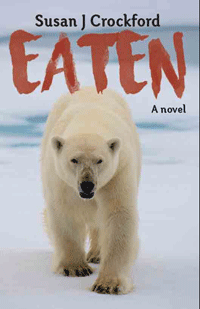
2015 was a great year for polar bears and for EATEN

Not only did we see plenty of great news about polar bears but EATEN (my first novel) is now well on it’s way to being a resounding success. Don’t let your friends and colleagues have all the nightmares! Fabulous read for a long cold NH winter’s night but also an excellent choice for the beach…perhaps fewer nightmares?

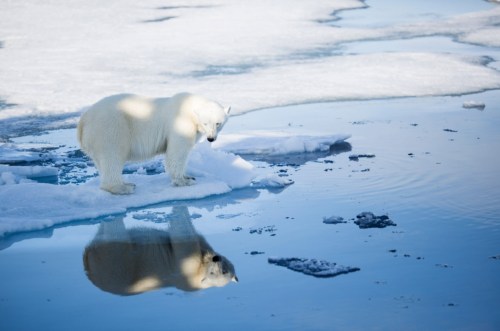
polar_bear570  ONTARIO MINISTRY OF NATURAL RESOURCES

The Canadian Ice Service predictions for winter 2016 off eastern Canada (where my novel takes place) is for extensive ice for the third year in a row. That means only nine years to go for the situation in 2025 to meet my speculations regarding a most terrifying onslaught of starving polar bears in Newfoundland.

I don’t ask for donations here at PolarBearScience – if you appreciate my efforts (418 posts and almost 630,000 views since late July 2012) and would like to see more of the same, please buy a copy or two of my book (and don’t forget to go back and leave a brief review; only the number of stars count). Paperback editions here and here; Ebooks for immediate gratification (Kindle; All other e formats).

EATEN-cover-front_thumbnail

In 2015, the Arctic Fallacy was exposed, there were official admissions of population increases (here and here) – all after we had Twenty Good Reasons Not to Worry About Polar Bears.

More of the same for 2016!

A heartfelt Happy New Year to you and yours, from a Canadian zoologist not afraid to wonder ‘what if’ but honest enough to call the output fiction.

Susan

Survey Results: Svalbard polar bear numbers increased 42% over last 11 years

Results of this fall’s Barents Sea population survey have been released by the Norwegian Polar Institute and they are phenomenal: despite several years with poor ice conditions, there are more bears now (~975) than there were in 2004 (~685) around Svalbard (a 42 30% increase) and the bears were in good condition.

Svalbard polar bear fall 2015_Aars

Oddly, in a September report right after the count, biologist Jon Aars reported them in “excellent” condition, with some of them “as fat as pigs.” I guess “good” is the same as “excellent.”

Bears in the Russian portion of the Barents Sea were not counted this year because the Russians would not allow it; the previous total count, from 2004, was 2,650 (range ~1900-3600) for the entire region.

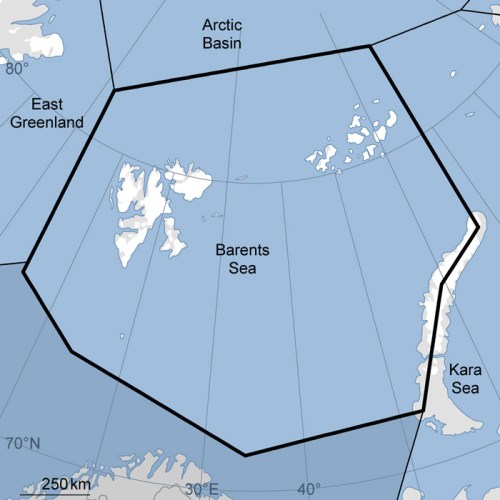
map-BarentsSea

In the map above (courtesy the IUCN Polar Bear Specialist Group), the Svalbard archipelago is on the left (Norwegian territory) and the archipelagos of Franz Josef Land and Novaya Zemlya on the right (Russian territory).

Oddly, the comments made by lead researcher Jon Aars to a Norwegian newspaper (in English), which picked this up yesterday (“Polar bears make a comeback” ), were far more positive than those in the press release (which is likely all that western media will see).

UPDATE 24 December 2015: The new population survey number for Svalbard is actually a 42% increase over the 2004 number. Thanks to Arvid Oen, a WUWT reader, for alerting Anthony Watts to the error, and to Anthony for passing it along. Title and text fixed accordingly, apologies to any others who have picked this up. Cheers and Merry Christmas.

Continue reading

Some polar bears make poor choices, like this one in James Bay

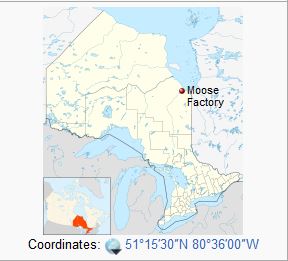
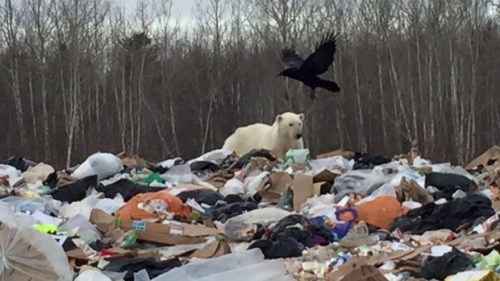
CBC reported this morning that a polar bear was shot last Friday (18 December) at the dump in Moose Factory, Ontario – long past the date when bears in Southern Hudson Bay are usually out on the ice. But a single bear in trouble does not spell catastrophe for the species or the local population: how many times does this need to be said?

Moose Factory_Wikipedia

Claims of “almost no ice” seem a bit disingenuous, since this seems to be the only bear caught in this situation (if there are others, no one has reported it): other bears appear to have either made use of the ice that was present (see map below) or walked north until they found more ice. This bear (picture below) seems to have decided that the fare on land might do for a while longer, which suggests he’s either a subadult bear (with little experience) or an old one – looks like the former to me in the picture below but the report doesn’t say.

Moose Factory_polar-bear-in-dump_CBC Dec 22 2015

Continue reading

Hudson Strait and Davis Strait polar bear habitat highest since 1993

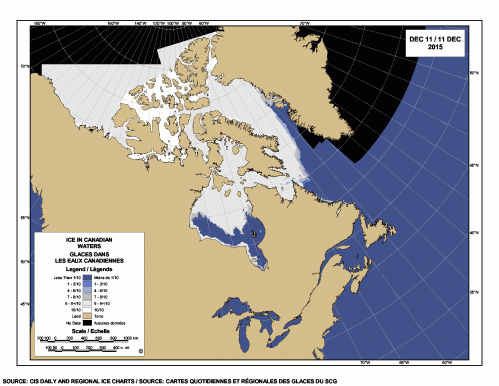
Sea ice development over Hudson Bay, Hudson Strait, and Davis Strait has been rather unusual this year but what that might mean for polar bears over the coming winter and spring is hard to tell.

Canadian Arctic Dec 11 2015_CIS

Note: The Canadian Ice Service seems to be in the process of updating its sea ice page and graphing features that used to be available weekly on Thursday have not been available until the following week. This means the most recent graphs available are for the week of 11 December (see below).
Continue reading

Barents Sea polar bears adapt to changing sea ice conditions

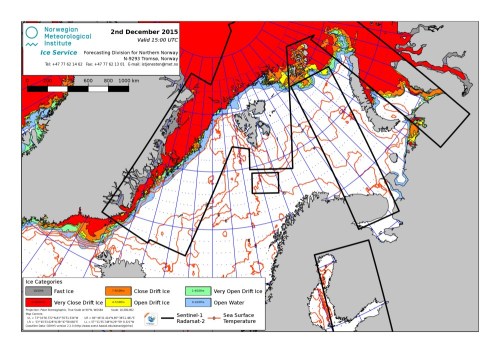
Sea ice development in eastern Svalbard this fall is lagging well behind the rest of the Arctic. Several polar bear researchers (e.g., Andrew Derocher here and here) have recently been raising the alarm that this might be devastating for Barents Sea females looking for suitable denning sites.

Barents Sea ice 2015 Dec 2_NIS_sm

The implication is that pregnant polar bear females are inflexible – so fixated on one location to give birth that they are unable or unwilling to choose an alternative if conditions preclude using their preferred location this year. However, the available facts do not support such a pessimistic attitude.
Continue reading

Ian Stirling uses lifetime award to repeat flawed predictions for polar bears

It has been less than a month since the 2015 IUCN Red List assessment for polar bears was announced, which emphasized that the population trend for polar bears is unknown and that there is only a 70% chance that polar bear numbers could decline by 30% over the next 35 years.

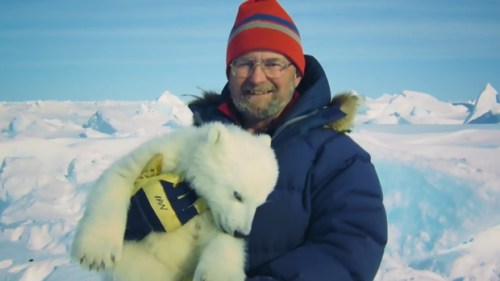
ian-stirling_full

Yet, in a press release announcing the Weston Family Prize for lifetime achievement in northern research (along with $50,000) to Ian Stirling for his work on polar bears (Newswire, December 9, 2015), Stirling is quoted repeating an out-of-date prediction:

“Dr. Stirling estimates that about half of the polar bear population around the circumpolar Arctic could disappear by 2050 to 2060, if climate warming continues as is currently projected…”

I’d have thought that if Stirling did not agree with the IUCN assessment prepared by his colleagues, he would have said so last month when the report was released to international fanfare. Instead, he seems to be deliberately ignoring the 2015 IUCN Red List assessment and pretending that the flawed predictions he had a hand in making are still plausible.  Continue reading

Paris climate change deal will not stop polar bears dying due to thick ice in spring

Thick spring ice due to natural causes is currently the single biggest threat to polar bears. Not declining summer sea ice – thick spring ice. That could change in the future but right now, the evidence supports that statement.

polar_bear with collar_USGS

Polar bear deaths due to cyclical changes in Arctic sea ice thickness in the spring have continued despite rising CO2 emissions and declining summer sea ice extent (last major incident, 2004-2006): there is no reason to expect this will not continue. Unwarranted attention on summer ice extent has deflected attention from this major cause of local polar bear population decline.

Sea ice models do not address past or future changes in spring ice thickness and predictive models of polar bear survival blame all population declines on summer sea ice declines despite strong evidence to the contrary (Crockford 2015: The Arctic Fallacy). Continue reading

Spring sea ice prediction for next year off Newfoundland: extensive ice coverage

EATEN – my new polar bear attack novel – is set in Newfoundland 2025 for a reason. I wondered: what if sea ice coverage 10 years from now is as high or higher than it has been for the last two years, with inevitable positive effects on Davis Strait harp seal and polar bear populations?

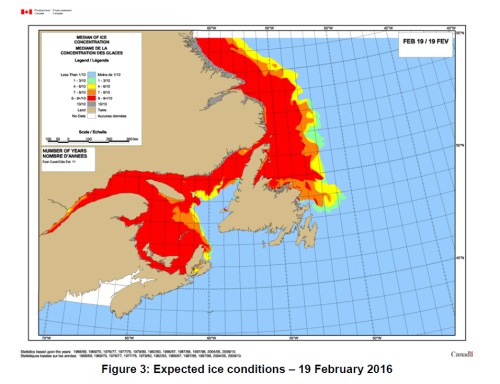
The Canadian Ice Service prediction for this region, released earlier this week (1 December 2015, see references for link), is that 2016 is set to meet my “what-if” scenario handily. Nine years to go! See the CIS expected ice coverage for 19 February 2016 below (CIS fig. 3):

2016 Newfoundland Ice outlook for 19 Feb 2016_at Dec 1 2015

How does the above ice map compare to the last two years? At least as high or higher. Have a look below.

Continue reading