Tag Archives: polar bears

Polar bears roaming Labrador in winter due to climate change, says minister

This is a follow-up to a post on my book blog that I wrote this morning because it’s relevant to the scenario I describe in my novel, set in the year 2025 in northern Newfoundland. I’m cross posting it for the benefit of regular readers here.

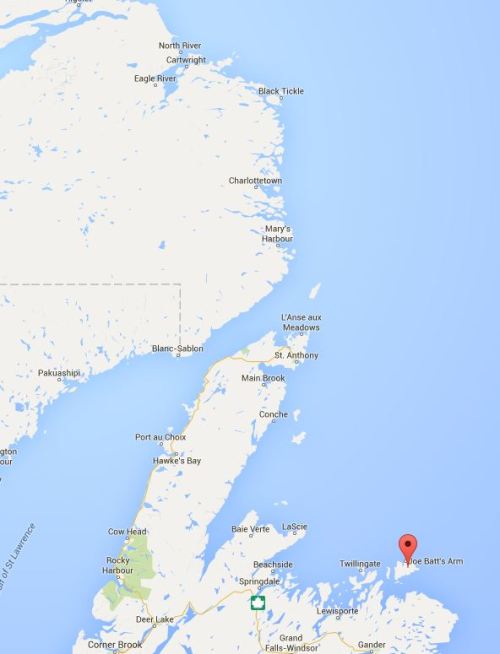
It appears that most of the blame for this phenomenon of multiple sightings of hungry bears onshore in the dead of winter (creating havoc and roaming among houses in the coastal Labrador communities of Black Tickle and Charlottetown) has been placed squarely on…climate change. By a government minister. You have to hear this man’s words to believe it.

Labrador south and Fogo Nfld marked

Continue reading

Discovery News spreads old misinformation about W. Hudson Bay polar bears

In a just-released Discovery News piece, Kieran Mulvaney (4 November 2015, “In the polar bear capital, an uncertain future) repeated three misleading statements about Western Hudson Bay polar bears that keep making the rounds, despite the fact they have been laid to rest by the latest scientific reports on  (Lunn et al. 2013, 2014; Stapleton et al. 2014). I reviewed these just a few weeks ago.
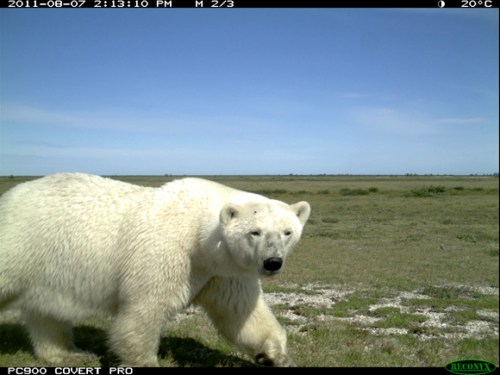
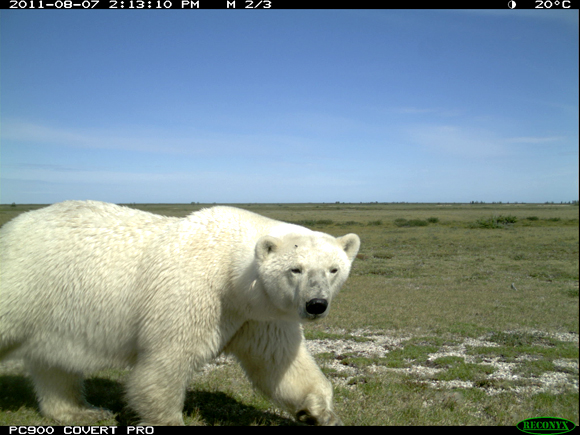
Western Hudson Bay bear, Wakusp National Park, August 2011.

Western Hudson Bay bear, Wakusp National Park, August 2011.

1) “Climate change is causing the bay’s ice to melt earlier and freeze later, causing bears to spend longer a shore.”

Not true. Lunn and colleagues stated explicitly that there has been no trend in either break up or freeze-up of WHB sea ice since 2001. Although there has been large variability in dates, that lack of trend that has continued to this year.

2 & 3) “As a consequence, Churchill’s polar bears are decreasing in number (from approximately 1,350 three decades ago to roughly 900-1,000 now) and in physical condition.”

This deliberately misleading statement avoids the fact that the latest surveys found roughly the same number of bears in 2011 as in 2004 (the estimate used by the IUCN Polar Bear Specialist Group for WHB is 1030) when different counting methods were taken into account. The ~900 bear estimate came from the mark-recapture survey, which left out a portion of the range that the aerial survey covered, hence the official estimate of 1030.

In addition, there has been no scientific assessment of body condition or cub survival since before the last population estimate in 2004 – polar bear “experts” keep telling journalists there are declines but have yet to produce any data to support those claims. The latest surveys did not collect data on body condition or cub survival.

Mulvaney’s misinformation is almost certainly the result of spending time in Churchill with activist Polar Bears International spokesperson Steve Amstrup and activist climate scientist Katherine Hayhoe doing webcasts (e.g. “Challenges of communicating climate change”).  

Mulvaney is clearly not a journalist or a science writer: if he was, he would do some research of his own and stop believing as gospel every word that activist scientists feed him. They are using him as a mouth-piece and sadly, Discovery News is buying it all and presenting it as science.

[Hayhoe, by the way, blocked me on twitter earlier this morning for making one observational comment, my first-ever to her account, in response to a conversation about polar bear population numbers. This is what I said that Hayhoe does not want her followers to know:

“Stop wanton slaughter, #’s go up, works for all species. S Beaufort #polarbear #s dipped due to thick spring #seaice”

Both statements are true and supported by scientific literature. But Hayhoe is all about “climate communication” which appears not to allow science to intrude.]

References
Lunn, N.J., Regehr, E.V., Servanty, S., Converse, S., Richardson, E. and Stirling, I. 2013. Demography and population assessment of polar bears in Western Hudson Bay, Canada. Environment Canada Research Report. 26 November 2013. PDF HERE

Lunn, N.J., Servanty, S., Regehr, E.V., Converse, S.J., Richardson, E. and Stirling, I. 2014. Demography and population assessment of polar bears in Western Hudson Bay, Canada. Environment Canada Research Report. July 2014. PDF HERE [This appears to be the version submitted for publication]

Stapleton S., Atkinson, S., Hedman, D., and Garshelis, D. 2014. Revisiting Western Hudson Bay: using aerial surveys to update polar bear abundance in a sentinel population. Biological Conservation 170:38-47. http://www.sciencedirect.com/science/article/pii/S0006320713004618#

Churchill problem polar bear report for 14-20 September 2015

Latest report on problem bears in Churchill, Manitoba, from the town’s Facebook page. See previous post here for map and background. Last week’s report here.

Polar bear-TRANSPORTED-TO-POLAR-PRISON_w Huff Post 2011

Photo above: A bear is transported to Churchill’s polar bear holding facility (from a 2011 Huffington Post article, “Polar Bear Prison”).

22 polar bears handled to date this year; 15 bears in the holding facility this week. See also last post on Polar Bear Town – a new TV reality show about Churchill polar bears.

Polar Bear Alert Program Activity Report as of Sep 21 (click to enlarge):

2015 Sept 14_20_at Sept 21

New paper finds experts were wrong: polar bears are not “walking hibernators”

A polar bear paper just out in Science concludes the experts were wrong, polar bears are not “walking hibernators” – in summer, they slow down and live off their accumulated fat just like other mammals. Take home message: experts are not infallible and spring fat is critical for polar bear survival over the summer.

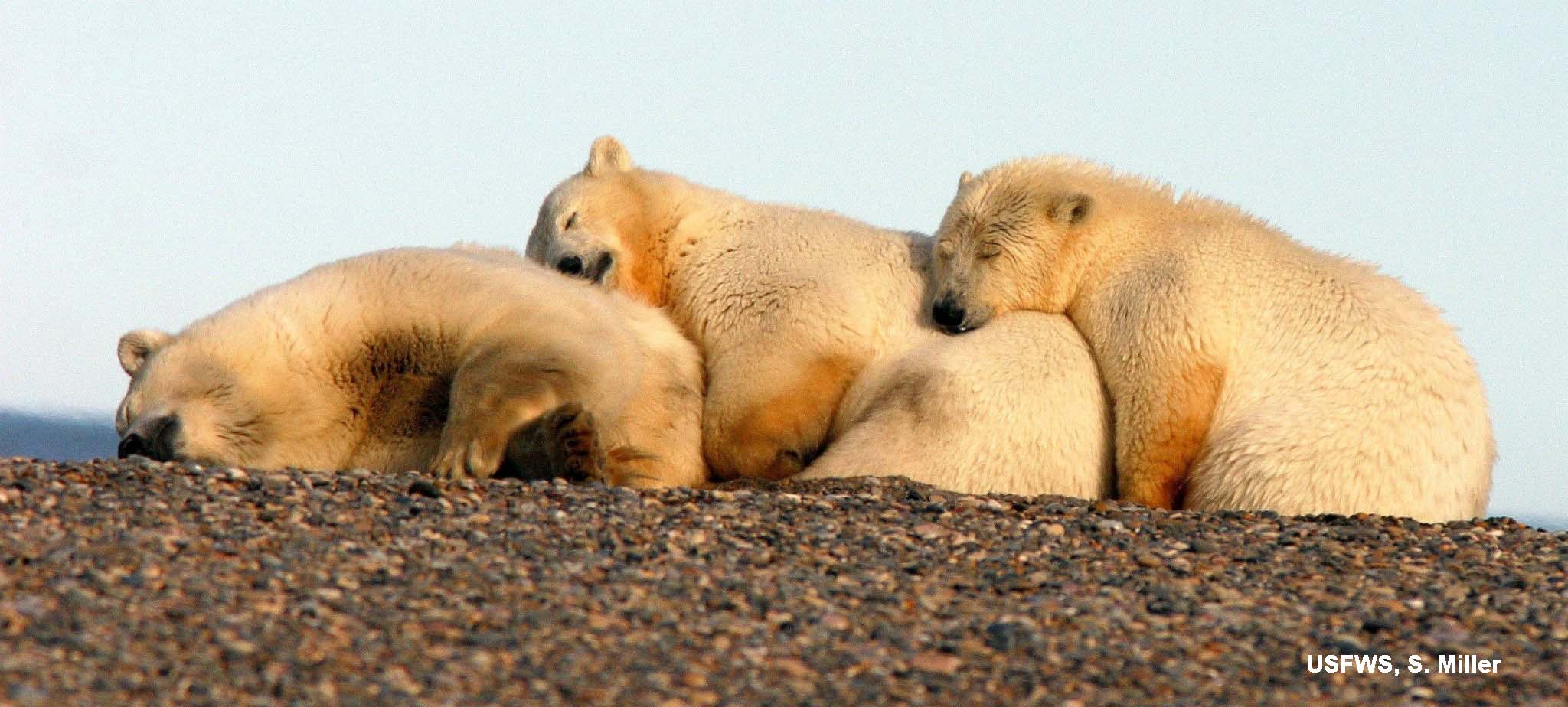
polarbears-arcticnatlwildliferefuge-suzannemiller-usfws_labeled_sm

This paper presents no compelling evidence that Southern Beaufort polar bears, or those in any other region, lack the ability to survive predicted summer sea ice declines in future decades – although they claim it does. See what you think.
Continue reading

It’s the middle of July – do researchers know where their Hudson Bay polar bears are?

If so, they’re not saying. This year, with higher-than-average sea ice, we’ve heard much less than usual about the location of tagged Hudson Bay polar bears. Odd, isn’t it?

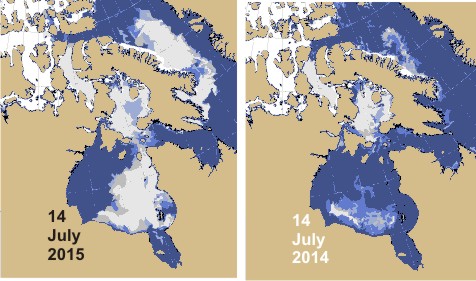
Hudson Bay breakup 2015_2014_14 July

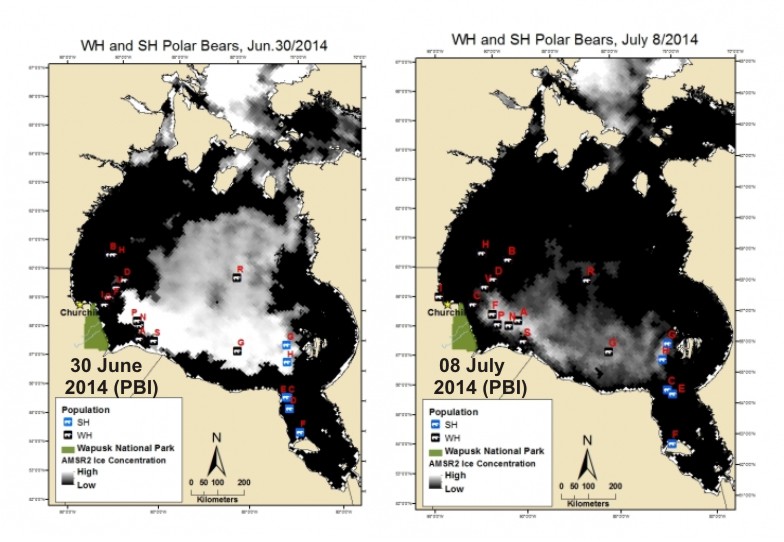
By this time last year, Polar Bears International rep Alysa McCall had published two reports on the location WHB polar bears tagged by the University of Alberta research team led by Andrew Derocher (Fig. 1 below).

Figure 1. Sea ice coverage and locations of female polar bears with tracking collars for 30 June 2014 and 8 July 2014 (black, Western Hudson Bay bears; blue, Southern Hudson Bay bears), courtesy Alysa McCall, Polar Bears International. Click to enlarge.

Figure 1. Sea ice coverage and locations of female polar bears with tracking collars for 30 June 2014 and 8 July 2014 (black, Western Hudson Bay bears; blue, Southern Hudson Bay bears), courtesy Alysa McCall, Polar Bears International. Click to enlarge.

This year, there’s been nothing: not a single PBI mention of WHB breakup. Derocher tweeted a track map on 6 July (2/9 bears ashore), with no updates since, but PBI’s “Bear Tracker” has not been updated since 2 July. Compare this year’s ice cover on Hudson Bay (and elsewhere in Canada) to last year on this date (14 July): quite a difference.
Continue reading

Hudson Bay breakup progressing slowly, still lots of polar bear habitat

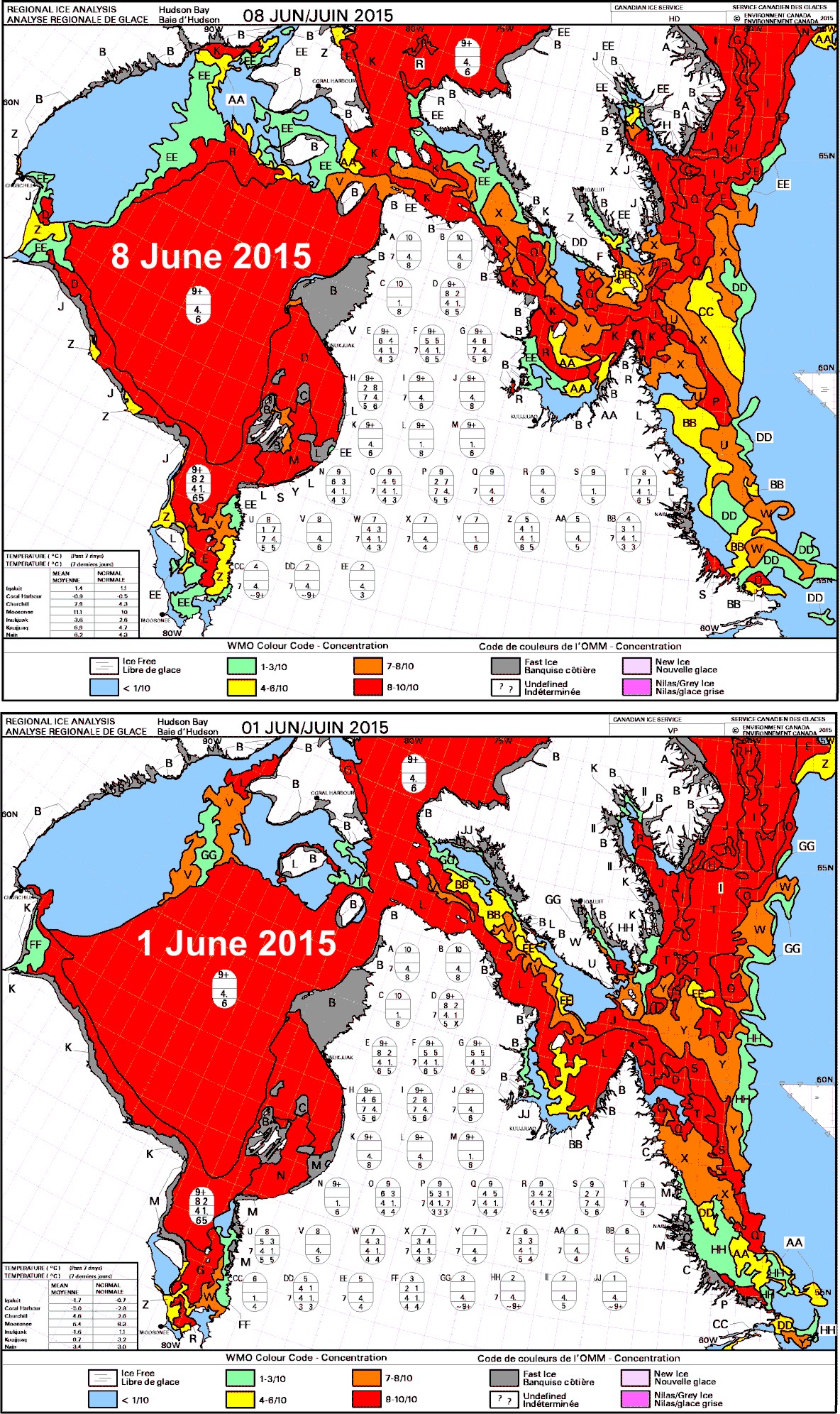
Not much change in sea ice coverage since last week – most of Hudson Bay is still covered with concentrated ice, which is good news for Western and Southern Hudson Bay polar bears. They are still free to roam and hunt over most of the ice-covered bay.

Hudson Bay breakup 8 June 2015 vs 1 June_PolarBearScience

There may be slightly less ice than average for this time of year (Fig. 1, below) but coverage is still >70% with concentrated ice and does not appear to be melting quickly (see charts above and Fig. 2, below).

The dates for three previous earliest breakups according to Lunn and colleagues (Fig. 3) have come and gone, as all were in the first week of June (more on that in an upcoming post) – no records broken. More graphs and maps below, see previous posts here and here.
Continue reading

Tracking polar bears in the Southern Beaufort, with a sea ice surprise – April 2015 map

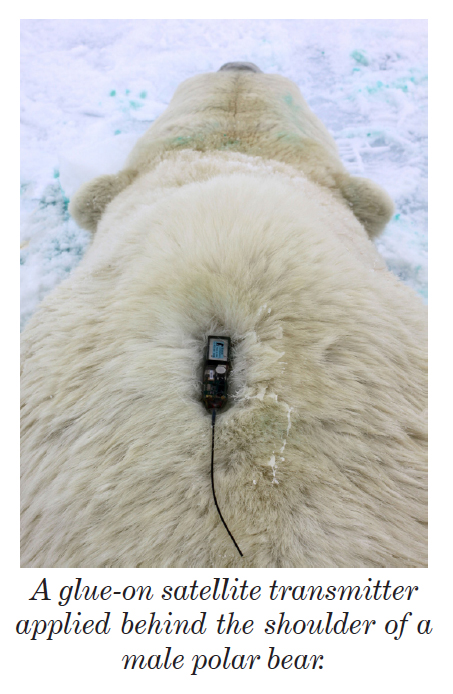
USGS biologists were clearly busy this spring putting more satellite radio collars and glue-on tags on Southern Beaufort Sea polar bears but there’s some surprising information in their April 2015 tracking map about current sea ice conditions.

From the 2013-2014 issue of  “Polar Bear News” (USFWS).

From the 2013-2014 issue of “Polar Bear News” (USFWS).

What’s interesting is that the sea ice maps they use show less dark spots that might be open water this year than were present last year in late April. Oddly, this phenomenon has one prominent biologist worried about “challenging” polar bear habitat developing this year – without mentioning last year at all.

The USGS track map for April 2015 is copied below.1
Continue reading

Tracking polar bears in the Beaufort Sea – March 2015 map

Here is the March 2015 follow-up to my post on the July 2013 track map for female polar bears being followed by satellite in the Beaufort Sea by the US Geological Survey (USGS) – “Ten out of ten polar bears being tracked this summer in the Beaufort Sea are on the ice.”

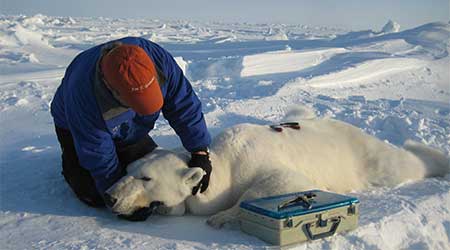
putting_collar_on_polar_bear_slider_USGS

See that post for methods and other background on this topic, and some track maps from 2012 (also available at the USGS website here). The USGS track map for March 2015 is copied below.

Three out of eight female bears tagged in the Southern Beaufort Sea were in the Chukchi Sea subpopulation region during March – not surprising, many bears cross this “boundary.”
Continue reading

Superb sea ice conditions for polar bears worldwide during their critical feeding period

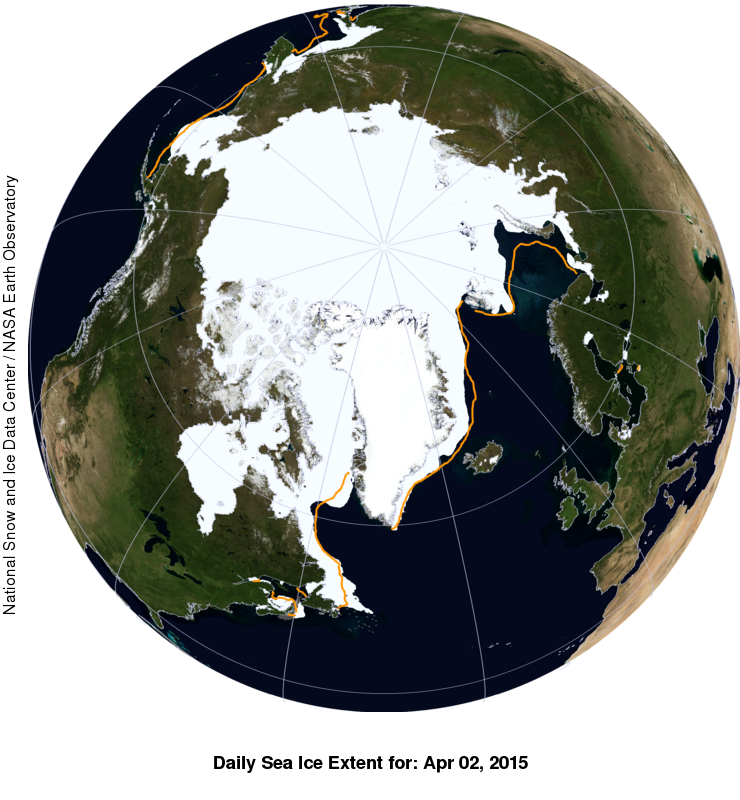
Prognosis, excellent. The sea ice hunting platform that polar bears require is everywhere and Davis Strait ice extent is the fourth-highest it’s ever been at this time of year.

Sea ice extent global 2015 April 2 NSIDC with anomaly WUWT

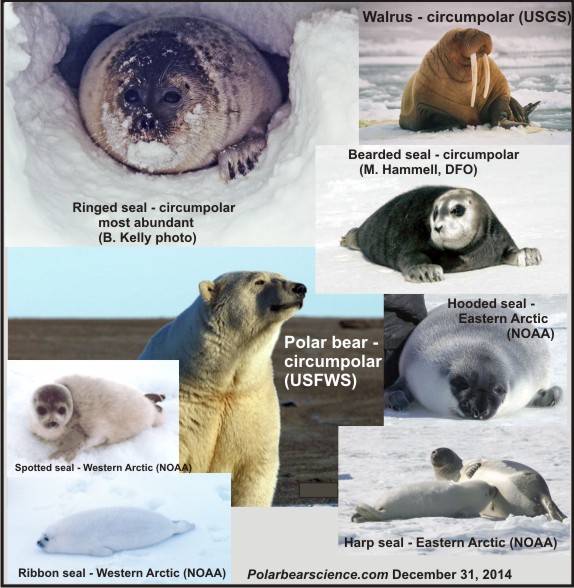
The spring feeding period is a messy, brutal business – many cute baby seals will die as polar bears consume 2/3rds of their yearly food supply over the next few months (April – June/early July), while sea ice is abundant.

Arctic marine mammals_Dec 31 2014_Polarbearscience

That leaves the remaining 1/3 of their energetic needs to be met over the following 9 months (most of it in late fall (late November/December) and hardly any during the summer months, regardless of whether the bears are on land or out on the sea ice) or over the winter. Continue reading

Polar bear habitat update – even more ice this week in the Barents Sea

Polar bear habitat is close to average for this date all over the Arctic this week. Barents Sea pack ice has increased substantially since last week and the ice in Eastern Canada is still well above average (and higher than 1979-early 1980s). Arctic ice has grown since a preemptive call for “the lowest maximum extent on record” was made by NSIDC last week — there is now at least as much ice for this date as there was in 2011 and almost as much as there was last year (2014).

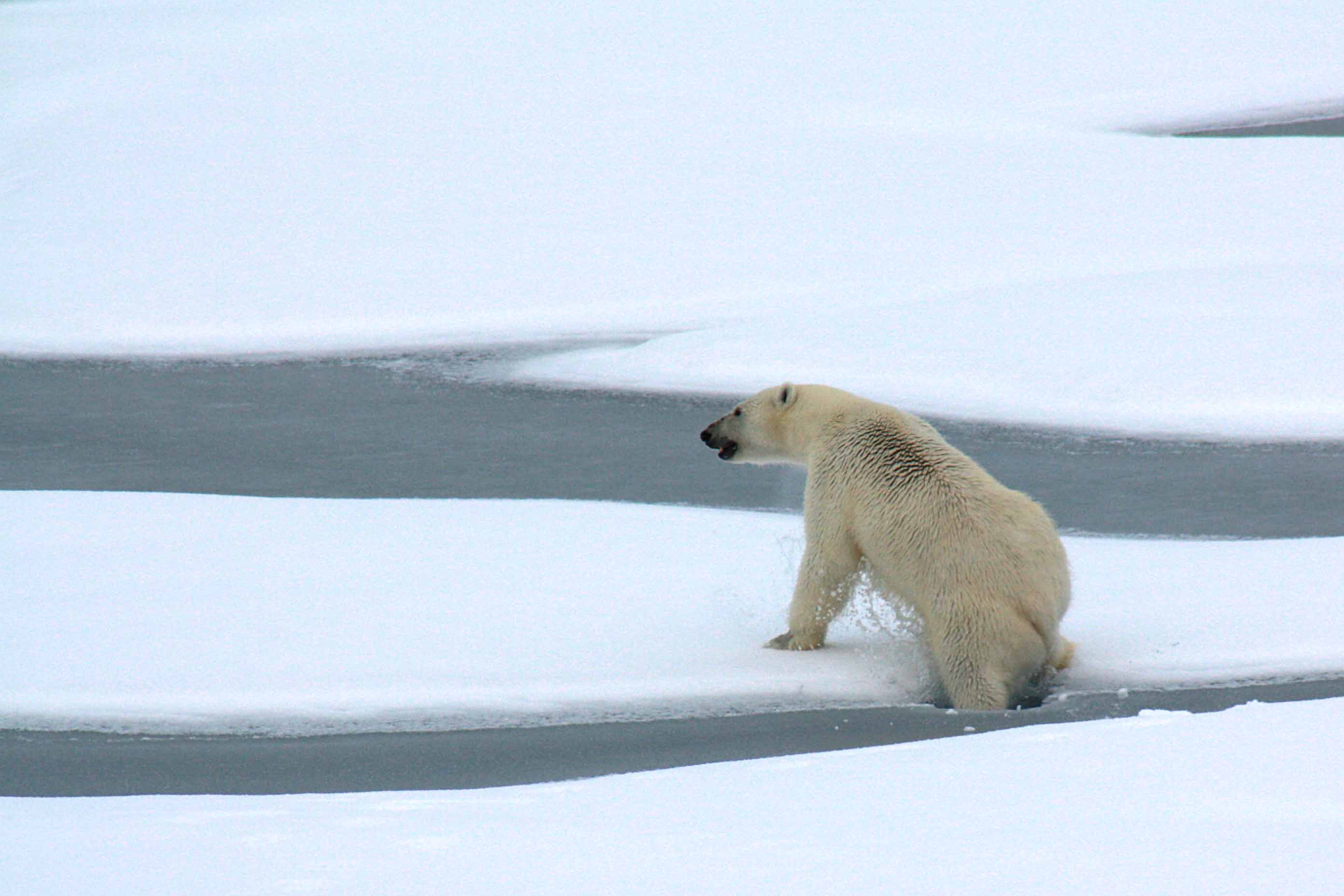
Polar Bear Breaks Ice

Southern Davis Strait polar bears are out feeding on the glut of harp seals in the pack ice off Labrador and Newfoundland (discussed in detail here). One or more bears strayed a bit from the pack and ended up swimming around near the Hibernia oil platform (not far from the ice edge, although the CBC reports didn’t mention that “minor” fact), discussed in this recently updated post (with maps).

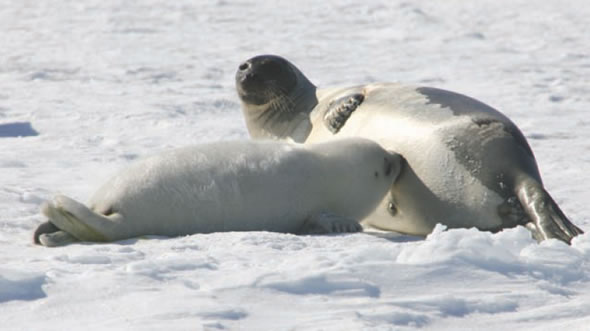
Harp seal female with nursing pup, DFO Canada.

Harp seal female with nursing pup, DFO Canada.

Ice maps and graphs below: it’s worth a look.
Continue reading