Tag Archives: polar bear

At the winter maximum, still about the same polar bear habitat this year as 2006

There is no evidence that slightly less winter sea ice than the average since 1979 has had any negative impact on polar bear health or survival: the difference is simply not biologically meaningful to Arctic animals.

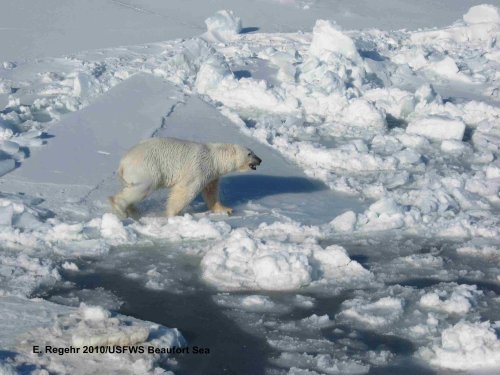
PB_male on ice_Regehr USFWS_March 2010_labeled

Polar bear on winter sea ice around the yearly maximum in the Beaufort Sea, 2010 (March 21).

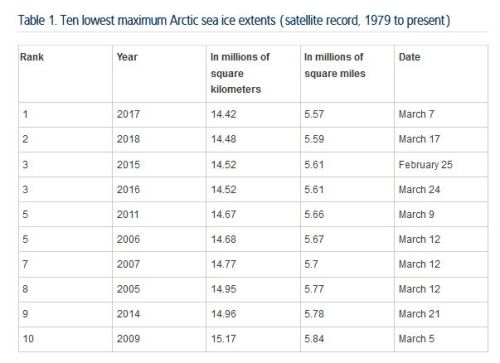
NASA’s 23 March 2018 announcement regarding the Arctic sea ice maximum this year:

“Sea ice in the Arctic grew to its annual maximum extent last week, and joined 2015, 2016 and 2017 as the four lowest maximum extents on record, according to scientists at the NASA-supported National Snow and Ice Data Center (NSIDC) and NASA.”

Except, what they don’t tell you is that 2006 had almost the same extent as 2018 and 2006 wasn’t far behind according to the official, averaged data presented at NSIDC’s Arctic Sea Ice News & Analysis:

Arctic sea ice Maximum 10 lowest extents_NSIDC 23 March 2018

Current conditions at the winter maximum (at 17 March 2018, from NSIDC Masie, extent measured at 14.7 mkm2, using software able to discern more ice than used for the figures in Table 1), shown below: Continue reading

Amstrup & colleages can’t refute my critique of their 2007 polar bear survival model, Part 2

Polar bear specialists Andrew Derocher and Steven Amstrup recently spent inordinate energy trying to refute the opinion piece I’d written for the Financial Post in celebration of International Polar Bear Day last month, ignoring my fully referenced State of the Polar Bear Report for 2017 that was released the same day (Crockford 2018) and the scientific manuscript I’d posted last year at PeerJ Preprints (Crockford 2017).

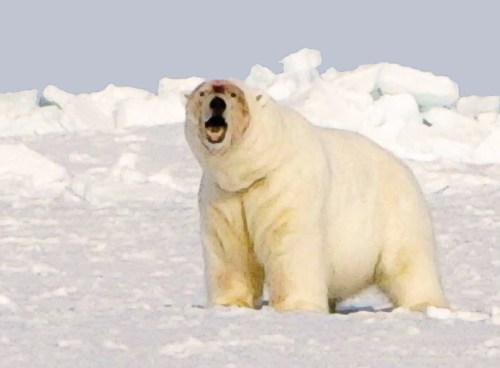
polar_bear_USFWS_fat Chukchi Sea bear

Their responses use misdirection and strawman arguments to make points. Such an approach would not work with the scientific community in a public review of my paper at PeerJ, but it’s perfect spin for the self-proclaimed “fact-checking” organization called Climate Feedback. The result is a wildly ineffective rebuttal of my scientific conclusion that Amstrup’s 2007 polar bear survival model has failed miserably.

This is Part 2 of my expose, see Part 1 here.
Continue reading

Amstrup & colleages can’t refute my critique of their 2007 polar bear survival model, Part 1

It’s been more than a year since I first published my scientific manuscript at PeerJ Preprints (a legitimate scientific forum) on the failure of Amstrup’s 2007 USGS polar bear survival model (Crockford 2017), a year waiting in vain for the polar bear community to comment. They either couldn’t be bothered or knew they couldn’t refute it – I haven’t known for sure which. But I do now.

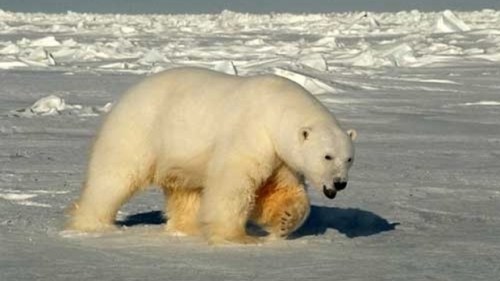
Beaufort Sea male polar bear USGS_2005 Amstrup photo

Polar bear specialists didn’t comment because they couldn’t refute it in the scholarly manner required by PeerJ: all they could do is tear it down with derision, misdirection and strawman arguments.

I know this because the damage control team for the polar-bears-are-all-going-to-die-unless-we-stop-using-fossil-fuels message wasn’t activated over my fully-referenced State of the Polar Bear Report for 2017 (Crockford 2018) released on International Polar Bear Day last month, but for a widely-read opinion piece I’d written for the Financial Post published the same day (based on the Report) that generated three follow-up radio interviews.

By choosing to respond to my op-ed rather than the Report or my 2017 paper, biologists Andrew Derocher and Steven Amstrup, on behalf of their polar bear specialist colleagues1, display a perverse desire to control the public narrative rather than ensure sound science prevails. Their scientifically weak “analysis” of my op-ed (2 March 2018), published by Climate Feedback (self-proclaimed “fact checkers”), attempts damage control for their message and makes attacks on my integrity. However, a scientific refutation of the premise of my 2017 paper, or The State of the Polar Bear Report 2017, it is not (Crockford 2017, 2018).

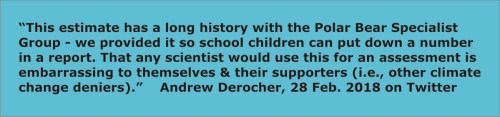
Derocher further embarrasses himself by repeating the ridiculous claim that global polar bear population estimates were never meant for scientific use, then reiterates the message with added emphasis on twitter:

Derocher tweet 2018 Feb 28 quote

Just as the badly written Harvey et al. (2017) Bioscience paper said more about the naked desperation of the authors than it did about me or my fellow bloggers, this attempt by the polar bear community’s loudest bulldogs to discredit me and my work reveals their frustration at being unable to refute my scientifically supported conclusion that Amstrup’s 2007 polar bear survival model has failed miserably (Crockford 2017).

Part 1 of my detailed, fully referenced responses to their “analysis” of my op-ed are below.  Part 2 to follow [here]. Continue reading

More Davis Strait polar bears onshore in the last two days

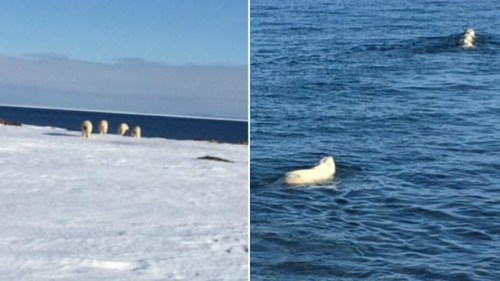
Four bears were photographed outside of Red Bay, Southern Labrador on Thursday 8 March and a bear was spotted ashore in NE Newfoundland overnight on Wednesday.

Red Bay Labrador polar-bears 8 March 2018_Vicki Hancock photo_CBC 9 March 2018

Continue reading

Polar bear ashore in Puvirnituq NE Hudson Bay over the weekend

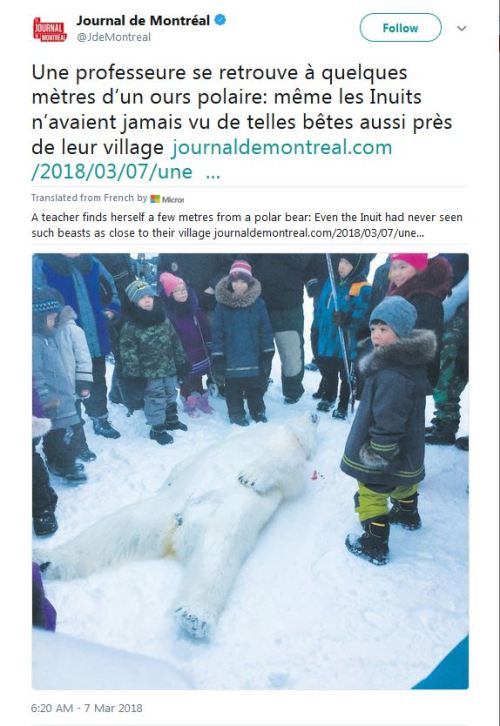
More ‘bears on shore’ news today, this time involving a young polar bear that came ashore in the village of Puvirnituq, northern Quebec and was shot for safety reasons by a local hunter.

puvirnituq_tweet-polar-bear_7-march-2018_translated.jpg

This incident is reminiscent of one last year a bit further north (Ivujivik) in early March, which I reported here.  Both involved young bears from the large and stable Foxe Basin subpopulation. As I’ve pointed out before, most bears in late winter are at their lowest weight and this can make them very dangerous if they come ashore looking for food.

But unlike the Ivujivik incident, was the first time a bear had ever come into the village of Puvirnituq, making it more like the visit in late February 2017 of a young female bear in Inukjuak further  south along the coast, the first such visit of a polar bear to that community in more than 30 years.

The exception to lean condition in late winter being the norm are bears in the Davis Strait subpopulation that have harp seals to feed on by February and are often in good condition by early March, as was the bear reported ashore yesterday in Newfoundland.

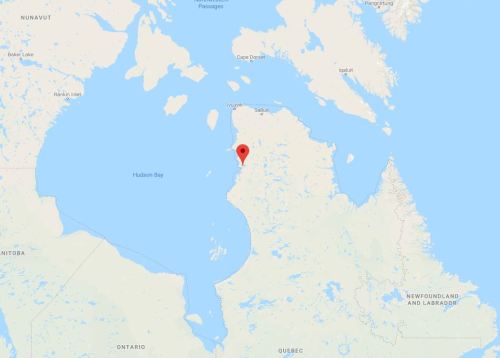
Puvirnituq Quebec_location_Google maps

Puvirnituq, northern Quebec. Polar bears in this region are part of the Foxe Basin subpopulation.

The news today came via an English language blog post that got an essential detail wrong1, so I turned to Google Translate to offer this version of the original, in French (Journal de Montreal, 7 March 2018):

Continue reading

Winter polar bear sea ice habitat by early March 2018 varied little from 2006 or 2017

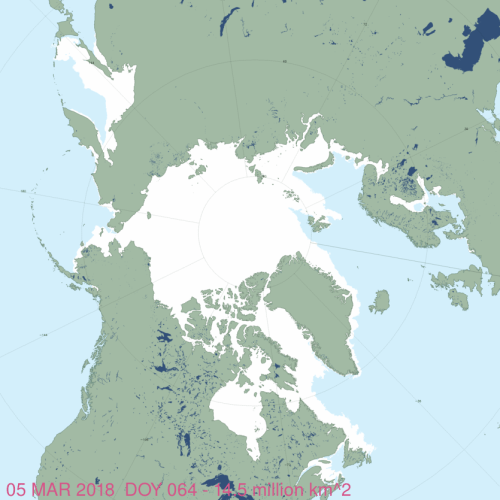
Here’s a polar bear habitat update for early March: some folks are wringing their hands over the relatively extent of ice this season but ice maps show that as far as polar bear habitat is concerned, conditions are not materially different this year from what they were in 2006 or 2017. There is still plenty of late winter sea ice for polar bears needing a platform from which to hunt Arctic seals, which in some areas will have already begun giving birth to their fat furry pups (harp seals first, other species later).

The MASIE map for 5 March 2018 (Day 64) shows ice extent at 14.5 mkm2:

masie_all_zoom_4km 2018 March 5

Continue reading

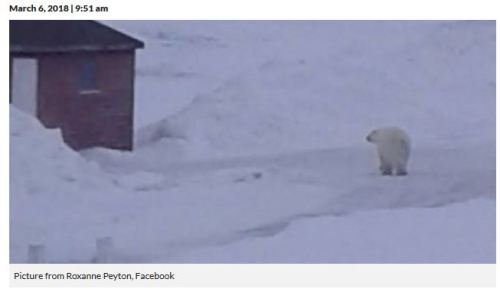
Polar bear sighted onshore in northern Newfoundland at St. Lunaire-Griquet

The first report I’ve seen this season of a polar bear onshore has come in and ironically, it comes from northern Newfoundland, the setting of my polar bear attack thriller, EATEN. Only time will tell if this year will be as active as 2017’s record-breaker for polar bears ashore in Newfoundland.

Saint Lunaire Griquet Newfoundland polar bear_VOCM news_6 March 2018

Update: 6 March 2018. A couple of hours after posting this, CBC News Newfoundland published a story on this incident, providing a bit more detail and video footage of the bear wandering around local houses.

Continue reading

Archive of 2007 USGS reports supporting 2008 ESA listing for the polar bear

The administrative reports used in 2007 to support the decision to list polar bears as ‘threatened’ under the US Endangered Species Act (ESA) in 2008 disappeared from the US Geological Survey website several years ago. I have archived them here in pdf format to make them easy to find for anyone wishing to access the accuracy of the models, data, and assumptions made in 2007.

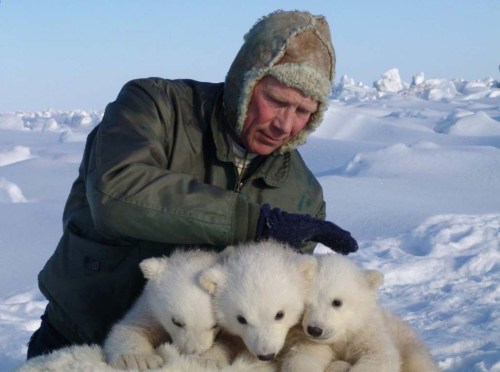
Amstrup w triplet_Prudhoe Bay 2005_USGS_sm

Steven Amstrup in 2005, then lead USGS polar bear biologist, with triplet cubs, Prudhoe Bay, AK.

This is a housekeeping post meant for future reference. I’ve included citations for the relevant sea ice projection papers used in the models presented in the 2007 documents and a few other related reports from the same time period. Continue reading

Histrionics over Arctic temperatures & sea ice extent: implications for polar bears

Panic over Arctic temperatures got smeared across news networks last week, so I think a bit of perspective is in order, including an assessment of what this means for polar bears and their prey (because some of the hysteria is being amplified from that corner).

The region causing all the kerfuffle is at the northernmost tip of Greenland (see map below), where there is a weather station at Cape Morris Jesup. Next-nearest stations are at Alert, Canada (to the west) and Longyearbyen, Svalbard (Norway, to the east).
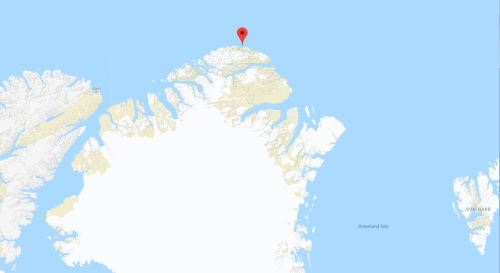
Cape Morris Jesup location Greenland_Google map

Arctic temps spike over 30 degrees in the midst of winter (The Weathern Network, Friday, February 23, 2018) included the tweet below, showing a fracture of sea ice north of Greenland so transient that it does not show up on daily sea ice maps:

“Along with those spikes in temperature, Lars Kaleschke’s tweet, above, also shows the large rift in the sea ice that opened up just north of Cape Morris Jesup, at the same time. Kaleschke is a professor of sea ice remote sensing at the Center for Earth System Research and Sustainability, at the University of Hamburg, in Germany.

Summary: Temperature and sea ice “abberations” in northern Greenland are transient phenomena that have clearly happened before (e.g. 2011) without major consequences except perhaps through impacts on eastern Arctic and subArctic weather conditions (including the UK).

Lack of sea ice north of Svalbard in the Barents Sea occuried last year and in 2012 in Februrary. But by mid-to-late March, when seal are beginning to give birth on the ice and polar bears are busy hunting them, ice had again covered the region. This year is likely to be the same. However, we won’t know until the end of March or ealry April if a recovery will or won’t happen, so any alarm-ringing about impacts on Arctic fauna surival have no foundation in fact until then.
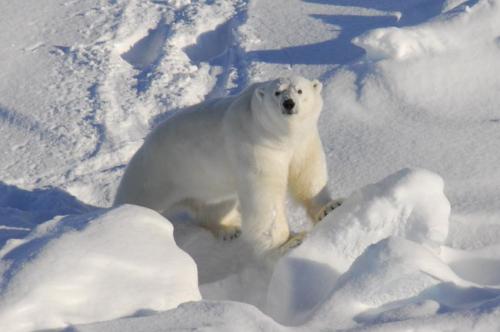
East Greenland Scorsby Sound March 2011 on Kap Tobin_Rune Dietz_press photo

Scorsby Sound, East Greenland bear in March 2011. Rune Dietz, press photo.

In the Bering Sea, ice extent is well below average for this time of year but studies show the one consistent feature of Bering Sea ice is its variability. Low ice levels have distressing impacts for St. Lawrence island seal and whale hunters. However, there is certainly enough ice in the Bering Sea/Chukchi Sea region for polar bears and Arctic seals to do what they do this time of year (which is try to survive until early April, at which time seals start giving birth to their pups and polar bears start to eat them, with gusto). And the ice season isn’t over: maximum extent of ice in the Bering sea doesn’t usually come until late April or May, and the dramatic decline of mid-February already shows signs of reversing.

Details below this ice map for 24 February 2018, courtesy NSIDC Masie:
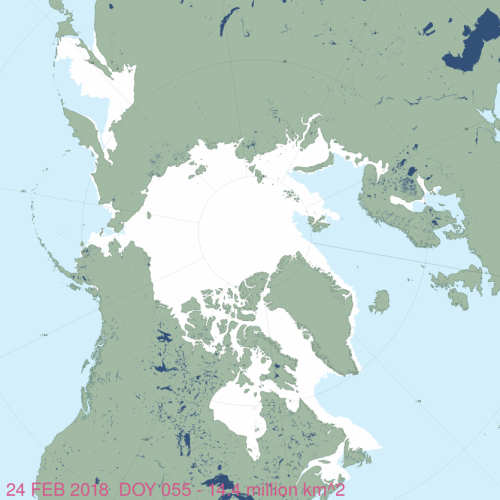
masie_all_zoom_4km 2018 Feb 24

PS. I’m off within hours to Toronto for the launch of my State of the Polar Bear Report in honour of International Polar Bear Day, 27 February. Watch for reports in the news and for my op-ed 27 February at the Financial Post.

Continue reading

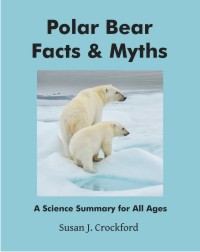
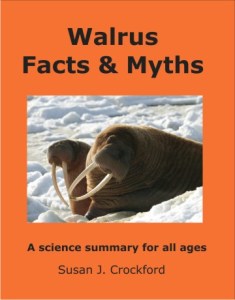
My Polar Bear Facts & Myths book for kids is being translated into Dutch & Norwegian

In celebration of International Polar Bear Day on Tuesday 27 February, I’m pleased to announce the up-coming publication of Dutch and Norwegian translations of my popular childrens’ science book Polar Bear Facts & Myths.

Lying bear shutterstock_244419640_Cropped_web size

Ijsberen Feiten en Mythen

Isbjørn Fakta og Myter

This means my powerful little book that provides the straight goods for kids on polar bear science will soon be available in five languages: English, French, German, Dutch and Norwegian.

Watch for them!